
Scientific Materials Station
Article Information
Optimizing Donor-Acceptor Interactions for Efficient Non-Halogenated Processed Organic Solar Cells and Modules
First Authors: Chen Xi, Tian Yuqian, Adili Jiang Wufuer
Corresponding Authors: Shi Minmin, Chen Hongzheng
Affiliation: Zhejiang University
Scientific Materials Station
Research Background
Organic solar cells (OSCs) are expected to be widely used in distributed photovoltaic applications due to their unique advantages of flexibility, lightweight, and semi-transparency. However, the high-performance OSCs currently rely on toxic halogenated solvents for processing, which severely restricts their industrialization. Although non-halogenated solvents (such as xylene) have low toxicity, low cost, and potential for large-scale processing, controlling the morphology of the active layer during processing is challenging, leading to significant performance degradation. Therefore, developing efficient active layer materials suitable for green solvent processing has become a research hotspot in the OSC field.
Scientific Materials Station
Article Summary
Recently, the research team led by Professors Chen Hongzheng and Shi Minmin from Zhejiang University published a paper titled “Donor–Acceptor Interaction Optimized Film-Forming Processes Lead to Efficient Organic Solar Cells and Modules Fabricated with Non-Halogenated Solvents” in the prestigious journal Angewandte Chemie International Edition. This work involved introducing 20% of the unit 2-(chlorothiazol-4-yl) (Tz2Cl) into the classic polymer donor PM6, resulting in the design and synthesis of a novel ternary copolymer PM6-ClTz20, which significantly improved its solubility in green solvents like xylene. By enhancing the donor-acceptor interactions, the film-forming dynamics and micro-morphology of the active layer were successfully controlled, achieving a high power conversion efficiency of 19.04% for small-area devices and 16.71% for mini-modules.
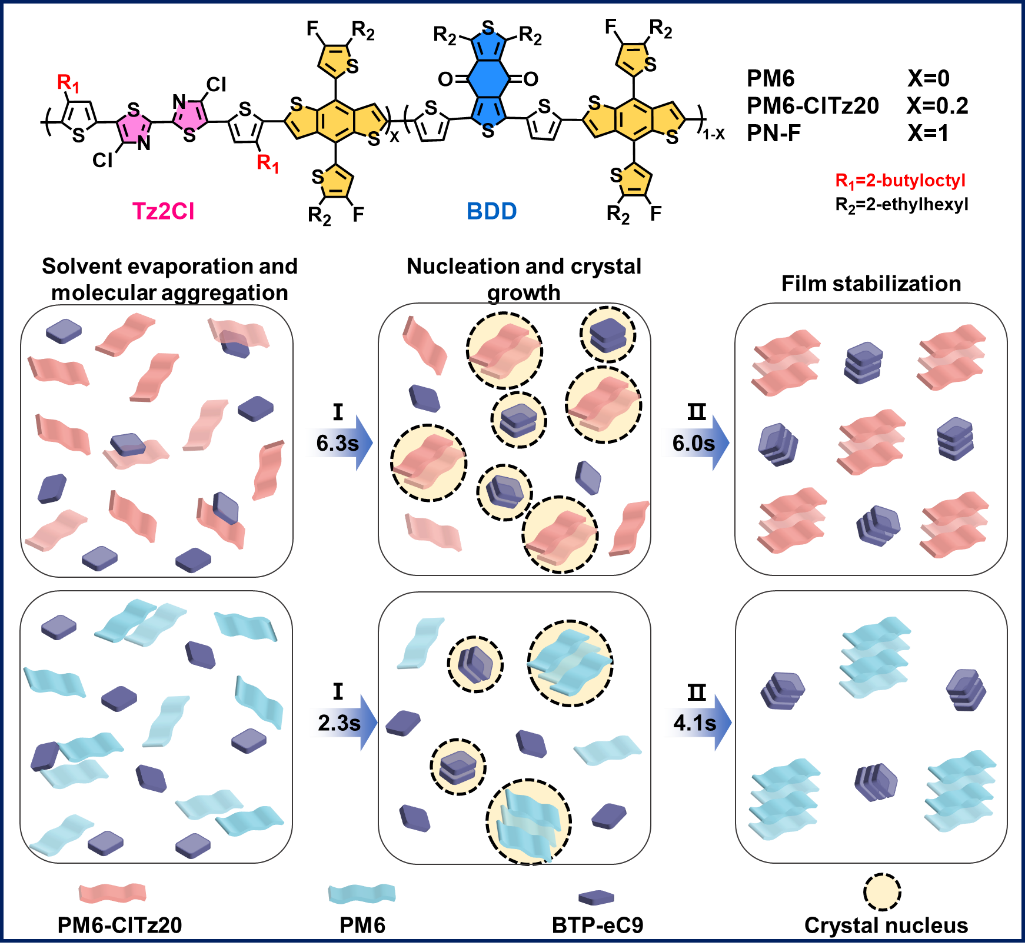
Figure 1. Structural formula of the polymer and schematic diagram of the film-forming process.
Scientific Materials Station
Main Points of the Article
Point 1: The Tz2Cl unit enhances solubility and interaction
The research team precisely chemically modified the star donor material PM6 by replacing 20% of the benzodithiophene-4,8-dione (BDD) unit with the Tz2Cl unit, resulting in the ternary copolymer PM6-ClTz20. This design has dual advantages: first, the random copolymer disrupts the structural regularity of the polymer backbone, increasing its solubility in green solvents like xylene from 1.98 mg mL-1 to 2.68 mg mL-1 (a 35% increase), effectively suppressing excessive molecular aggregation during processing due to poor solubility. Second, the Tz2Cl unit has a stronger electronegativity, with density functional theory (DFT) calculations showing its average electrostatic potential (ESP) as low as -5.14, significantly lower than the -2.76 of the BDD unit, thereby inducing a strong electrostatic attraction between the donor PM6-ClTz20 and the acceptor BTP-eC9.
Point 2: Donor-Acceptor Interaction is Key to Controlling Film-Forming Dynamics
Experiments revealed the core role of donor-acceptor electrostatic attraction in the film-forming process of the active layer processed with green solvents. 1H NMR tests showed that after mixing the Tz2Cl monomer with BTP-eC9, the chemical shift of the hydrogen atoms on the aromatic ring exhibited a significant upfield shift (up to 0.136 ppm), indicating strong intermolecular interactions. The 1H-1H NOESY NMR spectrum clearly observed cross-peaks between the aromatic hydrogen atoms of Tz2Cl and the alkyl hydrogen on BTP-eC9, directly proving that the spatial distance between them in solution is less than 5 Å, indicating close molecular contact. This strong donor-acceptor interaction delayed their rapid phase separation and premature crystallization during the solvent evaporation process.
Point 3: Extended Film-Forming Time Optimizes Active Layer Morphology
In situ UV-visible absorption spectroscopy was used to monitor the film-forming process in real-time. The study found that the entire film-forming process of the PM6-ClTz20:BTP-eC9 blend system (including molecular aggregation, nucleation, and crystal growth) took about 12.3 seconds, nearly double that of the PM6:BTP-eC9 system (about 6.2 seconds). This “slow crystallization” process allowed the donor and acceptor molecules more time for ordered self-assembly and rearrangement, ultimately forming a blend film with better phase separation size (confirmed by AFM and PIFM), larger crystal size (GIWAXS showed narrower π-π stacking peaks and longer coherent length), and higher crystallinity. This optimized morphology is beneficial for efficient charge generation and transport.
Point 4: Significant Improvement in Device and Module Performance
The optimized active layer morphology led to a comprehensive enhancement in device performance. The PM6-ClTz20:BTP-eC9 device processed with xylene achieved a maximum efficiency of 19.04% (VOC = 0.846 V, JSC = 27.96 mA cm-2, FF = 80.50%), significantly outperforming the PM6 system (18.33%). In-depth photophysical and electrical characterization indicated that its excellence is attributed to: ① Higher exciton dissociation efficiency (96.6%); ② Higher charge collection efficiency (85.8%); ③ More balanced carrier mobility (μh/μe ≈ 1); ④ Significantly suppressed bimolecular recombination and trap-assisted recombination. More importantly, this strategy demonstrated excellent scalability, with the fabricated 19.44 cm² mini-module achieving an efficiency of 16.71%, proving its industrialization potential.
Point 5: Applicable to Various Green Solvents and Acceptor Systems
The study showed that PM6-ClTz20 can achieve over 17% efficiency when processed in various non-halogenated solvents such as toluene, ortho-xylene, and para-xylene. Additionally, when paired with other mainstream acceptors like Y6 and L8-BO, the device efficiencies reached 18.26% and 18.52%, respectively, fully demonstrating the versatility of this donor in green solvent processing material systems.
Scientific Materials Station
Article Link
Donor–Acceptor Interaction Optimized Film-Forming Processes Lead to Efficient Organic Solar Cells and Modules Fabricated with Non-Halogenated Solvents
https://onlinelibrary.wiley.com/doi/10.1002/anie.202515280
Scientific Materials Station
Corresponding Author Profiles
Professor Chen Hongzheng Profile: Distinguished Professor at Zhejiang University, PhD supervisor. Recipient of the National Outstanding Youth Fund (2002) and the National Innovation and Excellence Award (2023), selected for the Ministry of Education’s Cross-Century Excellent Talent Training Program (2001), winner of the Chinese Chemical Society’s Youth Chemistry Award (2000), and selected for the Zhejiang Province “151 Talent Project” (2000) and the Zhejiang Province Ten Thousand Talents Program (2020). Graduated from Zhejiang University in 1988, obtained a PhD from Zhejiang University in 1994, and has been teaching there since. He has conducted collaborative research at the Hong Kong University of Science and Technology (01~04/1999), University of Antwerp in Belgium, and the European Joint Microelectronics Center (11/1999~04/2001, 07~10/2002, 07~09/2003), and Stanford University in the USA (02~08/2005, 09~11/2007). His research focuses on organic polymers and organic-inorganic hybrid perovskite optoelectronic functional materials and devices, having led over 20 national and provincial projects, published over 500 SCI papers in renowned journals such as Nature Nano., Adv. Mater., J. Am. Chem. Soc., Nature Commun., Angew. Chem. Int. Ed., Energy Environ. Sci., with over 000 citations, and holds 60 authorized national invention patents. He serves as a committee member of the Organic Solids Professional Committee of the Chinese Chemical Society, executive director and deputy secretary-general of the Polymer Materials and Engineering Branch of the Chinese Materials Research Society, chairman of the Zhejiang Composite Materials Society, and editor for ACS Applied Polymer Materials. He has received the first prize of the Zhejiang Provincial Science and Technology Award (Natural Science Award) in 2022, the first prize of the China Materials Research Society Science and Technology Award (Basic Research Award) in 2025, and the third prize of the National Education Commission Science and Technology Progress Award (1995), and has been honored as an advanced individual in the “Career-Family Balance” by the Zhejiang Provincial Education Union (2003), a “March 8th Red Banner Holder” (2008), a national model worker for female employees (2009), and a Zhejiang Provincial female inventor (2009).
Professor Shi Minmin Profile: Bachelor in Materials Science from the University of Science and Technology of China (1993), Master of Science (1996) and Doctor of Engineering (2004) from Zhejiang University. Since December 2003, she has been working in the Department of Polymer Science at Zhejiang University. She has long been engaged in fundamental and applied research on organic semiconductor materials and devices, with recent research interests focused on organic solar cells. She has undertaken over 10 national-level research projects and published over 180 SCI papers in journals such as Adv. Mater., J. Am. Chem. Soc., and Angew. Chem. Int. Ed., with over 12,000 citations and an H-index of 58 (Google Scholar), and has been selected as a Clarivate Analytics (SCI) Highly Cited Researcher. She has received the first prize of the Zhejiang Provincial Science and Technology Award (Natural Science Award) and the first prize of the China Materials Research Society Science and Technology Award (Basic Research Award). She holds 32 authorized national invention patents, and some of her research results have been commercialized.
Scientific Materials Station
First Author Profiles
Chen Xi, Master’s student in the Department of Polymer Science and Engineering at Zhejiang University, under the supervision of Professor Shi Minmin. His main research focuses on the design and synthesis of donor materials for organic solar cells.
Tian Yuqian, Master’s student in the Department of Polymer Science and Engineering at Zhejiang University, under the supervision of Researcher Zuo Lijian. His main research focuses on semi-transparent organic solar devices.
Adili Jiang Wufuer, PhD student in the Department of Polymer Science and Engineering at Zhejiang University, under the supervision of Professor Chen Hongzheng. His main research focuses on flexible organic solar cell modules.
Add Official WeChat for Group Discussions
SCI Carbon Dioxide Mutual Assistance Group
SCI Catalytic Materials Exchange Group
SCI Sodium-Ion Battery Exchange Group
SCI Ion Exchange Membrane Experience Exchange Group
SCI Fuel Cell Exchange Group
SCI Supercapacitor Exchange Group
SCI Aqueous Zinc Battery Exchange Group
SCI Water Electrolysis Mutual Assistance Group
SCI Gas Diffusion Layer Experience Exchange Group
Note: [Name-Institution-Research Direction]
Note
🔹 If there are any copyright issues with this content, please contact us for timely resolution.
🔹 Readers are welcome to share and promote this article.
🔹 The “Scientific Materials Station” will continuously improve its standards to share higher quality material consultations with readers, welcome to follow us.
For submissions, please contact [email protected]
Acknowledgments
Thanks to the authors for their strong support of this report.

Share

Support with a Like

Click to View