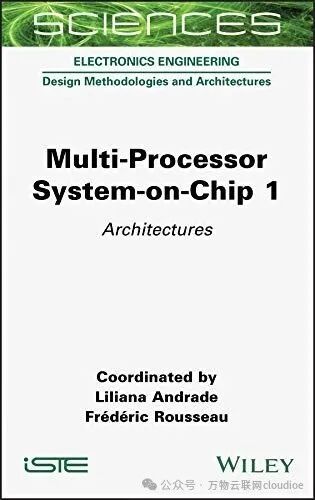
Introduction: Entering the Multicore World of MPSoC
Hello everyone! Imagine how the “brains” behind your smartphone, car, and smart home devices work. Today, we will discuss a technical treasure trove—”Multi-Processor System-on-Chip 1: Architectures.” This book is like an old professor, narrating the story of Multi-Processor System-on-Chip (MPSoC) from its inception to how it has changed the world today. MPSoC integrates multiple processor cores, memory, and communication modules into a single chip, allowing devices to handle complex tasks faster and more efficiently. From ST’s MPA architecture processing video in 1998 to today’s autonomous driving and IoT, MPSoC has come a long way over the past 20 years. The book is divided into three parts: processors, memory, and interconnects. I will explain the key technologies and research methods in simple terms, along with fresh market trends for 2025, so that you not only understand the technology but also see business opportunities. Let’s get started!
Part One: Processors—The “Power Engine” of MPSoC
The processor is the heart of MPSoC, responsible for all computations. The book traces its evolution: from dedicated cores to general-purpose multicore. For example, Sony’s PlayStation 2 used the Emotion Engine (5 cores) to make games smoother, and ARM’s MPCore in 2005 ushered in the era of quad-core. Today, almost all chips are multicore.
Key Technical Points:
- IoT Processors: IoT devices need to “sense, hear, and see,” while also being low power. The book cites examples of configurable processors supporting DSP (Digital Signal Processing), machine learning, and security features. For instance, a processor can handle both voice and image processing simultaneously, with benchmark data proving efficient operation on edge devices.
- Kalray MPPA Architecture: The third-generation MPPA is as scalable as GPGPU, energy-efficient like DSP, and has FPGA-like I/O capabilities. Designed specifically for autonomous driving, it supports high-performance functions (like deep learning) in soft real-time and high-reliability functions in hard real-time. The Coolidge2 processor, set to launch in 2025, will double INT8 performance, and the TC4 card will integrate four chips for AI acceleration.
- Plural Multicore Architecture: Combines multiple CPU cores, hardware scheduling, and large shared memory. It uses task graph programming, similar to the PRAM model, to efficiently handle DSP and machine learning. High core utilization and excellent performance-to-power ratio, with scalability to different process nodes.
- ASIP-based CNN Systems: CNN convolutional neural networks are computation-intensive. The book proposes using Application-Specific Instruction Set Processors (ASIP) to balance efficiency and flexibility. Starting from single-core VLIW-SIMD architecture, it expands to MPSoC, optimizing parallel execution and memory bandwidth. The goal: high throughput and low power consumption. Power simulations show it is more energy-efficient than traditional GPUs. Research in 2025 indicates ASIP combined with FPGA will accelerate AI/ML, handling mixed-critical tasks.
Research Design Methods: First analyze requirements (such as IoT computing demands), design scalable architectures, then benchmark and simulate for optimization. Kalray uses model-driven development to ensure real-time constraints. ASIP evolves from single-core to multicore, considering NoC and memory, iterating gradually.
Market and Technical Insights: Processor technology makes devices smarter. By 2025, the trend for IoT edge processors is AI integration and low-power design, with an expected connection of over 75 billion devices. Edge computing is becoming popular, and processors need to support 5G and AI, with energy efficiency being paramount—think of smartwatches that last a day without charging. The market opportunity is significant, with the overall SoC market projected to reach $152.1 billion by 2025, driven by AI growth. Kalray’s updated processors target data centers and 5G O-RAN acceleration, collaborating with SynaXG to optimize edge acceleration. In the future, ASIP will integrate AI further, with research focusing on new instruction sets and automated design to capture the explosive growth of AI.
Part Two: Memory—The “Smart Warehouse” of Data
Memory determines how data is accessed, and latency and bandwidth are bottlenecks in MPSoC. The book emphasizes data locality to avoid data scattering.
Key Technical Points:
- Data Locality Challenges: Using Region-Based Cache Coherence (RBCC) and Near-Memory Acceleration (NMA). RBCC dynamically configures subsets of cores to share, reducing directory size by 40% and latency. NMA places computation next to memory, reducing interconnect load and improving efficiency. The platform is a 2D computing tile array with NoC supporting QoS.
- mMPU Memristor Architecture: Traditional von Neumann architecture incurs high data transport costs. Memristors compute directly in memory and are non-volatile. Suitable for SIMD parallelism, using crossbar arrays for logic gates, with both manual/automatic methods and controllers. By 2025, 2D materials like MoTe2 memristors will be used for artificial synapses, achieving high energy efficiency.
- Dynamic Binary Translation Optimization: Address translation is slow during simulation. The book uses host MMU for direct handling, controlled by Linux modules. QEMU prototypes accelerate by 67% (x86) and 42% (ARM).
- Memory Bank Distribution: Multicore clusters use multiple banks for parallel access, employing hash functions or additional banks to avoid conflicts. Kalray MPPA simulations show no universal solution; application-specific adjustments are necessary.
Research Design Methods: For fluctuating loads, complementary concepts: RBCC dynamic reallocation, NMA considering task mapping and migration. Simulations like Kalray’s processor test conflict resolution schemes. Memristors evolve from logic gates to complex functions, validated progressively.
Market and Technical Insights: Memory innovations address the AI data hunger. By 2025, memristors will advance into neuromorphic computing, with the MEMRISYS conference focusing on materials and systems. The market sees that edge AI requires low-power memory, with trends towards silicon photonics and near-threshold circuits. This greatly benefits sustainable computing by reducing energy consumption. Opportunities lie in data centers and IoT, with memristors potentially revolutionizing AI hardware, expecting rapid market growth.
Part Three: Interconnects and Interfaces—The “Nervous System” of Chips
Interconnects enable communication between components, with NoC at the core.
Key Technical Points:
- NoC Technology: From buses to NoC, a historical evolution. Key components: configuration methods, QoS guarantees, secure debugging. Supports heterogeneous cache coherence and inter-chip communication. Future: planar guided topology synthesis, chiplets, diagnostic optimization. By 2025, Arteris FlexGen will use AI to generate NoC, achieving tenfold speed.
- Minimum Energy Computing: Dynamic scaling of power supply and threshold voltage, algorithms maintain efficiency points. Applicable to various processors, with near-threshold memory architectures and OS energy management. Prototype chips validate effectiveness.
- Task Migration Consistency: In heterogeneous FPGA clouds, using KPN models and protocols ensures communication determinism. Implemented on Zynq and Intel platforms, reducing switch latency by 98%.
Research Design Methods: NoC is projected from history to the future, emphasizing system services. Voltage scaling algorithms combine hardware and software attributes, experimentally validated. Migration uses KPN to provide deterministic behavior, tested across platforms.
Market and Technical Insights: The NoC market is projected to reach $2.3 billion by 2025, growing to $8.96 billion by 2034, driven by AI and complex SoCs. Trends: backside NoC and routing die solutions for scalability. Low-power interfaces are suitable for sensor networks, with cloud FPGA virtualization offering greater flexibility. Opportunities exist in autonomous driving and 5G, with NoC enabling chiplet assembly, reducing costs.
“Multi-Processor System-on-Chip (MPSoC) Architectures” is a comprehensive technical monograph detailing multicore and multiprocessor hardware and software systems. The book leads us to a deep understanding of the design concepts and technological developments of multicore processing architectures by analyzing the core components of MPSoC—processors, memory, interconnects, and interfaces. Let us delve into this book and explore how multicore systems support the challenges and opportunities of today’s complex application scenarios.
1. Basic Concepts and Development History of MPSoC
The concept of MPSoC first emerged in the late 1990s. Its inception was primarily to alleviate the complexity of Application-Specific Integrated Circuit (ASIC) design and introduce flexibility. MPSoC integrates multiple processing units (CPU, GPU, DSP, etc.) to provide efficient computing power for different application scenarios. Over the past 20 years, MPSoC technology has continuously evolved, from the early ST MPA architecture to Sony’s Emotion Engine and Kalray’s MPPA architecture, with each technological innovation bringing new breakthroughs to multicore processors.
The introduction of MPSoC architecture has significantly enhanced computing capabilities, especially in video processing, deep learning inference, and computer vision, showcasing powerful processing potential. With the maturity of multicore architecture, almost every SoC (System-on-Chip) today features a multicore design, making MPSoC the core of modern computer systems.
2. Key Components and Technical Characteristics of MPSoC
-
Processor ArchitectureIn MPSoC systems, the processor is a core component. With the rise of the Internet of Things (IoT), more and more edge devices (such as sensors, cameras, etc.) require efficient computing power. Low power consumption, high flexibility, and high scalability processors have become ideal choices for IoT devices. For example, modern multicore processors can support various functions such as voice/audio processing, communication, and machine learning, greatly enhancing the intelligence level of devices.
-
Multicore and Multiprocessor ArchitectureAs the demand for high-performance computing continues to rise, the adoption of multicore designs in MPSoC architecture has become mainstream. Taking Kalray’s third-generation MPPA processor as an example, it combines the performance scalability of GPGPU, the energy efficiency of DSP cores, and the I/O capabilities of FPGA, capable of handling high-performance computing tasks such as deep learning inference and computer vision. This architecture supports high performance while operating at low power, especially suitable for applications requiring high real-time performance, such as autonomous driving.
-
Memory and InterconnectThe design of memory and data transmission is a significant challenge in MPSoC design. To ensure the efficient operation of multicore systems, data needs to be quickly transmitted from memory to processing units. To this end, MPSoC employs advanced memory architectures and interconnect technologies. For instance, **Network-on-Chip (NoC)** is a key innovation that effectively manages data flow between cores, ensuring synchronization and collaboration among different cores.
-
Balancing Energy Efficiency and Computing PowerEnergy efficiency has always been a major challenge faced by multicore architectures. How to optimize energy consumption without sacrificing performance has become a key design consideration. For example, by dynamically adjusting voltage and current, the power consumption of processors can be optimized to achieve the best energy efficiency under different load conditions. Additionally, employingNear-Memory Acceleration (NMA) technology places processing resources close to data storage, reducing the overhead of data transmission, thereby enhancing computational efficiency.
3. Technological Trends and Challenges in MPSoC Design
-
Co-design of Hardware and SoftwareThe prevalence of multicore architectures presents new challenges for software developers—how to efficiently design distributed software systems that fully utilize hardware resources. To address this challenge, academia and industry have begun a series of research and discussions to explore new design methods and tools.
-
Security and Trusted Execution EnvironmentsAs MPSoC applications become increasingly widespread in fields such as autonomous driving and healthcare, system security has become an indispensable part of design. For example, Kalray’s MPPA processor integrates a hardware root of trust, supporting secure architectures to ensure data security, especially in the face of external attacks.
-
Energy Efficiency OptimizationEnergy consumption remains one of the core issues in multicore processor design, particularly in edge computing applications where devices often face battery power limitations. Designing low-power multicore architectures that utilize low voltage and low frequency adjustment technologies to improve system energy efficiency is an important research direction today.
4. Market Impact and Application Prospects of MPSoC Technology
With the continuous development of MPSoC technology, its application prospects are broad across multiple fields. From smartphones to autonomous driving, to big data processing and cloud computing, MPSoC is becoming the core technology supporting the next generation of smart devices and systems. In these applications, MPSoC not only enhances processing speed but also effectively reduces energy consumption, laying the foundation for the widespread adoption of energy-efficient, high-performance smart devices.
Conclusion
“Multi-Processor System-on-Chip (MPSoC) Architectures” provides us with an opportunity to gain an in-depth understanding of this field. By comprehensively analyzing the key components and technological trends of MPSoC, we can see how technology addresses existing challenges and grasp the trajectory of future technological development. As MPSoC architecture is widely applied across various fields, optimizing energy efficiency while maintaining high performance will become an important direction for technological advancement.
Through studying this book, we can better understand the advantages and shortcomings of current MPSoC technology, providing valuable references for researchers and engineers in related fields.
Summary: Insights and Prospects of MPSoC
MPSoC is not just a stack of technologies; it integrates hardware and software, driving the intelligent world. By 2025, the semiconductor market will soar due to AI, with a significant increase in chip sales. Trends include edge AI, sustainable computing, and modular design. Research methods such as simulation iteration and dynamic optimization will help you develop efficient systems. The market potential is enormous; seizing the wave of IoT and AI can create great value. Did you find this enlightening? Feel free to discuss, and see you next time!