In the field of industrial automation,
if you have paid attention to the methods of sensor signal transmission,
you will definitely notice a strange phenomenon:
Why do so many sensors choose to use 4-20mA for signal transmission?
What is the secret behind this?
Five Major Advantages

There is a lot of noise interference in industrial sites, and current signals are insensitive to noise. Even if the noise voltage amplitude is large, the noise power is weak, resulting in noise current typically only at the nanoampere level, which has a minimal impact on the transmission error of the 4-20mA signal. In contrast, voltage signals are easily affected by wire resistance voltage division and electromagnetic interference, while current signals output through a constant current source can effectively suppress interference and ensure signal accuracy.
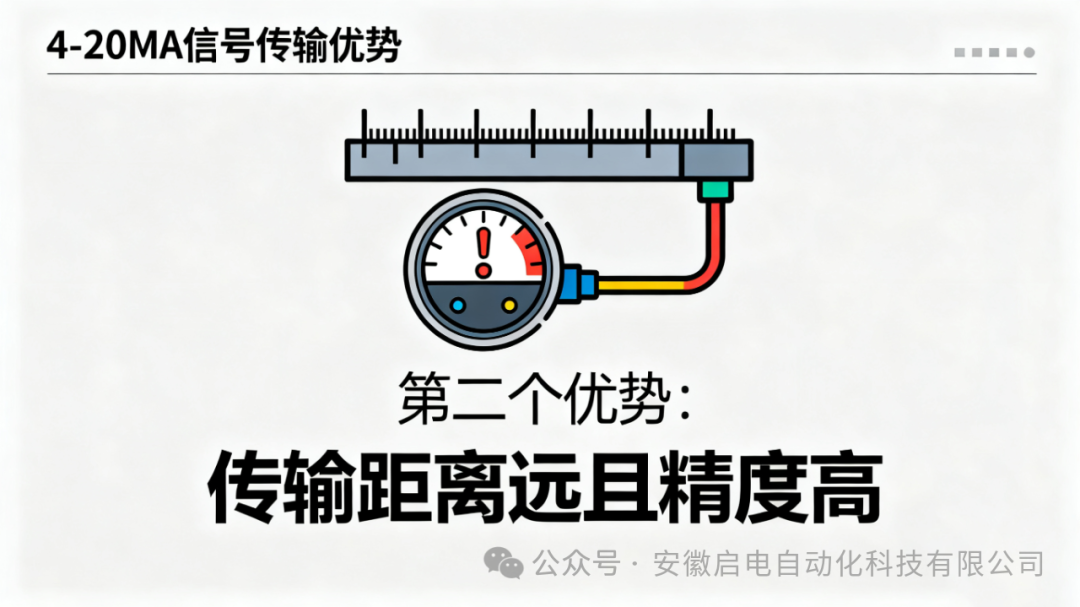
The internal resistance of the current source approaches infinity, and the wire resistance in series in the loop does not affect signal accuracy. On ordinary twisted pairs, 4-20mA signals can be transmitted over hundreds of meters or even further, with minimal signal attenuation. In contrast, voltage signals are affected by wire resistance, and the longer the transmission distance, the greater the voltage division error, leading to a significant decrease in accuracy.
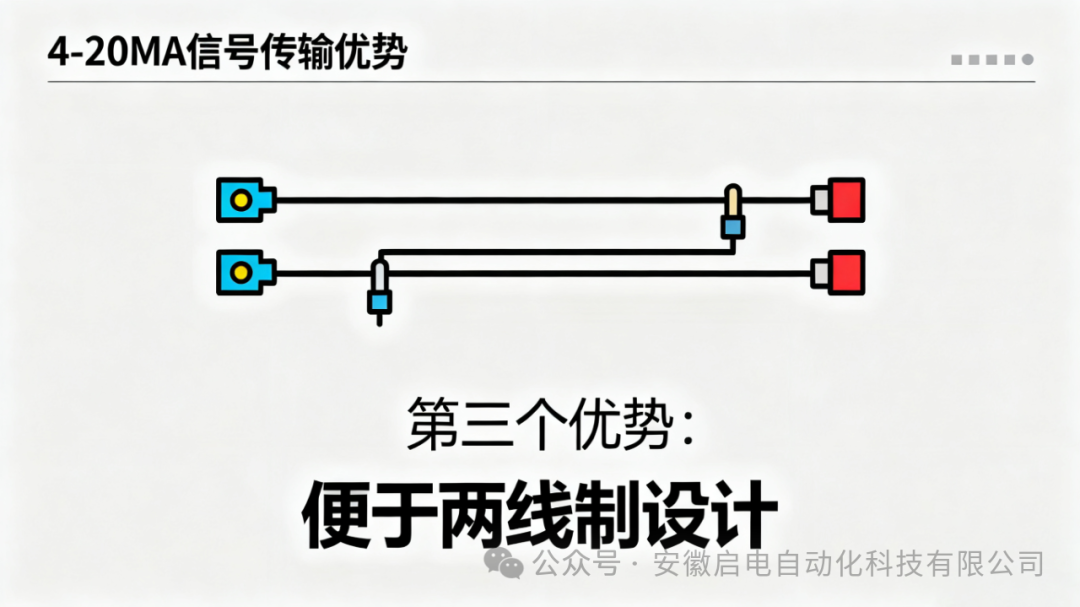
The 4-20mA signal supports two-wire transmission, meaning that the power supply and signal share two wires. The transmitter can operate within the 4mA to 20mA range, with 4mA serving as the static working current, providing power to the transmitter and acting as a “live zero point” to facilitate fault detection (for example, triggering an alarm when the loop current drops to 0). The two-wire system simplifies wiring, reduces costs, and is beneficial for safety and explosion-proof requirements.
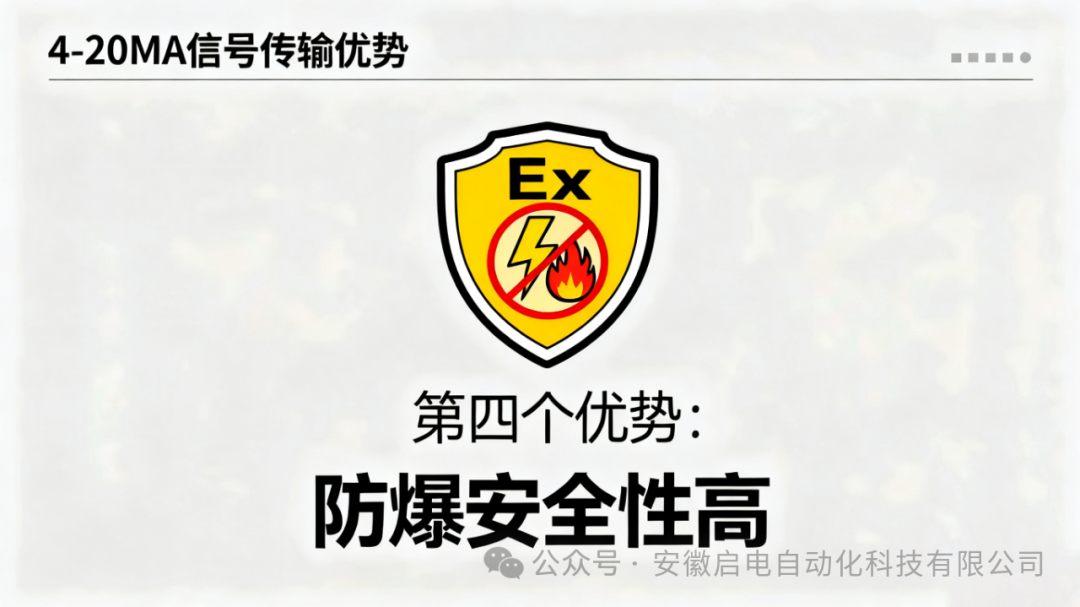
The spark energy generated by the on-off of 20mA current is insufficient to ignite flammable and explosive gases, meeting explosion-proof safety requirements. At the same time, the combination of a 24V DC power supply with a 4-20mA signal results in overall low energy, reducing the risk of explosion.
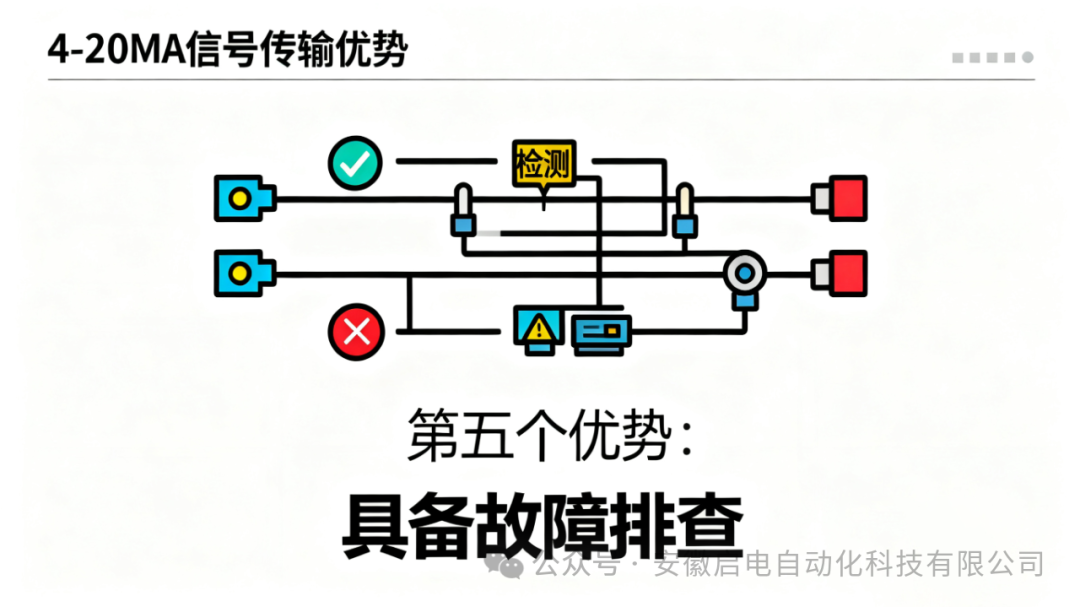
Using 4mA as the starting point, if there is a problem in the circuit and the current drops to 0, the fault can be instantly identified, facilitating timely troubleshooting.
Standardization and High Compatibility with Various Devices
4-20mA has become the “universal standard” in global industrial automation:
Almost all mainstream sensors (such as pressure sensors, temperature sensors, level sensors, flow sensors) support 4-20mA output;
Most control systems’ analog input modules default to support 4-20mA signals without the need for additional adaptation or conversion, offering high compatibility and reducing the difficulty of equipment selection and integration.
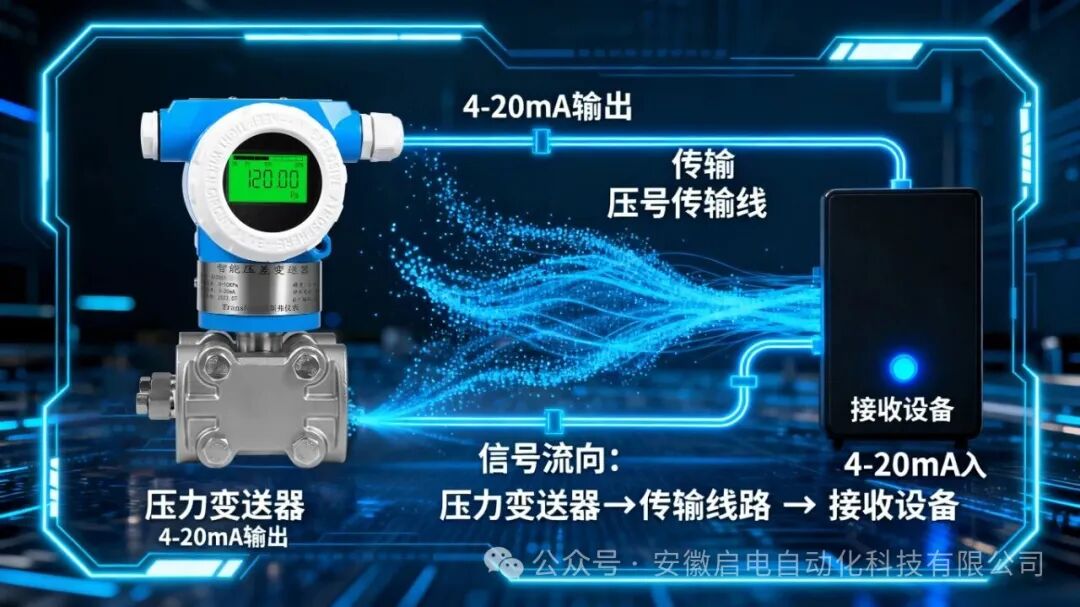
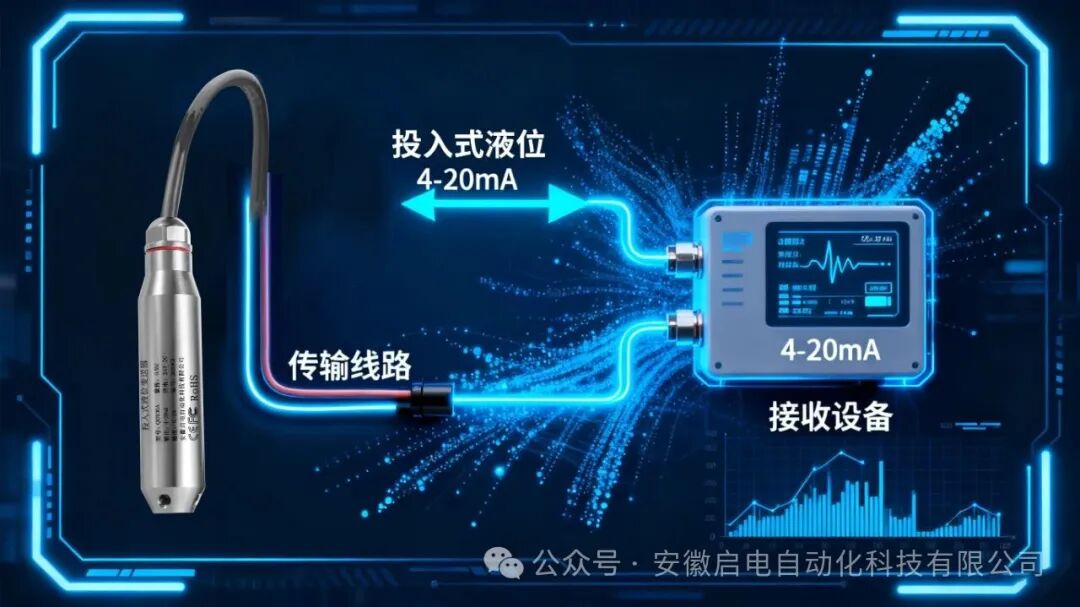
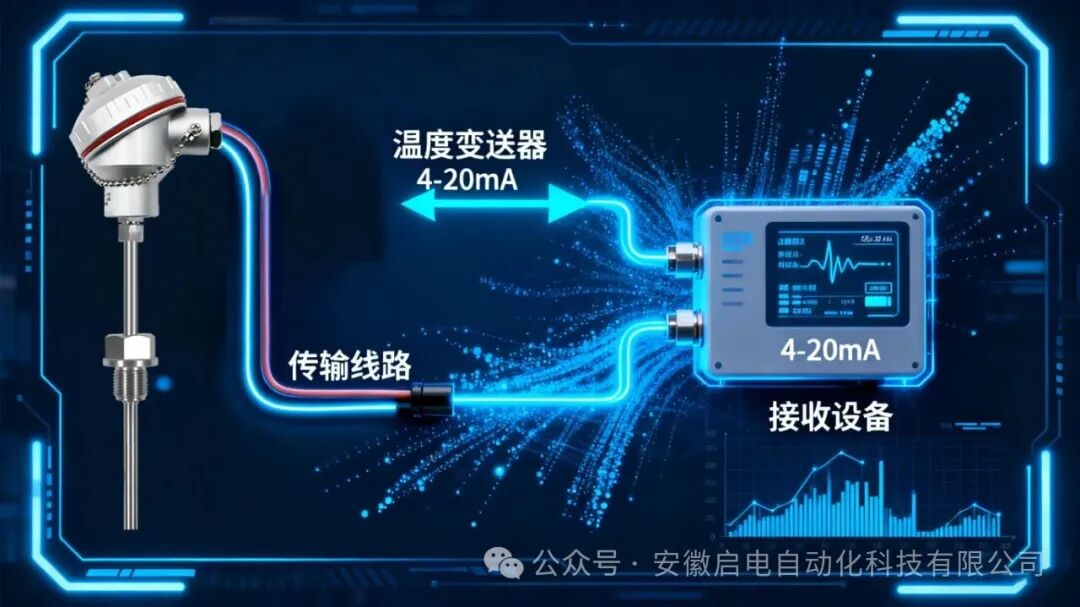
4-20mA is the “mainstream” in industrial sites.
The design of signal transmission at 4-20mA is not just a single advantage, but a comprehensive reflection of multiple advantages, effectively addressing the core pain points of industrial sensor signal transmission. Therefore, whether in heavy industries such as petrochemicals, electricity, metallurgy, or in light industries such as food and pharmaceuticals, as long as it involves signal transmission between “sensors and control systems”, 4-20mA is an excellent solution.
END
Website: http://www.qd-zdk.com
Phone: 400-127-7889
Address: No. 14, University Science and Technology Park, Yifeng Road, Xiangshan Industrial Park, Huaibei City, Anhui Province