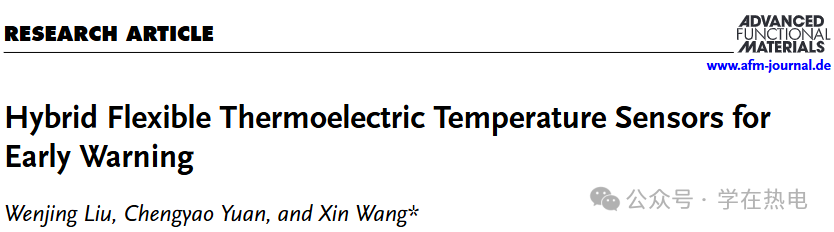
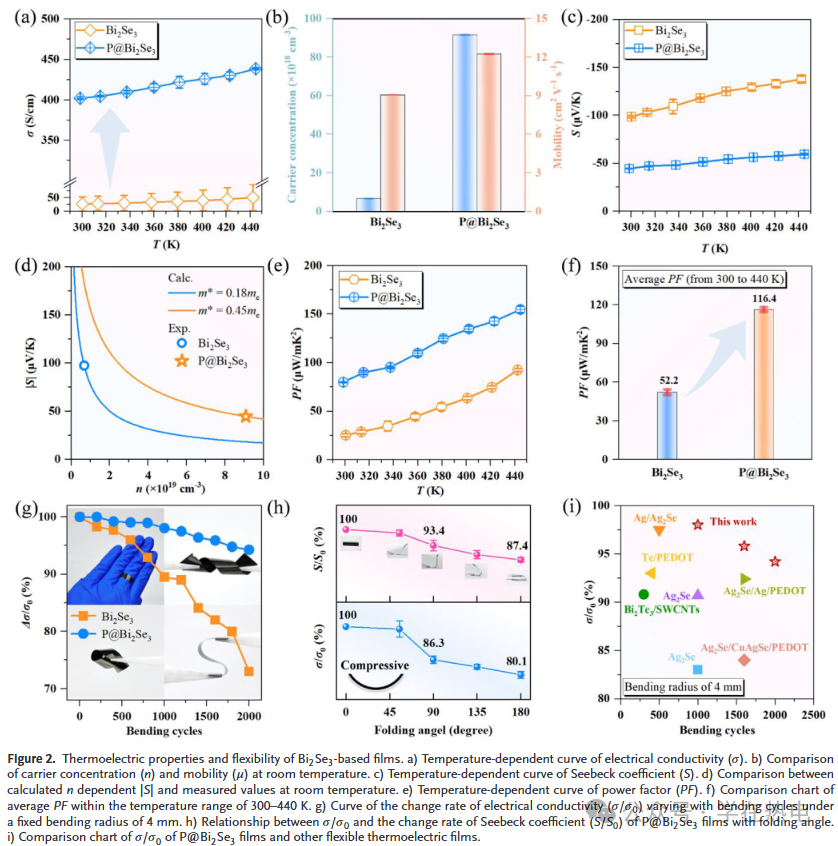
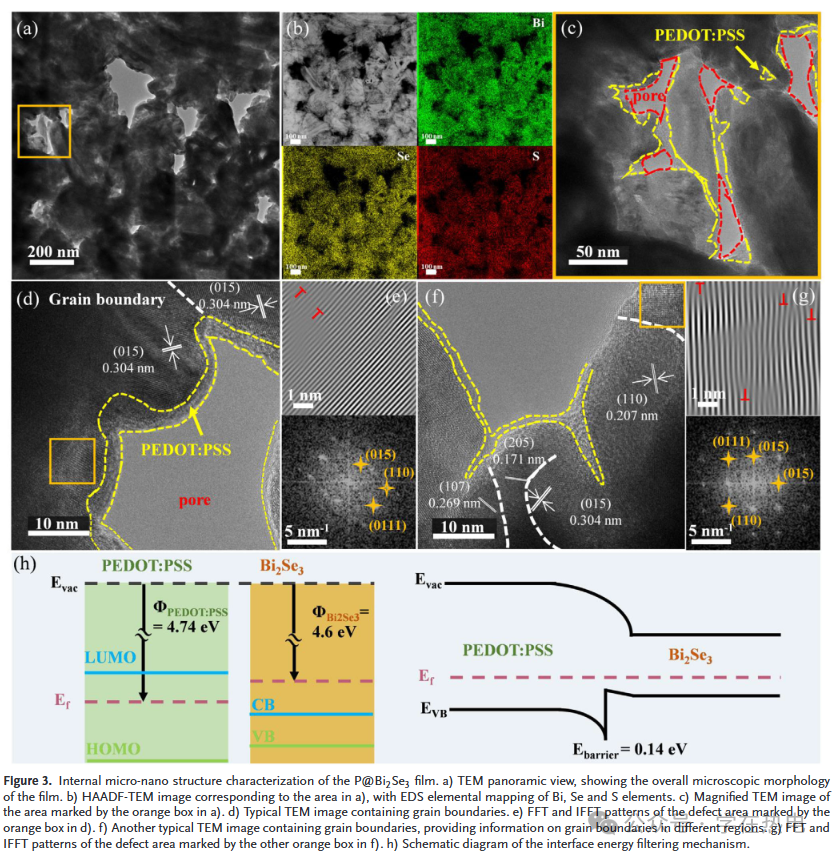
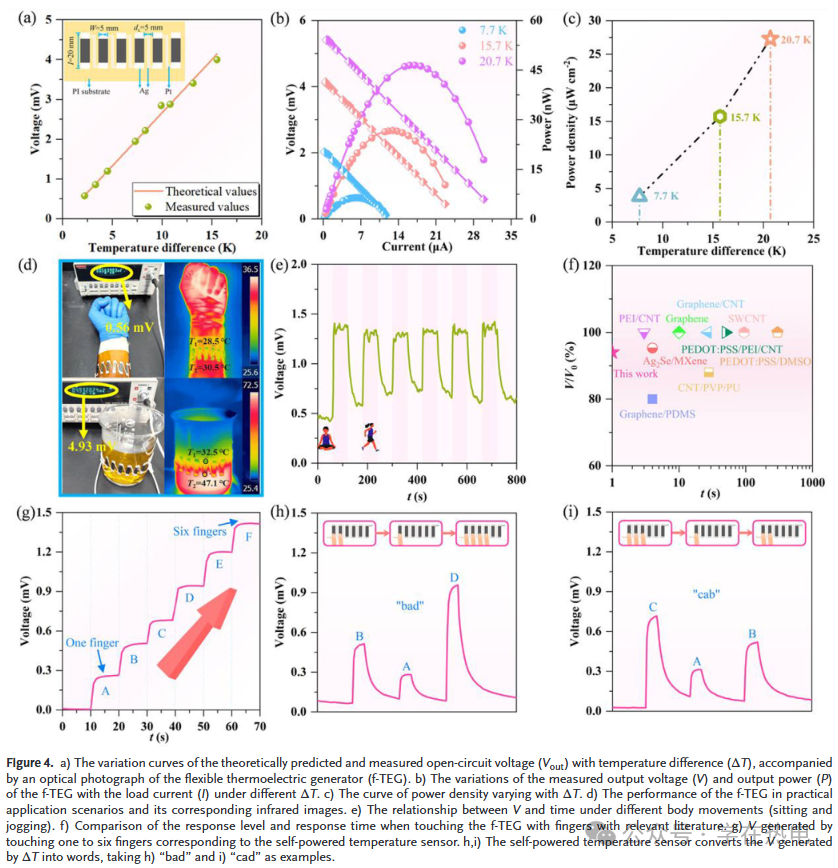
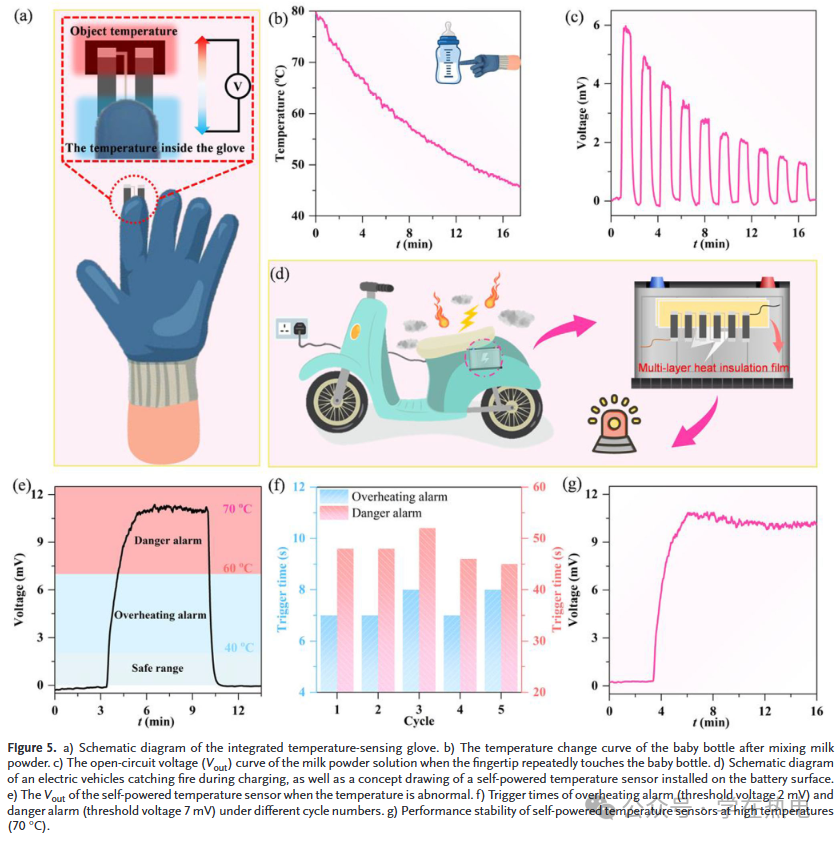
 Thermal energy is an indispensable form of energy in modern society, but its uncontrolled accumulation can easily lead to safety accidents, making intelligent temperature sensing and early warning technologies crucial. Among various temperature-sensitive materials, thermoelectric (TE) materials are considered ideal solutions due to their unique advantage of directly converting temperature differences into electrical signals without the need for an external power source. However, traditional all-inorganic thermoelectric materials (such as tellurium nanowire composites) often suffer from intrinsic brittleness, poor flexibility, and difficulty in conforming to the human body, while the high biotoxicity of certain materials also hinders their application in the wearable field. Therefore, developing thermoelectric materials that combine high performance, high flexibility, good stability, and biocompatibility has become a key challenge in advancing this technology towards practical applications.Based on the aforementioned core challenges, the research team at Songshan Lake Materials Laboratory selected n-type bismuth selenide (Bi₂Se₃) as the key material due to its abundant reserves, low toxicity, and tunable electronic properties. To address its intrinsic brittleness, the research employed an innovative in-situ synthesis technique, combining Bi₂Se₃ with the conductive polymer PEDOT:PSS to successfully prepare an inorganic/organic hybrid P@Bi₂Se₃ flexible thermoelectric film. This preparation method effectively avoids the dispersion issues that may arise from physical mixing of the two phases, enhancing interfacial bonding and laying the foundation for achieving synergistic effects. Compared to the slow response and poor stability of ionic gel materials, this type of electronic film material, with its high carrier mobility, provides the potential for rapid voltage response.The breakthrough progress achieved in this research is primarily reflected in the comprehensive enhancement of material performance. The final prepared P@Bi₂Se₃ composite film exhibits a power factor as high as 154.7 µW mK⁻² at 440K, reaching three times that of the original Bi₂Se₃ film, which is the highest value reported for flexible Bi₂Se₃/organic composite thermoelectric films. Its flexibility and stability are also outstanding, with only a 6% loss in conductivity after 2000 bending cycles, and a 29% improvement in stability compared to the original film. Temperature sensors assembled based on this film demonstrate a rapid response efficiency of 94% (within 1 second) and can accurately monitor abnormal heating. Additionally, this material shows potential applications in the field of electrochemical energy storage, with its assembled zinc-ion battery showing no capacity decay after 200 cycles. This research provides a feasible material solution for the development of next-generation self-powered, high-performance temperature sensors for medical assistance, battery safety intelligent monitoring, and wearable devices.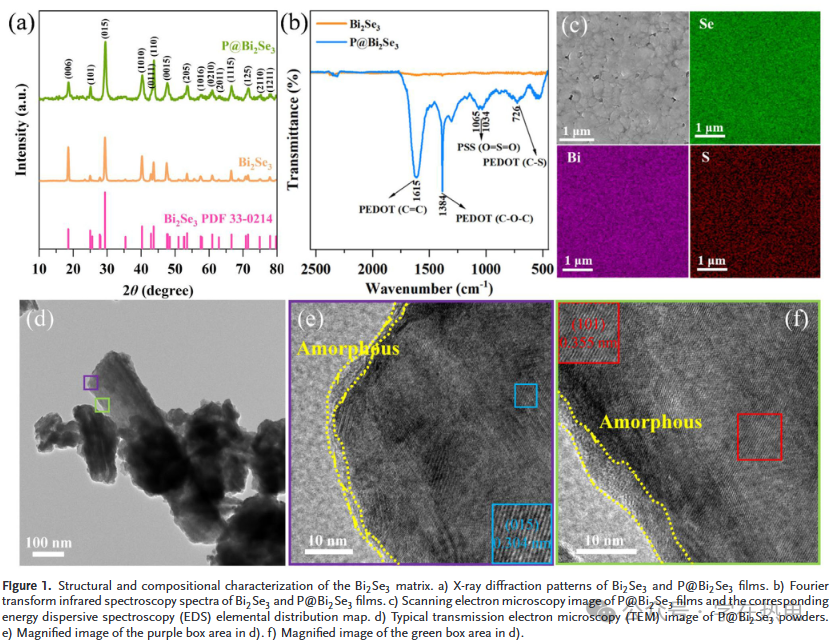
1
Reference Information
Liu W, Yuan C, Wang X. Hybrid Flexible Thermoelectric Temperature Sensors for Early Warning[J]. Advanced Functional Materials, 2025: e19209.
2
Reference Link
https://doi.org/10.1002/adfm.202519209
3
Contact Us
All literature information published by this public account comes from the official websites of various journals. The content of this article has been polished using AI; if there are any errors, please contact the backend. Thank you!
This public account freely promotes the latest research results for all authors and does not involve any charging behavior; authors are advised to discern!
This public account is dedicated to sharing the latest research results from editors and peers, while also providing free services for all scholars in the field of thermoelectric technology, including result sharing, recruitment information, etc., aiming to create a big family in thermoelectricity!
Contact Information: Email submission/WeChat submission
Email: [email protected]
WeChat ID:research_redian
Submission content reference already published articles.