Sensors are devices that can detect or perceive external physical, chemical, biological signals, and convert them into processable electrical signals or other forms of output. They serve as the core bridge connecting the physical world with electronic systems and are widely used in almost all technical fields, including industry, healthcare, consumer electronics, automotive, and environmental monitoring, making them the ‘electronic organs’ of modern information society.
1. Basic Structure and Working Principle of Sensors
1. Basic Structure
Most sensors consist of the following core components:
·Sensitive Element: The part that directly senses the measured signal (such as temperature, pressure, light intensity, etc.) and produces physical or chemical changes (for example, the metal wire of a thermocouple or the semiconductor material of a photoresistor).
·Transducer: The part that converts the output signal of the sensitive element into an electrical signal (for example, a strain gauge converts mechanical deformation into a change in resistance, and a piezoelectric crystal converts pressure into voltage).
·Signal Conditioning Circuit: This processes the converted electrical signal through amplification, filtering, calibration, etc., to meet the input requirements of subsequent circuits (such as microprocessors).
·Auxiliary Components: Such as power supply, housing, interfaces, etc., to ensure the stable operation of the sensor.
2. Typical Application Scenarios
The applications of sensors have penetrated all aspects of production and life:
Industrial Manufacturing: Pressure sensors detect equipment load on assembly lines, and temperature sensors monitor machine tool temperatures to ensure production safety.
Smart Homes: Temperature and humidity sensors automatically adjust air conditioning, light sensors control the opening and closing of curtains, and human infrared sensors trigger lights.
Automotive Electronics: Tire pressure sensors (TPMS) monitor tire pressure, millimeter-wave radar achieves automatic collision avoidance, and accelerometers trigger airbags.
Healthcare: Electrocardiogram sensors record heart electrical activity, blood oxygen sensors monitor blood oxygen levels, and blood glucose sensors assist in diabetes management.
Environmental Monitoring: Air quality sensors detect PM2.5, water quality sensors monitor wastewater indicators, and meteorological stations use wind speed sensors to collect data.
Consumer Electronics: Gyroscopes (for posture control) in smartphones, fingerprint sensors (for unlocking), and optical sensors (for imaging) in cameras.
3. Development Trends in Sensor Technology
With the advancement of technologies such as the Internet of Things (IoT) and Artificial Intelligence (AI), sensors are developing in the following directions:
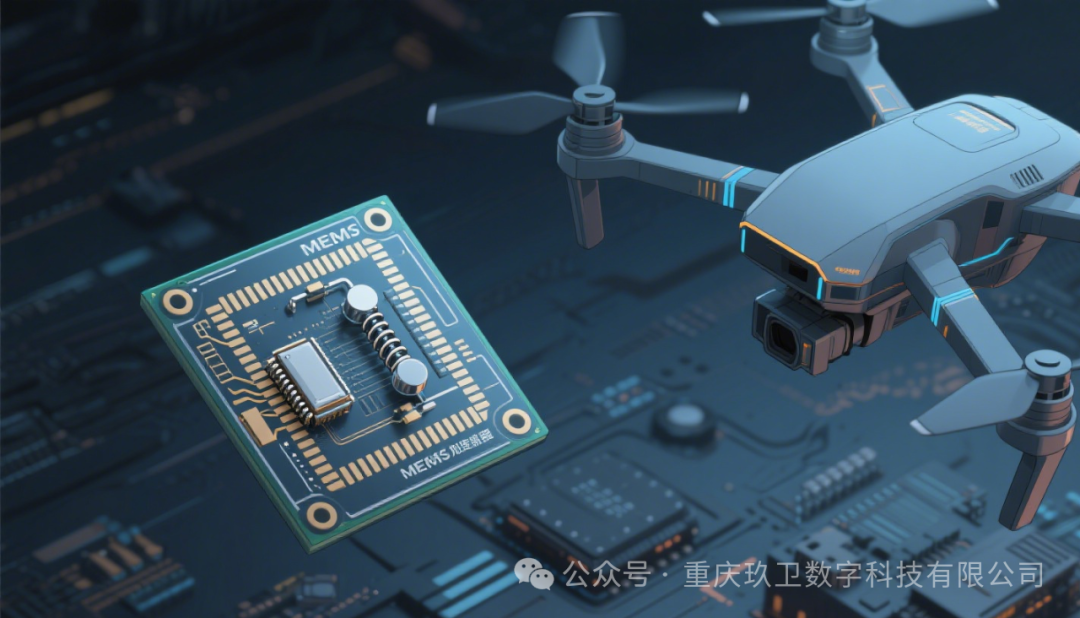
Miniaturization and Integration: Achieved through MEMS (Micro-Electro-Mechanical Systems) technology, such as miniature accelerometers in smartphones or ‘smart sensors’ that integrate multiple detection functions.
Intelligence and Networking: Built-in processors and communication modules allow for self-calibration, data preprocessing, and network transmission (such as IoT node sensors).
High Precision and Low Power Consumption: Meeting the high precision requirements of high-end fields (such as aerospace and healthcare) while reducing power consumption to extend the battery life of powered devices.
Multi-parameter Fusion: A single sensor can simultaneously detect multiple signals (such as temperature, humidity, and VOCs in environmental sensors), enhancing scene adaptability.
Flexibility and Wearability: Made from flexible materials, they can conform to the human body or curved objects, such as heart rate sensors in smart bands and flexible pressure sensors.
Sensors are fundamental components of modern technology, playing an indispensable role from everyday devices like smartphones and home appliances to industrial automation, smart cities, and space exploration. With technological advancements, sensors will become smarter and more efficient in helping humans perceive and understand the world, driving innovation across various industries.