With the continuous development of Internet of Things (IoT) technology, smart offices are gradually becoming an important direction for modern enterprises to enhance efficiency, optimize resources, and improve employee experience. Among various wireless communication technologies, LoRaWAN stands out as a highly potential connectivity solution in smart office scenarios due to its low power consumption, wide coverage, high capacity, and flexible deployment.
This article will delve into the typical application scenarios and technical advantages of LoRaWAN technology in smart offices, and compare it with other mainstream wireless communication technologies, helping readers better understand its applicability and value.
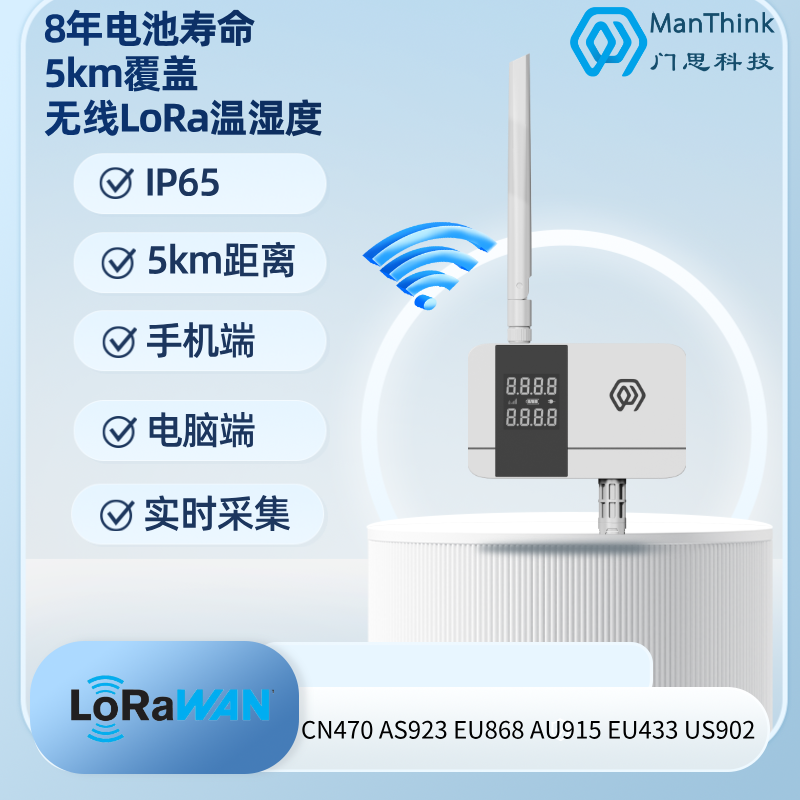
1. Introduction to LoRaWAN Technology
LoRaWAN (Long Range Wide Area Network) is a low-power wide-area network (LPWAN) protocol based on LoRa modulation technology, designed specifically for IoT devices. It is suitable for scenarios requiring long-distance communication, low power operation, and large-scale connectivity, and is widely used in smart cities, industrial automation, agricultural monitoring, smart buildings, and other fields.
The LoRaWAN protocol has the following core features:
- Low Power Consumption: Devices can operate for several years or even over a decade, making it suitable for battery-powered scenarios.
- Long-Distance Communication: Coverage of 3-5 kilometers in urban environments, and up to 15 kilometers in suburban areas.
- High Capacity: A single gateway can support thousands of terminal devices.
- Open Standards: Promoted by the LoRa Alliance, supporting interoperability among multiple vendors.
- Flexible Deployment: Supports various deployment methods including public cloud, private cloud, and edge computing.
2. Typical Application Scenarios of LoRaWAN in Smart Offices
1. Environmental Quality Monitoring
The demand for real-time monitoring of parameters such as air quality, temperature and humidity, and light intensity in modern office environments is increasing. LoRaWAN sensors can be deployed in offices, meeting rooms, corridors, and other areas to continuously collect environmental data and upload it to the cloud or local servers via gateways.
This data can be used for:
- Automatically adjusting air conditioning and fresh air systems to enhance employee comfort;
- Analyzing trends in air quality changes to prevent health risks;
- Implementing green office practices and optimizing energy usage.
2. Energy Management
One of the core goals of smart offices is to reduce energy consumption and emissions. LoRaWAN technology can be integrated with smart electricity meters, water meters, gas meters, and other devices to achieve remote meter reading, energy consumption analysis, and anomaly detection.
For example:
- Collecting data from RS-485 or MBus interface devices through LoRaWAN DTU (Data Transmission Unit);
- Real-time monitoring of peak electricity usage to optimize power scheduling;
- Detecting anomalies such as water leaks or gas leaks, providing timely alerts to prevent resource wastage.
3. Space and Asset Management
Efficient utilization of office space and real-time tracking of assets are important indicators of operational efficiency for enterprises. LoRaWAN supports the deployment of occupancy sensors, meeting room reservation systems, and asset tracking tags.
Application scenarios include:
- Dynamic display of meeting room usage status;
- Automatically identifying available workstations to optimize space allocation;
- Tracking the location of valuable equipment to prevent asset loss.
4. Security and Emergency Response
In office environments, safety is always a top priority. LoRaWAN can be used to deploy smoke sensors, door magnetic sensors, emergency buttons, and other security devices to enable rapid response and remote alarms.
Advantages include:
- No wiring required, easy installation;
- Strong signal penetration, suitable for multi-story buildings;
- Supports low-power long-term operation, reducing maintenance frequency.
5. Predictive Maintenance of Facilities
By installing LoRaWAN sensors on critical facilities (such as air conditioning, water pumps, elevators), the operational status of equipment can be monitored in real-time, including parameters like temperature, vibration, and current.
This data can be used for:
- Building health models for equipment;
- Providing early warnings for potential failures;
- Reducing unplanned downtime and improving operational efficiency.
3. Core Advantages of LoRaWAN Technology
1. Ultra-Low Power Consumption, Suitable for Long-Term Operation
LoRaWAN devices typically use battery power, and their low power characteristics allow them to operate stably for years without frequent battery replacements. This is particularly important for deployment in hard-to-maintain areas such as ceilings, walls, and underground garages.
2. Strong Signal Penetration Capability
LoRaWAN uses spread spectrum modulation technology, which provides good anti-interference capability and signal penetration. Even in reinforced concrete office buildings, stable communication can be achieved, reducing the number of gateways required and thus lowering overall costs.
3. High Capacity and Flexible Networking
A single LoRaWAN gateway can connect thousands of terminal devices simultaneously, making it very suitable for sensor-dense office environments. Its star network structure also ensures system stability and scalability, facilitating future expansion and functional upgrades.
4. Flexible Deployment, Supporting Privatization and Edge Computing
LoRaWAN supports various deployment methods, including public cloud, private cloud, and edge computing nodes. Enterprises can choose localized data processing according to their needs, enhancing data security and response speed.
5. Built-in Security Mechanisms to Ensure Data Transmission
The LoRaWAN protocol was designed with security in mind, supporting end-to-end encryption and device identity authentication to ensure the security and integrity of office data during transmission.
4. Comparison of LoRaWAN with Other Wireless Technologies
In smart offices, common wireless communication technologies include LoRaWAN, NB-IoT, Zigbee, Wi-Fi, and Bluetooth. Each has its advantages and disadvantages, suitable for different scenarios.
LoRaWAN vs. NB-IoT
|
Feature |
LoRaWAN |
NB-IoT |
|
Transmission Distance |
Long (3-5 km in urban areas, further in suburban areas) |
Medium (depends on cellular network) |
|
Power Consumption |
Extremely low, suitable for battery power |
Low, but higher than LoRaWAN |
|
Deployment Cost |
Self-built gateways, higher initial investment |
Depends on operator network, billed by data usage |
|
Applicable Scenarios |
Wide area, low-frequency communication |
Urban-level, high-density deployment |
LoRaWAN is more suitable for scenarios where enterprises build their own networks and localize data processing, while NB-IoT is suitable for scenarios requiring wide coverage without privatized deployment.
LoRaWAN vs. Zigbee
|
Feature |
LoRaWAN |
Zigbee |
|
Communication Distance |
Long distance |
Short distance (10-100 meters) |
|
Power Consumption |
Extremely low |
Low |
|
Network Topology |
Star structure |
Mesh structure |
|
Applicable Scenarios |
Wide area, low-frequency communication |
Local area, high real-time communication |
Zigbee is suitable for scenarios requiring high real-time performance and complex networking, such as smart homes and building automation, while LoRaWAN is more suitable for long-distance, low-frequency, large-scale deployments in office environments.
5. Deployment Recommendations for LoRaWAN in Smart Offices
When deploying a LoRaWAN network, enterprises should choose suitable devices and architectures based on their needs:
- Small Office Scenarios: A single indoor gateway (such as the GDI51 series) can be used with several sensors for quick deployment;
- Large Campuses or Corporate Headquarters: It is recommended to use outdoor gateways (such as the GDO51 series) combined with edge computing nodes to enhance data processing efficiency;
- Existing System Integration: LoRaWAN DTU can seamlessly connect with traditional instruments and control systems, achieving intelligent upgrades without software development;
- Data Platform Integration: LoRaWAN network servers (NS) can integrate with systems like BMS, Home Assistant, and ThingsBoard for unified management.
6. Future Outlook: Deep Integration of LoRaWAN and Smart Offices
With the advancement of the LoRaWAN 2.0 standard, improvements in location accuracy, data rate, and security are expected. In the future, LoRaWAN is anticipated to deepen its applications in the following areas:
- Smart Lighting Systems: Automatically adjusting light brightness based on personnel activity;
- Smart Access Control Systems: Achieving low-power, long-distance access control;
- Smart Meeting Systems: Real-time feedback on meeting room status to enhance meeting efficiency;
- AI + LoRaWAN: Combining artificial intelligence for data analysis and prediction.
Conclusion
LoRaWAN technology, with its low power consumption, wide coverage, high capacity, and flexible deployment, is becoming one of the important communication technologies in the field of smart offices. It effectively supports core scenarios such as environmental monitoring, energy management, space optimization, security alarms, and facility maintenance, while seamlessly integrating with existing systems to assist enterprises in achieving digital transformation.
As the LoRaWAN ecosystem continues to improve, its applications in office scenarios will become more widespread and in-depth, bringing enterprises higher efficiency, lower costs, and better user experiences.
Thinklink: An Open LoRaWAN Application Platform
- Cloud Version: Supports global LoRaWAN standards, free registration, and free support for 1000 device connectionshttps://thinklink.manthink.cn
- Edge Version: Integrates LoRaWAN NS, BACnet, Home Assistant, and ThingsBoard, supporting low-cost independent deployment
For more product information, please visit the Manthink Technology official website:https://www.manthink.cn
Contact email: [email protected]