LoRaWAN is a low-power wide-area network technology based on LoRa (Long Range) modulation technology, designed specifically for Internet of Things (IoT) applications to achieve long-distance communication and high energy efficiency.LoRaWAN network architecture and its operating modes are key to realizing these features. This article will provide a detailed analysis of the LoRaWAN network architecture and its three main operating modes.
The LoRaWAN network mainly consists of four parts: end devices (End Device), gateways (Gateway), network servers (Network Server), and application servers (Application Server). Each part performs different functions and roles, collectively constructing the entire LoRaWAN network.
End Devices (End Device):
End devices are sensor nodes or actuators in the LoRaWAN network, commonly referred to as nodes (Node). These nodes can be various types of sensors or actuators, such as environmental monitoring sensors, smart metering devices, etc.
End devices communicate with gateways using LoRa wireless technology, responsible for collecting data and sending it to the gateway.
Gateways (Gateway):
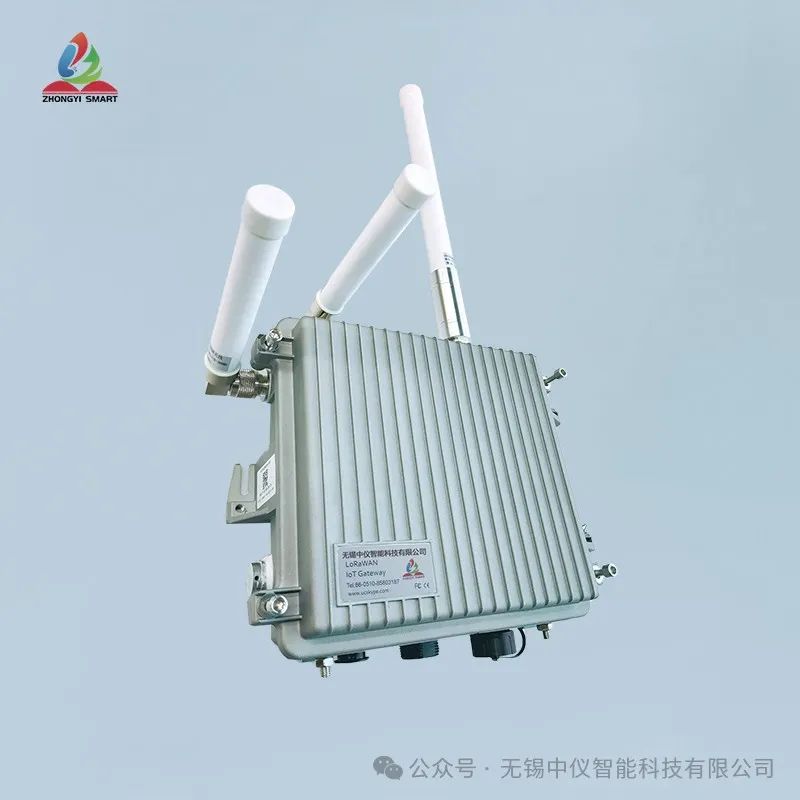
Gateways act as a bridge connecting end devices and network servers. They are responsible for receiving data sent by end devices and forwarding it to the network server.
Gateways are typically installed at high locations to provide optimal coverage, with each gateway capable of covering several kilometers, enabling LoRaWAN to achieve wide-area coverage.
Network Servers (Network Server):
The network server is responsible for managing all end devices and gateways in the LoRaWAN network. It processes the received data and forwards it to application servers or other network servers as needed.
The network server also handles functions such as end device authentication, encryption and decryption, data deduplication, and network management.
The Three Operating Modes of LoRaWAN
LoRaWAN defines three device classes to accommodate different application needs:
Class A: This is the most basic device class, suitable for most battery-powered sensors. In Class A mode, end devices listen for downlink messages from the network server for a short time after sending uplink messages. This mode is the most energy-efficient, but downlink communication has a delay since the device only listens after sending an uplink message.
Class B: Class B devices add scheduled receive slots on top of Class A. This means the network can send downlink messages to the device more frequently, but at the cost of increased energy consumption. Class B devices are suitable for applications that require more frequent downlink communication.
Class C: In Class C mode, end devices maintain a longer receive window, allowing almost immediate response to downlink messages. This mode offers the lowest downlink latency, but correspondingly, the energy consumption is the highest. Class C is suitable for applications that require frequent bidirectional communication.
LoRaWAN, as an efficient low-power wide-area network technology, provides reliable connectivity solutions for IoT applications. With its flexible operating modes and complete network architecture, LoRaWAN can adapt to various application scenarios, from simple data collection to complex real-time control. In the future, as the IoT develops, LoRaWAN will continue to play its role in connecting billions of devices, driving the development of smart cities, industrial automation, and agricultural intelligence.
(Domestic)
Mobile: 18661076788 (same number on WeChat)
Phone: 0510-88717081
QQ: 1687168855
Email: [email protected]
(International)
Mobile: +8618661076788 (same number on WeChat)
Phone: +86510-88717081
Email: [email protected]
For more information, please consult: www.zhongyismart.com

Long press fingerprint recognition two-dimensionalcode to follow the official account and share to Moments