This article is sourced from: IoT Media
Author: Silver Craftsman

The LoRa technology, launched a few years ago, excited the entire IoT industry due to its long transmission distance and much lower power consumption compared to other wireless communication technologies. Many believe that the emergence of LoRa and other LPWAN technologies can fill the gaps in the communication technologies of the IoT, providing connectivity for billions of IoT devices and making the vision of an interconnected world possible. At the “LoRa Technology and Application Summit Forum” held on April 25 during the 2018 China International IoT Expo, Sun Weiren, Vice President of Hangzhou Luowang Information Technology Co., Ltd., shared insights on the value and market prospects of LoRaWAN technology.

Sun Weiren, Vice President of Hangzhou Luowang Information Technology Co., Ltd.
LoRa and LoRaWAN
During the forum, Mr. Sun stated that many people confuse LoRa with LoRaWAN; in fact, they are two different concepts.
LoRa is a concept for the physical layer of radio network, a unique modulation format for ultra-long-distance wireless transmission. Many traditional wireless systems use frequency shift keying (FSK) modulation as the physical layer because it is a very effective way to achieve low power consumption. LoRa is based on chirp spread spectrum modulation, which maintains the same low power characteristics as FSK modulation while significantly increasing communication distance.
LoRaWAN, on the other hand, is a standard protocol that allows all LoRa products to interconnect through the standard LoRaWAN protocol. LoRaWAN defines the communication protocol and system architecture for long-distance communication links using the LoRa physical layer, which has a decisive impact on the battery life of nodes, network capacity, quality of service, encryption, and the diversity of application services.
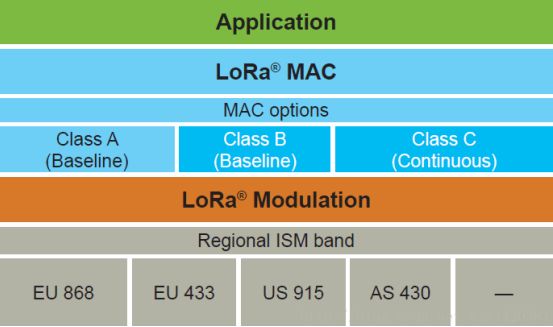
LoRaWAN Architecture Diagram
Mr. Sun shared at the forum that in 2017, the domestic shipment of LoRa chips exceeded 10 million, but only a small fraction adopted the standard LoRaWAN protocol. Most applications used LoRa point-to-point communication due to the years of difference between the emergence of LoRa modulation technology and the formation of the LoRaWAN protocol, leading most application enterprises to already be using LoRa small wireless technology. However, as the IoT applications gradually grow and the number of connections increases, LoRaWAN will be needed to provide large-scale network coverage capabilities for mass commercial use, which is an unstoppable trend.
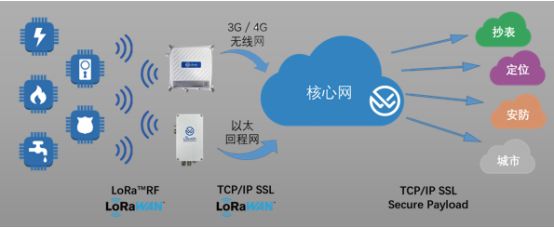
Luowang Information LoRaWAN Product Topology
The Value of LoRaWAN
Mr. Sun analyzed the following advantages of LoRaWAN during the forum:
Terminal Device Compatibility, which means different manufacturers and applications can uniformly access the standard LoRaWAN protocol. Additionally, this can shorten cycles, reduce costs, and enable rapid implementation; most existing LoRa nodes only need firmware upgrades to be compatible with the standard LoRaWAN.
Handling High-Capacity Scenarios, LoRaWAN supports multi-channel access and frequency switching, easily connecting thousands of nodes; it adapts its rate (ADR) to achieve optimal rate and transmission power; furthermore, LoRaWAN has a standardized communication process that can reduce communication power consumption.
Communication Security, LoRaWAN is the first to propose dual encryption for IoT and supports source authentication, with a MAC architecture ensuring data integrity.
Feature Expansion and Upgrades, LoRaWAN is currently evolving rapidly, with the latest version released. LoRaWAN nodes can continuously expand and upgrade through firmware updates; adding features like positioning, roaming, broadcasting, and multicasting; benefiting continuously from a public technology platform.
LoRaWAN, Undervalued, What Are Its Future Applications?
As a standard communication protocol, LoRaWAN can provide large-scale network coverage compared to LoRa modulation technology, allowing applications to save costs and be implemented quickly. Compared to cellular communication technologies like NB-IoT, it can flexibly cover remote environments, ensuring data privacy without the pressure of traffic costs. It is evident that the current value of LoRaWAN is greatly underestimated, and in the future, it can play a more important role in the application scenarios of IoT.
Currently, LoRaWAN has achieved city-level coverage in certain regions of the country. In these covered cities, various application enterprises only need to use standard LoRaWAN module products to achieve LoRaWAN network connections, which is a significant boon for various smart city applications, such as underground parking, water meters, gas meters, and underground pipe corridors, where users are fragmented, thus utilizing LoRaWAN networks can save substantial costs.
As LoRaWAN technology matures, more and more enterprises are exploring its technology and applications, believing that LoRaWAN will further promote the prosperity of the IoT industry.
More Recommendations
-
Entrepreneurs Chasing Trends: “R&D” Chips Solely Based on PPT
-
A Table to Understand the Differences Between LTE and 5G NR
-
The “IoT CEO Thousand-Person Conference” is Finally Open for Free Applications, Aiming to Connect 1,000 IoT Industry CEOs
-
“IoT + Platform Ecosystem” Roundtable Q&A | Huawei IoT Platform, Microsoft China, Alibaba Cloud, Rihai IoT, China Telecom
-
IoT + Cold Chain Logistics Development New Momentum