This article is compiled based on reports from Huicong Machinery Network (http://www.machine.hc360.com) and others. Please “read the original text” for more details.
Many applications have adopted chips using LoRa technology but have not utilized the LoRaWAN network protocol. Some of this is due to the low number of application points and small scale, making the cost of using LoRaWAN networks high. Others find the technical threshold of LoRaWAN too high to grasp in the short term, thus settling for alternatives. However, as the Internet of Things continues to expand and applications become more widespread, the use of LoRaWAN will become an inevitable trend.
LoRa is a physical layer transmission technology characterized by long range and low power consumption. Its data rate is relatively low. The corresponding product for LoRa is the transceiver chip, such as Semtech’s SX1278. Using this technology and product means inputting or reading your business bits, while all upper-layer protocols and services are defined by yourself. 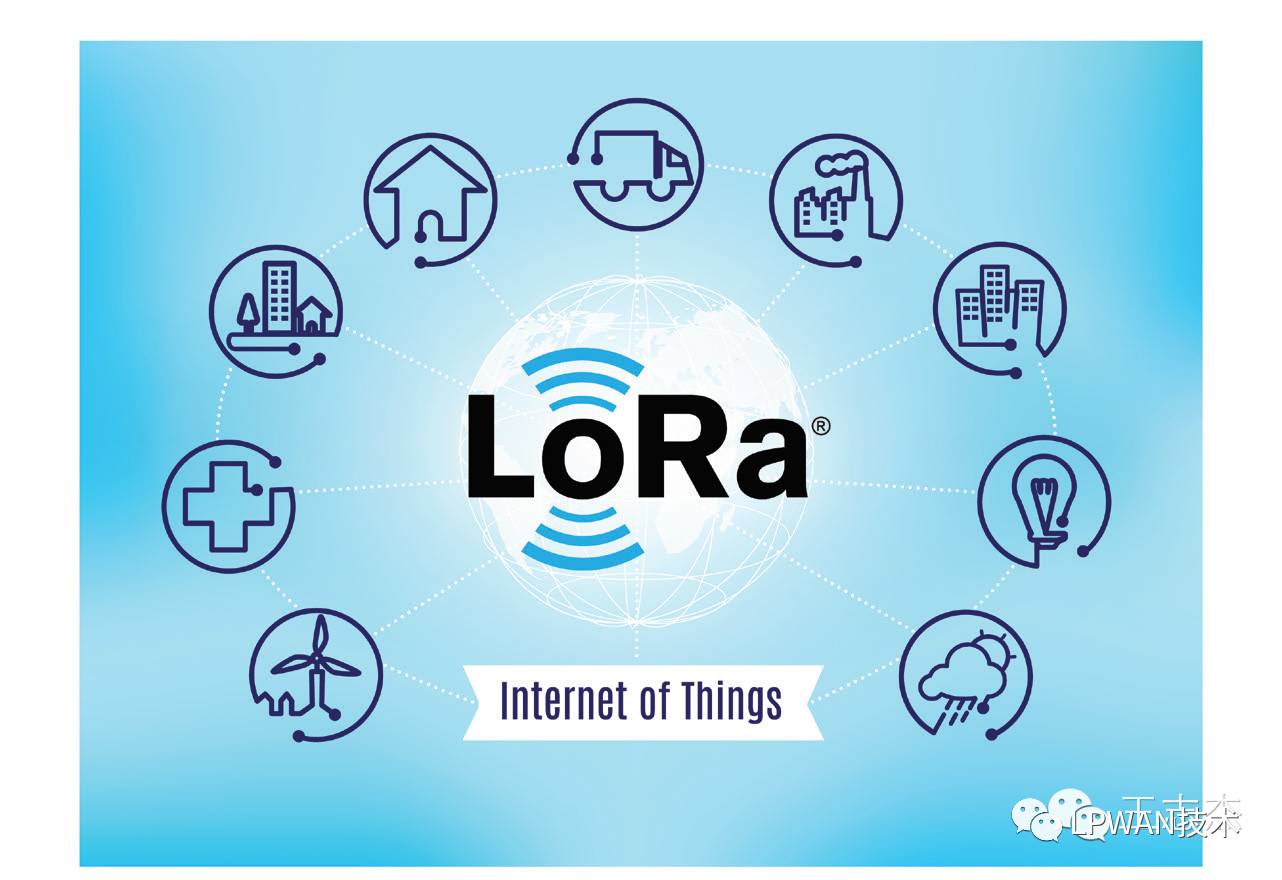
LoRaWAN is a set of protocol standards based on the LoRa physical layer transmission technology, primarily focusing on the MAC layer. With this standard, LoRaWAN has transformed into a network technology. The products corresponding to this technology include LoRaWAN nodes, LoRaWAN gateways, and the LoRaWAN protocol and data cloud platform. When using LoRaWAN network products, there are two user interfaces: one is the data interface between the sensor and the LoRaWAN node, where sensor data is transmitted to the network; the other is the data interface between the LoRaWAN protocol and data cloud platform and the user’s application, which transmits network data to the application. 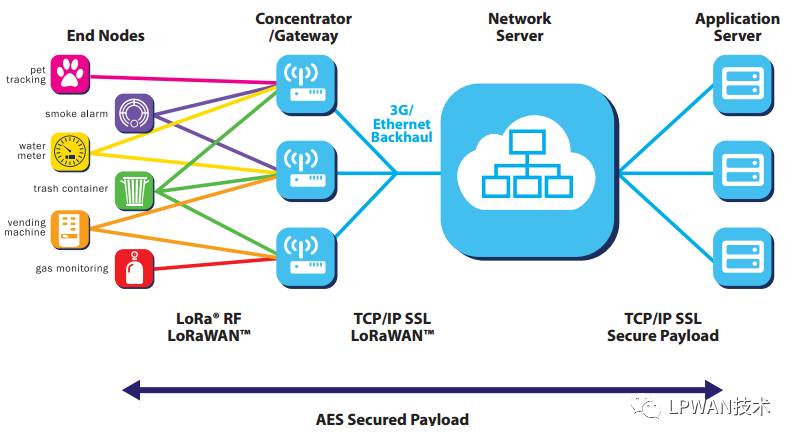
LoRaWAN provides features such as multi-channel access, frequency hopping, adaptive data rates, channel management, scheduled transmission/reception, node access authentication, data encryption, and roaming. In addition to maintaining the advantages of long transmission distances and low power consumption at the physical layer, it has the following advantages compared to the transmission method that only uses the LoRa physical layer:
1. Good Compatibility. Different sensor nodes from various manufacturers can connect to the same LoRaWAN network, and the interfaces at the LoRaWAN protocol and data cloud platform are unified. For application developers, there is no need to customize all sensors, shortening the R&D cycle and reducing development costs, allowing for rapid delivery.
2. Large Network Capacity. Through multi-channel access, frequency hopping, and adaptive rates, the LoRaWAN network has a larger data capacity compared to point-to-point or point-to-multipoint applications based on the LoRa physical layer, allowing for more connected nodes and strong scalability. This is beneficial for application developers to create larger scale applications and continuously upgrade them.
3. Strong Security. The LoRaWAN network is designed with node access authentication, data encryption, and other security mechanisms. These mechanisms have been reviewed by industry experts and validated through various applications by technology companies worldwide, offering much higher security than temporary protocols developed by application developers. This ensures ongoing security for applications.
4. Easy to Expand and Upgrade. With the evolution of the LoRaWAN network standard, features like positioning, roaming, broadcasting, and multicasting can be continuously added. This is akin to benefiting continuously from a public technology platform.