Recently, I have been organizing FPGA devices, so I would like to share the models of different Xilinx series chips and the corresponding application directions for each series.
Spartan Series: Positioned for low-cost, power-sensitive applications, suitable for mass production in consumer electronics and industrial applications. It has limited logic resources but I/O is abundant, with no high-speed transceivers. Typical applications include embedded control, sensor interfaces, and simple signal processing.
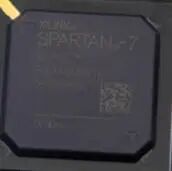
Spartan2 Series: Uses 0.18 process technology, achieving a density of 5292 logic units, such as the XC2S series, with a maximum of 200,000 system gates, capable of running an 8 bit PicoBlaze soft core.
Spartan2E Series: Based on the VirexE architecture, using 0.15 process technology, achieving a density of 15552 logic units, such as the XC2S600E, with a maximum gate count of 600,000, and up to 4 delay-locked loops.
Spartan3 Series: Utilizes 90nm technology, 8 metal layers, with system gate counts exceeding 5 million, such as the XC3S50 and XC3S400, embedding hard multipliers and digital clock management modules.
Spartan6 Series: Manufactured using low-power 45 nm, 9-layer metal wiring dual-oxide process technology, such as XC6SLX16 and XC6SLX9, containing up to 150,000 logic units, with integrated PCI Express modules.
Spartan7 Series: Utilizes 28 nm HPL mature process, containing 6K to 102K logic units, such as the XC7S series, equipped with enhanced DSP modules and BRAM, with BRAM capacity up to 4.2Mb.
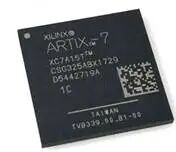
Artix Series: Focuses on balancing cost and performance, suitable for mid-range applications requiring certain high-speed communication capabilities. This series supports 6.6Gbps or higher rate SerDes, includes DSP48 slices, with a moderate number of logic units. It can be used in video processing (such as HDMI interfaces), industrial automation, communication protocol bridging, etc.
Xilinx Artix Series mainly includes Artix7 and Artix UltraScale + sub-series. Common Artix7 models include XC7A15T, XC7A100T, XC7A200T , etc.
Kintex Series: Targeted at mid-to-high-end applications, focusing on balancing performance and cost, suitable for communication, signal processing, and compute-intensive tasks. It features high-performance transceivers, DSP48E2 slices, with moderate to high logic capacity, supporting DDR4, LPDDR4 memory. Commonly used in 5G base stations, radar signal processing, machine vision, etc.
Kintex7 and Kintex UltraScale/UltraScale+ sub-series, with common models:
XC7K70T: Approximately 70,000 logic units, suitable for scenarios where logic resource demand is not particularly high, while balancing cost and performance, such as signal processing modules in some small communication devices.
XC7K160T: Has approximately 162,240 logic units, can be used for medium-scale logic operations and signal processing, such as the data processing part of industrial cameras.
XC7K325T: Contains 326,080 logic units, commonly used in scenarios requiring certain logic resources and DSP performance, such as 4K video processing, high-speed data acquisition cards, etc.
XC7K410T: Approximately 406,720 logic units, can meet more complex computation and processing needs, such as high-end communication base station signal processing modules.
XC7K420T: Commonly applied in high-performance computing scenarios, such as high-performance FPGA algorithm acceleration cards based on PCI Express bus architecture, capable of processing large amounts of data calculations.
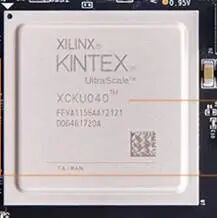
Kintex UltraScale Series:
XCKU040: Suitable for applications with high performance requirements while needing certain logic resources, can be used for data center network acceleration, etc.
XCKU060: Such as XCKU0602FFVA1156I, can be used for high-performance PCIe carrier boards, supporting high-speed data transmission and processing.
Kintex UltraScale+ Series:
XCKU3P: Can be applied in wireless MIMO technology, PON access, etc., meeting the requirements for high-speed data processing and communication interfaces in related scenarios.
XCKU5P: Such as XCKU5P2FFVB676I, featuring GTY 28Gb/s x16 transceivers, can be used for 100G Ethernet and other high-speed network applications.
XCKU15P: Commonly used in scenarios with high performance and resource requirements, such as high-end video image processing, semiconductor testing equipment, etc.
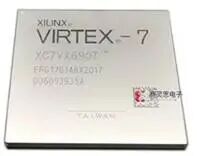
Virtex Series: Belongs to the high-end application series, pursuing extreme performance, suitable for the most demanding computing and communication tasks. It features ultra-high-performance transceivers, large logic capacity, supports HBM and CCIX protocols, and provides enhanced security. Mainly applied in data center acceleration, AI inference, high-performance computing (HPC), aerospace, etc.
Virtex Series: Includes Virtex2, Virtex2 Pro, Virtex4, Virtex5, Virtex6, Virtex7, Virtex UltraScale and Virtex UltraScale+ sub-series. The Virtex7 series includes XC7V585T, XC7VX330T, XC7VX415T, XC7VX485T, etc.
Virtex UltraScale Series includes XCVU065, XCVU080, XCVU095, etc.
Virtex UltraScale+ Series includes VU19P, etc.
Zynq SoC Series: Combines FPGA with ARM processors, suitable for embedded systems and mixed-signal processing. This series includes dual-core / quad-core ARM Cortex processors, with FPGA logic comparable to Spartan/Artix/Kintex, and rich peripherals. It can be used in autonomous driving, industrial IoT, embedded vision processing, etc.
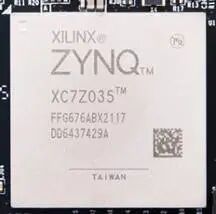
Xilinx‘s Zynq SoC Series mainly includes Zynq7000, Zynq UltraScale+ MPSoC and Zynq UltraScale+ RFSoC three categories, as follows:
Zynq7000 Series: Based on 28nm process, integrates dual-core Arm CortexA9 processors with FPGA logic components. Includes XC7Z010, XC7Z15, XC7Z020, XC7Z030, XC7Z035, XC7Z045, XC7Z100, etc.
Zynq UltraScale+ MPSoC Series: Adopts 16nm FinFET+ process, integrating dual-core or quad-core CortexA53 processors, dual-core Arm CortexR5F real-time processors, and FPGA logic components.
Zynq UltraScale+ RFSoC Series: Integrates RF analog signal chains based on Zynq UltraScale+ MPSoC, achieving high-performance RF signal transmission and reception.