Part One
After seeing the delay of Shenmue 3, I revisited Kickstarter, where a total of 8 individuals each pledged $10,000 just to have dinner with the producer…
Back then, there were also 4 users who collaborated to support $10,000 to have dinner with the producer of Mighty No. 9
(Yu Suzuki and Keiji Inafune are indeed charming)
Now this game has been pushed to the corner where it must be a masterpiece: Take the time you need, but I want a good game at the end
Of course, a crazier project on Kickstarter should be Kingdom Death Monster 1.5, which raised a total of $12.4 million and is already clear that it will take longer than Shenmue 3…
For comparison, Supercell raised $12 million in Series A funding, while MZ raised $8 million in Series B funding
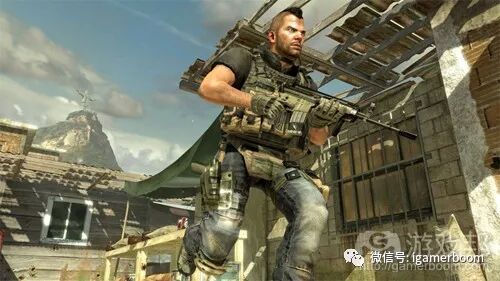
Modern Warfare 2 (from Gamasutra)
Part Two
The financial reports of Tencent and NetEase, along with the performance and product lists of Supercell, Gungho, King, Glu, Electronic Arts… clearly present a serious issue: Companies at high revenue levels, under pressure for sequential growth, are being led down a narrow path where they must only create phenomenal products; generally excellent games are no longer sufficient.
NetEase’s mobile gaming segment saw revenues of 7.869 billion in Q1 2017, 6.827 billion in Q2, 5.54 billion in Q3, and 5.44 billion in Q4, with a turning point at the hit games Chulu Xiang and Wilderness Action.
Tencent’s mobile gaming segment reported revenues of 12.9 billion in Q1 2017, 14.8 billion in Q2, 18.3 billion in Q3, 16.9 billion in Q4, and 21.7 billion in Q1 2018, with a turning point at the hit games QQ Speed and Miracle Awakening.
If Mixi and Gungho do not have the next Monster Strike and Puzzle & Dragons, or at least products of a similar scale, then even if they release many smaller products, it will be difficult to withstand the decline pressure from the old product cycle bottleneck.
Since 2016, many top companies’ games have died in the soft launch phase, with some testing over 10 products without a single one making it through. The core issue remains: your product must meet extremely high expectations; if there are no signs of top competition, it will likely be discarded.
Some products that appear to perform well in ordinary companies are ruthlessly eliminated in the high-pressure competitive environment of the top tier.
This is also the logic of the 80/20 rule and Winner Takes All: a phenomenal product is worth 100 average games.
Throughout 2017, NetEase released dozens of games but still could not stop the risk of high-level sequential decline. Various product concepts were crazier than the last, but it was futile; NetEase only needed to sustain an overwhelming hit, so it had to wait until Chulu Xiang arrived to return to a positive growth trajectory.
Tencent’s sequential decline in Q4 2017 was also due to that financial report cycle, where there were no representative products, but in Q1 2018, it continued with QQ Speed, which was as popular as Honor of Kings, and the outcome was immediately different.
However, creating a phenomenal product that can fill the gap is extremely difficult. Zynga has closely followed Peak Games and Playrix in optimizing Match 3 over the past two years, but none have succeeded. King has even boldly entered the casino sector but has not found a successor to Candy Crush Soda Saga. As for whether Brawl Stars will be released and whether it can generate $1 billion in revenue, the market has been anxious for Supercell for almost a year.
In other words, the market has no way to maintain positive expectations for game companies competing at high levels; a more logical approach is to adjust judgments according to the rhythm of the products.
For example, when NetEase and Tencent’s internal quality PC game IPs are exhausted, we can observe whether NetEase’s self-developed history in MMORPG can continue to dominate the domestic market; and whether Tencent’s collaborative agency strategy can continue to uncover hit products.
After all, in Q1 2017, the revenue gap between NetEase’s mobile segment and Tencent’s mobile segment was 5 billion RMB, and by Q1 2018, this gap had widened to 15.4 billion RMB.
Ultimately, this uncertainty is also the most attractive part of the mobile market: in a truly high-pressure environment, without good products, high-level competition will quickly decline, and ordinary developers without good products will be kicked out.
In the end, it all comes down to whether one can create good products.
Part Three
User reviews in real environments can be quite mysterious. Here are a few examples.
The previous column lists games that users have heavily criticized.
Pokemon Go (Niantic), Lineage M (NcSoft), Dark Avenger 3 (Nexon), Raven (Netmarble), Final Fantasy XV: A New Empire (MZ), Super Mario Run (Nintendo), King of Fighters 98 Ultimate Match OL (Tencent), Miracle MU (Kying Network)
The next column lists games that users have praised and worshipped.
Badland (Frogmind), Monument Valley 2 (Ustwo), The Room (Fireproof), Limbo (Playdead), Year Walk (Simogo), Gorogoa (Annapurna), Candleman (Aurora Games)
However, from the perspective of actual grossing returns: users do not spend much money on the games they praise, nor do they hesitate to spend money on the games they criticize.
The revenue of the games with high ratings can only be a fraction of the revenue of those with poor ratings.
This is an unavoidable issue in the user review environment: why do users consume (for example, Badland has excellent reviews, but Frogmind sold its controlling stake at a less than ideal price, indicating limited self-sustaining ability; Lineage M, despite mostly negative reviews, caused NcSoft’s quarterly financial report to soar vertically…)
Part Four
The competition dilemma regarding mobile MMOs is quite evident:
A. NetEase’s systematic product group (which occupies an unshakable top position): Dream Journey to the West, Ghost Story, Daluo Xiyou, Chulu Xiang, Town of Magic, Light of the World, Tianxia, Datang Shuangxiong, Great Voyage…
B. Tencent has almost represented the typical works in the market: Miracle Awakening (Tianma Shikong), Dragon Babu (Changyou), New Swordplay (Xishanju), Dragon Nest (Happy Entertainment), Journey (Giant Network), The King’s Avatar (Mokuan Digital), Dream of the Immortal (Zulong Entertainment), Seeking Immortal (Pixel Software), Legend of the Empire (Aurora Network), Legend of the World (Shanda Games), Blood of the Legend (Shanda Games), Six Dragons Battle (Zulong Entertainment)…
Basically, these are two impenetrable walls.
Therefore, in the past year and more, many high-cost MMO masterpieces have not managed to seize the hill and have already raised the white flag (the list is omitted).
The key here is high costs…
Part Five
Games that can withstand various time cycles and maintain top revenue competitiveness on mobile are mainly concentrated in three types: Puzzle (typical case is Candy Crush Saga), Casino (including Card, typical case is Slotomania), and Strategy (typical case is Clash of Clans).
So years ago and years later, what supports King, Zynga, and Supercell are still the same games.
Of course, the above can easily be refuted by individual cases, but from the perspective of more widely applicable competitive cycles, for example, those with super revenue competitiveness that can be deeply explored and continuously operated for over 6 years.
For instance, the longest competitive cycle in the domestic market is Tencent’s and Competitive World’s Landlord, followed by Tencent’s and Le Element’s Eliminate/Eliminate, as well as Supercell’s Clash of Clans.
Then looking at various MMORPGs with heavy costs, even with excellent teams and IP support, the competitive cycle is difficult to maintain for even a month, with a large proportion lasting only a few days…
Part Six
According to NetMarble’s financial data, we can estimate the revenue data of two main products over the past year (2017 Q2 – 2018 Q1) (there may be exchange rate differences):
A. Lineage 2 Revolution, $814.8 million (approximately 5.2 billion RMB)
This is a product released at the end of 2016 and has been operating for a year and a half.
B. Marvel Contest of Champions, $284.8 million (approximately 1.8 billion RMB)
This is a product released at the end of 2014 and has been operating for three and a half years.
Part Seven
Regarding the creativity of expression methods, here are a few existing cases (of course, the following are not innovations of a certain expression method, but rather integrations of certain expression methods):
A. Clash Royale, which involves CCG (Collectible Card Games) + TD (Tower Defense) + MOBA (Multiplayer Online Battle Arena)
B. Home Design Makeover, which involves Design Home + HomeScapes + core elements of Candy Crush Saga
C. Pokemon Go, which involves LBS (Location Based) + AR (Augmented Reality) + Exercise (Physical Activity)
Of course, a more typical example would be the recent trend from Call of Duty to PUBG and Fortnite.
Part Eight
Thus, the exit of the great Cliff Bleszinski and his Boss Key Productions is still the judgment we mentioned this morning.
This is an industry that does not look at what you did right in the past, but rather what you can do well now and in the future.
Previously mentioned eight great developers (the mentioned peak companies, not participants, but co-founders) have not returned to their peak in their new ventures.
A. Respawn co-founder Vince Zampella’s studio Unclear Division
B. Bungie co-founder Alex Seropian’s studio Industrial Toys
C. Rare co-founder Tim Stamper’s studio FortuneFish
D. Unity co-founder Nicholas Francis’s studio Framebunker
E. Maxis co-founder Will Wright’s studio Stupid Fun
F. Naughty Dog co-founder Jason Rubin’s studio Monkey Gods
G. Popcap co-founder Jason Kapalka’s studio Blue Wizard Digital
H. Origin System co-founder Richard Garriott’s studio Portalarium
Part Nine
Among revenue-competitive products, three types of products are most likely to trigger collective negative reviews:
A. One type is IP adaptations (including both formally authorized and unofficial adaptations)
B. One type is localized adaptations and agency of overseas products (especially modifications for local users)
C. One type is Strategy Games (including but not limited to domestically produced strategy games released overseas)
I am particularly focused on one area: why do users express such collective negative emotions in Strategy Games?
Part Ten
The core logic remains:
A. The starting point of the product is paramount; deviations and loss of control at the starting point mean that everything else surrounding the product will be futile.
B. Path dependence; many products can have unique protective factors, but it is difficult to bypass others’ insights into product advantages by merely accumulating manpower and resources.
C. Timing windows; many products that seem ideal in experience are of no use because, in that model, users do not need them (either because there are earlier homogeneous products or because the demand has evolved to a new stage).
Thus, despite the hundreds of thousands of mobile games, the list of competitive products can be counted.
Moreover, in the next product, the troubles of large and small companies are not significantly different: both are about starting over and competing from scratch (if large companies also calculate costs and opportunity risks).
Part Eleven
Basically, this is an industry that does not look at what you did right in the past, but rather what you can do well now and in the future.
I have hidden the sources of the following product list; can you guess which company made these products just by their names?
Age of Empires Castle Siege, Temple Run Treasure Hunters, Galactic Frontline, Super Senso, Mystery of the Opera, The Ramen Sensei 2, Lost Survivor, Sweet Maker, Boulder Goat, Stellar Galaxy Commander, Berry Rush, Time Gems, Car Town Racing
The corresponding companies that faced Waterloo with these products are: Microsoft, Scopely + Imangi, NetEase, Gungho, Kairosoft, Innogames, IGG, Electronic Arts, King, Peak Games, Playrix, Glu Mobile
All are well-known company names.
The uncertainty of this industry ultimately rests on the product.
The landscape will not actually become rigid.
Because products can gain positions, and products can also lose positions.
If successful companies could replicate past successes, the industry would be rigid; if successful companies cannot replicate past successes, the industry would be fluid.
This is a market where the capacity can double in the next five years, with product competition determining the outcome, so there is nothing to fear.
Part Twelve
Friends often ask us how we view the mobile gaming industry.
This is roughly our basic attitude:
A. Mobile gaming is a product-oriented industry; one wrong step can lead to heaven or hell (if you don’t step well, you can’t stop the rapid decline).
Good products will do very well, while bad products will do very poorly.
B. The core of games has become very stable; future competitiveness will mainly lie in: creativity in expression methods.
C. We are a methodology-first team, always exploring more attractive expression paths.
Therefore, we are always full of faith in the industry: we like uncertain industries and believe we can find opportunities for competitive products.
Everything else is just a timing node.
This article is compiled from recent moments in our WeChat circle; discussions and exchanges are welcome. Zheng Jintiao, WeChat: zhengjintiao