
The research team from the University of Cordoba has developed an innovative monitoring system.This system, by deploying various sensors, can provide more detailed, accurate, and synchronized operational information about solar power plant performance, thereby effectively reducing the uncertainty in plant operations.
Recently, related research titled Implementation and Characterization of a High-Precision Monitoring System for Photovoltaic Power Plants Using Self-Made Phasor Measurement Units was published in IEEE Sensors Journal.
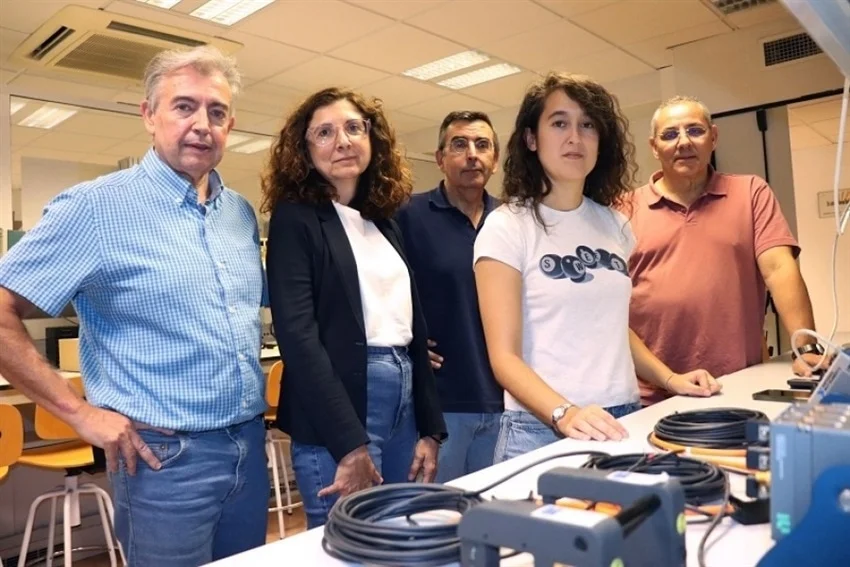
Image source / University of Cordoba
Solar power plants do not generate electricity continuously and stably; their energy output entirely depends on weather conditions and can only operate when environmental conditions permit. For example, a passing cloud can lead to a sharp decline in power generation. This new monitoring system not only observes and predicts plant performance but also dynamically adjusts electricity prices, making pricing more aligned with actual generation conditions.
The research aims to explore the relationship between solar power generation and meteorological conditions. The team innovatively modified existing market devices to develop Extended Phasor Measurement Units. This device can synchronize the collection of electrical data such as current, voltage, frequency, and environmental meteorological data like solar radiation.
The core advantage of this system is its ability to collect data at a high frequency of 10 times per second, with such high precision that it generates approximately 2-3GB of data per month. Since all devices maintain time synchronization and are distributed across different geographical locations (including adjacent solar power plants), this synchronized data can both restore historical operational states and support future generation predictions. The denser the monitoring, the faster protective measures can be initiated: by promptly disconnecting system connections, effectively preventing fault propagation.
These sensors have undergone meticulous calibration and validation through experiments at two power plants, and all data deviations have been verified. The research team is currently conducting the second phase of the project: in-depth analysis of the massive collected data.

References
Arenas-Ramos, V., et al. (2025) Implementation and Characterization of a High-Precision Monitoring System for Photovoltaic Power Plants Using Self-Made Phasor Measurement Units. IEEE Sensors Journal. DOI:10.1109/JSEN.2025.3598820. https://ieeexplore.ieee.org/document/11131518
Content sourced from “AzoSensors”, for academic reference only; click “Read the original text” at the end to view the English report.


The Intelligent Sensor Professional Committee of the China Metrology Association (hereinafter referred to as the “Intelligent Sensor Committee”) is an organization approved and registered by the China Metrology Association, belonging to its branch. The Intelligent Sensor Committee is composed of enterprises and institutions engaged in intelligent sensor technology research, product design, production processing, packaging testing, and those promoting the application of new intelligent sensor technologies; as well as universities and research institutes with relevant specialties.
The responsibilities of the Intelligent Sensor Committee are as follows:
(1) Implement national strategic deployments and government policies and regulations; collect and analyze domestic and international market and technology information to provide consulting opinions and suggestions for government decision-making and industrial policy formulation.
(2) Establish expert working groups to carry out industry-related work in intelligent sensor technology research, product design, production processing, packaging testing, etc. Promote the establishment of standards related to intelligent sensors, establish relevant group standards, and gradually form industry and national standards, advancing the application of intelligent sensors in fields such as smart manufacturing, energy conservation and environmental protection, intelligent robotics, smart cities, consumer electronics, automotive electronics, biomedical, and smart agriculture.
(3) Explore innovative models and mechanisms for the intelligent sensor industry by establishing a data cloud platform for intelligent sensors, promoting capability enhancement in design, process, production, packaging, and testing.
(4) Establish an information release platform, public account platform, and publications for the Intelligent Sensor Committee, organize industry seminars involving production, learning, research, and application institutions in the intelligent sensor industry chain, inform member units of information, share experiences, promote new technologies, and connect various demands and capabilities to facilitate communication and cooperation.
(5) Promote academic exchanges, regularly organize industry academic conferences, solicit papers and evaluate outstanding papers, publish proceedings, and recommend award-winning papers for publication in public journals.
(6) Conduct training for industry talents in technology, management, and vocational skills.
(7) Organize evaluations of advanced units, advanced workers, advanced products, and excellent cases in related fields, summarizing and promoting advanced experiences.
(8) Conduct intellectual property operations to accelerate the transformation of corporate scientific research achievements. Organize the publication of popular science literature to disseminate relevant scientific knowledge and advanced technology and management experiences.
(9) Organize various types of international and domestic exhibitions or showcases related to intelligent sensors and related fields according to industry development needs.
Member rights of the Intelligent Sensor Committee:
(1) Voting rights, eligibility for election, decision-making rights, and the right to appeal within the Intelligent Sensor Committee;
(2) The right to be informed, participate, criticize, suggest, and supervise the work, projects, and activities conducted by the Intelligent Sensor Committee;
(3) Priority for member personnel to enter the expert committee organizations in academic, technical, and industrial aspects of the Intelligent Sensor Committee;
(4) Priority and discounts for participating in activities organized by the Intelligent Sensor Committee;
(5) Access to relevant industry materials, literature, analysis reports, and proceedings published by the committee;
(6) Priority for enterprise promotion and display on the official media of the Intelligent Sensor Committee;
(7) Priority for other services provided by the Intelligent Sensor Committee.
We welcome relevant enterprises to join the Intelligent Sensor Committee and work together for a bright future.
Contact number: 010-62453984
Email: [email protected]

Editor: Wang Luowen
Reviewer: Zhang Yunxia