 In the rapidly developing field of 3D printing (additive manufacturing), ceramic materials have gradually become the focus of attention in both research and industry due to their excellent high-temperature resistance, corrosion resistance, insulation, and biocompatibility. However, the quality and performance of 3D printed ceramic parts are not solely determined by the equipment and processes; the deeper key often lies in the “powder” as the fundamental material.
Ceramic powders not only form the basic framework of the printed parts, but their particle size, shape, flowability, dispersibility, and high-temperature stability directly determine the feasibility of the printing process and the precision, strength, and reliability of the final products. It can be said that ceramic powders are the “invisible cornerstone” supporting the success or failure of 3D printing. This article will systematically review the key roles and research progress of ceramic powders in 3D printing, exploring their profound impact on printing quality.
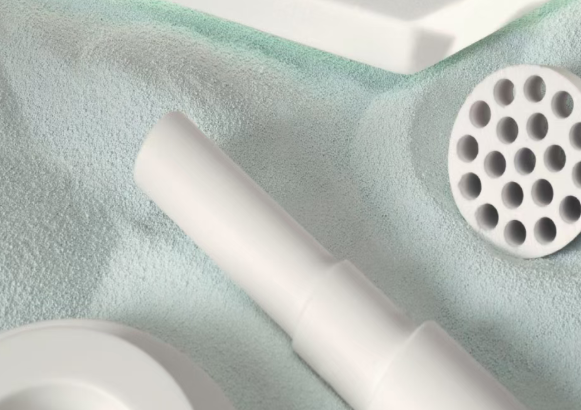
Figure 1, Ceramic powders and ceramic products
1. Particle Size and Distribution: Core Parameters Determining Precision and Strength
Among all influencing factors, particle size and distribution are almost the most fundamental and important. Particle size directly affects the surface roughness, packing density, and subsequent mechanical properties of the powder.
-
Excessively large particle size: This can easily lead to rough surfaces of the printed layers, reduced detail resolution, and may form voids during inter-layer bonding, weakening mechanical strength.
-
Excessively small particle size: This significantly increases the specific surface area, enhances the van der Waals forces between particles, and can easily lead to agglomeration, resulting in decreased flowability, and in severe cases, may cause nozzle blockage or uneven powder spreading.
Therefore, ceramic powders suitable for 3D printing typically range from micron to sub-micron, within which they can maintain good flowability while balancing precision and strength.
At the same time, the rationality of particle size distribution is also critical. Powders with a single particle size will leave larger voids during packing, while powders with a wide distribution can fill the gaps between larger particles with smaller ones, thus improving density and uniformity. However, an excessively wide distribution may also lead to separation phenomena, affecting stability.
Research shows that by using classification techniques to control the powder within a reasonable range, the powder spreading effect and post-sintering density can be effectively improved. For example, zirconia and alumina powders exhibit higher printing precision under narrow particle size distributions, while composite particle size designs can enhance mechanical properties after sintering.
Thus, particle size and distribution are the primary design indicators for ceramic powders, and their optimization relies not only on powder production processes (spray drying, sol-gel, vapor deposition, etc.) but also closely relates to subsequent classification and surface treatment.
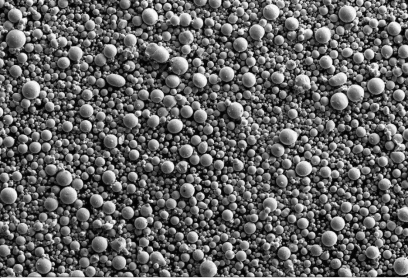
Figure 2, Microscopic observation of ceramic powder particle size
2. Particle Shape and Surface Morphology: Key Factors Affecting Packing and Spreading
The ideal shape of ceramic powder particles should be close to spherical. Spherical particles have the following advantages:
-
Better flowability: They primarily roll under stress, have a low friction coefficient, and are conducive to uniform spreading;
-
Dense packing: The spherical structure can maximize the filling of voids, increasing initial density;
-
Stable processes: Good uniformity of powder layers can reduce defects caused by differences in particle morphology.
In contrast, irregularly shaped powders, such as flaky, needle-like, or fragmentary shapes, are prone to leaving voids during packing, affecting inter-layer bonding, and may form structural defects during high-temperature sintering.
Surface morphology is also not to be overlooked. Smooth powders help reduce the adhesive forces between particles, decrease agglomeration, and improve dispersibility; whereas rough-surfaced powders are more likely to experience uneven packing.
In actual preparation, the purity of raw materials, grinding processes, calcination temperature, and atmosphere can all affect the final particle shape and surface state. For example:
-
Spray drying is commonly used to prepare spherical powders, which have excellent flowability and are suitable for large-scale applications;
-
High-energy ball milling can refine particle size but tends to produce flaky or fragmentary particles, requiring further modification;
-
Surface coating (such as Al₂O₃ or SiO₂ coatings) can significantly improve powder dispersibility and stability.
Therefore, the morphology control of ceramic powders not only depends on process selection but also requires integration with post-treatment and modification techniques to meet the requirements of 3D printing.
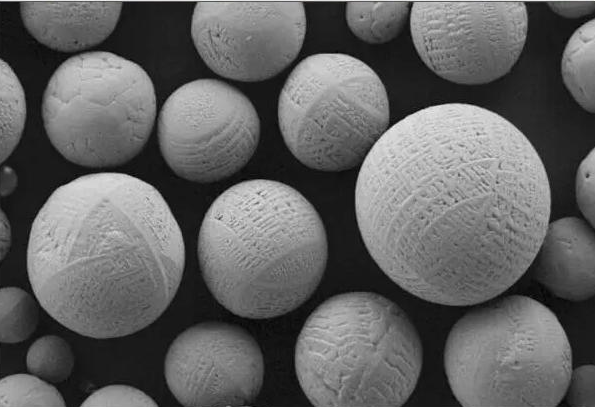
Figure 3, Microscopic image of ceramic powder
3. Powder Flowability and Dispersibility: Ensuring Uniform Spreading and Structural Density
During the powder spreading process, flowability and dispersibility directly affect the uniformity of the powder layer, which in turn determines the stability of the printing layer and the density of the final part.
-
Good flowability: Ensures that the powder can spread smoothly under gravity or blade action without creating “voids” or “piles”;
-
Excellent dispersibility: Prevents powder agglomeration, ensuring uniform particle distribution between layers and enhancing bonding strength.
Methods to enhance flowability and dispersibility mainly include:
-
Adding dispersants: Reducing agglomeration through electrostatic repulsion or steric hindrance, such as adding polycarboxylate dispersants to alumina slurries;
-
Controlling humidity: Moderate moisture can reduce particle friction and improve lubricity, but excessive humidity can lead to clumping, worsening flowability;
-
Surface coating and modification: Water-sensitive aluminum nitride powders often use organic coatings to improve dispersibility and stability;
-
Composite powder design: Optimizing flowability and density through the ratio of large and small particles.
Research cases show that using surface-modified nanoparticle composite powders can significantly enhance the dispersibility of ceramic slurries, resulting in denser parts with excellent mechanical properties.
4. High-Temperature Stability: A Necessary Condition for Ensuring Final Performance
In many ceramic 3D printing technologies, the printing process is only the first step; subsequent high-temperature sintering is necessary to achieve densification and performance enhancement. Therefore, the stability of the powder at high temperatures is extremely important.
-
If the powder undergoes chemical reactions (such as oxidation or decomposition) during sintering, it may lead to structural defects or performance degradation;
-
If phase changes occur (such as the tetragonal-monoclinic phase change of ZrO₂), it may cause volume changes and cracking;
-
If impurities are present, they may form low-melting phases at high temperatures, weakening grain boundaries and reducing strength.
Therefore, ceramic powders must undergo strict purity control and phase composition regulation before application. For example, silicon carbide, due to its high covalent bond characteristics, has low sintering activity and often requires the addition of sintering aids; while zirconia needs stabilizers (such as Y₂O₃ or MgO) to suppress phase changes to ensure structural stability.
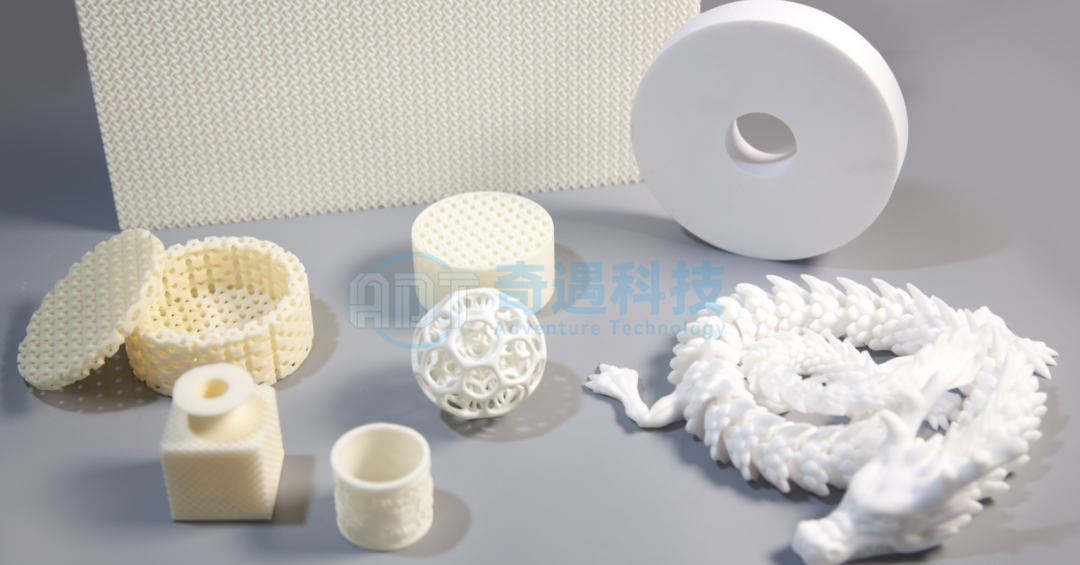
Figure 4, Some ceramic samples successfully printed by Qiyu Technology
5. Conclusion
Ceramic powders play an “invisible leading role” in 3D printing. Their characteristics such as particle size, morphology, flowability, and high-temperature stability collectively determine the precision, strength, and reliability of printed parts. With the continuous advancement of powder production technologies and modification methods, ceramic powders are bound to play a greater role in the field of 3D printing, opening new pathways for the preparation of high-performance ceramic components.
References from “Science of Inorganic Non-Metallic Materials”, shared for reference only. If there are any inaccuracies, please feel free to correct them or request removal.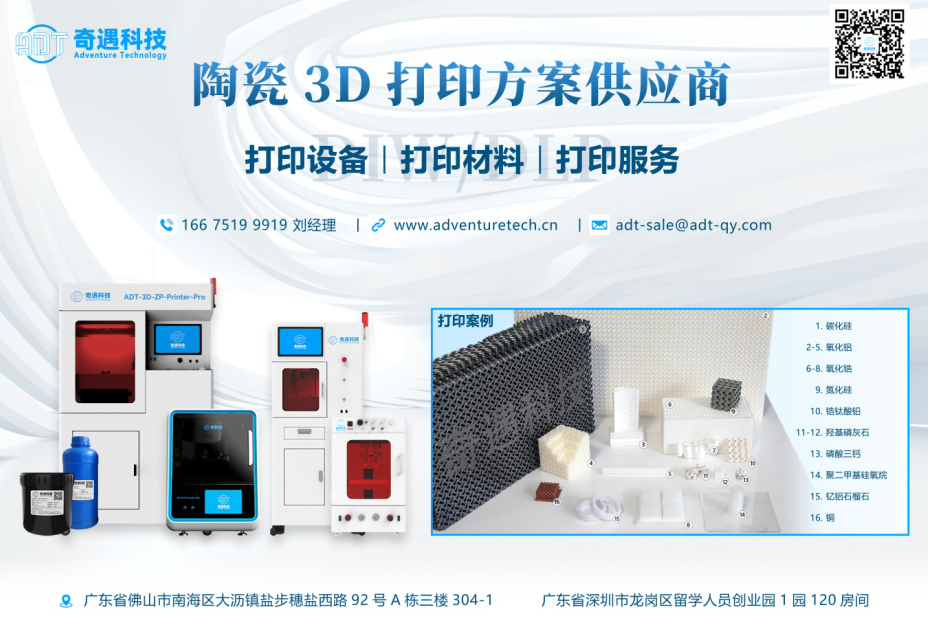

 Click “Read Original” to enter the official website