Stretchable sensors are highly useful in various applications, including monitoring human health and simulating artificial muscles in soft robotics. A significant issue with these sensors is their short lifespan when twisted, stretched, and deformed.
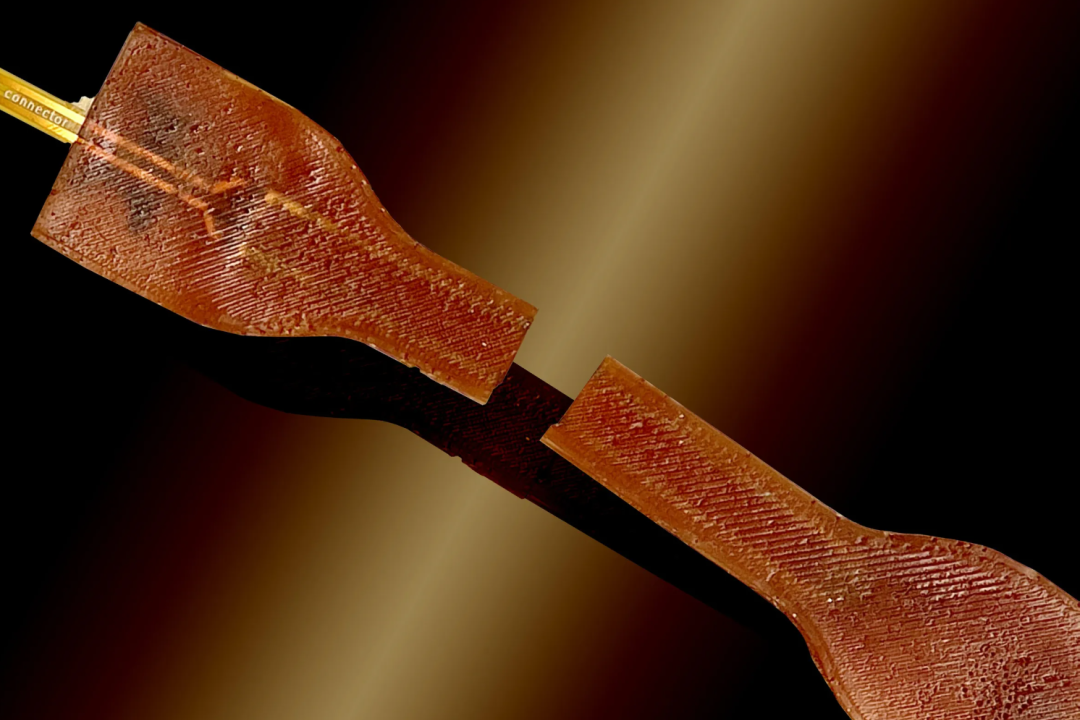
A research team from Belgium has now developed a highly durable, stretchable sensor with exceptional self-healing capabilities—able to self-repair even when completely cut in half while maintaining nearly perfect performance.This research was published in a study in the IEEE Sensors Journal.
The lead author of this paper, Rathul Sangma, a PhD student at Vrije Universiteit Brussel and affiliated with Imec, stated that his team is dedicated to developing a reliable stretchable sensor for health monitoring, rehabilitation, and motion tracking, as “these systems often endure repeated tensile forces or accidental damage. Existing stretchable sensors may fail under such conditions, leading to decreased reliability and waste.”
Sensor Cutting Experiment
RESEARCH INTRODUCTION
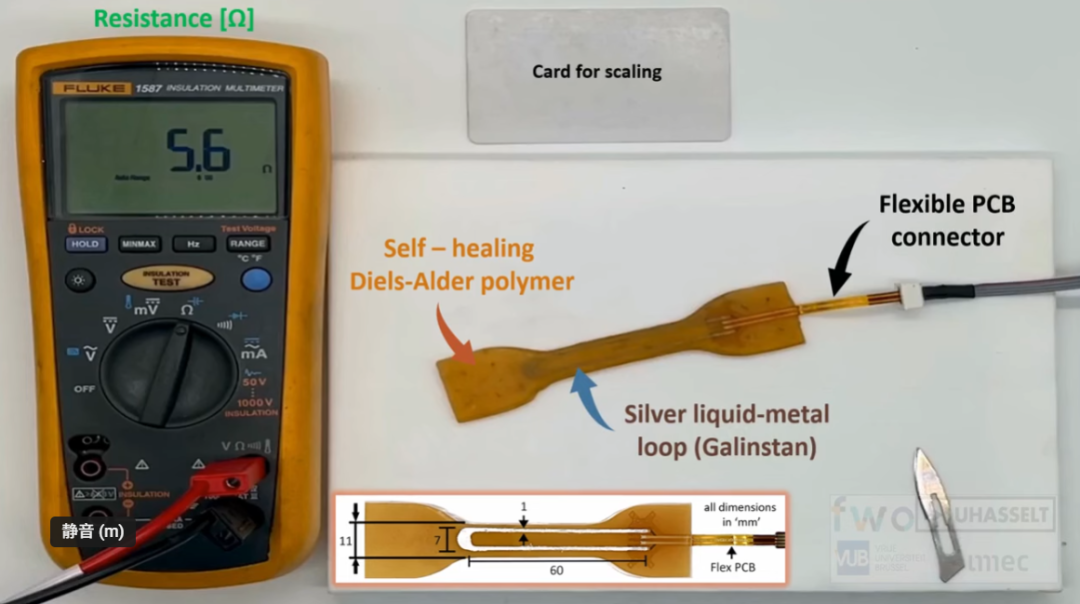
To create durable sensors, Sangma and his colleagues decided to use a polymer with a Diels-Alder crosslinking chemical bonding mechanism. These chemical bonds are reversible, meaning they break when damaged and reform upon re-contact. Sangma explained, “When the material is cut, the broken bonds become reactive, and as they rearrange, they reconnect, restoring the original structure of the polymer.”
Researchers demonstrated in experiments that this polymer can be cut in half and achieve self-healing at room temperature in about 24 hours. When placed in an oven at 60°C, the self-healing process can be shortened to just 4 hours.Even after being stretched to failure and repaired six times, the sensor can still operate at 80% capacity.
A liquid metal called Galinstan is embedded in the polymer, serving as a conductor.While one might think that the liquid metal would leak out when the polymer is severely damaged, researchers found that the loss of Galinstan is minimal. They speculate that this liquid metal oxidizes when exposed to air, forming a thin protective layer of oxide that prevents the liquid from escaping. Once the two parts of the sensor are mechanically connected, this oxide barrier is broken.
“This mechanism is very similar to how blood clots form after a human vein ruptures to prevent further blood loss,” Sangma said, “the oxide acts as a temporary seal, maintaining the integrity of the system until the wound fully heals.”
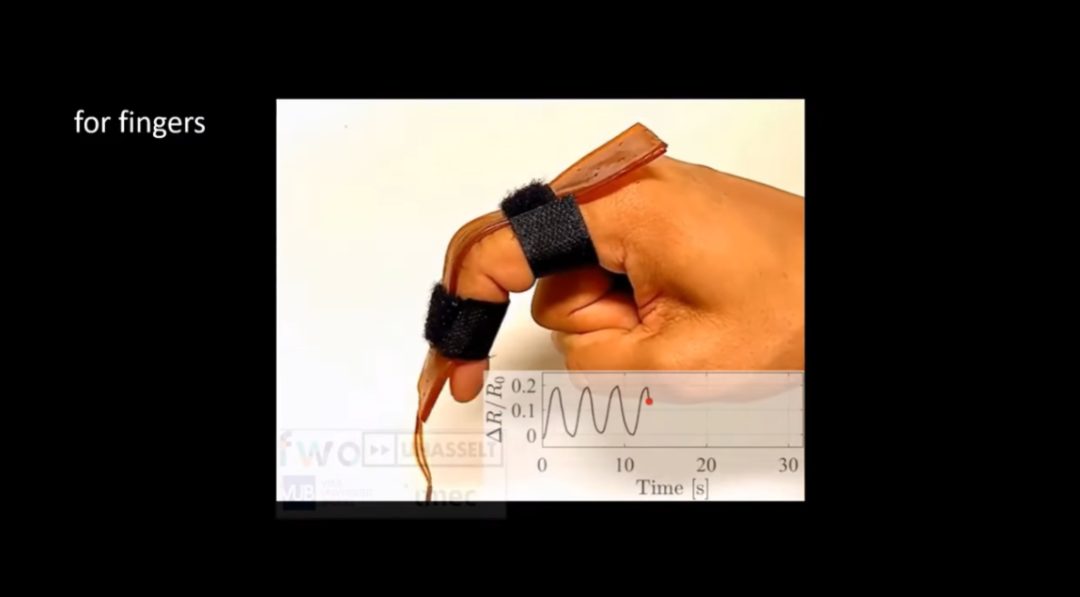
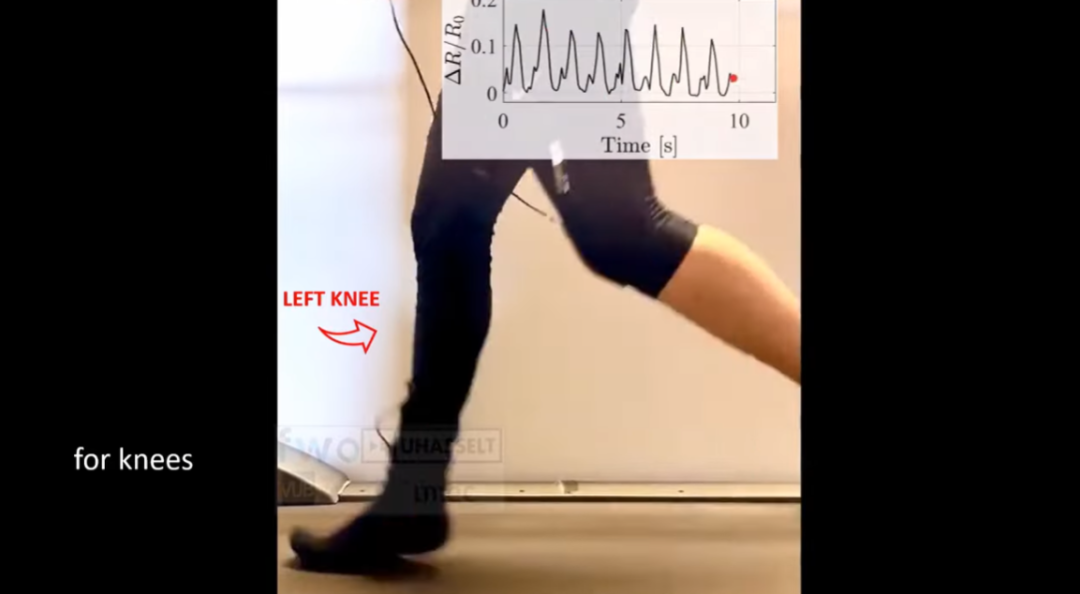
▲ Finger and knee stretching experiment
In a series of tests, researchers explored the drift of intact and damaged sensors. Drift refers to the gradual change in sensor signals during prolonged continuous stretching. Results showed that intact sensors drifted less than 5% after being stretched 800 times, while sensors cut in half and stretched the same number of times drifted less than 10%.
Sangma stated, “The dual repair of structural and electrical functions makes our design stand out.”
Tests also indicated that once the device reaches the end of its lifespan, these materials can be efficiently recycled. “More than 95% of the sensor materials can be recycled—this is an important step towards environmentally friendly wearable devices,” Sangma said.
Expanding Applications of the Material
RESEARCH SIGNIFICANCE
The research team is actively exploring commercialization opportunities for the sensors, aiming to apply them in medical rehabilitation, sports performance monitoring, and soft robotics systems. They have established a spin-off company named Valence Technologies to commercialize these materials.
This breakthrough in self-healing stretchable sensors also provides new insights for the future development of brain-machine interfaces.Its emergence suggests that future brain-machine interfaces, especially non-invasive ones, may overcome the limitations of fragility and single-use, gradually moving towards more durable, environmentally friendly, and everyday wearable forms, opening new possibilities for the popularization and practical application of brain-machine interfaces.
News Source: IEEE SPECTRUM
Recommended Reading

 …… Scan the code now to add your exclusive service officer