Chapter One: Differences Between FCS and DCS
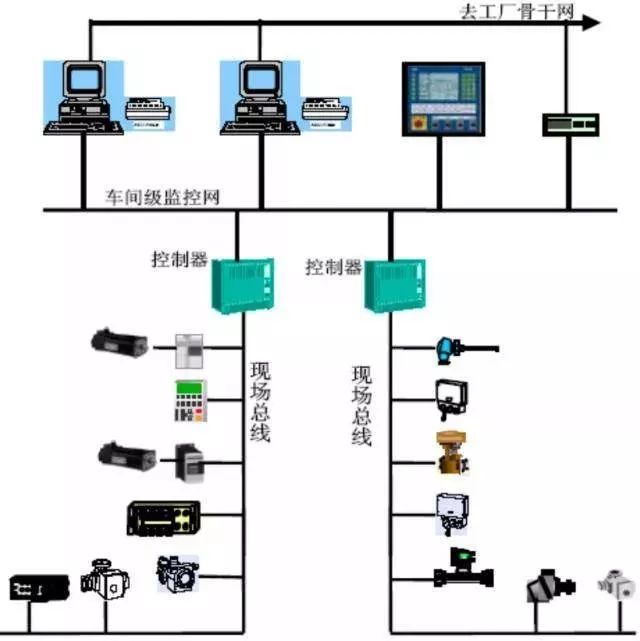
Traditional Method: A one-to-one I/O wiring method connects field devices to controllers.
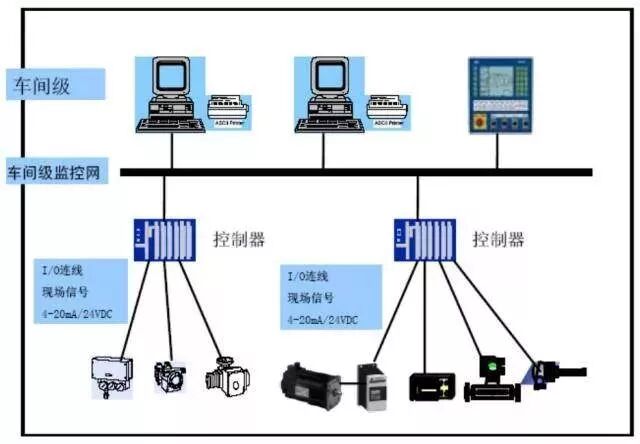
Fieldbus Technology: All field devices are connected using a single cable.
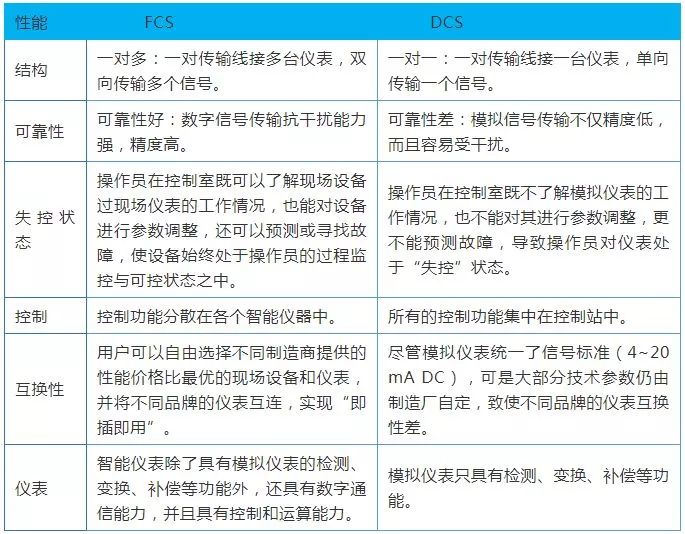
Detailed Comparison of FCS and DCS
Chapter Two: Differences Between DCS and PLC
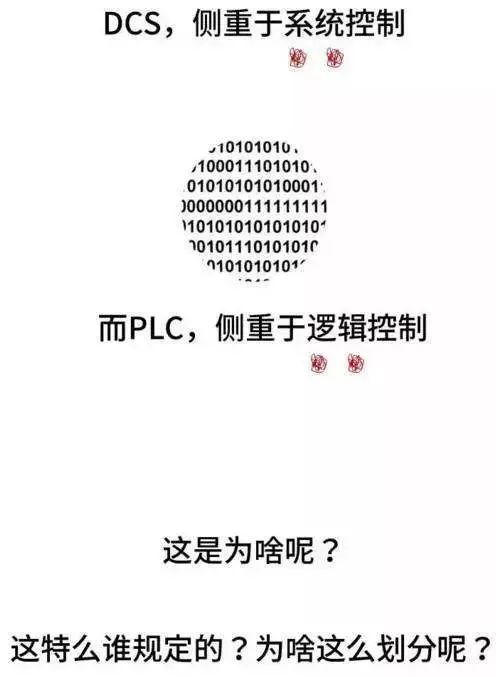
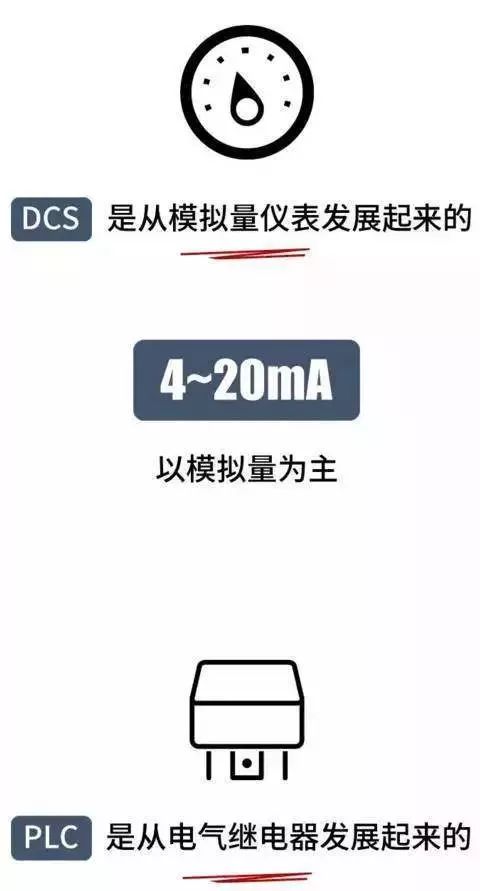
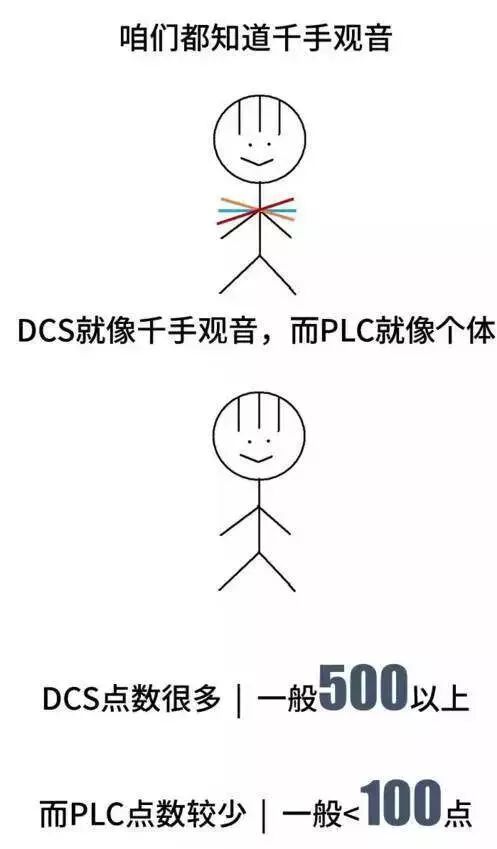
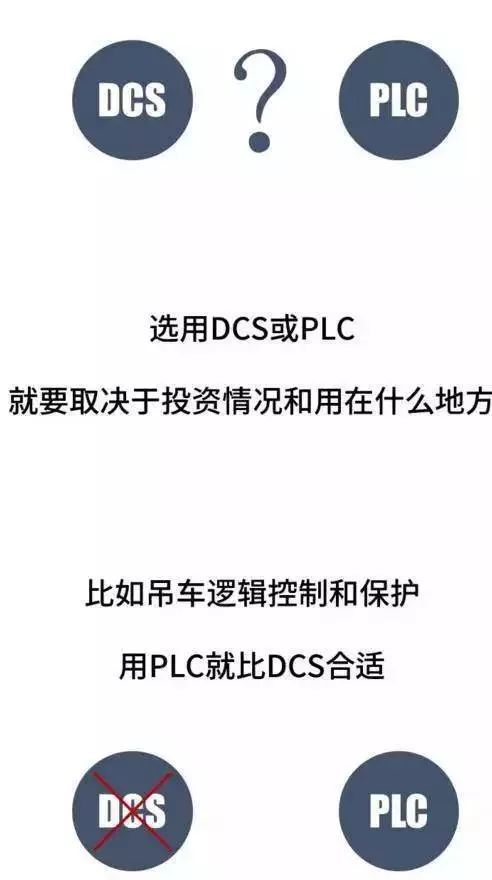
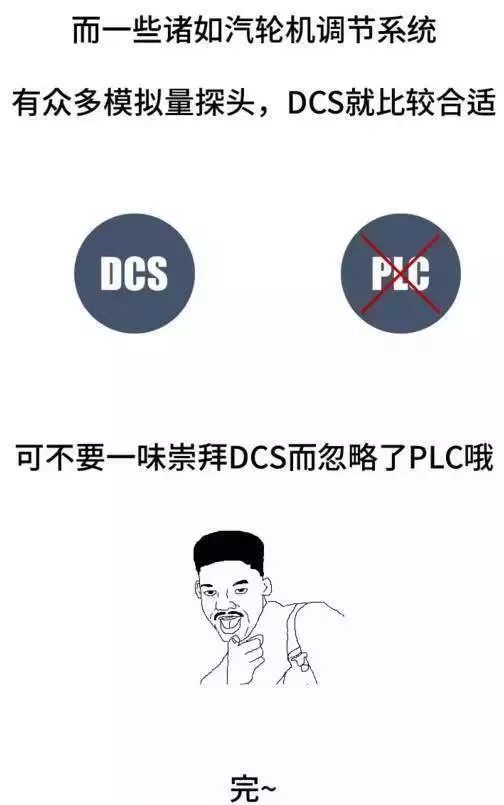
Currently, there is no strict boundary between DCS and PLC. Most people view larger systems as DCS and smaller systems as PLC. While this perspective is not entirely incorrect, it is also not entirely accurate.Let’s redefine this concept.
PLC
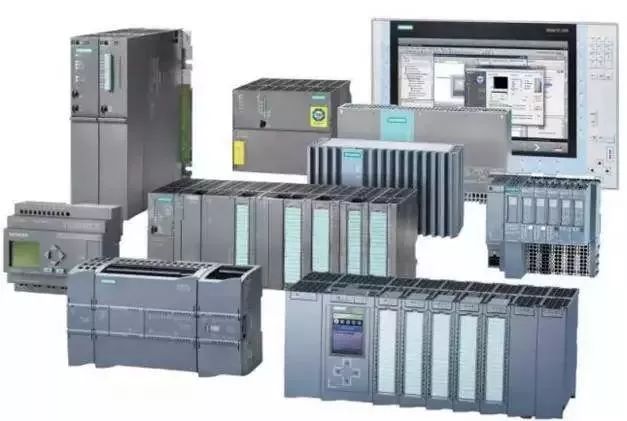
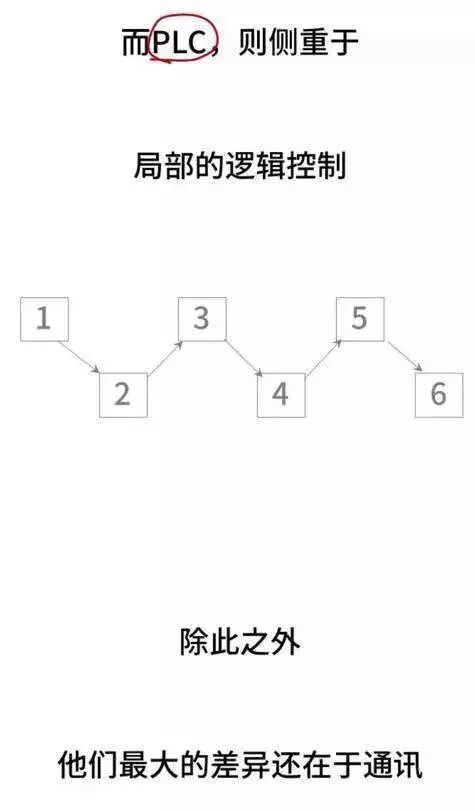
(1) Development from discrete control to sequential control and transport processing, moving from bottom to top;
(2) Continuous PID control and other multifunctional capabilities, with PID in the interrupt station. A PC can serve as the master station, with multiple identical PLCs as slave stations;
(3) A single PLC can act as the master station, with multiple identical PLCs as slave stations, forming a PLC network. This is more convenient than using a PC as the master station because when user programming is involved, there is no need to know the communication protocol; just follow the manual format;
(4) A PLC network can function as an independent DCS or as a subsystem of a DCS;
(5) PLCs are primarily used for sequential control in industrial processes, and new PLCs also have closed-loop control functions.

DCS
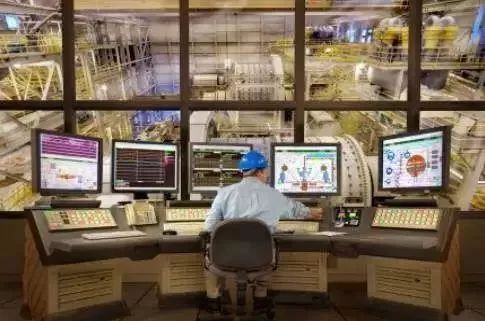
(1) Distributed Control System:
DCS integrates 4C (Communication, Computer, Control, CRT) technologies into a monitoring technology;
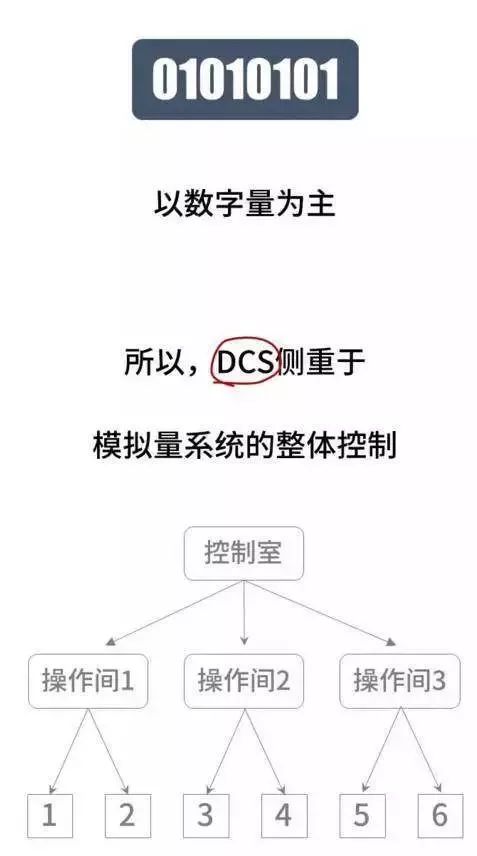
(2) A top-down tree topology large system, where communication is key;
(3) PID in the interrupt station connects computers with field instruments and control devices in a tree topology and parallel continuous link structure, with many cables running from relay stations to field instruments;
(4) Analog signals, A/D—D/A, with microprocessor integration;
(5) Each instrument connects to I/O with a pair of wires, linked to the local area network (LAN) by the control station;
(6) DCS has a three-level structure consisting of control (engineer station), operation (operator station), and field instruments (field measurement and control station);
(7) Used for large-scale continuous process control, such as in petrochemicals.
Industry Experts Discuss the Differences Between PLC and DCS
PLC and DCS cannot be compared directly; PLC is a controller, an isolated product, while DCS is a system. However, PLC can be compared to the control station of DCS. The cycle time of PLC is around 10 milliseconds, while that of DCS control stations is around 500 milliseconds. PLC has better openness and stronger independent operational capabilities as a product.—— OMRON Corporation
DCS is a system that includes upper-level software, networks, and controllers, while PLC is just a controller. To form a system, an upper-level SCADA system and a connected network are also needed. For PID loop control, Mitsubishi’s process controllers can also implement FBD programming similar to SAMA configuration; DCS systems are larger, with more control loops and more complex control and algorithms. Hardware reliability is similar. DCS can achieve I/O redundancy, while PLC cannot. Relatively speaking, systems built with PLC are less expensive.
—— Mitsubishi Electric Automation Precision Control Department Manager
DCS is a “Distributed Control System” that includes field controllers, operator station computers, engineer station computers, and the network system connecting them; DCS software is a comprehensive solution that addresses all technical issues of a system, with tight integration between its components. PLC is a device, hardware equivalent to the field controller in DCS; software-wise, it is a localized solution with loose organization between stations.—— Beckhoff Technical Manager for APROL Product Application Development
Analyzing the differences between DCS and PLC, the key points are twofold: first, DCS is distributed control with a global database; second, PLC operates on a sequential scanning mechanism, while DCS is time-based control. Our system aligns with the first point; for example, a modification of an I/O tag can be synchronized in the HMI.——Rockwell Automation Process Market Product Manager
Understanding PLC and DCS Through Comics