Everyone · Technology FrontierMASTERS
Ding Xianting
Distinguished Professor at the School of Biomedical Engineering, Shanghai Jiao Tong University, and Deputy Director of the International Cooperation and Exchange Office
It is well known that during the clinical trial process before drugs are marketed, traditional methods mainly rely on animal models to complete a large number of toxicity, pharmacokinetics, and efficacy evaluations. Due to the species differences, ethical issues, and lengthy experimental cycles associated with animal models, establishing a new drug screening platform that is rapid, high-throughput, automated, and avoids species differences has become an urgent priority in global drug development.
Recently, there has been a growing recognition that microfluidic organ chips, particularly microfluidic multi-organ chips that integrate multiple organs to mimic human metabolic pathways, can complement the value of animal experiments in medical research: from basic biological research to drug development and testing, microfluidic multi-organ chips simulate the human microenvironment and cultivate healthy or diseased human cells or tissues using cell culture techniques to validate efficacy and toxicity, thereby shortening the lengthy clinical trial period.
What is a microfluidic chip? A microfluidic chip is a technology characterized by controlling fluids at the micron scale, and it is one of the coolest technologies in the fields of science and engineering, playing an important role in the forefront of technological development in biology, chemical engineering, and medical testing.
Currently, mainstream microfluidic chips refer to those that integrate or fundamentally integrate basic operational units involved in sample preparation, reaction, separation, detection, cell culture, sorting, and lysis in fields such as chemistry and biology onto a chip of a few square centimeters or even smaller, forming a network of microchannels through which controllable fluids permeate the entire system, allowing for various functions of different laboratories in chemistry, biology, materials, optics, etc.
In 2017, the Ministry of Science and Technology designated microfluidic chips as a “disruptive technology,” and an important branch of microfluidic chips—organ chips—was recognized as one of the “Top Ten Emerging Technologies” by the World Economic Forum in 2016.
Due to advantages such as lower costs, better performance, less resource consumption, and greater safety, microfluidic chips are widely applied in daily life: in the microelectronics field, many tiny chips are found in mobile phones and computers; in mechanical systems, whether electric or fuel vehicles, there are numerous chips inside; in the biochemical field, chemical detection and sensing of chemical substances both require chips; in medicine, many chips are used in devices like cochlear implants and pacemakers.
The miniaturization of chips not only brings about safer and more environmentally friendly benefits but also leads to an integrated and systematic industrial revolution. In this industrial revolution, we inevitably need to mention its core technology, which we refer to as photolithography, or lithography technology. Photolithography is an important process used for etching at a small scale.
The following text introduces the processing and fabrication of microfluidic chips, their advantages and challenges, as well as their applications in real life and work.
Processing and Fabrication of Microfluidic ChipsWhy should we encourage making chips smaller, more miniaturized, and more integrated? This is because miniaturized chips have many advantages, including lower costs, better performance, greater savings, enhanced safety, and environmental friendliness. Against this backdrop, the discipline of micro-nano machining (micromachining) has emerged, which utilizes processes similar to those of integrated circuits and computer chips to gradually reduce the size of large chips. The underlying technologies and principles used in this discipline are very similar to those of integrated circuits and computer chips, both being processes that gradually miniaturize large chips. The various physical, chemical, material, and biological knowledge formed behind this process integrates into a new interdisciplinary field, which we call micro-nano machining.Under the guidance of the micro-nano machining discipline, more chips can be densely integrated on the same unit area or unit space, making their systems smarter, more integrated, and more functional, which may lead to the next industrial revolution: a new industrial revolution characterized by integration and systematization.A new term has emerged in the process of system integration: micro-electromechanical systems (MEMS), or micro-mechanics, micro-systems. This refers to the high-density integration of many chips in a very small space, enabling them to have certain electrical and mechanical properties, thus forming a complex functional system. MEMS is a comprehensive discipline, with evident interdisciplinary characteristics, mainly involving micro-machining technology, mechanics/solid acoustic wave theory, thermal flow theory, electronics, biology, etc. The characteristic length of MEMS devices ranges from 1 millimeter to 1 micron (the diameter of a hair is about 50 microns).How are such small and highly integrated devices manufactured? The manufacturing of MEMS widely borrows from the processes of photolithography, etching, and coating in integrated circuits. Photolithography is the most technically challenging and critical step in the entire microfabrication process. Photolithography is a process that uses light for etching at a small scale. It involves photosensitive materials, masks, and exposure systems.Photoresist is a type of photosensitive material that can be etched after exposure, thus also called a photoresist agent, which changes properties when exposed to light and is one of the key materials for micro-pattern processing in microelectronics technology, mainly applied in the electronics and printing industries. There are positive and negative photoresists: positive photoresist becomes more soluble in the exposed areas after exposure, and after development, the exposed part is dissolved, leaving only the unexposed part to form the pattern; while negative photoresist does the opposite, becoming less soluble in the exposed areas, leaving the exposed part to form the pattern after development. The mask has patterns, and light passes through it to transfer the pattern onto the photoresist. The exposure system is used to provide light of various intensities and wavelengths. The photolithography process is one of the more challenging technologies, including photoresist technology, mask processing technology, and exposure system technology.The photolithography process has given rise to a concept we often hear: Moore’s Law. Moore’s Law was proposed by Gordon Moore, one of the founders of Intel. It states that the number of components that can be accommodated on an integrated circuit doubles approximately every 18 to 24 months, with performance also doubling. In other words, the computing performance that can be purchased for one dollar will more than double every 18 to 24 months. This law reveals the speed of progress in information technology. Although this trend has continued for over half a century, Moore’s Law is still regarded as an observation or speculation, rather than a physical or natural law. Moore’s Law indicates the trend of integrated systems becoming smaller and their performance becoming higher. MEMS can achieve performance improvements through photolithography technology.
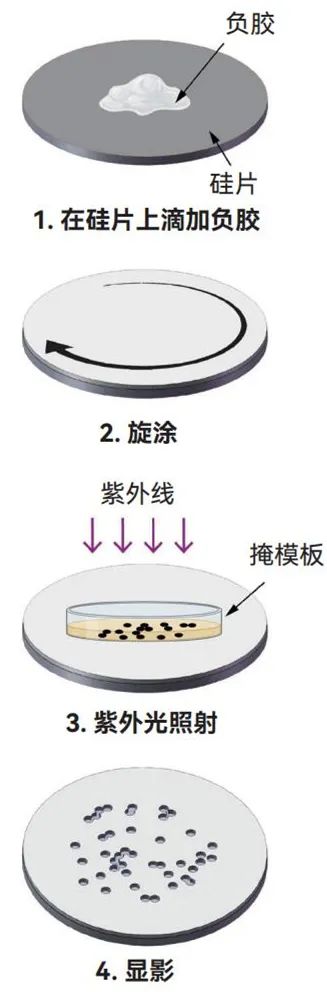
Figure 1 Basic Process of Photolithography Technology
As mentioned earlier, microchips have important applications in many fields, such as artificial insemination technology, micro-gear processing technology, etc. So we may ask, what can be done with smaller chips? Here are several typical applications of MEMS.
1) Micro Tweezers: This is a classic application in the MEMS field, used for precise manipulation of cells to enhance cell viability. In real life, we can use artificial insemination technology to improve sperm viability, thereby increasing the accuracy and success rate of assisted reproductive processes.
2) Micro Gears: Micro-gear processing technology makes mechanical components smaller and lighter, thus reducing energy consumption.
3) Micro Robots: Micro-robot drive technology enables small moving robots through voltage-controlled material shape changes, achieving robot crawling and driving. The applications and innovations of these technologies have made significant contributions to related fields.
4) Microneedles: Microneedle technology can create micro-needle patches densely packed with fine needles, avoiding the pain of coarse needle injections. Additionally, microneedles can also serve as sensors to monitor body performance indicators in real-time, providing hydration and rest reminders. Microneedle systems have broad application prospects in treatment and detection.
5) Biomimetic Sensors: By mimicking the system of dandelions, they have significant advantages in detecting atmospheric substances and performing gastrointestinal examinations. This small system can achieve wireless signal transmission and photography, making human operations more convenient and safe.
Advantages and Challenges of Microfluidic Chip ProcessingThe change in scale from large to small brings advantages in integration performance, cost, and processing time, while also making systems more portable, reducing power consumption, and meeting mass production requirements. However, various technical challenges will be faced during the processing of chips from large to small, including a series of differences in material optics, mechanics, chemistry, fluid dynamics, temperature control, electricity, and magnetism. These differences in physical, chemical, and biological properties are merely intuitive and cannot be directly applied to this micro world.Here we focus on discussing what changes occur in mechanics, biology, physics, and fluid dynamics during the process from large to small.
Mechanics
How does the attractive force between two objects change when the world collapses to one-tenth of its original size? By analyzing the relationship between the law of universal gravitation and size effects, we can conclude that the attractive force is proportional to the fourth power of the size effect. When the size is reduced to one-tenth, the mutual attraction becomes negligible. Insects can lift objects ten times heavier than themselves, while humans cannot. These phenomena are all due to size effects, indicating that size effects are very important. In chip design, macroscopic experience does not apply to microscopic scales and must be accumulated from scratch. The physicochemical properties of different scales change, making it difficult to design using macroscopic intuition and common sense. By understanding the changing laws of volumetric forces, surface forces, and linear forces, designers can aid in separation and design in microchips. At a microscopic scale, surface forces become the dominant force, while the effects of volumetric forces can be ignored. Therefore, designers need to consider storage effects and changes in relative importance to adapt their design thinking and concepts.
Biology
How does the metabolic rate change when the world collapses to one-tenth of its original size? This involves the relationship between metabolic rate and size effects in biology. The energy metabolic rate is related to heat loss rate, and energy dissipation is related to area; thus, metabolic rate is related to the square of the size effect, while mass is related to the cube of the size effect. Kleiber’s Law (Klieber’s Law) demonstrates that the metabolic rate of an organism is proportional to its mass. Therefore, the metabolic rate increases with the size of the animal and decreases with the size reduction.
Physics
In physics, small objects are more affected by surface tension, while large objects are more likely to sink in water. Understanding size effects can help us comprehend the phenomenon of floating on water and the scaled-down world of little people.
Fluid Dynamics
Fluid mechanics is also an important branch of mechanics in daily life, involving activities related to fluids such as swimming and flying. The Reynolds number is an important physical quantity in fluid mechanics, composed of the density, velocity, size, and viscosity coefficient of the liquid. Fluid systems with a Reynolds number greater than 4000 are called turbulent systems, while those below 2000 are termed microfluidic or laminar flow systems. Turbulent systems generate vortices, while fluid mixing in microfluidic systems becomes difficult.Such a change in fluid mechanics from macroscopic to microscopic brings us several benefits. Microfluidic chips utilize the properties of laminar flow fluids to achieve precise control and prediction of fluid pathways. Drug combination screening experiments conducted using microfluidic chips can facilitate more convenient and accurate drug effect assessments, improving cell utilization efficiency and addressing the troubles and limitations faced by traditional experiments.
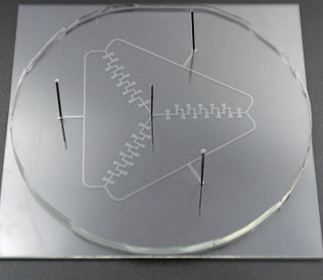
Figure 2 Physical Image of Microfluidic ChipApplications of Microfluidic Chips
Microfluidic chips are systems integrated using the properties of micro-scale fluids, serving as the main platform for microfluidic technology, also known as biochips or chip laboratories. The features of these devices primarily include effective structures that accommodate fluids (channels, reaction chambers, and other functional components) that are at least at the micron scale in one dimension. Due to the micron-scale structure, fluids within them exhibit and generate special properties different from macroscopic scales, leading to unique analytical capabilities:
They feature controllable liquid flow, minimal consumption of samples and reagents, and analysis speeds that are tens to hundreds of times faster, allowing for simultaneous analysis of hundreds of samples in just a few minutes or even shorter time frames, and enabling online sample preprocessing and analysis throughout the entire process.
Microfluidic technology is the key technology of microfluidic chips, referring to the precise manipulation of micro-volume fluids in micro-scale tubes, integrating basic operations of biochemical experiments such as sample reaction, preparation, separation, and detection onto a very small chip, with various advantages including high sensitivity, high integration, high throughput, and high efficiency.From the analytical capabilities of microfluidic chips, their future application fields will be very broad and are still continuously expanding, but the current focus is evidently in the biomedical field, applicable to drug synthesis analysis, medical in vitro diagnosis, biomimetic skin tissue organs, single-cell analysis, nucleic acid analysis, drug screening delivery, etc. In addition, high-throughput drug synthesis and screening, environmental monitoring, food safety, forensic science, and national defense will also become important application fields.Here, we will illustrate the tremendous potential of microfluidic chips in the biomedical field by presenting three examples.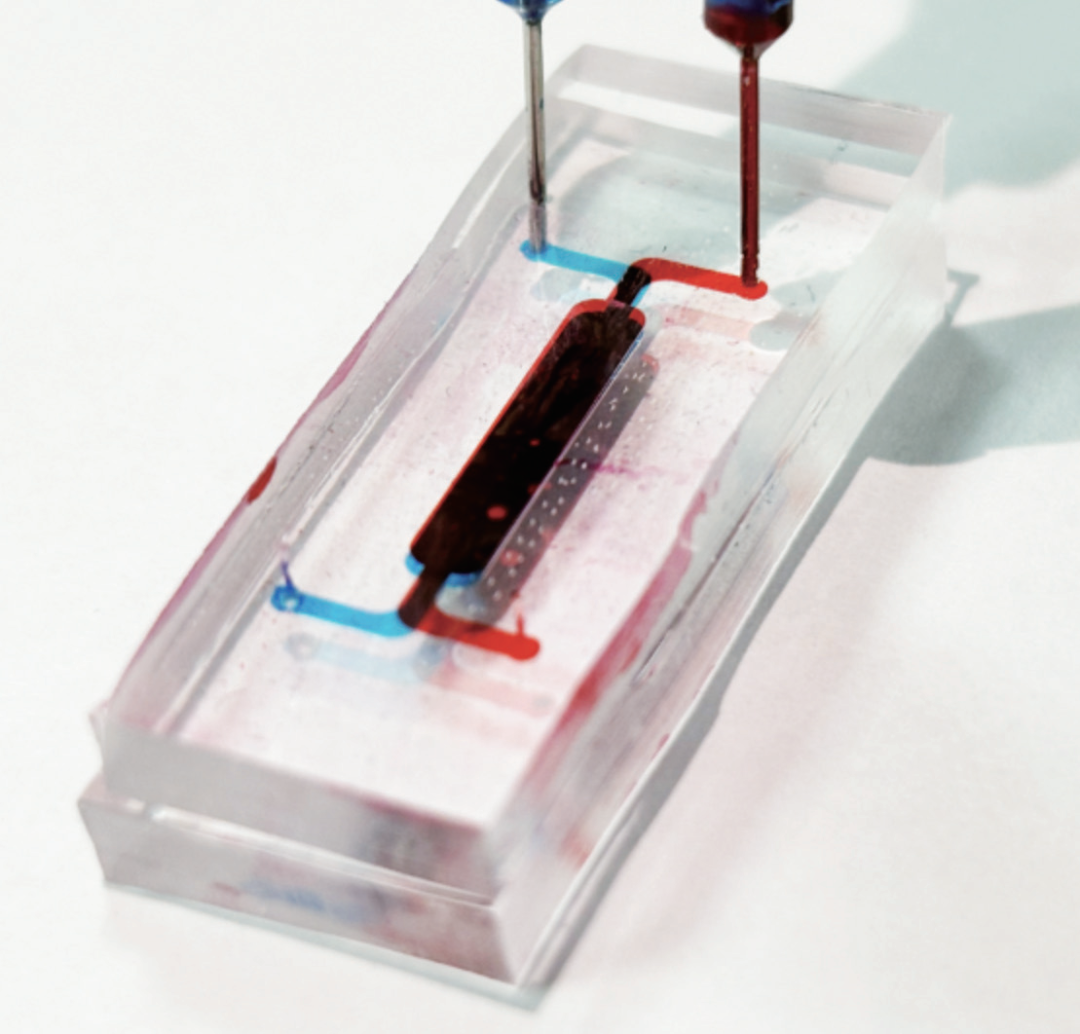 Figure 3 Schematic Diagram of Microfluidic Chip for Drug Combination Optimization and Screening
Screening of Combination Drugs
Microfluidic chips can achieve mixing and dilution of drugs, forming concentration gradients. By placing the patient’s own cells on the chip, effective drug combinations can be quickly screened. Experimental results can be judged by observing cell survival conditions, thereby determining the optimal drug ratio. This method of screening combination drugs is of significant importance, providing new ideas for tumor treatment.
Circulating Tumor Cells
Microfluidic technology has simple and precise advantages in screening circulating tumor cells. Through the traction and centrifugal forces in the microfluidic system, different types of cells can be separated, allowing for the counting of circulating tumor cells.
Human Organ Chips
Microfluidic technology can also simulate the human circulatory system, studying organ functions and drug effects by integrating different types of cells in human chips. In 2010, Donald Ingber and others from Harvard University published a representative organ chip in the journal Science, which is a lung organ chip. Human organ chips may free us from the ethical dilemmas of animal experiments.
Although the effectiveness and functionality of organ chips in replacing real organs still face challenges, scholars at home and abroad are making efforts. Human organs are complex, composed of various cell types and three-dimensional structures, thus simulating real organs is a significant challenge. Introducing three-dimensional microfluidic systems and printing technologies may help address this issue. Although they cannot yet replace real organs, the future is promising.
ConclusionIn summary, microfluidic chips are miniature chips that achieve precise control over micro-volume fluids through microfluidic technology. They are characterized by small size, low cost, short experimental cycles, and ease of operation, and can be widely applied in fields such as biomedicine, environmental monitoring, and food safety. For example, microfluidic chip technology can cultivate different types of cells in complex systems, forming multicellular populations, with the potential to replace live animal experiments; by simulating personalized disease models in vitro, individual drug screening can be conducted. With the development of technology, microfluidic chips will increasingly be applied in various fields, achieving higher levels of integration and intelligence. However, it is undeniable that before applying chips to clinical settings, challenges in physics, mechanics, fluid dynamics, and biology during chip processing must be overcome.
In the next ten to twenty years, microfluidic chips are destined to become a deeply industrialized technology, and the scientific research and industrial competition of microfluidic chips worldwide will become increasingly fierce.
China is considered one of the countries with a high level of research in the field of microfluidic chips, yet the domestic microfluidic chip industry is still in its infancy, with only a few microfluidic products available, lagging far behind developed countries like Europe and the United States. Nevertheless, we are pleased to find that in recent years, more and more experts in microfluidic technology, market professionals, as well as research institutions, enterprises, and investment agencies in China are paying attention to and engaging in the industrialization of microfluidic chips. We have reason to believe that microfluidic chips will successfully be industrialized in China.
– This article is based on the author’s report at the “Shanghai Science Popularization Forum” organized by the Shanghai Science and Technology Popularization Volunteer Association and published in the “World Science” magazine, July 2024 issue, “Everyone · Technology Frontier” column–
This article is reprinted from the WeChat official account of World Science