As the new generation of automotive electronic and electrical architecture (EEA) enters a rapid iteration phase, the trend of regionalization and centralized computing leads to concentrated computing power and reconstruction of power supply networks. Coupled with the maturity and large-scale application of various28nm automotive-gradeMCUs, there are stricter requirements for the power management integrated circuits (PMIC, Power Management Integrated Circuits) that accompany the controllers.
The accompanyingPMIC must not only adapt to multi-rail power supply, wide voltage range, and high transient response performance requirements but also achieve a deep match with the overall vehicle safety objectives at the functional safety level. So, what is the underlying relationship between functional safety andPMIC? What targeted technical solutions have mainstream manufacturers introduced?
Functional Safety is Becoming Increasingly Important
The ISO 26262 standard, based onIEC 61508, was established in2011 and is specifically designed for functional safety in the automotive electronics field. Since the inception of this standard, functional safety design has been widely applied across various automotive components. However, during the period from2014 to 2016, the application of functional safety in China was not widespread, as it was still in the era of fuel vehicles, where functional safety was mainly applied in areas such asEPS (Electric Power Steering), engine management, or braking systems.
Now, as we enter the era of electric vehicles and assisted driving, automotive electronic components are becoming increasingly complex, and scenarios such asADAS (Advanced Driver Assistance Systems) have an urgent need for functional safety. If functional safety is not in place, it can easily lead to accidents; functional safety is now ubiquitous in the automotive field.
When it comes to functional safety, the determination of its safety level is closely related to the system safety objectives and must be clarified based on specific system risk analysis. Therefore,OEMs will follow theISO 26262 standard, determining the ASIL (Automotive Safety Integrity Level) through hazard analysis and risk assessment (HARA). This level is assessed based on three dimensions:
-
S (Severity): The level of harm that an occurrence may cause to the driver, passengers, pedestrians, or personnel in surrounding vehicles.
-
E (Exposure): The probability of the operational scenario occurring during normal driving.
-
C (Controllability): The probability that the driver or other involved personnel can control the hazard to avoid injury.
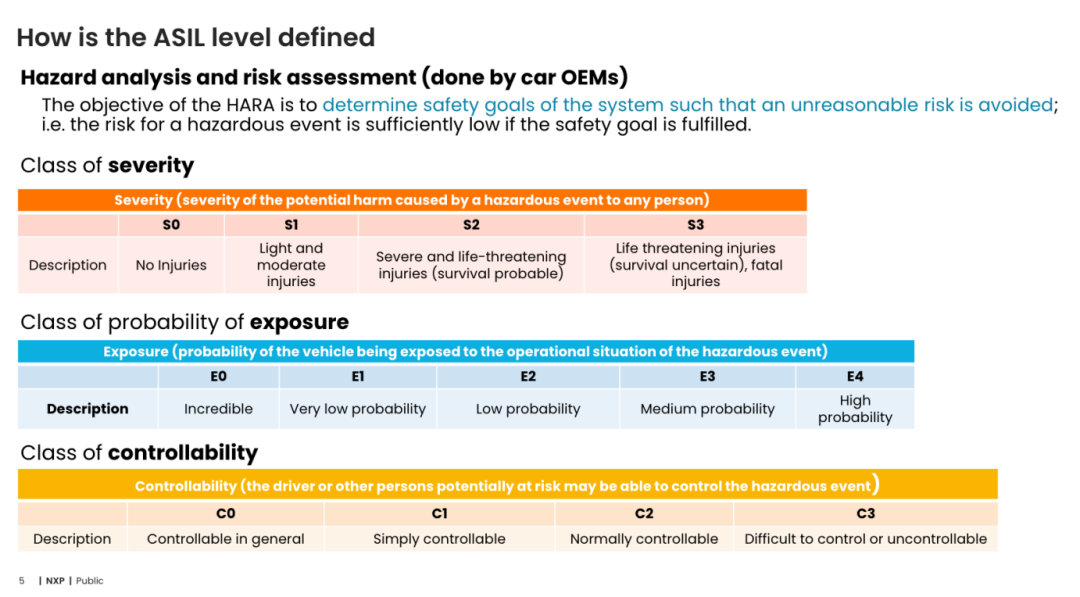
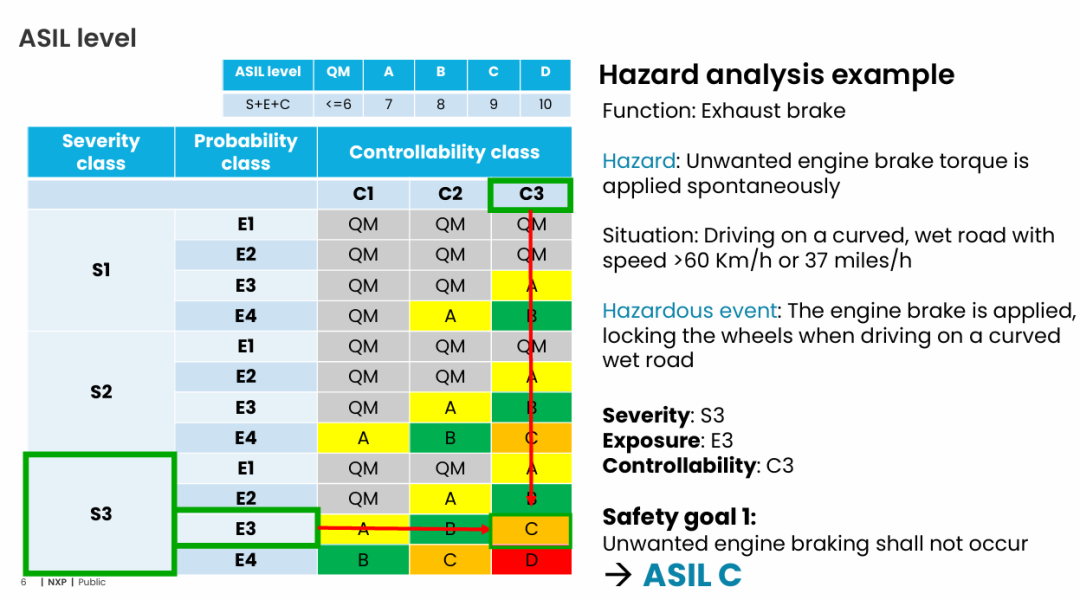
Through a comprehensive scoring based on these three dimensions, the automotive safety integrity level is determined, ranging fromQM (non-safety-related) toA,B,C,D (with D being the highest level). Among them, ASIL-D represents the highest strict level, while ASIL-A represents the lowest strict level, and QM (Quality Management) means that as long as the development follows the enterprise process, it can meet theISO 26262 requirements without any other special requirements.
For example, in the case of an exhaust braking function, if an unexpected engine braking leads to wheel lock-up on a slippery curve, the severity isS3, exposure probabilityE3, and controllabilityC3, corresponding to an ASIL C level.
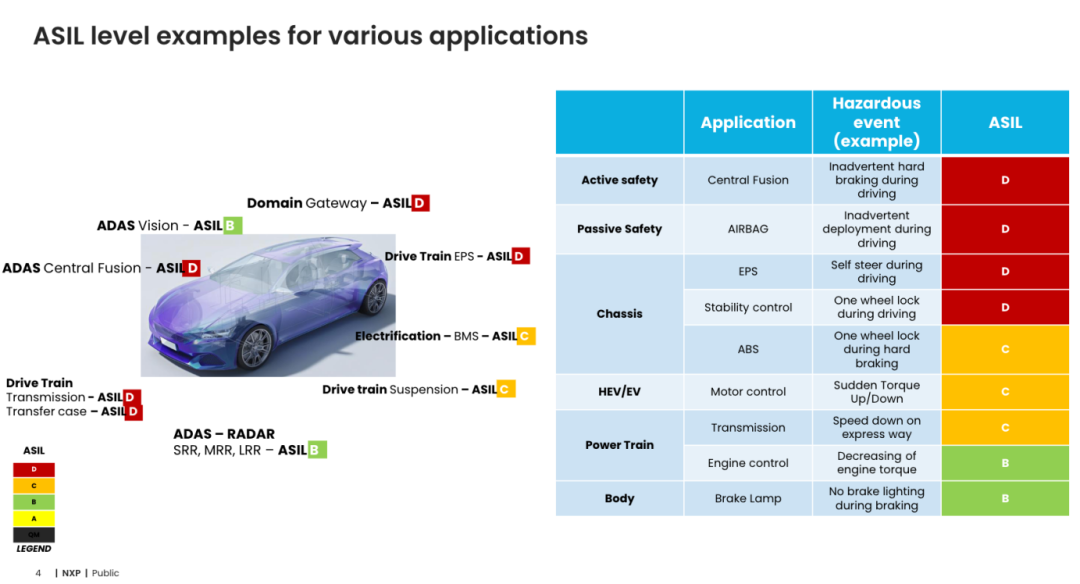
Different automotive systems correspond to different ASIL levels due to the risk differences of hazardous events, as shown in the table below:
PMIC and Functional Safety
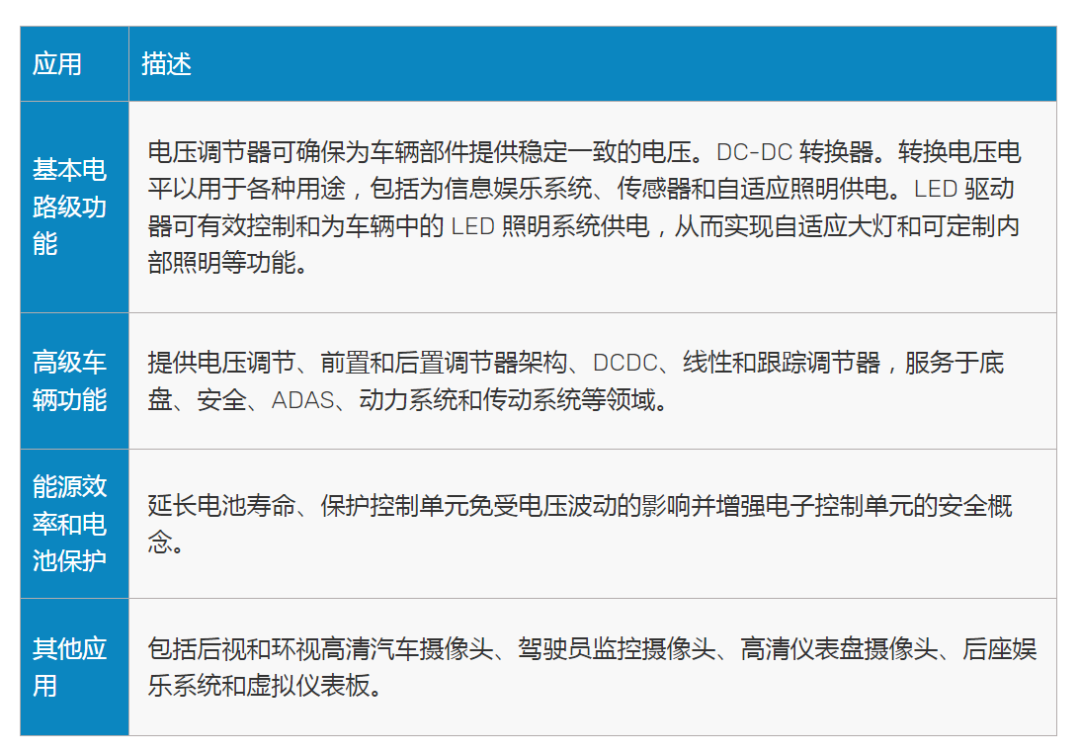
Automotive PMIC is one of the devices most closely related to automotive functional safety. Automotive PMIC manages and regulates the power supply for electronic systems in vehicles, responsible for managing various power supplies and voltages required by numerous electronic components in the vehicle, acting as a “power hub” to ensure efficient energy distribution while preventing electrical anomalies such as voltage spikes and surges.
Automotive PMIC has multiple functions including battery management, voltage regulation, and power sequencing, effectively completing tasks such as battery charging, DC-DC conversion, and voltage regulation; it integrates monitoring, sequencing, and functional safety support functions, simplifying customer design and saving circuit board space. By achieving high integration, it saves space and costs in automotive systems, enhancing system reliability and robustness; it features efficient configurable switch-mode regulators and linear regulators that can provide core voltage, memory voltage, andI/O voltage according to specific application needs.
PMIC is widely applied in various automotive scenarios, including power, ADAS, chassis, in-vehicle cameras, entertainment systems, and virtual dashboards. Currently, with the rise of zonal architecture, SoCs and MCUs are becoming increasingly complex, with more system functions and rising power consumption. PMICs need to continuously innovate to adapt to technical requirements. They are mainly divided into two categories: self-developed power management companies and MCU supporting companies. Although some automotive chip prices have decreased, the overall demand for automotive PMIC remains stable during the transition from fuel vehicles to electric vehicles, needing to meet higher power, complex system integration, and safety and reliability requirements for autonomous driving.
PMIC plays multiple roles in automotive functional safety:
-
Power supply and monitoring core: Provides stable power supply for MCUs, sensors, etc., while monitoring supply voltage, MCU operating status, etc. For example, it is necessary to ensure that the power supply voltage for the MCU is stable, monitoring its operation through a watchdog, and responding promptly to any anomalies.
-
Architecture meets safety requirements: PMIC integrates power conversion, monitoring, safety mechanisms, and other modules, reducing peripheral components, lowering system complexity, and enhancing signal integrity and anti-interference capability to meet different ASIL level requirements. For instance, a PMIC at ASIL-D level will integrate more comprehensive self-test (such as ABIST, LBIST), complex watchdogs (such as Challenger Watchdog), and fault control units (FCCU), while a PMIC at ASIL-B level will have relatively simplified safety function configurations.
-
Adapting to different ASIL levels: Different automotive application scenarios correspond to different ASIL levels, and PMICs need to adapt accordingly. For example, scenarios such as ADAS central fusion require ASIL-D, and PMICs need to have higher diagnostic coverage and lower hardware failure probabilities; while engine control scenarios require ASIL-B, PMICs only need to meet basic safety monitoring. Through such adaptations, PMICs help automotive electronic systems meet functional safety requirements, ensuring safe operation of vehicles in various scenarios.
Modern automotive PMICs have evolved from single power conversion devices to integrated systems of “conversion + monitoring + safety,” with architecture design following the principles of “layered defense and redundancy tolerance.”
It is important to note that while many manufacturers place PMICs and SBCs together, there are certain differences in the selection of these two power supply chips in ECU design. PMICs focus on power management, responsible for power conversion, distribution, and anomaly monitoring (such as watchdogs and voltage monitoring), while SBCs are an “integrated” solution that combines communication interfaces such as CAN, LIN on top of power supply. The choice between the two should be based on requirements: if the system needs precise management of multiple voltages, emphasizes conversion efficiency and complex power functions, choose PMIC; if integration of power supply, communication, monitoring, and other basic functions to simplify design is needed, or if there are high requirements for communication interfaces, then SBC is more suitable, although it is somewhat more expensive than PMIC.
Core Functional Safety Mechanisms of PMIC
So, what core functional safety mechanisms does PMIC include? Taking NXP’s PMIC as an example, it includes the following important mechanisms:
Self-test mechanism (ABIST/LBIST): ABIST (Analog Built-In Self-Test) is automatically triggered during PMIC startup or when waking from low power mode (LPOFF), and can also be triggered on demand via the SPI interface; LBIST (Logic Built-In Self-Test) checks the integrity of the logic circuits in the monitoring unit, covering both combinational and sequential logic faults.
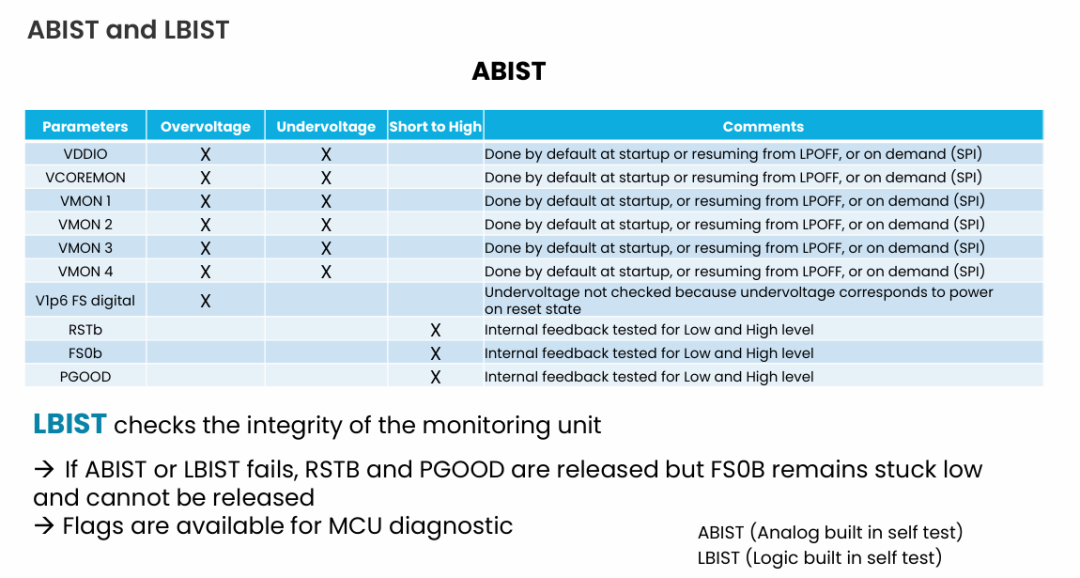
Voltage monitoring mechanism: Adapts to different scenario requirements through flexible voltage monitoring design.
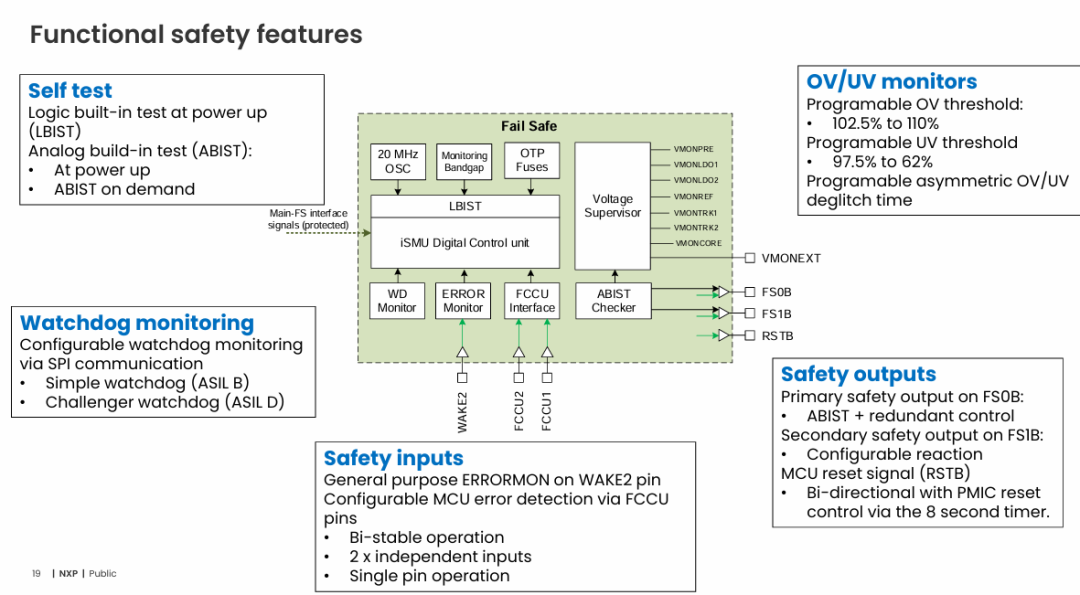
Watchdog monitoring mechanism: The watchdog is the core module for monitoring the operating status of the MCU, with different selections for ASIL-B or ASIL-D levels.
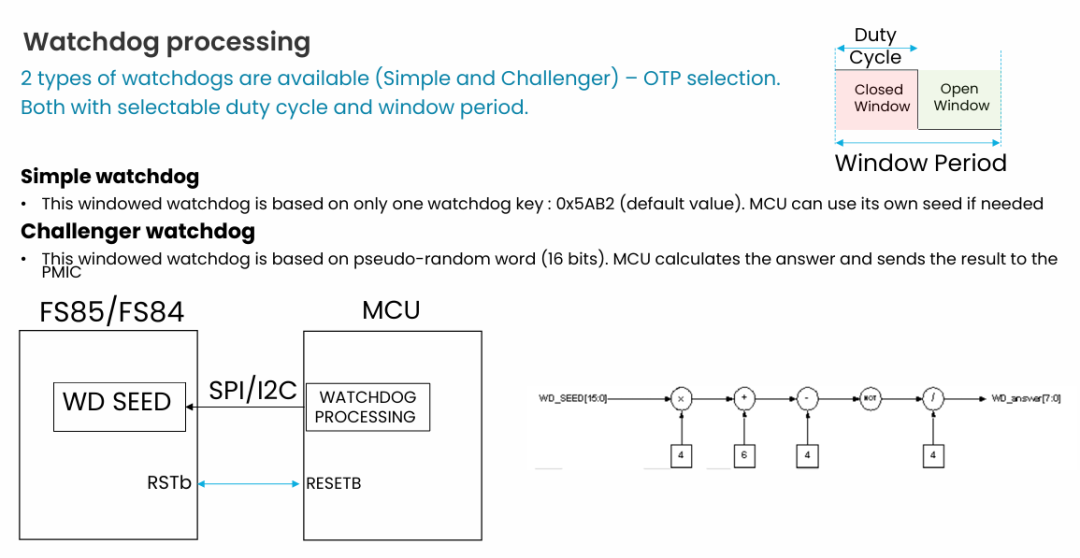
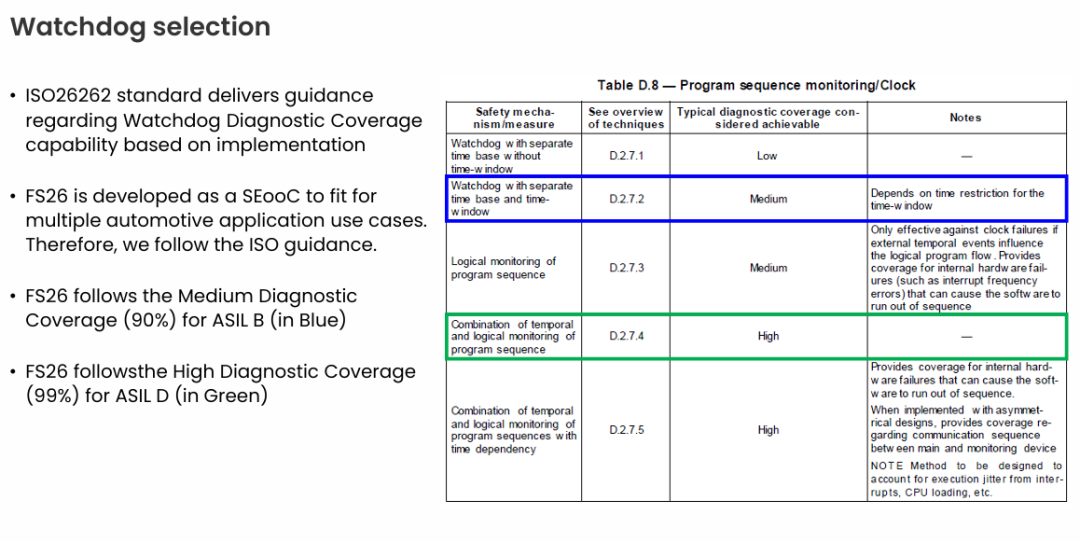
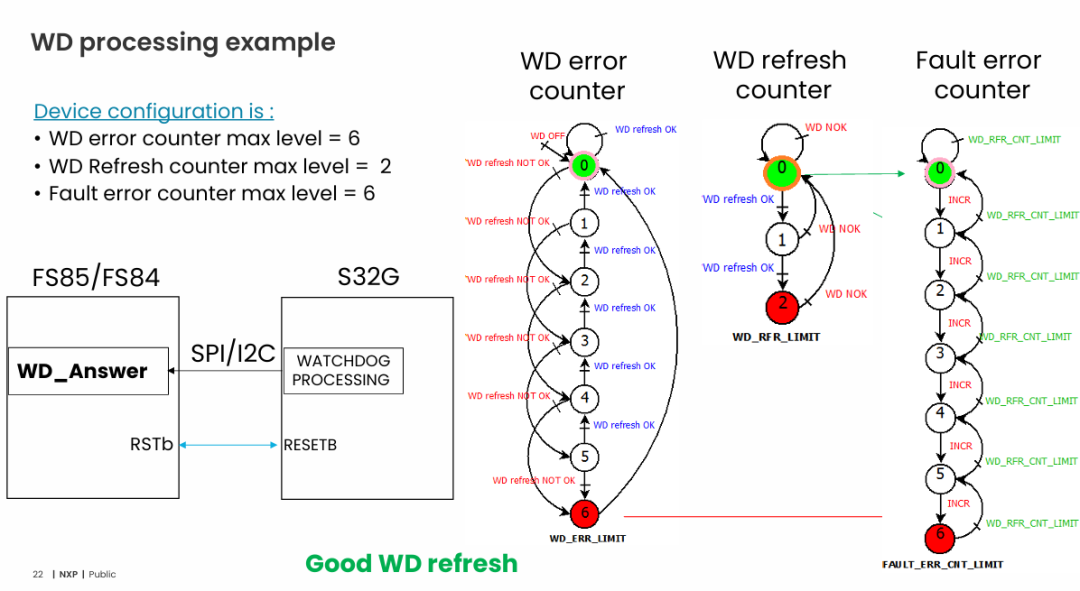
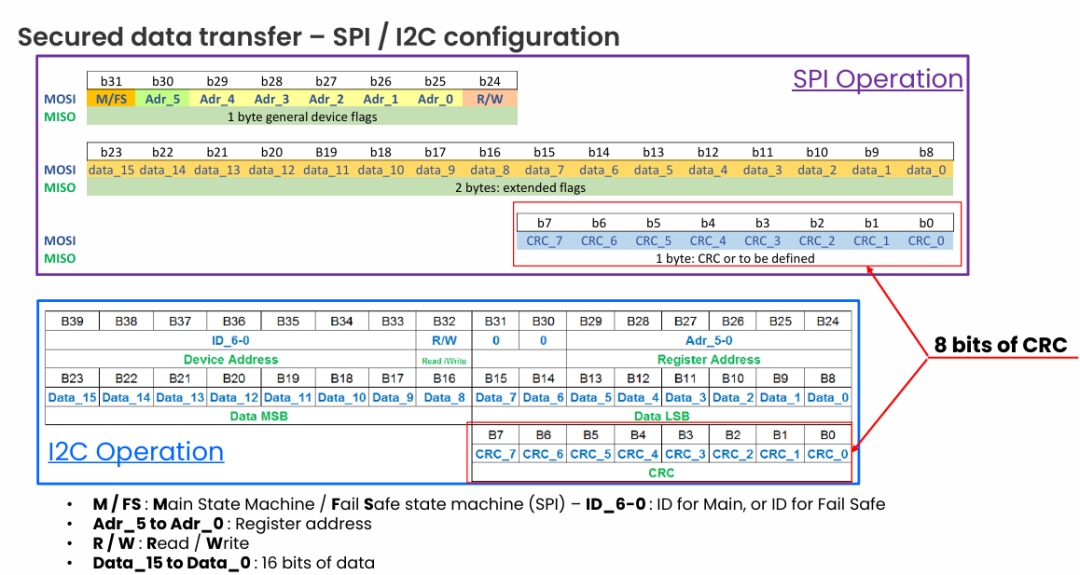
SPI/I2C transmission security: To prevent configuration data tampering or transmission errors, PMIC employs multiple security mechanisms.
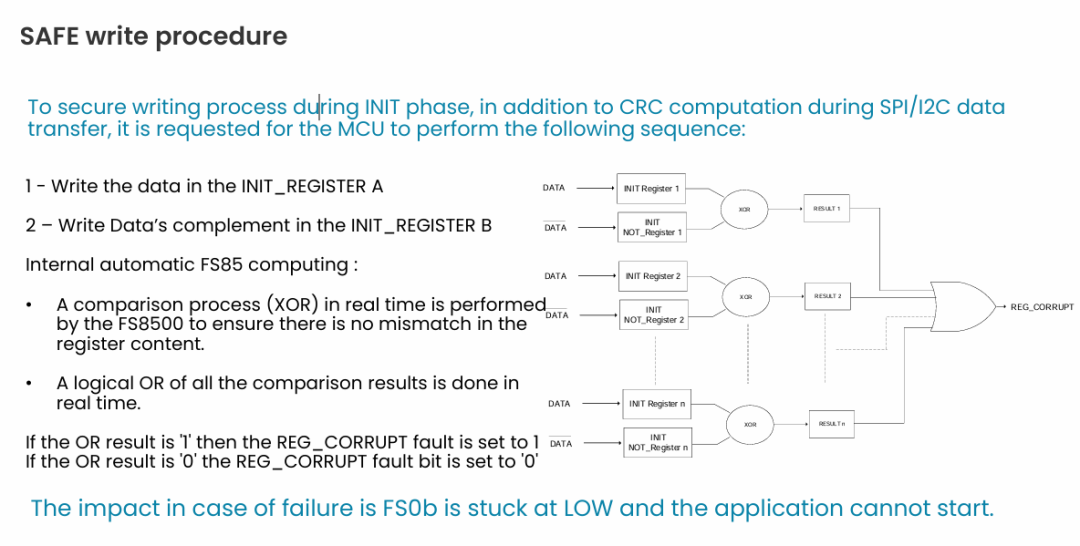
Safe writing process (INIT phase): During the initialization (INIT) phase of the PMIC, to prevent register configuration errors, the following process must be executed:
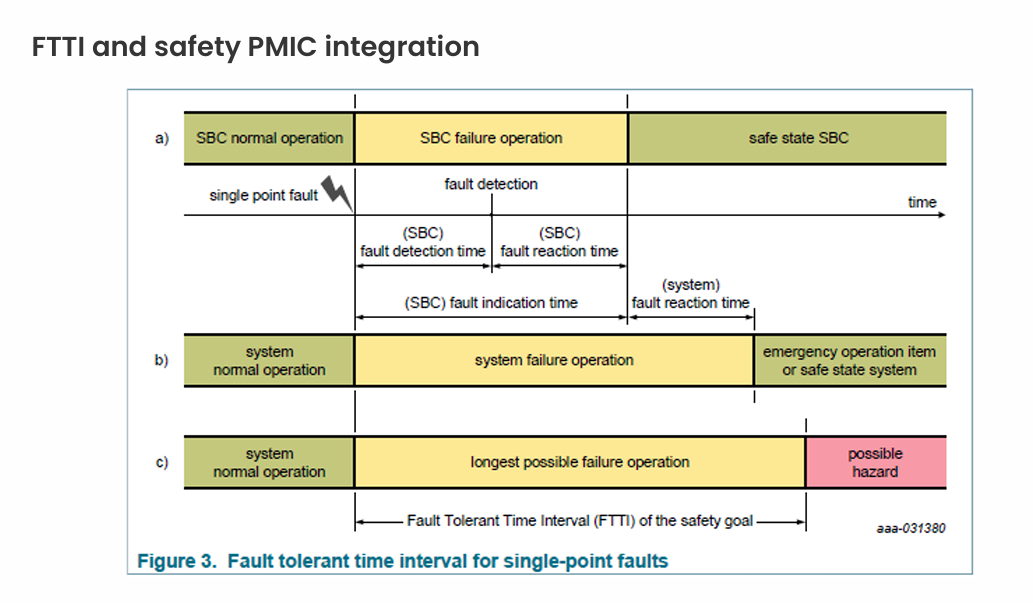
Fault Tolerance Time Interval (FTTI): FTTI is the maximum allowable time for the system to enter a safe state from the occurrence of a fault.
Layout of Foreign Manufacturers’ PMICs
Currently, automotive-grade PMICs are mainly from foreign manufacturers, each of whom has a different understanding of their products. This is especially true as the current EEA gradually develops towards centralization.
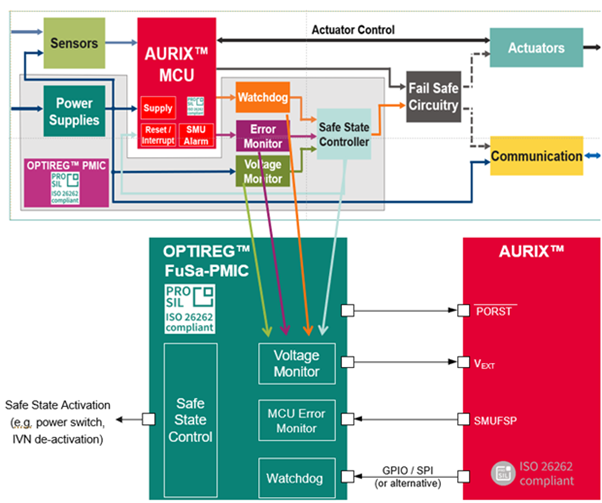
Infineon has provided its best partners for functional safety:AURIX TC4x and OPTIREG PMIC TLF4x.AURIX TC4x is Infineon’s third-generation product in the AURIX MCU product line, further enhancing its functional safety features.
Infineon’s TLF4x PMIC features safety monitoring functions tailored for AURIX, providing external safety measures required by AURIX: power supply voltage monitoring, clock monitoring (watchdog), SMU (Safety Management Unit) alarm monitoring. In addition, PMIC also provides a second shutdown path independent of the MCU, forming the smallest functional safety core unit with the MCU, supporting the system to meet ASIL-D functional safety requirements.
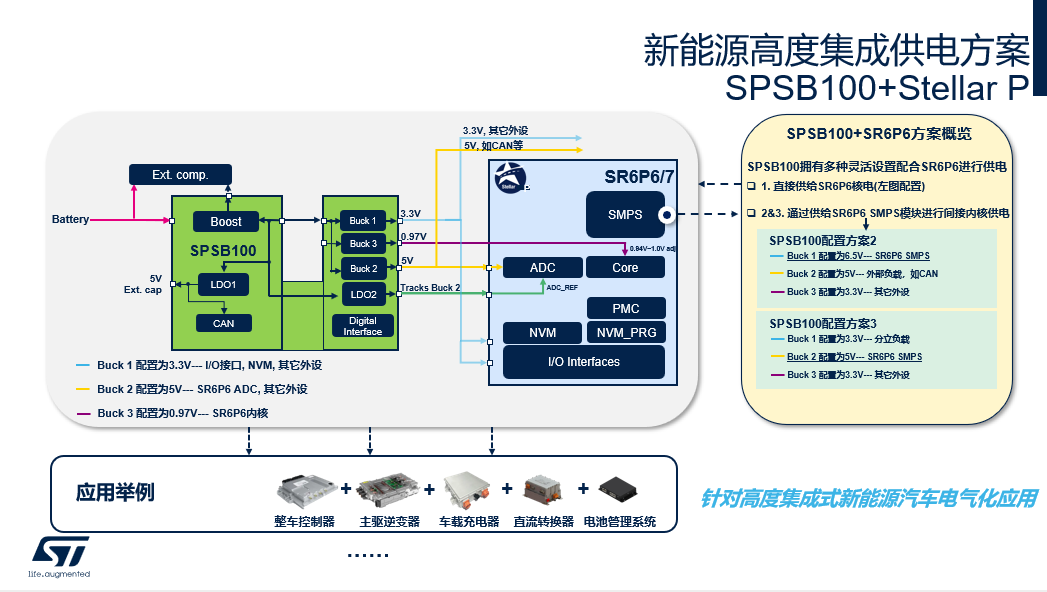
STMicroelectronics’ (ST) latest automotive-grade PMIC, the SPSB100, is a product that matches high integration MCUs. ST has provided the combination ofSPSB100+Stellar P.
SPSB100 integrates three buck converters (with a maximum output of 6A), two LDOs, and high-side drivers, supporting multiple voltage outputs such as 3.3V and 5V, allowing flexible settings for power-up sequences and output parameters, adapting to Stellar MCUs, zonal control units, body control, and other platforms. By storing configuration parameters in internal NVM, the SPI port supports control and diagnostics, with static current in deep sleep mode below 40µA, achieving both energy efficiency and convenience. It features multiple protection functions such as overcurrent, overheating, and voltage transient stability, providing ISO 26262 functional safety-related technical documentation, with factory defaults of SPSB100B (direct supply to MCU core) and SPSB100P (driving MCU internal power) configurations to meet different system power supply needs.
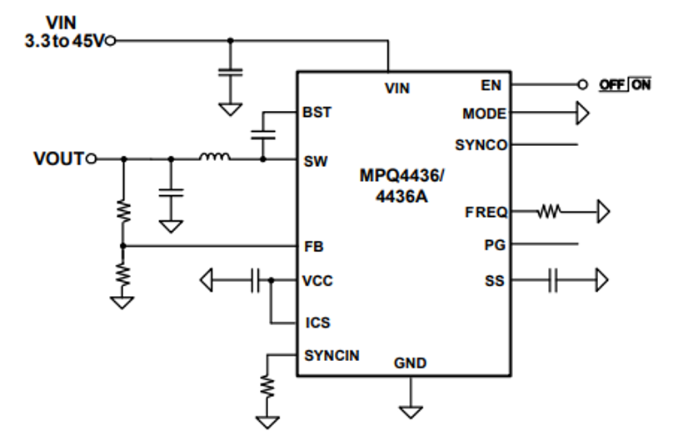
MPS has been a leader in the automotive chip field, continuously focusing on automotive functional safety, from self-developingMPSafe automotive functional safety development processes to creating a series of functionally safe chip products with level certification. MPS has been working hard.
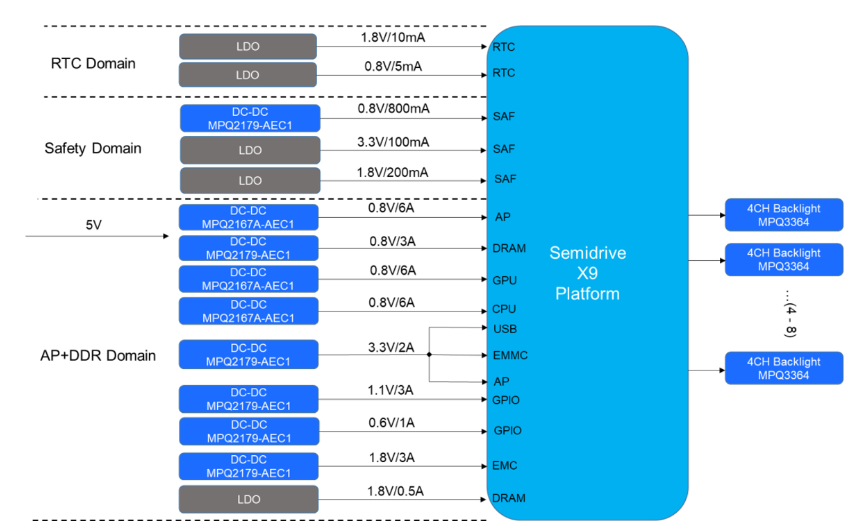
MPS mainly develops customized automotive PMIC solutions in collaboration with automotive-grade MCU and SoC manufacturers. For example, the previously collaboratedX9H reference board adopts a two-stage power supply architecture: the first stage circuit uses MPQ4436-AEC1, supporting 45V wide input and 6A output, with optional spread spectrum function to reduce EMI; the second stage circuit uses MPQ217x series and MPQ2167A-AEC1 to achieve fast transient response and ultra-low noise output, adapting to multi-screen interaction needs.
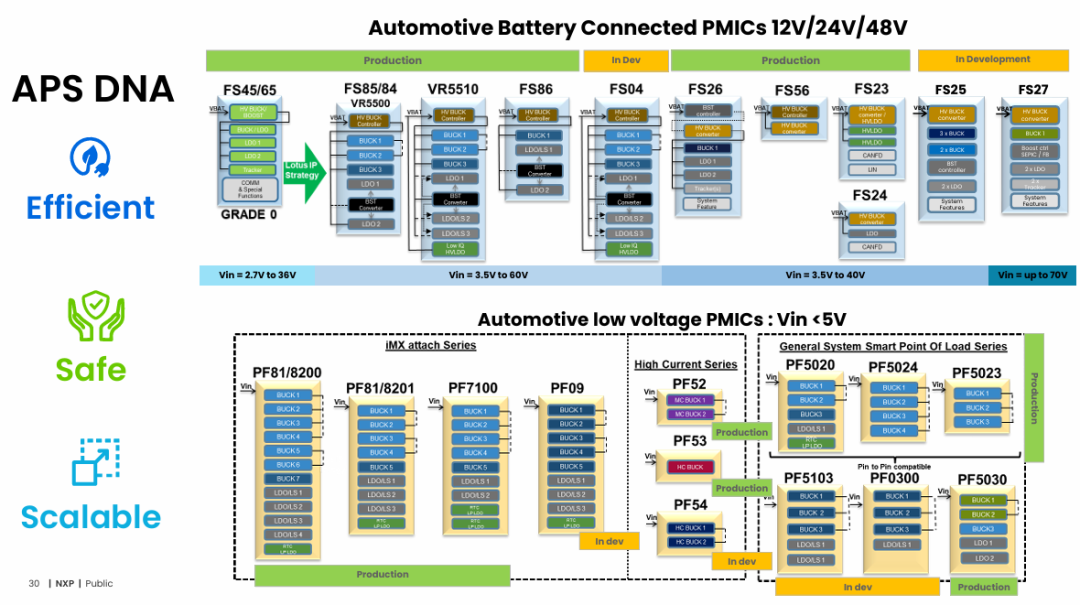
NXP has built a product matrix of automotive PMICs covering high, medium, and low voltage scenarios, adapting to the needs of traditional fuel vehicles to high-end smart electric vehicles. At the same time, NXP’s PMIC has established a cross-manufacturer processor adaptation ecosystem, supporting adaptation solutions for brands such as Ambarella, Horizon, Infineon, etc., in fields such as ADAS, power domain, and intelligent cockpit.
Domestic Manufacturers are Continuously Breaking Through
Domestic manufacturers have also been making breakthroughs, continuously launching related products.
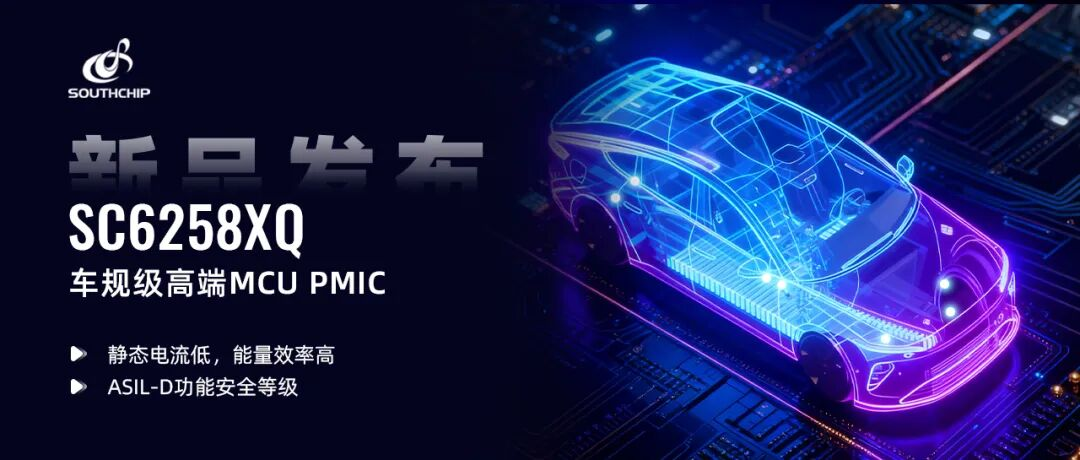
With the upgrade of functional safety requirements for automotive three electrics, domain control, chassis, and other systems, the demand for functional safety MCU in a single vehicle exceeds 10 units, and the corresponding demand for ASIL-D PMICs will also increase accordingly. In response to this trend, Nanjing Semiconductor Technology recently launched a new automotive-grade high-end MCU PMIC SC6258XQ, which can provide efficient and stable power support for the MCU cores in domain controllers, body control modules, powertrains, and ADAS systems.
SC6258XQ has passed the ISO26262 ASIL-D functional safety certification and AEC-Q100 certification, with low static current and high energy efficiency, supporting the diverse functions of high-end MCUs in vehicle systems. It provides system-level functions such as AMUX, external voltage monitoring, and supports flexible power-up/down sequences, adaptable to international manufacturers’ automotive-grade MCUs, as well as domestic MCUs. This product adopts a high-voltage converter pre-regulation + low-voltage converter output target voltage architecture, integrating multiple power rails, including 1 buck-boost controller, 2 buck converters, 1 high-voltage LDO and multiple post LDOs, used for MCU main power supply, core power supply, peripheral interface power supply, ADC power supply, and sensor power supply. In standby mode, the static current is as low as 20μA, and in sleep mode, the static current is as low as 300μA, effectively reducing energy dissipation and extending the driving range of electric vehicles.
In August of this year, the Silergy SA47301/SA47321 series automotive-grade PMICs obtained the SGS functional safety ASIL-D product certification. The SA47301/SA47321 series chips have passed the strict AEC-Q100 reliability certification and have become the first choice for domestic alternatives in various products such as electronic power steering systems (EPS), electronic parking brakes (EPB), transmission control units (TCU), active suspension, on-board chargers (OBC), battery management systems (BMS), advanced driver assistance systems (ADAS), vehicle control units (VCU), and domain controllers (ZCU).
Chipone’s automotive-grade 55 series PMIC chips successfully passed independent third-party testing, inspection, and certification by TÜV NORD Group for ISO 26262 ASIL-D functional safety product certification last year, achieving relevant certification. This achievement marks that Chipone’s automotive-grade 55 series PMIC chips have reached international standards in automotive-grade chip functional safety development capabilities. Chipone’s automotive-grade 55 series PMIC chips are high-performance, high-real-time, and high-safety automotive power management chips, integrating multiple power supplies for MCUs, CAN transceivers, sensors, and watchdogs, covering core applications such as transmission, electric drive, battery management, chassis, and ADAS.
Although there are currently not many domestic products, domestic manufacturers have begun to make breakthroughs. As the automotive EEA architecture further evolves, the requirements for PMICs paired with MCUs will also be higher, and it is believed that domestic manufacturers will catch up more quickly at that time.
References
[1]NXP: Functional Safety in Power Management
[2]NaXin Micro: https://mp.weixin.qq.com/s/Rh_RsC2-hFmL-G_oVJ59aw
[3]STMicroelectronics Automotive Electronics: https://mp.weixin.qq.com/s/Ct2MdNRw4Ia90fdwfv87mg
[4]Infineon Automotive Electronics Ecosystem: https://mp.weixin.qq.com/s/rijYh50A41dXCzQDEIEqJQ
[5]Zhihu: https://zhuanlan.zhihu.com/p/464128452
[6]Automotive MCU Software Design: https://mp.weixin.qq.com/s/OwJKu7gOGGvR6uRVxFdMKg
· END ·
Welcome to follow the subscription account of EEWorld: "Automotive Development Circle"

Scan the code to add the assistant and reply “join the group”
to communicate face-to-face with electronic engineers