In 2025, the competition in automotive cockpits has never been so intense.
“Weilai, Xiaopeng, and Li Auto” continue to refresh the intelligent cockpit experience, while “Hua Xiaomei” reshapes benchmarks with a cross-border momentum. A full-scale arms race around high-performance chips, AI large models, and seamless connectivity in intelligent cockpits has begun, rivaling the competition in electric drive and intelligent driving.
The automotive cockpit is transforming from a comfortable mobile space into the ultimate battleground for car manufacturers to compete for user minds and market discourse power.
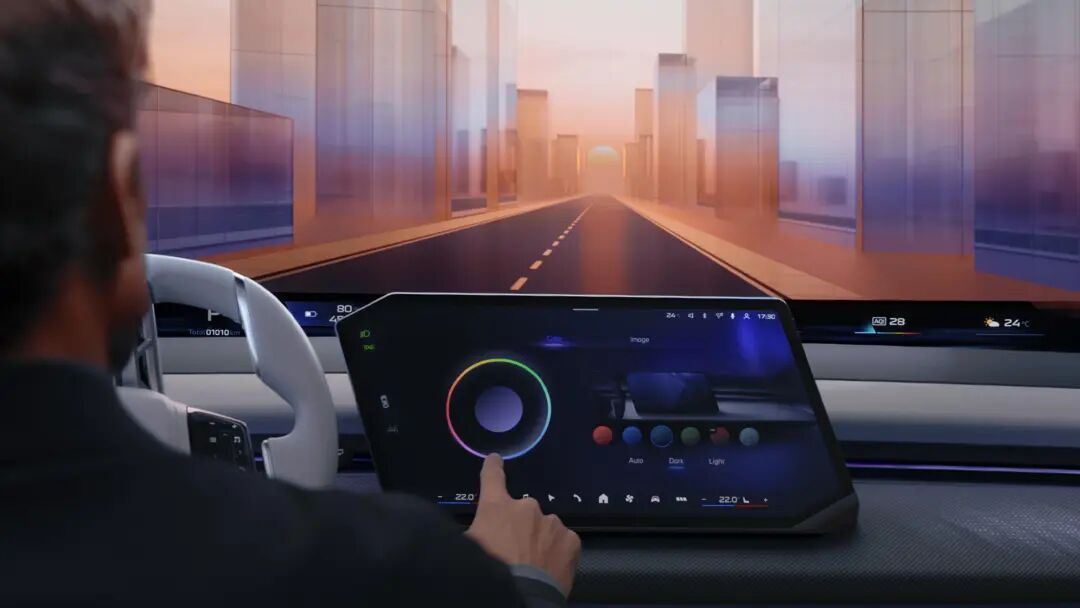
According to a report from the China Automotive Technology Research Center, the penetration rate of intelligent cockpits for new cars in China and the global market has risen to 73% and 58%, respectively, both occupying over half of the market share. In the face of this wave, car manufacturers are increasing their investments, seeking differentiation in advanced functions while promoting popularization to seize the market high ground.
Therefore, the industry also views 2025 as the “Year of Intelligent Cockpits,” and a fundamental question arises:Who is forging the key to unlock the future of cockpits behind intelligent cockpits? Who can transcend cycles with deep accumulation and become the core driver of this hardware revolution?

The Rise of Domain Controllers: The Driving Force Behind the Year of Cockpits
This arms race around user experience is undergoing a silent revolution in its underlying hardware support.
Recently, during discussions with colleagues in the automotive industry, when I asked, “What is the key hardware foundation supporting the explosion of the intelligent cockpit market?” their answer pointed to a core component – the domain controller.
Indeed, the answer is not a specific chip or a component familiar to ordinary users, but a “domain controller” that plays a core role behind the scenes, yet is not known to most consumers. It is the key hardware cornerstone that enables the popularization and evolution of intelligent cockpits.

What is a domain controller? A domain controller can be understood as the “central nervous system” of the car, which centralizes processing to solve the pain points of traditional automotive electronic architecture.
In the past, each function of the car, such as headlights, audio systems, and door locks, relied on an independent ECU control, just like every smart device at home needing to be operated separately. With the increase in functions, the number of ECUs easily exceeded a hundred, leading to lengthy and complex wiring harnesses, which could reach 3-4 kilometers, making development and maintenance extremely difficult, and unable to achieve efficient vehicle upgrades.
The emergence of domain controllers centralizes the computing and decision-making capabilities originally scattered across numerous ECUs into a few powerful domain controllers. The original ECUs are either simplified into more basic input-output terminals or directly replaced.
In simple terms, a domain controller is the core hub of vehicle intelligence, significantly reducing the number of ECU hardware, simplifying wiring harnesses, lowering complexity and costs, and making collaborative control of vehicle functions and seamless OTA upgrades truly possible.
The mainstreaming of domain controllers reflects the inevitable trend of automotive electronic and electrical architecture evolving from distributed to centralized.In this new battlefield defined by domain controllers, a unicorn worth billions has emerged, which, with its sixteen years of focus and deep cultivation, has stepped from behind the scenes to the forefront, becoming a key force empowering this revolution – Bota Intelligent Vehicle Networking.
As a key driver behind many car manufacturers’ intelligent cockpits, how strong is this “invisible champion”?

According to its official website, Bota was established in 2009 and is one of the earliest companies in China focused on the research and development of vehicle networking technology, recognized as an industry pioneer.
Currently, Bota’s clients cover over 50 automotive brands and more than 200 models, with cumulative financing exceeding 4 billion yuan. Its investor lineup is strong, including industry giants and well-known institutions such as Dongfeng Group, FAW Group, Haier Capital, Shanghai Guosheng Capital, Ping An Capital, China Electric Vehicle 100 People Association, Dongfang Fuhai, Zhong’an Capital, and Beijing Zhongke Rongyi. The company has also initiated the IPO process for the Hong Kong stock market.
After 16 years of deep cultivation, this is undoubtedly a victory for long-termism. However, the story of Bota is far from being summarized in a few words.

Sensitive Intuition,
Boldness to Take Risks
A deep analysis of Bota’s entrepreneurial journey reveals that its founder, Ying Yilun, had industry insight that began to take shape long before he entered the vehicle networking field.
In 2001, the first rays of the new century seemed to still carry the warmth of the millennium, with the air filled with anticipation and uncertainty about the future. At that time, Bota’s founder, Ying Yilun, had already embarked on his entrepreneurial journey in the advertising industry in Shanghai. This experience in brand communication and marketing allowed him to gain deep insights into consumer trends and to keenly engage with the burgeoning automotive industry.
In collaboration with automotive clients, Ying Yilun and his team clearly captured an impending wave: the informatization and intelligent transformation of automobiles. They foresaw that cars would no longer be mere transportation tools but would become important mobile terminals connecting people with information and services. However, looking at the industry chain at that time, there were still very few professional pioneers in the vehicle networking field in this opportunity-filled “new continent”.
In the autumn of 2009, insight transformed into decision. With keen market intuition and the courage to take risks, Ying Yilun officially founded Bota Intelligent Vehicle Networking by the Huangpu River.
Ying Yilun’s “marathon” in vehicle networking has officially started, running for sixteen years.

In 2010, automotive intelligence was still in its infancy. However, Bota proactively launched China’s first 3G vehicle networking system and reached a cooperation with industry giant SAIC Group. The inkaNet system, installed in the Roewe 350, was like the first stone thrown into the river of intelligent vehicles, creating ripples of change.
Soon, the hurricane of mobile internet swept in, reshaping the world and profoundly impacting automobiles. Users’ thirst for digital experiences shifted to the mobile “second space” – the car.
With giants entering the fray, the smoke of battle rose sharply. Internet giants like Baidu, Tencent, and Alibaba rushed into the automotive field with capital and ambition, igniting the new blue ocean of digital cockpits.
In the midst of market clamor, Bota precisely anchored its role:not to create dazzling terminal products under the spotlight, but to provide the brain of the digital cockpit – the domain controller,becoming the core Tier 1 empowering the intelligent transformation of Chinese automobiles, pushing the steel body to transform into intelligent life.
The speed of industry evolution continues to accelerate. Before 2015, the “nerve center” of digital cockpits was still dormant, with traditional chip suppliers like Renesas, NXP, and TI dominating the market with cost-effective products. In an instant, power-hungry players from the consumer electronics world, such as Qualcomm, Intel, and MediaTek, broke through the dam of the old order!
In 2019, Qualcomm launched the landmark product, the Qualcomm 8155 vehicle chip, and Bota Intelligent Vehicle Networking was the first to achieve mass production of the first-generation intelligent cockpit domain controller based on the Qualcomm 8155 chip in 2022, implementing an innovative “one chip, multiple screens” architecture in a flagship model of a leading independent brand, promoting the popularization and application of high-end intelligent cockpit domain controllers in the domestic market.
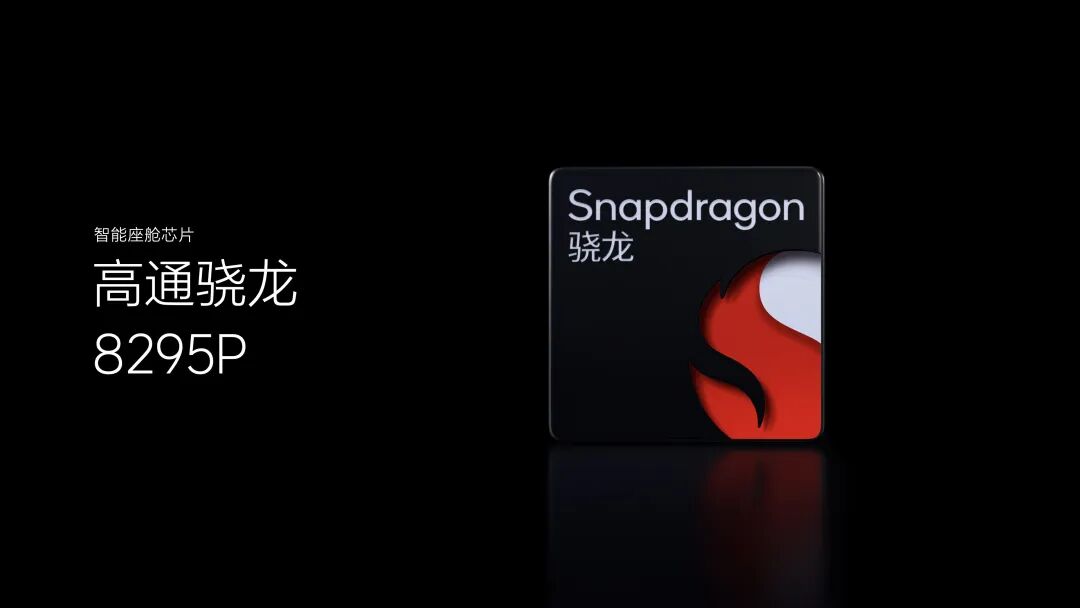
Subsequently, the golden age of digital cockpits arrived, crashing down in the collision of chips and the torrent of data! In 2021, the release of the Qualcomm 8295 chip marked the entry of cockpit intelligence into a new stage. Computing power became the new oxygen for intelligence. Bota keenly captured the trend and in 2023 became one of the first providers of Qualcomm Snapdragon 8295 intelligent cockpit solutions, further solidifying its market position through cooperation with Qualcomm and BlackBerry, deepening collaborations with heavyweight clients like Dongfeng, Avita, and Lantu.
By the end of 2024, based on the number of high-end intelligent cockpit solutions equipped with Qualcomm 8295 chips, Bota Intelligent Vehicle Networking ranked first among intelligent cockpit solution providers in China.
Bota’s territory is still expanding. With cockpit domain control as a pivot, they have entered another important ecosystem – Huawei’s Kirin chips and HarmonyOS. They are one of the few suppliers capable of providing solutions based on Kirin 9610A and HarmonyOS. By the end of 2024, the cooperation between the two parties upgraded to the source code level, allowing Bota to deeply master HiCar integrated development, further enhancing its core capabilities.
Thus,Bota has become one of the very few companies that deeply integrate both Qualcomm and Huawei ecosystems.From being an initial participant in the intelligent networking of Chinese automobiles to a game-changer, and now to a backbone of the industry, Bota Intelligent Vehicle Networking has firmly occupied the “intelligent” high ground.At every key node in the leap of the Chinese intelligent cockpit industry, Bota Intelligent Vehicle Networking has played an important role.
Looking back at history, we can find Bota’s “three jumps” logic:
From 0 to 1 (2009-2014): Defining a blank market with technological originality, daring to be the “first to eat crabs”;
From 1 to N (2015-2019): Breaking industry inertia with model innovation, building walls with patents, and expanding ecosystems;
From N to ∞ (2020 to present): Partnering with giants through ecosystems, sprinting towards the global core supply chain of intelligent vehicles.
Each breakthrough at key nodes confirms that local Tier 1 companies in China are gaining increasingly strong technological discourse power in the arms race of intelligent cockpits. Bota Intelligent Vehicle Networking’s sixteen-year journey is a microcosm of the independent innovation and resilient growth of the core supply chain of intelligent vehicles in China.

From the Huangpu River to the Hong Kong Stock Exchange,
A victory for long-termists
On June 13, 2025, the China Securities Regulatory Commission officially issued the filing notice for Bota Intelligent Vehicle Networking’s listing in Hong Kong. This leader in intelligent cockpits has officially entered the final sprint stage of its IPO process, about to face the ultimate test of the Hong Kong stock market.
According to the updated prospectus in March 2025, Bota’s revenue is projected to rise from 1.2 billion yuan in 2022 to 1.5 billion yuan in 2023, and nearly 2.6 billion yuan in 2024, a year-on-year increase of 70.9%. According to Zhi Shi Consulting data, Bota holds a market share of 11.9%, ranking as the second-largest supplier of intelligent cockpit domain controller solutions for new energy vehicles in China, with a valuation exceeding 10 billion yuan.
The completion of this filing marks that Bota is just one step away from becoming the “first stock of intelligent cockpits in China”. If Bota Intelligent Vehicle Networking’s IPO in Hong Kong is successful, it will not only be a capital milestone for a single enterprise but also a key node in the upgrade of the Chinese intelligent automotive industry chain.
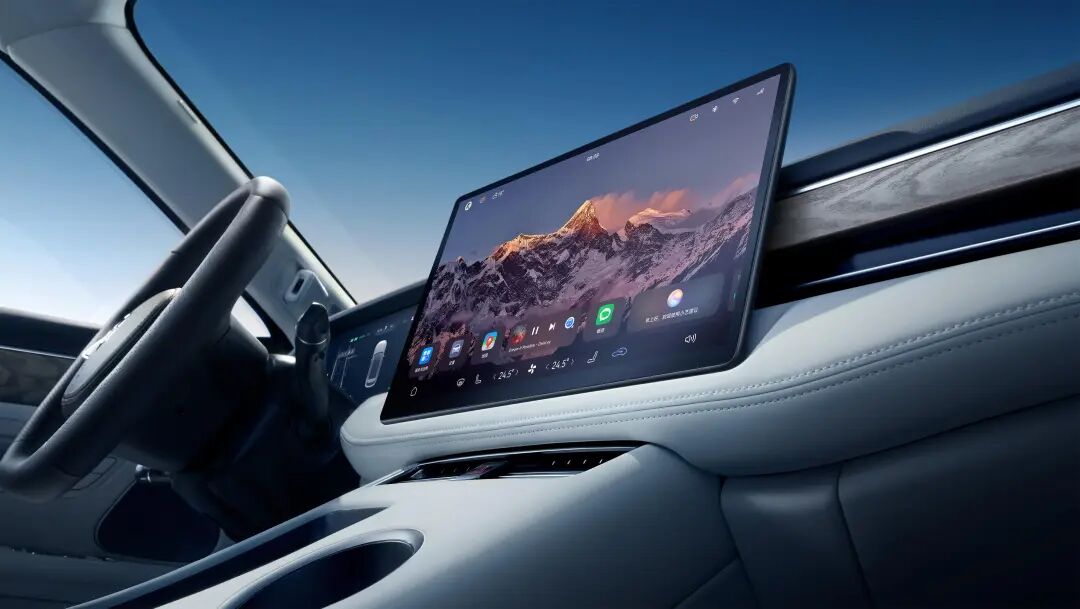
Looking back at the 16-year journey, this is a complete victory for long-termism. In the turbulent arena of automotive technology, “long-termism” is not an empty talk, but a marathon that requires continuous heavy investment, firm belief, and extraordinary endurance.
Bota Intelligent Vehicle Networking, with a sixteen-year long run, starting from the Huangpu River to soon knock on the door of the Hong Kong stock market, holds the secret to its comeback in the “technical faith” and “strategic resilience” of its founder, Ying Yilun.
Technology as the foundation is Bota’s ballast stone to navigate cycles and withstand storms.
For sixteen years, Bota’s foundation has always been rooted in the fertile soil of research and development. The prospectus silently tells this persistence: over 700 million yuan in R&D investment in the past three years. Behind the numbers are 6,034 patent applications building a technological wall, and 1,721 authorized patents (including 898 invention patents) forming a competitive barrier.
From the first Chinese natural language vehicle voice interaction system iVoka, to the first vehicle navigation system that avoids congestion, to the world’s first solid-state sound field intelligent system, every step of Bota is at the forefront of technological innovation.
As intelligent cockpits become the main battlefield, Bota has also worked hard to build a full-stack capability system from “cloud” to “end”:
The “Qing OS” operating system serves as the nerve center of the intelligent cockpit, with a modular design adaptable to various vehicles;
The “Qing Core” hardware platform is compatible with top chips from Qualcomm, Huawei, etc., achieving flexible configuration and rapid iteration of computing power through a modular SoC architecture;
The “Qing Cloud” cloud service platform connects vehicles with the digital world, supporting full-scenario services from remote upgrades to emergency responses.
The three “Qing” brothers are the confidence of Bota in providing “one-stop” intelligent cockpit solutions to car manufacturers with deep technical foundations. This means that Bota has the capability to achieve differentiated configurations by providing a combination of software, hardware, and cloud services, maximizing the diverse needs of automotive clients.
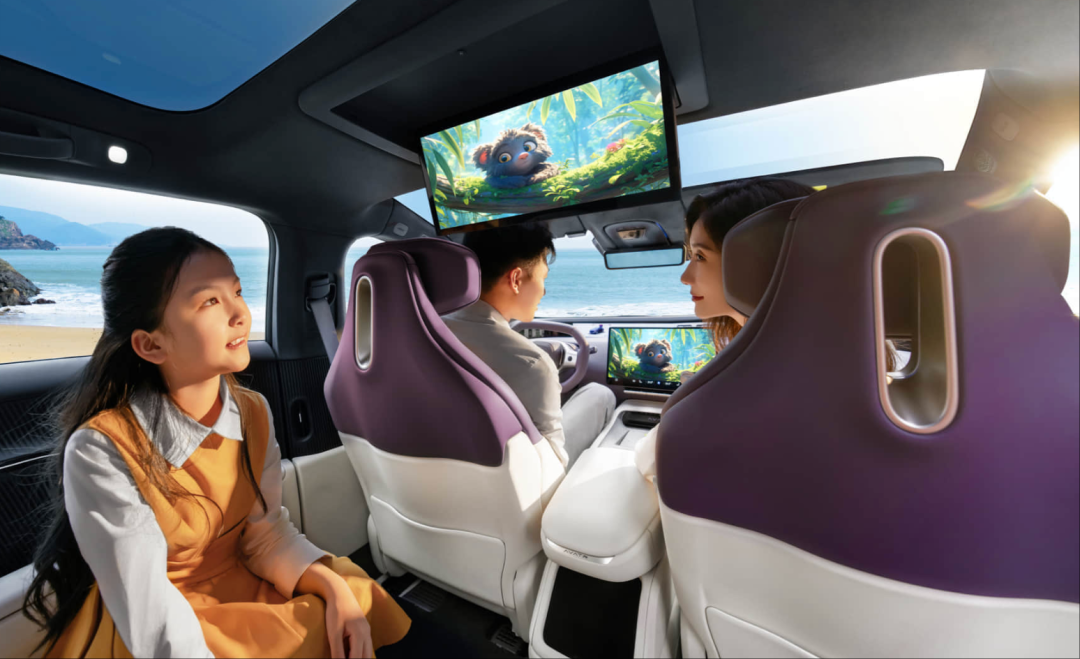
For example, Bota integrates the core module of Qing OS into Huawei’s HarmonyOS, making the cockpit domain control technology compatible with the Kirin processor and HarmonyOS, meeting the customization requirements of multiple automotive brand clients. This comprehensive capability is a better solution for car manufacturers in the heated competition to seize new opportunities and solutions.
Long-termism is by no means complacency.Bota’s sixteen years have been years of keen insight and seizing opportunities. Ying Yilun’s “marathon” continues. This technology-believing long-distance runner is driving Bota, the “invisible engine” of Chinese intelligent vehicles, towards a future woven by computing power, data, and humanized experiences.
The tide of the era driven by intelligence continues to surge, and Bota’s story is far from its final chapter.
#Bota #VehicleNetworking #IntelligentCockpit #Huawei #Qualcomm
End