
Connected video devices are everywhere. From doorbells to cars, cheap image sensors from old phones are finding new life in connected devices. This marks a significant shift in how we create and consume devices.
As a result, video is shifting from a core function of the Internet of Things (IoT) to a secondary attribute. These cameras are not only changing how we watch videos but are also fundamentally transforming consumer demand and embedded device development in three main ways.
Embedded Vision Is More Than Just Adding Cameras
With this development, users now expect even the simplest embedded sensors to record, process, and transmit video. For example, a connected oven no longer just measures temperature; it includes a real-time video source to monitor dishes. Additionally, some models even use artificial intelligence to view images, assess cooking processes, and suggest remaining time. This is much more complex than basic embedded designs, presenting developers with a steep learning curve to transition to video-centric systems. Notably, providing embedded vision does not merely mean adding a camera. Instead, it requires an integrated system to capture image streams and process onboard data. In more advanced cases, as mentioned, devices can leverage other technologies to make autonomous decisions. This is a specific system designed for particular tasks.
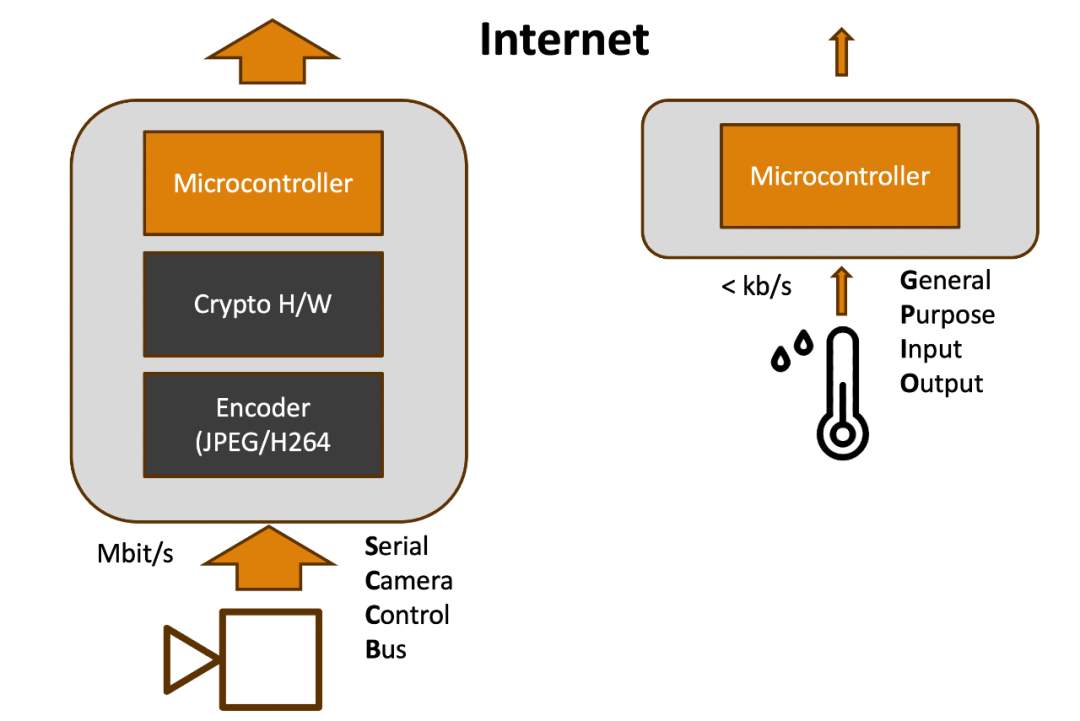
Comparing a camera monitoring platform (left) and an IoT temperature sensor (right) shows the data journey from device to the internet.
Clearly, enabling embedded vision requires more components and technical troubleshooting. (Image source: Nabto)
Developers soon realize that creating such devices can only be done with specialized components. For instance, real-time operating systems may struggle to efficiently handle and transmit video. This often necessitates a switch to high-end operating systems like Linux and their adaptive software libraries, although this may raise energy concerns for battery-powered devices.
Moreover, achieving efficient video encoding and compression typically requires specific chip combinations. And because video exponentially increases data volume, developers will need additional hardware components to encrypt transmitted images. In summary, creating video-supported devices is no easy task, leading to software, hardware, and development hurdles.
The Vendor’s Dilemma
For this reason, device manufacturers should think carefully before venturing into video. They not only need to redesign the hardware and software of the devices but also securely create supporting applications and platforms to connect users with the devices. This requires special attention to data transmission, security, and privacy. Therefore, flexible teams with diverse skills will best meet this need.
However, not every business wants or needs to create video-enabled ovens or doorbells. Instead, leaders must assess this evolution in the context of their products. This includes prioritizing research and development (R&D), considering use cases, and making adjustments accordingly. Most importantly, do not just add cameras for the sake of it. Trends come and go. Only pursue this direction when it makes commercial and technical sense.
Additionally, remember that device vision is not synonymous with cameras. For example, LiDAR sensors can determine distance by targeting objects with lasers and measuring the return time of reflected light. Autonomous vehicles use this technology to map their environment in 3D. In some cases, providing this “vision” capability is easier to integrate and cheaper than embedded cameras. Furthermore, from a privacy standpoint, customers may prefer using sensors in their homes over cameras.
Endpoint Security Is Paramount
Of course, adding cameras to everyday devices poses security risks, especially when these devices often have limited defense mechanisms. For instance, during the Mirai botnet attack, a Chinese monitoring manufacturer recalled nearly 5 million cameras with guessable default passwords.
Thus, this is not a redesign of devices to be taken lightly. For example, user authentication must be a top priority. Tools like Public Key Infrastructure (PKI) achieve this by using encryption keys instead of traditional usernames and passwords. This provides two benefits. First, it offers high resistance to brute-force attacks. Second, it eliminates shared secrets like passwords. The latter is especially important when security breaches or internal compromises occur, necessitating a complete reset of all deployed devices.
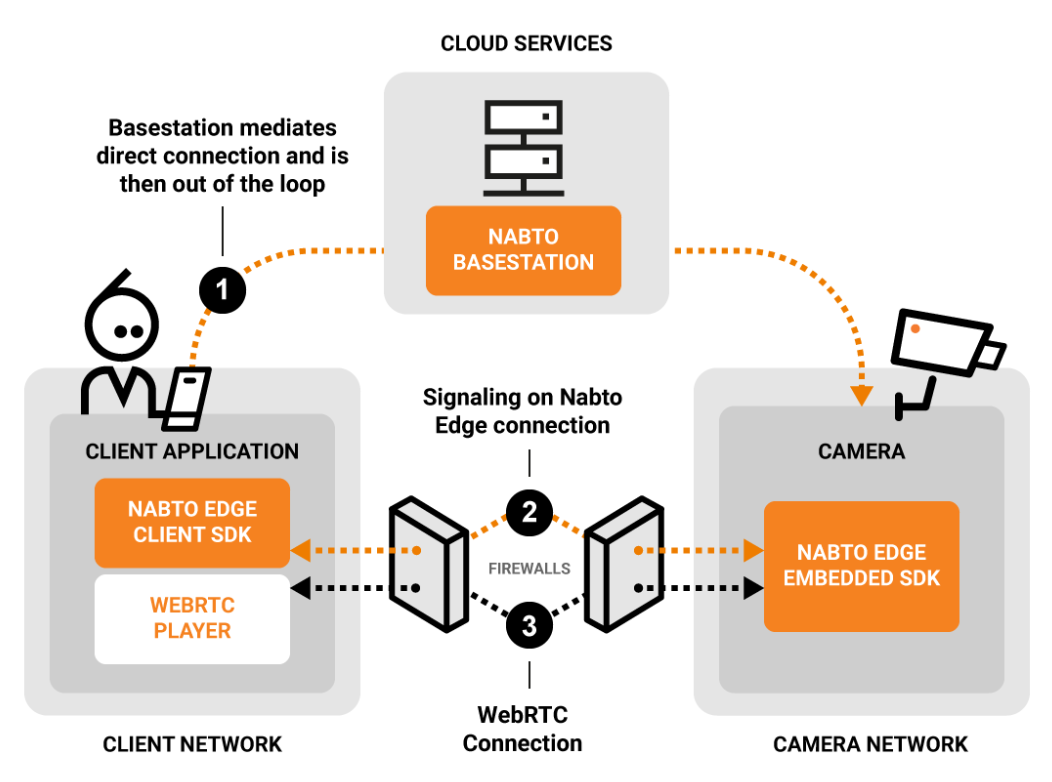 To establish a WebRTC connection between two peers, they must be able to negotiate through signaling connections. (Image source: Nabto)
Whether through direct peer-to-peer connections or cloud-based solutions, securely transmitting processed data to end-users is also crucial. The former bypasses any intermediary servers to ensure end-to-end communication. The latter is another popular transmission method, although it may affect affordability as cloud storage providers charge based on file size (an important consideration when dealing with the large amounts of data generated by video processing).
As devices invade modern homes and offices, increasingly adding cameras, developers must carefully consider their next steps. They must prioritize innovations that make commercial and technical sense while protecting user data with robust security measures. The video revolution has arrived—now it’s up to device manufacturers to plan the way forward.
Source: Qianjia.com
Disclaimer
This article is sourced from the web, primarily aimed at sharing information to allow more people to access the information they need. Copyright belongs to the original author. If your rights or copyrights are infringed, please notify us in a timely manner, and we will delete it within 24 hours.Looking Back At Party HistoryCentral Committee Issued “Party History Learning Education Work Regulations”ReprintDoing These 11 Details Can Make Security Monitoring Construction Twice As Effective!NoteUnderstand the Guangdong Province High-Quality Development Conference From 12 KeywordsNewsGuangzhou Holds High-Quality Development Conference, Guo Yonghang, Sun Zhiyang, Wang Yanshi, Li Yiwei Attend

–END–
Click to Follow for First-Hand Security Information
▼

Light Up [In View], Share With More People