During my business trip, I took some time to discuss sensors (148).
Last time, I casually wrote a short article titled “The Urgency of Domesticating Pressure Sensors” on WeChat, which caused quite a stir among friends in the industry. Today, while waiting at the airport, I am writing the second part for everyone to discuss.
In a hurried one-and-a-half-day trip to Tianjin, I attended a half-day meeting and an evening discussion. I felt that the leaders of the Tianjin Municipal Committee and the municipal government are very pragmatic about the development of the IoT industry, empowering manufacturing and various smart applications. There were only over 40 participants from outside the city, yet two members of the municipal committee met with us in the afternoon and evening, highlighting Tianjin’s emphasis on attracting investment in the IoT sector.
In the afternoon and evening, entrepreneurs from Beijing and Shanghai had precise connections with leaders from Hexi District. The two main leaders also invited the Shenzhen IoT Association to consider holding an IoT exhibition in Tianjin, potentially starting a future with two major exhibitions in China, one in the south (Shenzhen) and one in the north (Tianjin).

Today, I had a nearly three-hour conversation with a technical expert from a foreign-funded sensor company in Tianjin. The main topic was the domestication of pressure sensors in China and how they can expand into high-end markets and applications. We also discussed suggestions and expectations for our original MCS high-end pressure sensors.
 MEMS pressure sensors are currently the most popular form of pressure sensors in China. There are dozens of companies capable of producing oil-filled cores, with nearly ten in Shaanxi Province alone. However, none have successfully produced sensors with a range below 35 kPa, forcing many applications to rely on imports. Delving deeper, among the dozens of manufacturers producing oil-filled cores, most buy imported wafers, with very few capable of designing and manufacturing wafers themselves. Furthermore, are the raw materials for producing 4-inch, 6-inch, 8-inch, or even 12-inch wafers sourced from domestic manufacturers? This raises the question posed by Mr. Xu, the former director of the Shenyang Institute of Technology, who has been calling for years: when can Chinese pressure sensors solve the issue of having “devices” without “cores”? (where “devices” refers to transmitters).
The glass micro-fusion process used to create pressure sensors also faces the same MEMS wafer issues. Only a few companies have managed to solve the problem of connecting MEMS wafers to metals through glass sintering, which is a significant advancement.
 The progress in ceramic piezoresistive and ceramic capacitive pressure sensor cores in China is notable. Shenzhen Anpeilong has genuinely addressed these issues and is now producing them in large quantities, especially in the automotive industry, marking a significant advancement for China’s pressure sensors. However, I have yet to see a Chinese manufacturer achieve the high precision of ceramic capacitive pressure sensors like those from Germany’s E+H company.
There are also a dozen companies producing ceramic piezoresistive sensors domestically, but large-scale applications, especially those exceeding one million units, have not yet been observed. However, I am unclear whether the ceramic cups and slurries have truly achieved domestication.
 The sputtered thin-film process, primarily for high-pressure range pressure sensors, has also seen significant development in recent years in China. There are nearly ten manufacturers in the country. Military enterprises have good production lines, but low-cost civilian applications have not yet been resolved. Private enterprises have made notable investments in sputtered thin-film technology, particularly in Hunan Province, but long-term stability and large-scale applications still need improvement. This is also a significant advancement.
Similarly, I am unsure whether the materials used in the sputtering process have truly achieved domestication.
 While chatting, I received inquiries from some WeChat friends about various sensors.
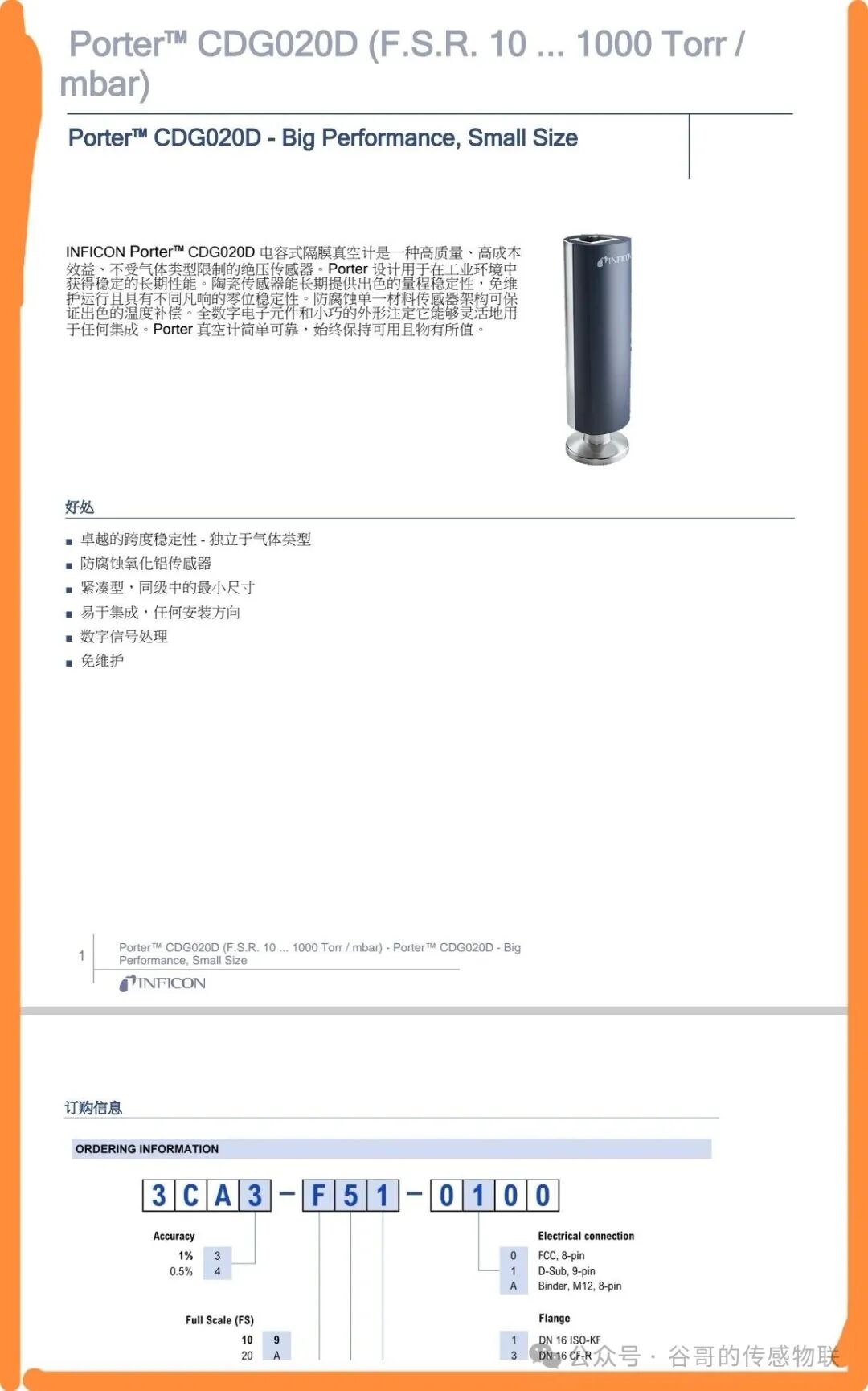 For example, the low-pressure vacuum silicon pressure sensor shown above, used in the semiconductor industry, has a pressure range of 1000 hPa. Our MCS should be able to produce it, but there are still issues with upgrading the process environment that need to be resolved, requiring additional investment. Companies in China that can produce such sensors are welcome to contact me.
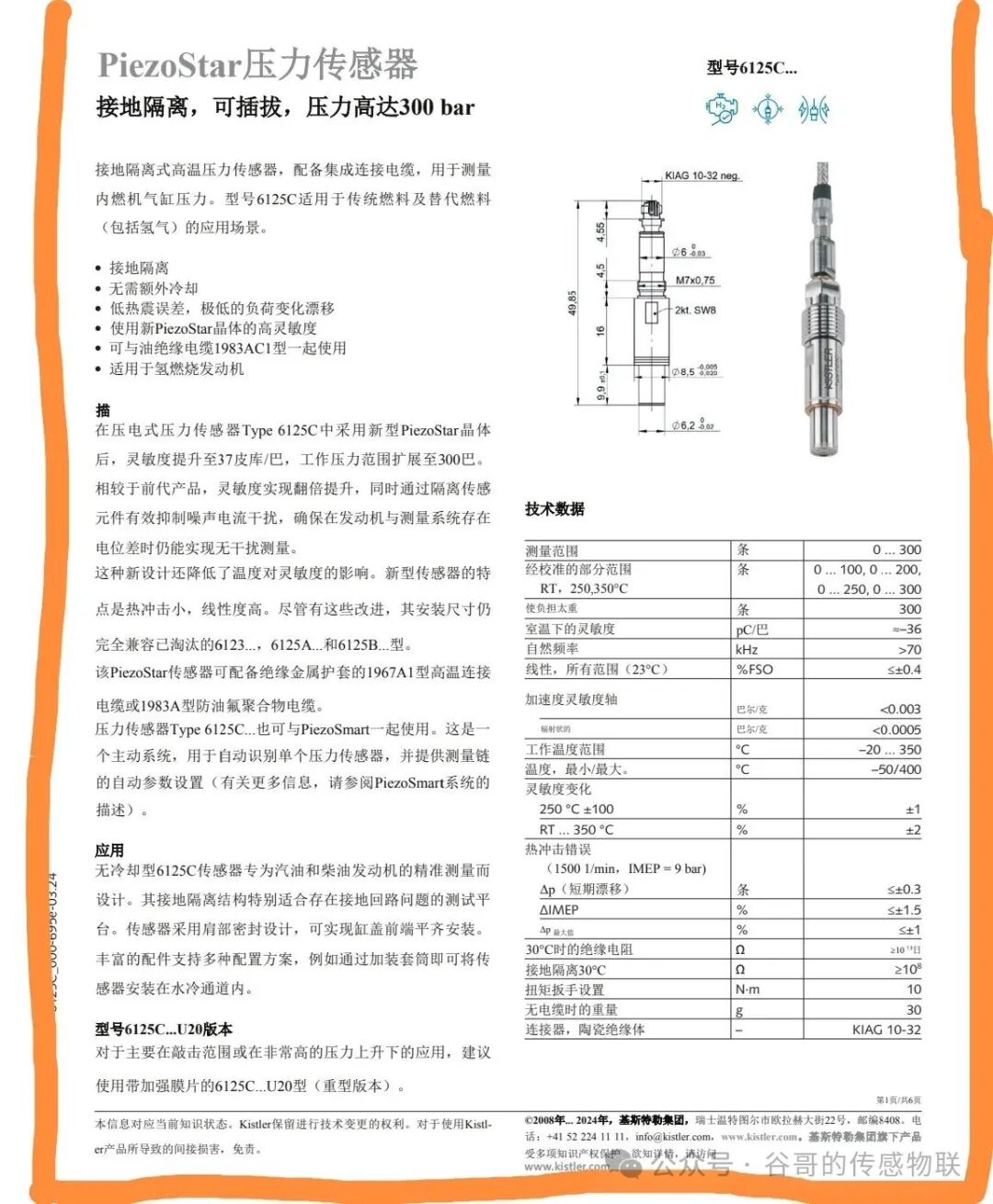 Similarly, high-frequency response and high-temperature pressure sensors have always been a challenge for Chinese pressure sensor companies. The combination of high temperature and high-frequency response is particularly difficult. Companies capable of producing such sensors are also welcome to contact me.
It is estimated that no one knows how many manufacturers produce pressure sensors in China. In 2019, I personally wrote the “White Paper on Industrial Pressure Sensors in China,” which reported only 800 companies producing industrial pressure sensors. However, I did not account for many companies that do not label themselves as sensor manufacturers but still produce sensors, nor did I include some state-owned research institutes that are difficult to quantify strategically. With so many companies, the homogenization is severe; those who can produce compete on price, while those who cannot are reluctant to invest, waiting for others to invest first to replicate, which is indeed somewhat sad. As the technology war between China and foreign countries continues, this is a problem that Chinese enterprises must address.
 I am often asked if there are any Chinese pressure sensor companies that can replace American companies like Kulite or Endevco or PCB. These are small-sized, high-frequency response sensors. I am also frequently asked if there are any sensor companies in China that can replace Japanese Yokogawa and American Rosemount pressure sensor cores. These require high precision, stability, and reliability. Additionally, I am asked if there are companies capable of producing pressure sensors for 1500 MPa or those that can withstand long-term operation at 1800 degrees or 3000 degrees. I truly do not have good answers.
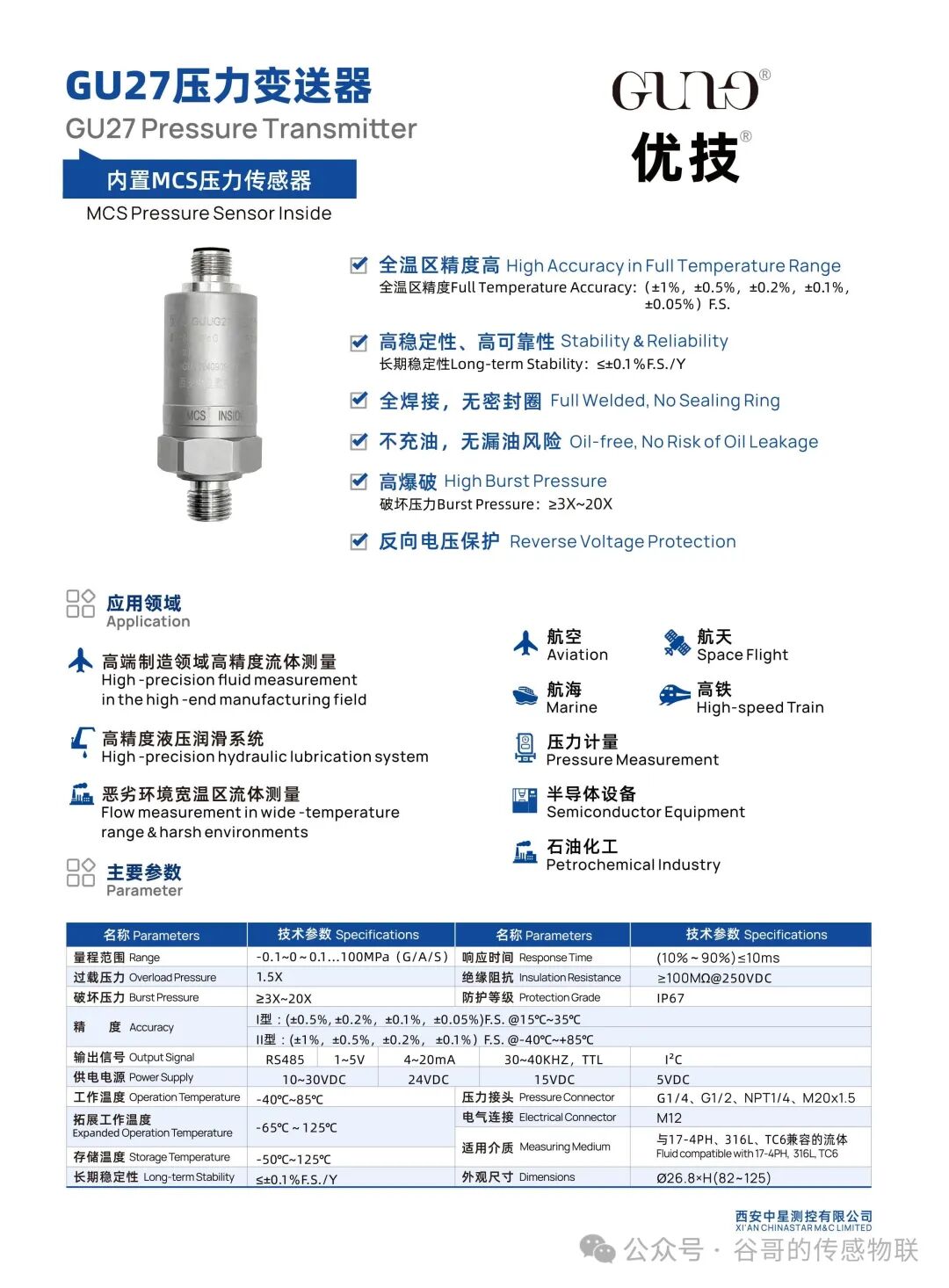
 Our Xi’an Zhongxing Measurement and Control Company has spent nearly ten years developing a pressure sensor using MCS technology. We hope to solve issues of high precision, achieving up to 2/10000; relatively high temperatures, currently up to 180 degrees; large ranges, theoretically up to 1200 MPa; low temperatures, down to minus 70 degrees; and small ranges, currently the lowest being 50 kPa. We welcome any business in this area for joint research and progress.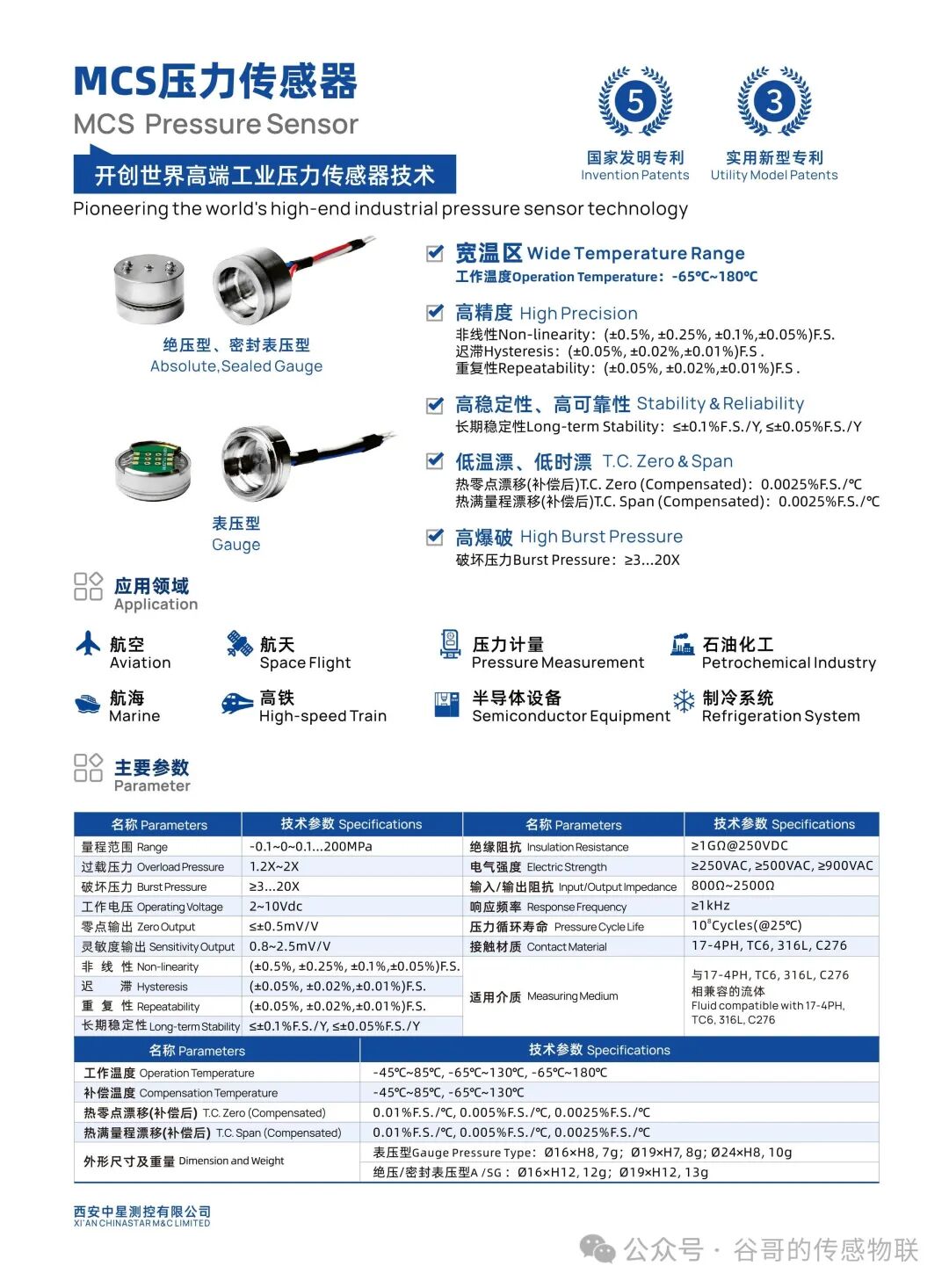
 Boarding has started, so I will conclude today’s WeChat article here.
#2025.09.17:48 Tianjin Airport#