On November 17, 2025, the semiconductor industry witnessed another significant merger: Unisoc International, a subsidiary of Unisoc, plans to acquire 1.8% of the shares of H3C for $128 million, further increasing its stake; on the same day, Puran announced it would acquire a controlling stake in Noah Changtian for 144 million yuan, indirectly gaining control of the Hong Kong storage company SHM. These two seemingly independent capital operations precisely respond to the industry’s core propositions of “exploding demand for computing power” and “self-controllable storage.” Under the dual catalysts of policy relaxation and industrial upgrading, the semiconductor industry is accelerating resource integration through mergers and acquisitions, with leading companies either deepening ecological barriers vertically or breaking through technical bottlenecks horizontally, marking an accelerated phase in the value reconstruction of China’s semiconductor industry chain.
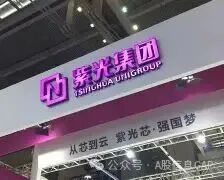
Capital Duet: Breakthroughs in Computing Power and Storage Mergers
Although the two merger cases focus on different fields, they both reflect a clear strategic orientation of “filling gaps and building strengths,” triggering differentiated responses in the capital market and highlighting the value judgment of funds on the semiconductor sub-tracks.
The “centralized” integration of the computing power ecosystem has taken the lead. Unisoc’s increase in stake may seem modest, but it sends a clear signal of strengthening its dominance in computing power. After the transaction is completed, Unisoc’s stake in H3C will further increase, and H3C, as a core asset, has contributed 59.623 billion yuan in revenue in the first three quarters, accounting for 77.1% of Unisoc’s total revenue, with a year-on-year growth rate of 48.07%. This operation of “the parent company increasing its investment in the core subsidiary” directly boosts market confidence, with Unisoc’s stock price rising 4.2% against the trend on the 17th, and net inflows of large orders exceeding 200 million yuan. Institutions generally believe that the increase in stake will reduce decision-making inefficiencies caused by dispersed equity and accelerate H3C’s resource investment in intelligent computing centers, liquid cooling technology, etc., with its kilowatt-level super node product expected to be launched ahead of schedule.
A “cross-border” breakthrough in the storage sector is also unfolding. Puran’s acquisition of a controlling stake in Noah Changtian for 144 million yuan allows it to gain SHM’s revenue, completing a critical extension from NOR Flash to NAND. SHM has accumulated deep expertise in high-performance flash memory fields such as SLC NAND and eMMC, with products already penetrating core scenarios like industrial control and smart terminals, and a high proportion of overseas revenue, complementing Puran’s domestic market. This “snake swallowing elephant” merger quickly activated market expectations, with Puran’s stock opening up 12%, even hitting the daily limit at one point, reflecting the high recognition of the funding logic for domestic storage alternatives.
Core Drivers: Dual Forces of Ecological Positioning and Technological Breakthroughs
The intensive landing of these two merger cases is essentially an inevitable result of the resonance between the semiconductor industry’s “policy tailwind + industrial necessity,” with companies increasingly eager to break through development bottlenecks through capital means.
Competition in computing power forces ecological centralization. The exponential growth in AI computing power demand has made the synergy of “computing power × connectivity” a core competitive advantage. H3C, as Unisoc’s pillar of computing power, has broken through several major client projects in intelligent computing center construction in the first three quarters, with international business growth reaching 83.99%. However, the dispersed equity structure may hinder strategic advancement efficiency. Unisoc’s increase in stake is aimed at strengthening its control over H3C, accelerating the integration of core resources such as liquid cooling technology and AI cloud platforms, and building a complete computing power ecosystem from hardware devices to industry applications. Boson Securities points out that in current semiconductor mergers, leading companies have increasingly adopted vertical integration to streamline the industry chain, and Unisoc’s actions are a typical reflection of this trend.
Storage alternatives spur technological cross-border integration. The domestic storage chip market has long been dominated by overseas giants like Samsung and SK Hynix, with a particularly prominent gap in domestic alternatives in the high-performance flash memory sector. While Puran has established a foothold in the NOR Flash field, its single product structure limits growth potential, whereas SHM possesses mature 2D NAND technology and a global sales network, with firmware algorithms and packaging design capabilities that can complement Puran’s technology. This “local design + overseas technology” merger model has become a shortcut for small and medium-sized chip companies to quickly break through technological barriers. Dongguan Securities analyzes that driven by the demand for self-control, technological mergers in the storage field will continue to heat up, becoming an important path for domestic alternatives.
Policy relaxation lowers merger thresholds. Since the release of the “Six Merger Guidelines” in 2024, mergers and acquisitions in industries like semiconductors have accounted for over 70% of the total, with significant policy support for hard technology mergers. Whether it is Unisoc’s large cross-border stake increase or Puran’s cross-border acquisition, both benefit from improved merger approval efficiency and supporting funds, with policy dividends providing crucial support for corporate capital operations.
Industry Impact: From Technological Synergy to Value Reconstruction
The value of mergers will gradually be released along the path of “technological integration — efficiency improvement — market breakthrough,” profoundly impacting the computing power and storage industry chain.
The synergy effect of the computing power ecosystem accelerates. After Unisoc’s stake increase, H3C’s “diversified computing power” layout will receive more substantial resource support: its liquid cooling cabinet technology is expected to interact with Unisoc’s network devices, creating bundled advantages in intelligent computing center projects; investment in AI cloud platform development will further increase, accelerating the deployment of intelligent agents in government affairs, manufacturing, and other fields. Shenwan Hongyuan estimates that resource integration is expected to increase H3C’s computing power business gross margin by 3-5 percentage points, with revenue expected to exceed 90 billion yuan by 2026.
The domestic alternative landscape in the storage sector is changing. The technological complementarity between Puran and SHM will create a “1+1>2” effect: Puran’s domestic channels can quickly introduce SHM’s high-performance flash memory into local markets such as industrial control and home appliance security, while SHM’s overseas network can help Puran achieve global breakthroughs. More critically, this move fills the gap in the domestic mid-to-high-end SLC NAND sector, breaking the monopoly of overseas giants. According to TrendForce data, the domestic high-performance flash memory market exceeds 50 billion yuan, and Puran is expected to quickly capture 5%-8% of the market share through the acquisition.
Upstream and downstream demand in the industry chain is heating up. The technological breakthroughs in computing power and storage will transmit demand to upstream equipment and materials: H3C’s expansion in computing power will drive demand for server chips and liquid cooling components, with related suppliers’ orders expected to grow by over 30%; Puran’s integration of SHM will increase demand for packaging testing and wafer foundry, with companies like Longji Technology and SMIC likely to see business growth. This “merger-driven — demand expansion” transmission will further solidify the self-controllable foundation of the semiconductor industry chain.
Outlook: A Period of Integration with Opportunities and Risks
Institutions generally view the long-term value of these two merger cases positively, but short-term integration risks still need to be monitored, as the market shifts from “expectation speculation” to “performance verification.”
Core opportunities focus on two types of companies. Guolian Securities suggests focusing on two main lines: first, leading companies in computing power ecosystem integration, with Unisoc expected to capture a larger share in intelligent computing center construction due to its deep control over H3C, with a valuation recovery potential of over 30% by 2026; second, targets for breakthroughs in storage technology, with Puran entering the high-performance flash memory sector through acquisitions, and if it can achieve technological synergy, net profit growth is expected to rise from the current 20% to 40%. Additionally, semiconductor equipment and materials companies with merger integration capabilities will also benefit from the demand growth brought about by the industry merger wave.
Two major risks to watch closely. Guojin Securities warns that Unisoc needs to be cautious of the risk that H3C’s performance may not meet expectations after the stake increase, as its international business expansion may face geopolitical resistance; Puran faces challenges in technological integration, with uncertainties in the collaboration between SHM’s overseas team and domestic management system, and if the synergy effect is poor, it may drag down overall profitability. Furthermore, the semiconductor industry’s valuation has partially reflected the benefits of mergers, and if subsequent performance fails to materialize, there may be pressure for a correction.
Conclusion: Mergers Rewrite the Competitive Landscape of the Industry
The two merger cases of Unisoc and Puran are like “twins” in the semiconductor industry’s merger wave, representing the ecological deepening of leading enterprises and the technological breakthroughs of small and medium-sized enterprises. Driven by both AI computing power and storage alternatives, this model of resource integration through capital means will become the core path for China’s semiconductor industry to break through technological bottlenecks and build competitive barriers.
For the industry, mergers are not the end but the beginning; subsequent technological integration, management synergy, and market breakthroughs are the keys to success or failure. For investors, it is essential to penetrate the merger events themselves and focus on the logic of enhancing the core competitiveness of enterprises. At this critical juncture of reshaping the global semiconductor industry landscape, this value reconstruction led by mergers will ultimately drive China’s semiconductor industry from “scale catch-up” to “value leadership,” occupying a more central position in the global industry chain.