
Click the blue text above to follow us


Abstract: Behind the explosive growth of new energy vehicles, power semiconductors have become the new center of the industrial chain. Domestic companies are leveraging this wave to achieve technological breakthroughs, but the stringent requirements for automotive certification mean that this turnaround must be both aggressive and steady.
▼
Introduction There is a queue of green license plate cars on the road, and behind this lies the “comeback story” of the semiconductor industry. During the morning rush hour waiting at a red light, I counted and found that out of five cars in front of me, three were green electric vehicles. The driver of the ride-hailing car next to me tapped the steering wheel and said, “These things are really good; the electricity costs are half of what gas costs. But you might not know, the most valuable part of the car is not the battery, but the semiconductors.” I was taken aback, and after a lot of effort researching, I finally understood: the acceleration, braking, range of electric vehicles, and even the efficiency of charging stations all rely on power semiconductors to “control the situation.” Take IGBT for example (don’t worry about the technical jargon; just think of it as an “electric current switch”). The moment you press the accelerator, it must precisely control how much power the battery delivers to the motor; and then there’s MOSFET, which is the “key” to achieving fast charging at charging stations. The hotter the new energy vehicles sell, the greater the demand for power semiconductors—this has actually been quietly brewing for a while.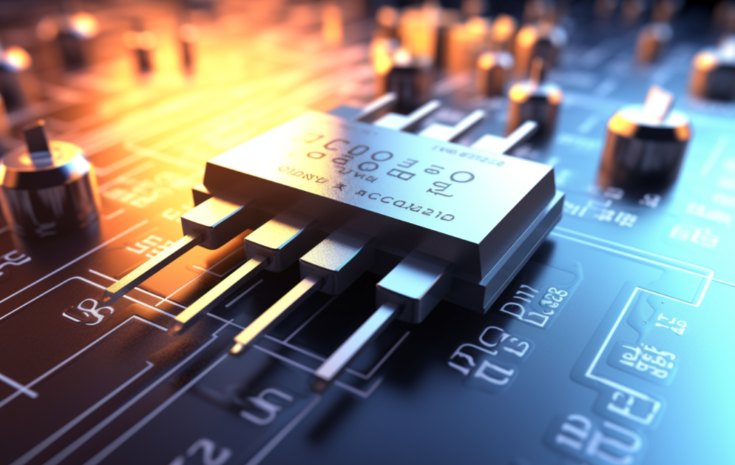 Let me throw out some “not-so-serious” data: the market is big enough to accommodate several “small goals”
The global power semiconductor market is expected to grow to over $70 billion by 2025. And what about China? It is the largest consumer in the world—after all, our new energy vehicles account for half of global sales, and we also lead in installed capacity for solar and wind power. Which of these can do without power semiconductors?
Industry insiders report, “When customers come to me for products, the first question is not ‘how much,’ but ‘do you have automotive-grade certification?’ Semiconductors that can pass certification are being snatched up even at three times the price.”
Can you imagine how big this market is?
Companies’ “performance stories”: some are turning losses into profits, some are coasting, and some are preparing big moves
Recently, I looked at the semi-annual reports of several semiconductor companies, and it felt like they had opened a “golden finger”:
Silicon Micro: Last year they were still in the red, but this year they have turned around—thanks to the explosive sales of automotive IGBT and IPM modules! A friend of mine said their IGBT shipments have multiplied several times, and even BYD is looking to place orders with them. Their net profit has turned from loss to gain; this bet on automotive has paid off.
Yangjie Technology: Even more impressive, they have benefited from both automotive and AI (the power modules for AI servers also require power semiconductors), with net profit increasing by over 41%. Isn’t it a coincidence? They had early investments in automotive-grade products, and now they are perfectly positioned to ride the “new energy + AI” dual wave.
Jiejie Microelectronics: Although their growth is slower (around 15%), they have a “big bomb”—they have started mass production of automotive-grade MOSFETs! What is this? It is the “voltage regulator” for automotive power systems, and being able to meet automotive-grade standards is equivalent to obtaining a “ticket to mainstream automotive companies.”
These companies are not just selling semiconductors; they are also “expanding production capacity”—Silicon Micro has invested in a 12-inch wafer fab, and Yangjie has built a production line for automotive-grade modules. The market demand is there, and with production capacity, there is money to be made.
 Equipment and Mergers: Quietly Filling the Gaps with “Diligent Efforts”
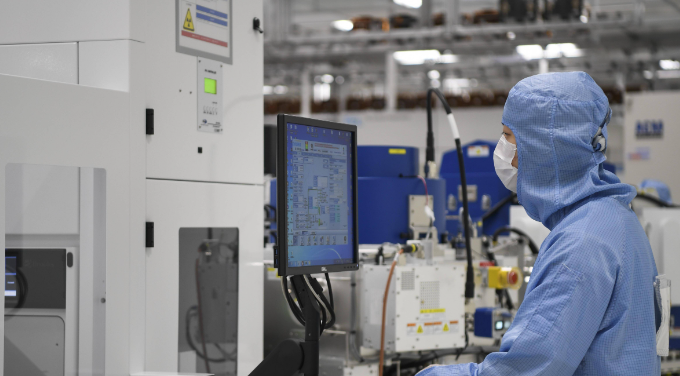
When talking about semiconductors, one cannot avoid the “equipment” topic. This year, the global semiconductor equipment market is about $100 billion, but we can only produce a little over 20% of that (less than 22%). Isn’t that a bit disheartening? But don’t worry, a few companies are quietly catching up:
-
SMIC: They make etching machines, and this year their performance is expected to increase, with many customers being wafer fabs;
-
Jinhai Tong: They make testing equipment, and their orders exploded in the first half of the year, and they are reportedly expanding production capacity.
A friend of mine who works in equipment said, “In the past, customers thought domestic equipment was ‘unreliable,’ but now they come looking for us—because imported equipment takes six months to arrive, while domestic only takes two months, and the precision is about the same.”
There’s also been a lot of activity in mergers and acquisitions recently: Fulede acquired Fulehua, and Huaya Intelligent acquired Guanhong Intelligent. This is essentially “twisting the industrial chain into a rope”—for example, if you originally only did packaging, acquiring a wafer company allows you to handle everything from raw materials to finished products, saving you from being choked by others. This strategy is really smart; nowadays, “going solo” definitely cannot compete with others.
 By the way: How “difficult” is it to achieve automotive-grade semiconductors?
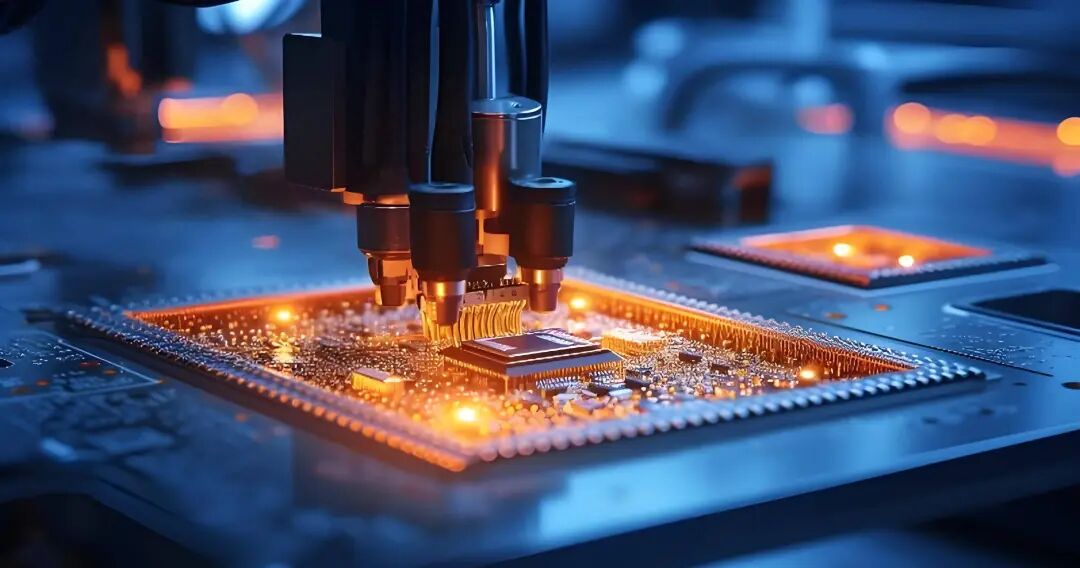
I asked a friend who works in R&D, and he said, “Automotive-grade certification is harder than the college entrance examination.” Just think about it, cars need to last for ten years, and semiconductors must operate for thousands of hours without error in environments of 125℃ high temperature (next to the engine), -40℃ low temperature (Northeast winter), and continuous vibration (driving on rough roads). Products that can pass are truly “one in a thousand.”
So now, companies that can produce automotive-grade semiconductors are particularly impressive—they have essentially obtained a “VIP card for new energy vehicles,” which others cannot snatch away.
In conclusion: Domestic substitution is urgent but must be “steady”
The current “face” of China’s semiconductor industry is quite good:
-
There is a market (new energy and AI are both growing, with huge demand);
-
There are companies (Silicon Micro, Yangjie, and others are doing R&D, not foolish);
-
There are policies (you know, things that are critical will definitely be supported).
Although there is still a gap compared to foreign countries, it’s a gradual process—just like the range of electric vehicles, which used to only be able to run 200 kilometers, but now can run 600 kilometers; it’s all come step by step.
If one day, all the semiconductors in our electric vehicles, from IGBT to MOSFET, are domestically produced, how great would that be? Not only would cars sell well, but semiconductors would also make a lot of money, and we wouldn’t have to look at others’ faces anymore.
The wind is here, and even pigs can fly; let alone we have “diligent efforts.”
Written by: Manling Re Lun Liu Qizheng

Scan to follow our public account
Daily insights, exciting content
Long press the QR code to recognize



Give a thumbs up if you think this is great