This time, NVIDIA really can’t hold back!
Jensen Huang probably hasn’t slept well these past few days, not because of stock prices or competitors, but because—China really isn’t buying into H20!
Sales are at 0! You heard that right, zero!
To put it bluntly, the so-called “China special edition” chip H20 has been a joke from the start.
Think about it, a “crippled version” chip with only 15% to 30% of H100 performance, and it still dares to call itself an AI accelerator?
What’s even more absurd? The U.S. government wants to take a 15% cut from the sales!
This isn’t selling chips; it’s extortion!
Chinese AI companies aren’t fools. Domestic chips like Huawei’s Ascend, Baidu’s Kunlun, and Cambricon are all powerful. Why would they spend a fortune on your “defective product”?
The key issue is that the Chinese Cyberspace Administration directly interviewed NVIDIA, questioning the “backdoor security risks” of H20 and demanding proof.
Can this chip even be used?
Even more shocking, NVIDIA’s market share in China’s GPU market has plummeted from 95% four years ago to 50%!
This is the sound of a slap in the face!
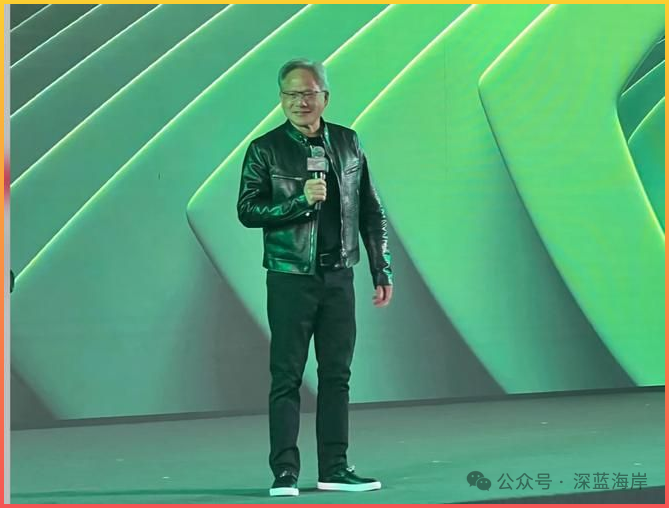
Now Jensen Huang is in a hurry, rushing to TSMC to customize the new chip B30A.
This time he’s being smart, using the latest Blackwell architecture, boosting performance directly to 80% of B200’s level.
See, this is what we call sincerity!
But the problem arises: whether B30A can enter the Chinese market still depends on the U.S. government’s stance.
Jensen Huang himself said: “It depends on the U.S. government’s decision.”
How frustrating is that?
Your own product still has to look at others’ faces to sell.
Even more amusing is that while Jensen Huang is being choked, he’s still touting the Chinese market as worth $50 billion.
He talks about “huge opportunities” but is really thinking, “Please buy my chips!”
Ultimately, this is a reversal of a dimensionality reduction attack.
It was originally thought that China couldn’t do without NVIDIA, but they ended up developing the Ascend 910B and Kunlun 2nd generation themselves.
It was thought that H20 could fool everyone, but Chinese companies directly said, “We don’t need it.”
It was believed that NVIDIA’s monopoly position was as solid as a rock, but their market share has been halved.
Do you know what this indicates?
It shows that China is no longer a follower in the AI chip race but is now a co-runner or even a leader!
The computing density of Huawei’s Ascend has already surpassed that of H100, Baidu’s Kunlun performs excellently in large model training, and Cambricon’s MLU370 excels in inference performance, outperforming many foreign products.
Jensen Huang knows these data better than anyone.
NVIDIA’s strategy now is: since the hard approach isn’t working, let’s try the soft one.
B30A is their “peace offering.”
With stronger performance and a lower profile, they attempt to win back the Chinese market.
But times have changed, my friend!
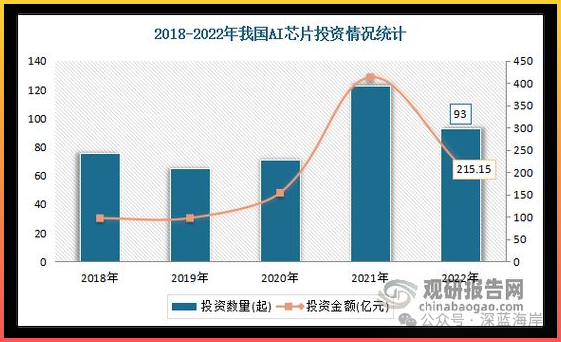
By 2024, Chinese AI chip companies will have formed a complete industrial chain.
From design to manufacturing, from software to ecosystem, a one-stop service.
The efficiency of model training in deep exploration even surpasses that of peers using NVIDIA chips.
Moore Threads’ GPUs are making strides in both gaming and AI.
Sunway Technology’s cloud AI chips are already in large-scale commercial use.
This is not an isolated phenomenon; it’s a collective explosion of the entire industry!
Do you think China would give up independent research and development for a B30A?
Dream on!
The current situation is: you have B30A, I have Ascend; you have the CUDA ecosystem, I have the CANN platform.
Who’s afraid of whom?
Moreover, domestic chips have an advantage that NVIDIA can never match—no political risk.
Today I sell you H20, tomorrow it might be banned.
Today I say B30A has strong performance, tomorrow it might be “crippled.”
This kind of uncertainty is a disaster for companies.
So the answer is simple: China really doesn’t need H20 anymore.
As for whether B30A can “capture the Chinese market”?
First, ask Huawei, Baidu, and Cambricon if they agree!
In a word: the wheels of the times are rolling forward; those who should get off the bus shouldn’t hold on!
After all— we are already sprinting on the new track!