With the systematic development of materials, processes, design, and application thinking, 3D printing technologies using engineering plastics, resin-based composites, ceramics, etc., have transitioned from rapid prototyping applications in laboratories or R&D departments to small-batch manufacturing applications for final products. However, the “internal health” of non-metal 3D printed parts is not so easy to control.
Taking the material forming process of 3D printers based on Fused Deposition Modeling (FDM) technology as an example, this technology is a rapid prototyping method that is low in complexity, cost-effective, and easy to promote. FDM technology primarily uses polymer materials, and there are three main reasons for errors during the manufacturing process: First, during the initial model construction phase, the designed model file is usually converted into the STL format, which is recognizable by most 3D printers. Essentially, this format approximates the three-dimensional digital model using numerous spatial triangular faces. The parameters set during the approximation process, such as angle control and chord height, directly affect the accuracy of the file. Second, during the processing and forming phase, different condensation delays can occur in the XYZ directions. Additionally, there are certain mechanical motion errors during the reciprocating movement of the hot melt head along the trajectory profile. Besides printing accuracy, the printed parts may also hide invisible bubbles, fine cracks, or delamination and weak adhesion between layers. These “minor issues” can lead to the scrapping of critical components, and excessive errors may pose safety risks, cause resource waste, and even lead to safety accidents.
But don’t worry, a “quality inspection expert” has arrived — Terahertz technology. Terahertz (THz) technology is an emerging spectral technology that, as a non-destructive and non-contact detection method, has been widely applied in various fields such as food, safety, and energy.
FDM technology often uses polymer materials such as ABS and PLA, which exhibit significant absorption in the terahertz waveband, showing clear responses. FDM formed parts of different thicknesses or shapes can be distinguished through terahertz spectral signals. With the ability to “see through” certain materials, non-destructively and with high sensitivity, terahertz technology is becoming the “all-seeing eye” in the field of additive manufacturing, uncovering hidden defects one by one. This issue of the column will focus on how terahertz technology helps to “spot-check” 3D printing.

Why Can It Be the “Quality Inspector” of 3D Printing?
Terahertz is the “middle ground” of the electromagnetic wave family, with frequencies between microwaves and infrared (typically 0.1-10 THz), representing the last undeveloped segment of the electromagnetic spectrum. It has two exceptional skills that are particularly suitable for 3D printing quality inspection:
First, non-contact and non-destructive penetration. Terahertz waves can easily penetrate non-metal 3D printing materials such as plastics, ceramics, and resins without generating ionizing radiation like X-rays. During detection, it neither damages the freshly printed parts nor harms the operators, which is crucial for testing non-destructive samples like medical implants and precision electronic components. It also does not require coupling agents like ultrasound, thus avoiding contamination of the printed parts and eliminating the need for additional cleaning. It is important to note that while terahertz cannot penetrate metallic powders or dense metal parts— the high conductivity of metals strongly reflects terahertz waves, it can penetrate certain metal oxides and sulfides, which are important components of 3D printing and additive manufacturing. Therefore, it can perform internal defect detection on metal oxides and sulfides and surface and near-surface analysis on metallic materials, rather than penetration detection.
Second, molecular-level sensitivity. Terahertz waves are extremely sensitive to the higher-order structures and molecular arrangements of non-metal materials. The bubbles and cracks in non-metal 3D printed parts essentially represent “gaps” in the molecular arrangement within the material. When terahertz waves encounter these structures, the propagation speed and absorption level change significantly, allowing precise localization of defect positions and types through spectral signal analysis. For metal powders, although penetration is not possible, terahertz can assist in assessing the quality of material preparation before printing by detecting the surface morphology, particle agglomeration state, and powder uniformity.
With these two exceptional skills, terahertz technology can play a significant role in the entire quality inspection process of 3D printing (especially for non-metal material printing).

Application in Online Quality Assessment of 3D Printing Materials Throughout the Process
First Stage: “Real-time Monitoring” During Printing, Defects Are Eliminated as Soon as They Arise
3D printing is a “layer-by-layer” process, and issues such as uneven material melting and fluctuations in nozzle flow rate can easily lead to bubbles or unbonded seams within non-metal parts. Traditional inspection requires sampling after printing is completed, and if problems are found, often the entire batch of parts is scrapped, which is extremely costly.
Terahertz technology enables “monitoring while printing” (mainly for non-metal materials such as plastics, resins, and ceramics), effectively equipping 3D printers with dual “real-time monitoring eyes.” The principle is as follows: during the printing process, terahertz radiation continuously penetrates the forming non-metal parts, and the receiving end captures the reflected spectral signals — different substances exhibit significant differences in their absorption characteristics to terahertz. For example, air bubbles in the plastic layer will cause “abnormal pulses” to appear in the time-domain spectrum because the refractive index of air differs from that of plastic. When terahertz encounters a bubble (i.e., at the “plastic-air-plastic” interface), it generates a strong reflection signal. If THz-TDS detection is used, the location of the bubble will show as an abnormal reflected echo (an additional peak appears in the time-domain signal); in the frequency domain, it may manifest as a change in signal intensity due to scattering or interference. Relevant studies indicate that this real-time intervention can reduce the defect rate of non-metal printed parts by over 60%, significantly reducing cost losses [1].
Once engineers capture abnormal signals, they can immediately adjust parameters: for instance, during the printing of a drone’s plastic propeller, terahertz monitoring detected continuous “abnormal absorption peaks,” and upon investigation, it was confirmed that the melting temperature of the raw material was too low. After raising the temperature from 190°C to 205°C, the bubble defects completely disappeared, and the part’s strength met the standards.
For metal 3D printing processes such as Selective Laser Melting (SLM), although terahertz cannot penetrate the metal layers being printed, it can assist in detection during the powder spreading phase — detecting one layer at a time as it is printed. By analyzing the surface flatness and particle dispersion of the powder layer through terahertz reflection spectral analysis, if local powder agglomeration is detected (indicated by a sudden increase in reflected signal intensity), it can trigger the powder roller to re-flatten, preventing subsequent sintering defects due to uneven powder distribution.
Second Stage: “Full-body Imaging” After Printing, Identifying “Health Risks”
Even if the printing process goes smoothly, internal stresses during the cooling of non-metal parts may still produce micro-cracks. These cracks are often smaller than 0.1 millimeters (thinner than a human hair), making them difficult to identify with traditional methods. However, in scenarios such as medical implants and precision instrument casings, such defects can have fatal consequences.
At this point, terahertz time-domain spectroscopy (THz-TDS) can be extremely useful (for non-metal parts). The ultra-resolution terahertz imaging system developed by City University of Hong Kong can even identify micro-defects on the order of 0.1 millimeters and precision structures spaced 0.2 millimeters apart, with a resolution far exceeding traditional detection methods [2]. It generates detailed spectral images by penetrating the parts, clearly revealing issues such as cracks, bubbles, and poor interlayer adhesion. Additionally, the combination of terahertz time-domain spectroscopy with CT technology can accurately identify defects in 3D printed resin parts through mean square error analysis. Research shows that when defects are present, the mean square error value can increase by over 14%, further enhancing the accuracy of defect detection [4].
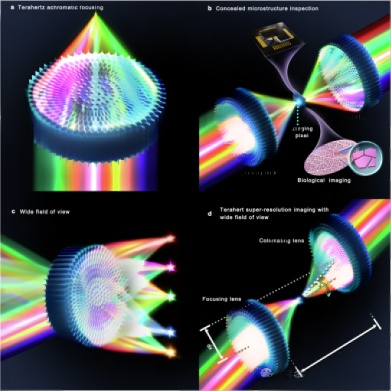
Figure 1: Aberration-free terahertz superlens achieves achromatic wide-angle super-resolution imaging
Taking 3D printed ceramic hip prostheses as an example, terahertz time-domain spectroscopy can not only detect internal micro-cracks but also analyze the arrangement state of ceramic crystals — terahertz time-domain spectroscopy (THz-TDS) primarily characterizes the macroscopic dielectric properties, crystal form (polycrystalline), and crystallinity of ceramics by analyzing the dielectric constant, refractive index, and absorption coefficient of the material. Engineers can use this signal to determine whether the strength of the prosthesis meets the standards, avoiding the risk of implanting non-compliant products into the human body.
For 3D printed metal parts, although terahertz cannot penetrate to detect internal defects, it can be used for rapid screening of surface and near-surface defects (such as micro-cracks and oxidation layers): micro-cracks on the metal surface will cause terahertz reflected waves to scatter, resulting in an increase in “杂峰” in the reflected spectrum; the thickness and composition differences of the oxidation layer will also alter the reflected signal intensity, assisting in assessing the surface quality of metal parts and providing preliminary screening basis for subsequent non-destructive testing (such as ultrasound and X-rays).
Third Stage: Helping Materials “Customize Formulas” for More Efficient 3D Printing
Terahertz technology can also optimize the formulas and printing parameters of 3D printing materials from the source, with different analytical focuses for non-metal materials and metal powders:
1. Non-metal materials and metal oxides/sulfides: Precisely controlling internal characteristics
For non-metal printing materials such as PLA plastics, photosensitive resins, and ceramic slurries, terahertz spectroscopy can help engineers deeply “understand” the essence of materials. For example, in PLA plastic testing, terahertz can fit the spectral curve using the Lorentz function to calculate the ratio of the peak areas of the crystalline and amorphous regions, accurately deriving the crystallinity value [5]. Crystallinity directly affects the performance of parts: excessive crystallinity in PLA can make it brittle, while too low crystallinity can lead to insufficient strength. Engineers can adjust the cooling rate based on the crystallinity data obtained from terahertz testing to achieve the best balance between strength and toughness.
Additionally, terahertz technology can accurately detect printing errors in non-metal parts, with studies confirming its ability to distinguish size errors that differ from design values by 0.96%, providing precise basis for material parameter optimization [3]. This precise parameter matching can reduce the trial-and-error attempts for non-metal materials from over a dozen to 3-5 times, lowering trial-and-error costs by over 70%.
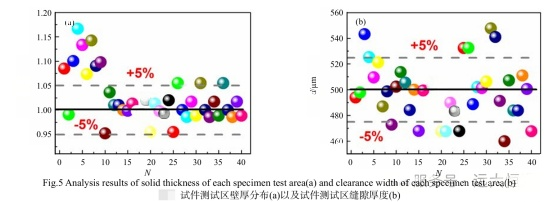
Figure 2: Terahertz technology used to improve the accuracy of FDM 3D printing technology
2. Metal powders: Optimizing surface and dispersion characteristics
For metal printing powders (such as titanium alloy and aluminum alloy powders), terahertz cannot penetrate to analyze the interior, but it can assess the surface state and dispersion of the powders through reflection spectral analysis. For example, if titanium alloy powder shows surface oxidation due to improper storage, the intensity of its terahertz reflection signal will significantly increase (due to the dielectric constant difference between the oxidation layer and the metal powder), allowing engineers to determine whether the powder needs reprocessing; during the powder mixing phase, terahertz can also detect the uniformity of different component powders — if a certain area is unevenly mixed (such as particle agglomeration of a certain component), it will manifest as “signal fluctuations” in the reflection spectrum, indicating the need to adjust mixing process parameters.
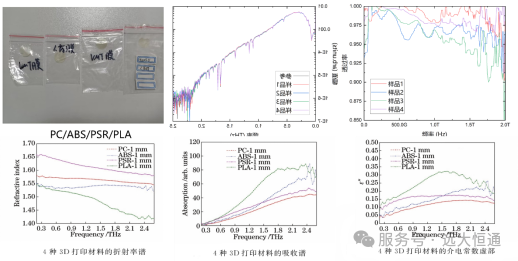
Figure 3: Characterization of dental 3D printing materials using Yuanda Hengtong TA series products
“ 3D Science Valley White Paper Illustrated Analysis
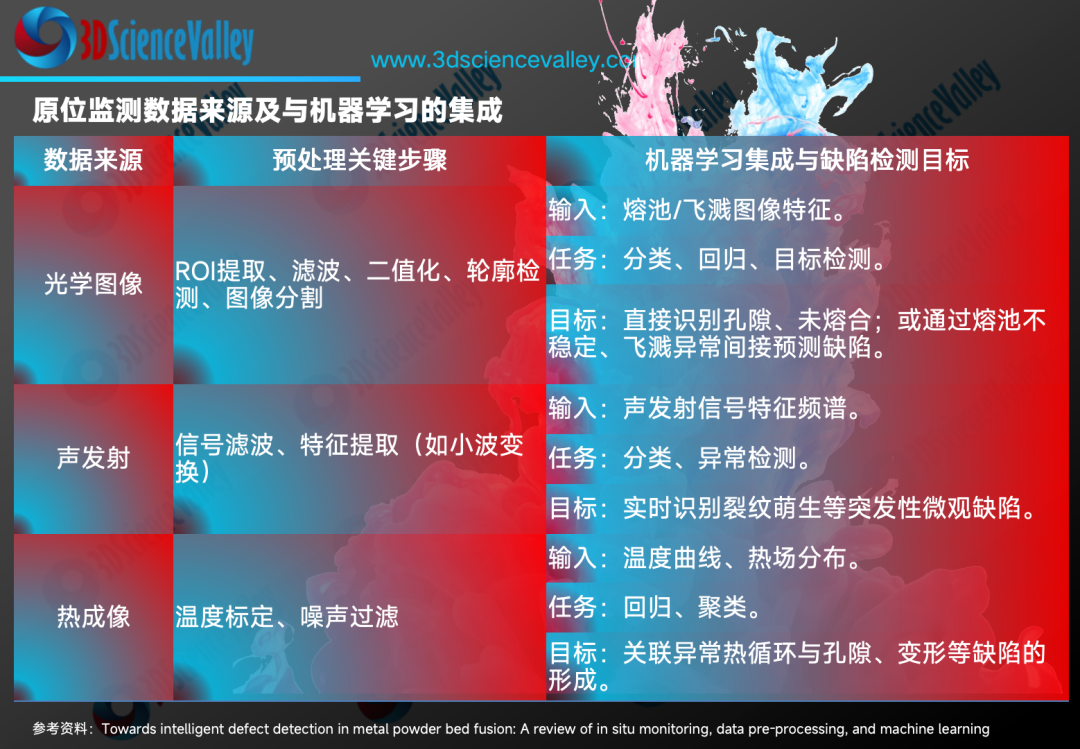
“

The Future: Terahertz Makes 3D Printing Smarter
Terahertz monitoring modules have gradually been integrated into non-metal 3D printers, achieving a “printing – detection – adjustment” integration; in the field of metal 3D printing, terahertz has also become an important auxiliary detection tool during the powder spreading phase, and industries such as aerospace and medical have listed it as a mandatory inspection item for non-metal parts before leaving the factory. In the future, with technological upgrades, terahertz detection will become even more “intelligent”:
After integrating artificial intelligence, devices will be able to automatically identify defect types in non-metal parts (such as bubbles and cracks) and predict potential printing parameter issues; for metal 3D printing, the fusion of terahertz with other non-destructive testing technologies (such as ultrasound and X-rays) will achieve “surface – near-surface – internal” quality control across all dimensions; the application of super-material lenses will also make terahertz devices smaller and more portable, allowing small and medium-sized 3D printing studios to utilize professional quality inspection technology.
From the laboratory to the production line, terahertz technology is helping 3D printing (especially non-metal material printing) shed the label of “rough manufacturing.” With this “quality inspection expert,” every 3D printed product, whether a ceramic implant in the human body or a plastic casing for precision instruments, can be more precise and reliable.
Source: Yuanda Hengtong
References
1. Hou X, Zhang Y, Liu Z. Terahertz non-destructive testing for additive manufacturing: A review[J]. Additive Manufacturing, 2023, 71: 103789.
2. Chen J, Huang S X, Chan K F, et al. 3D-printed aberration-free terahertz metalens for ultra-broadband achromatic super-resolution wide-angle imaging with high numerical aperture[J]. Nature Communications, 2025, 16(1): 1-11.
3. Guan Limei, Miao Xinyang, Zhan Honglei, Zhao Kun. Error analysis of fused deposition 3D printing based on terahertz technology. Journal of Terahertz Science and Electronic Information, 2018, 2: 218-222, 232.
4. Smith A B, Johnson C D, Lee E F. The use of terahertz computed tomography and time domain spectroscopy to evaluate symmetry in 3D printed parts[J]. Polymers, 2024, 16(23): 4890.
5. Wang Hongtao, Li Jianming, Zhao Xiaocheng. Progress in the application of terahertz spectroscopy technology in quality control of additive manufacturing materials[J]. Chinese Laser, 2024, 51(8): 0802003.

Schedule a visit to the TCT Asia Exhibition and gain new insights into 3D printing.
3D Science Valley Focus

Can your next drone be 3D printed? — Technical partners unlock the present and future of additive manufacturing for low-altitude vehicles.
With over ten thousand certified deliveries annually, how can aircraft maintenance effectively utilize continuous fiber 3D printing?

 ▌Three-Dimensional Science l Infinite PossibilitiesSubmissions丨daisylinzhu WeChat[email protected] Editorial Email
www.3dsciencevalley.com