
Cornell University researchers have unveiled a novel method for manufacturing superconductors that relies on specialized 3D printing inks and self-assembly techniques to create specific nanostructures. This strategy enables engineers to produce superconductors with specific characteristics and properties using less investment and fewer specialized devices. It has the potential to revolutionize fields such as computing and quantum science. Here’s what you need to know.
Self-assembling (SA) Nanostructures
Self-assembly (SA) refers to the natural phenomenon where atoms, molecules, or particles organize themselves into specific shapes without any intervention. This strategy provides engineers with a reliable and effective method to create durable microstructures without the need for specialized mechanical equipment.
The principle of self-assembly results from the interaction of non-covalent forces with environmental factors. Tiny nanostructural units automatically form structures that optimize energy utilization. These small shapes possess high scalability, durability, and other ideal characteristics, making them well-suited for tasks such as manufacturing superconductors.
Notably, with the advent of the first self-assembling superconductor in 2016, SA projects have gained increasing popularity. Interestingly, many of the same engineers were also involved in this latest project, highlighting their long-term and significant contributions to nanostructure science.
Challenges of the SA Method
If engineers want to fully leverage the potential of this manufacturing method, the SA strategy must overcome several technical barriers. First, different nanostructures require different ordered dynamics at various length scales, which consist of different processing methods.
Additionally, engineers have found that 3D printing functional crystalline porous inorganic nanomaterials remains a daunting challenge. Current strategies rely on multifaceted approaches, including the separate synthesis of porous materials.
These materials are first converted into a powder form to mix with a binder. The mixture is then reprocessed and enters the final stage—thermal treatment. This process is time-consuming, costly, and limited by the applicability of nanostructures and materials.
Mesoscopic Structures Derived from Block Copolymer (BCP) SA
Engineers have invested significant effort in developing the most robust and efficient nanostructures. The application of mesoscopic structures derived from block copolymers (BCP) has recently opened doors to more applications. These tiny designs enhance structural rigidity and controllability. Specifically, BCP nanostructures enable engineers to alter mesoscopic lattice and lattice parameters, creating stronger and higher-performance solutions.
It is noteworthy that BCP SA-based hierarchically ordered mesoporous transition metal compounds are seen as the future of this technology. However, to date, no research has successfully and effectively 3D printed BCP nanostructures.
Research on Self-assembling 3D Printed Superconductors
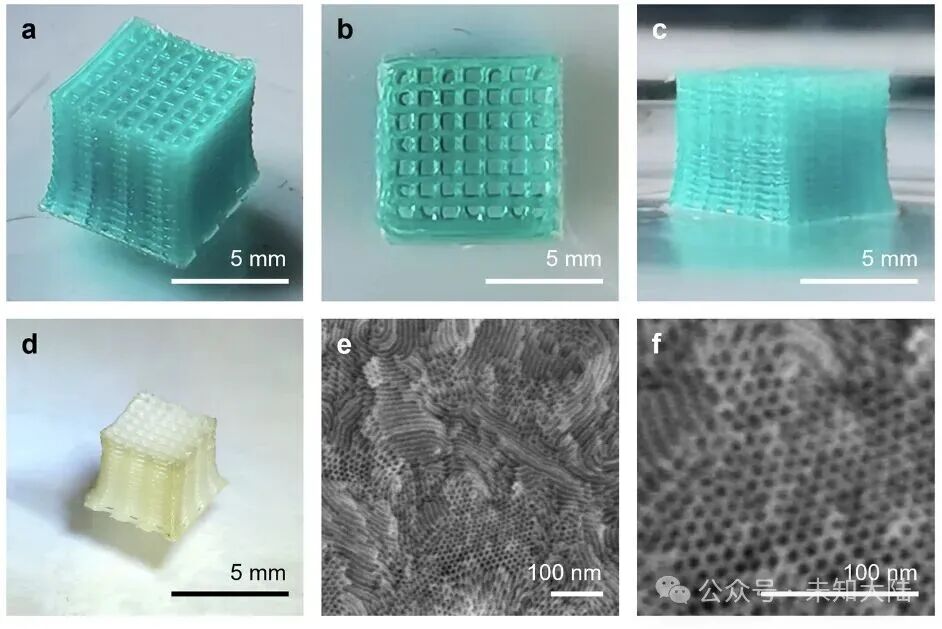
A one-pot 3D printing method for preparing hierarchically ordered porous transition metal compounds introduces a novel preparation method for creating advanced SA nanostructures through 3D printing. This research delves into the self-assembly of 3D printed transition metal compounds during the printing phase via sol-gel chemical reactions.
Source: “Nature”
Mapping
The first step taken by engineers is to create a computer map of the nanostructures and their formation processes. This strategy allows them to identify key details, such as which polymer’s molar mass can provide the highest superconducting performance, and so on.
Direct Ink Writing Process
Engineers devised a unique strategy relying on the “one-pot method” for printing. This strategy employs a special ink made from Pluronic family block copolymers (BCP). Interestingly, BCP is combined with transition metal sol, which is formed by the hydrolysis of metal alkoxides in an acidic ethanol solution. Compared to traditional methods that rely on powder processing, this strategy is more efficient and cost-effective.
Printing
To support the “one-pot ink” strategy, researchers designed a special 3D printer nozzle. This device utilizes a syringe pump-style print head to deliver materials. Specifically, the dedicated print head extrudes the ink into a petri dish containing other materials, depending on the type of nanostructure the scientists want to create.
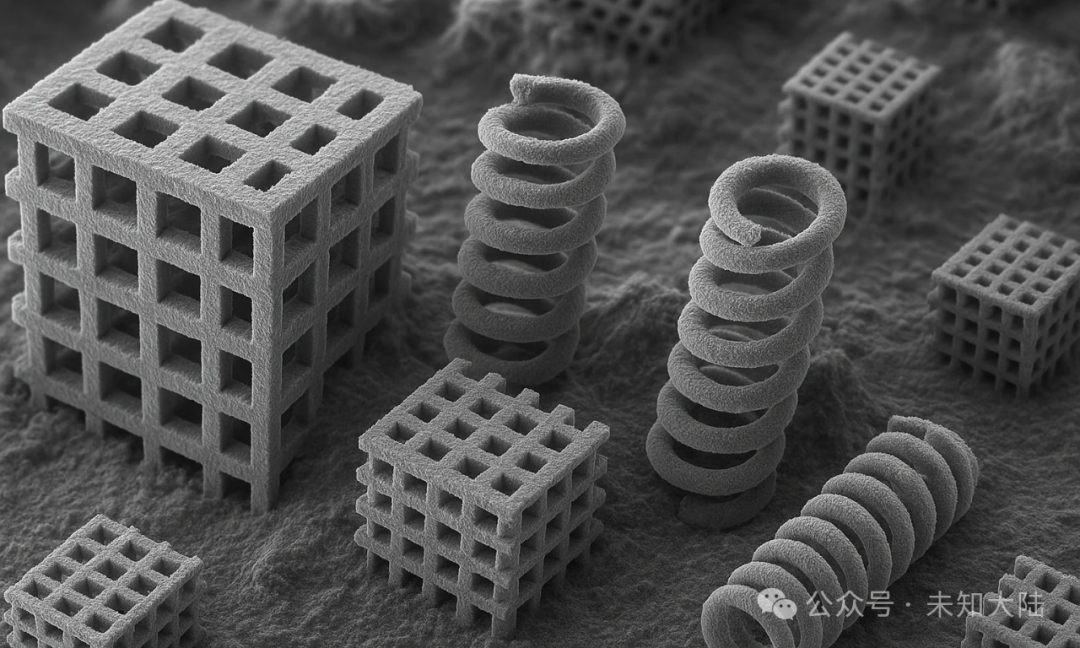
Specifically, they used a petri dish filled with hexane to construct periodic cubic pillar structures. Additionally, they used another alternative, a gel-like liquid containing 25% Pluronic F127 in water. This substance can self-assemble into periodic helical structures.
Thermal Treatment
The final stage of the manufacturing process involves thermal treatment. When heat is applied to the printed pieces, reactions occur, forming hierarchically ordered and porous crystalline oxides and nitrides. These materials then self-assemble into periodic mesoscopic structures, making them ideal for use as crystalline superconductors.
Structural Control
Engineers noted that scalable porous functional inorganic material structures allow them to filter for specific performances. They recorded three specific length scales, including combined atomic lattices, SA-based mesoscopic scale lattices, and 3D printing-induced macroscopic lattices.
This method eliminates many time-consuming and costly steps from previous methods, enabling engineers to determine structural properties through the crystallization of oxides or nitrides. Specifically, the team utilized block copolymer self-assembly technology to create mesoscopic structural lattices, which can include coils or helical structures, making them ideal for various application scenarios.
Drying and Solidification
After processing, the nanostructures are exposed to air and then undergo another round of thermal treatment in ammonia and carburizing gas. This step utilizes high temperatures of 950°C to convert oxides into specific crystalline transition metal nitride spirals and hexagonally ordered pillars containing atomic lattices.
Testing Self-assembling 3D Printed Superconductors
To test their “one-pot method” ink formulation and printing technology, the team created multiple test scenarios aimed at monitoring the process’s impact on durability and assembly time. The first step was to create independent mixed pillar lattices.
The pillar lattice contains mesoporous helical structures of oxides and nitrides. This key detail is crucial because, in the past, directly printing non-self-supporting structures was nearly impossible. To accomplish this task, engineers relied on their mapping algorithms to determine the optimal macromolecular characteristics and designs.
Results of Testing Self-assembling 3D Printed Superconductors
The printing tests yielded some impressive results. First, they found that this method could print complex shapes with higher performance than any previous methods. They noted that this durability is largely attributed to the mesoscopic structures retained in the final crystalline materials, which contain periodic lattices.
Impressively, the performance of this new type of superconductor far exceeds previous attempts, with upper critical magnetic fields reaching 40 to 50 Tesla. Notably, this is a new record, far surpassing previous attempts. Scientists also noted that the printed lattice exhibits superconductivity, with its conductivity determined by molar mass and surface area.
Advantages of Self-assembling 3D Printed Superconductors
| Method | Process Complexity | Cost-effectiveness | Performance |
|---|---|---|---|
| Traditional Powder-based | High | Low | Moderate |
| Self-assembling 3D Printing | Low to Medium | High | Record-breaking (40-50 Tesla) |
The research on self-assembling 3D printed superconductors will bring numerous benefits to the market. First, it creates a new manufacturing method capable of producing superconducting materials with record-high surface areas and conductivity. This discovery will help expand scientific understanding of nanostructure forms and their applications.
This research also opens the door to more complex nanoscale 3D printing strategies. It will drive the development of more efficient and powerful SA-guided mesoporous transition metal compounds. Therefore, the long-term benefits of this research remain to be seen.
Practical Applications and Timeline for Self-assembling 3D Printed Superconductors:
The applications of self-assembling 3D printed superconductors are vast. First, these devices will elevate energy conversion methods to a new level. The additional surface area provided by compact structures ensures maximum conductivity for each application.
This research may help improve energy storage technologies. These superconductors have larger surface areas, making them ideal catalysts for industrial uses or other applications requiring energy conversion or delivery. Therefore, this research will further advance battery technology.
Microelectronics
This work has various applications in the field of microelectronics. Self-assembly technology enables engineers to construct complex micro designs, allowing advanced functionalities even in the smallest devices. In the future, microelectronics technology will rely on this technology to ensure efficient operation and enhance performance.
Timeline for Self-assembling 3D Printed Superconductors
This technology is expected to take about 7 to 10 years to be fully implemented. To ensure the scalability and performance of these new superconductors under long-term use, extensive research is still needed. Therefore, it is anticipated that several more years of research will be required before any production strategies are formulated.
Researchers of Self-assembling 3D Printed Superconductors
Cornell University led this research on self-assembling 3D printed superconductors. Contributors to this research include Fei Yu, R. Paxton Thedford, Thomas A. Tartaglia, Sejal S. Sheth, Guillaume Freychet, William RT Tait, Peter A. Beaucage, William L. Moore, Yuanzhi Li, Jörg G. Werner, Julia Thom-Levy, Sol M. Gruner, R. Bruce van Dover, and Ulrich B. Wiesner.
The team received additional funding and support from the National Science Foundation, Cornell University Materials Research Science and Engineering Center, Cornell High Energy Synchrotron Source, and the Air Force Office of Scientific Research.
The Future of Self-assembling 3D Printed Superconductors
The prospects for self-assembling 3D printed superconductors are bright. This technology is more important than ever. Today, the fields of microelectronics and nanotechnology are rapidly evolving with significant investments. This work will further advance scientific research and explore technologies to enhance performance.
There are already many exciting superconducting projects around the world. These projects include the creation of room-temperature superconductors, expanding conductivity using new materials, and improving performance through the use of magnetism.
Investing in Superconductor Manufacturing
The field of superconductors brings together many well-known manufacturers and research institutions. These companies continue to invest millions of dollars in R&D aimed at developing more powerful and efficient materials. Their work drives advancements in cutting-edge sciences such as computing, quantum physics, and aerospace. Below is a company that consistently stands at the forefront of innovation and is respected in the market as an industry leader.
Self-assembling 3D Printed Superconductors | Conclusion
The research on self-assembling 3D printed superconductors opens the door to soft matter methods for studying quantum materials and other fields. The future will rely on these advanced materials to provide higher performance and greater durability at the microscopic scale. Therefore, this paper can be seen as the beginning of significant innovations to come.