After visiting the exhibition at the Dunhuang Contemporary Art Museum in Shanghai, I was deeply moved by the statue of the Nine-Colored Deer I saw upon exiting. It is truly beautiful, and the entire small square seems to shine because of it.
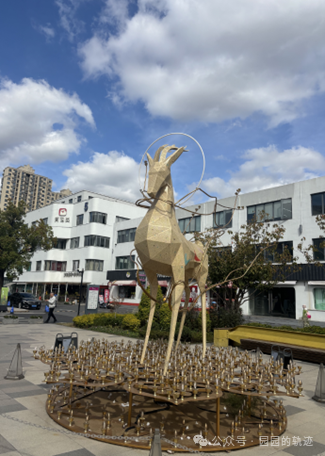
The Nine-Colored Deer comes from the Dunhuang mural “The Story of the King of Deer” from Cave 257 of the Northern Wei Dynasty. The painting employs a horizontal scroll format, arranged in a unique sequence that begins at both ends and ends in the middle, telling the story of the kind Nine-Colored Deer who saves a drowning man in the Ganges River. After being saved, the man forgets his gratitude, informs the court, and leads the king’s party to capture the Nine-Colored Deer, ultimately facing the consequences of his betrayal.
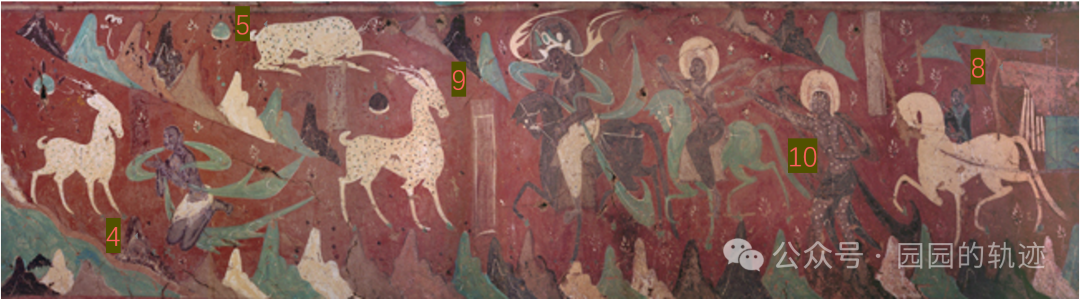
The King of Deer (detail) from the Dunhuang Academy
On the left side of this mural (1,2,3. the image details are not displayed) is the Nine-Colored Deer hearing the cries for help from a drowning person, rushing to rescue him. The drowning man rides on the deer’s back, tightly holding its neck, as the Nine-Colored Deer carries him out of the water. (4) The drowning man kneels before the Nine-Colored Deer, promising to keep its whereabouts a secret. The Nine-Colored Deer then rests (5). On the far right (6,7. the image details are not displayed) is the queen charming the king to obtain the skin of the Nine-Colored Deer. In the image, the king and queen are seated in the palace, with the queen’s right arm around the king’s shoulder, turning towards him, one foot raised, displaying a charming demeanor. Outside, the drowning man is treacherously informing the king. (8) A person drives a carriage, as the king and queen ride in the same carriage led by the drowning man to hunt the Nine-Colored Deer. This carriage is a closed canopy type, with a double-yoke and double-wheels, driven by a single horse. The canopy is not luxuriously decorated, likely due to the need to enter the mountains for hunting. The posture of the horse is very elegant, reflecting the nobility of the royal carriage, and the design of the carriage is quite exquisite. Due to the impending war, the monks of the Mogao Caves, considering the disasters of war, sealed all the scriptures, documents, archives, and paintings of Buddha preserved by the temple in this cave, then built a wall outside and painted murals to conceal it. Later, as the monks also fled from the war and did not return, the cave fell into disrepair, and over time, the passage was blocked by wind and sand, remaining sealed for nearly 800 years. Until the 26th year of the Guangxu reign of the Qing Dynasty (1900), the monk Wang Yuanlu of the Mogao Caves led people to “clear the sand from the three layers of caves,” revealing the secret chamber to the world, which he named the Library Cave.
In ancient India, Buddhist followers combined traditional burial architecture with the function of burying Buddha relics and commemorating the place of Buddha’s enlightenment, resulting in a type of brick and stone stupa called Stupa. This also led to the emergence of cave temples centered around stupas. In ancient China, skilled craftsmen combined the Indian prototype with the cultural tradition of “immortals living in high towers,” along with high platform architecture and wooden structure traditions, gradually producing various types of Chinese pagodas.
The Dunhuang murals contain various images of stupas from the Northern Wei to the Yuan Dynasty, and there are also earthen stupa ruins near the Mogao Caves. They are products of cultural exchanges among the Brahmin, Han, Hu, and Tibetan cultures, and are an important component of regional Buddhist landscapes. This series selects the ancient stupa ruins of Dunhuang, specifically the Da Hua Tower at Chengcheng Bay, and 20 images of stupas from the murals of the Mogao Caves and Yulin Caves, including stupa types such as the covered stupa, pavilion-style stupa,密檐塔, and Vajra throne stupa. The physical forms and colors of the stupas are restored, and the images of the stupas are three-dimensionally deduced, with restoration design proposals made into scaled 3D printed models. Among them, the flower tower model is hand-painted according to the original craftsmanship and materials.
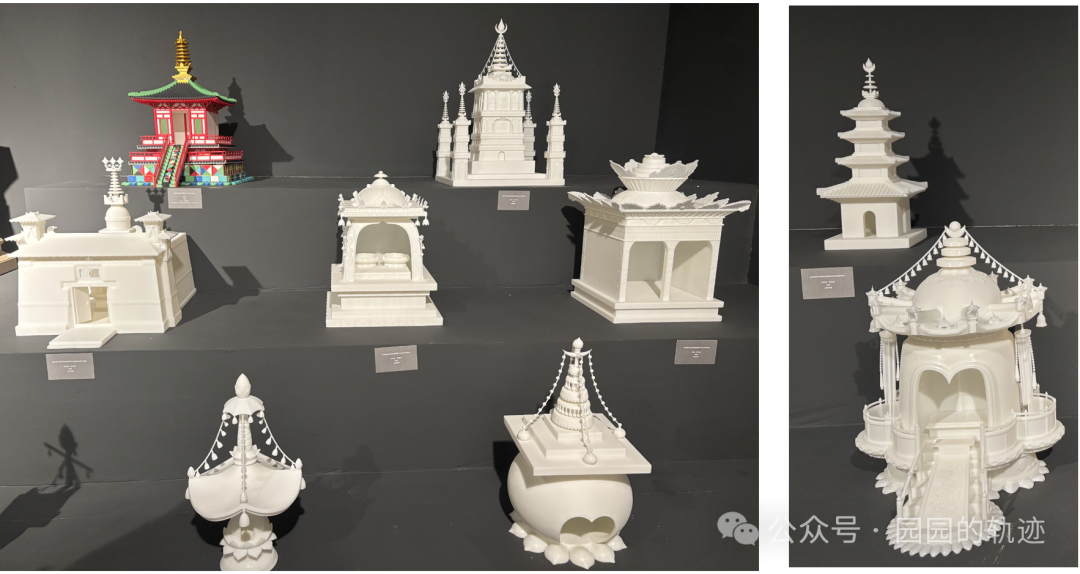
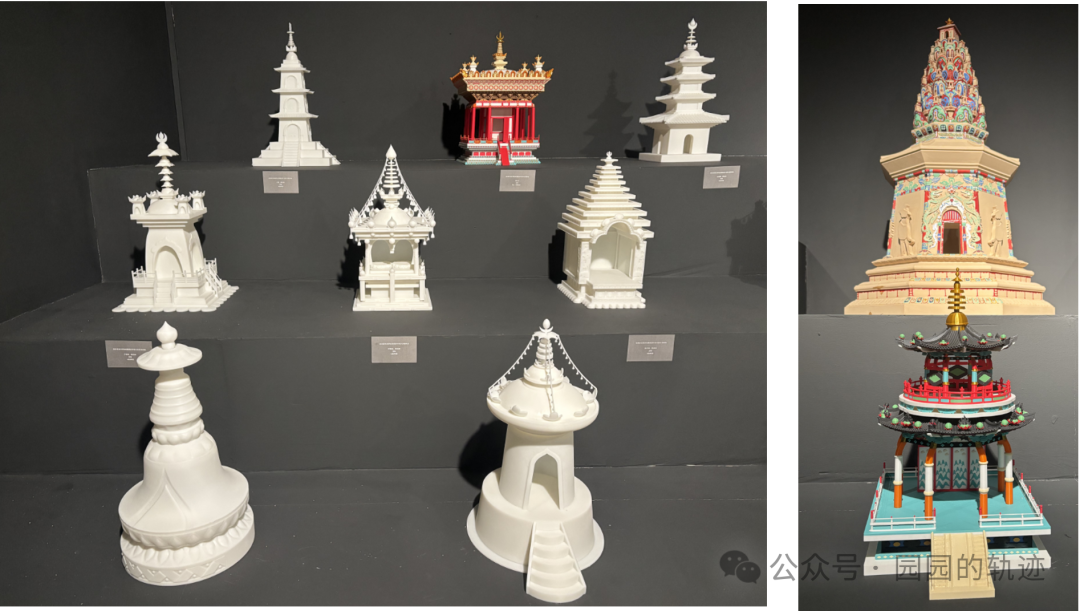
Images of stupas in Dunhuang murals by Zhou Zhenru 3DPrinting
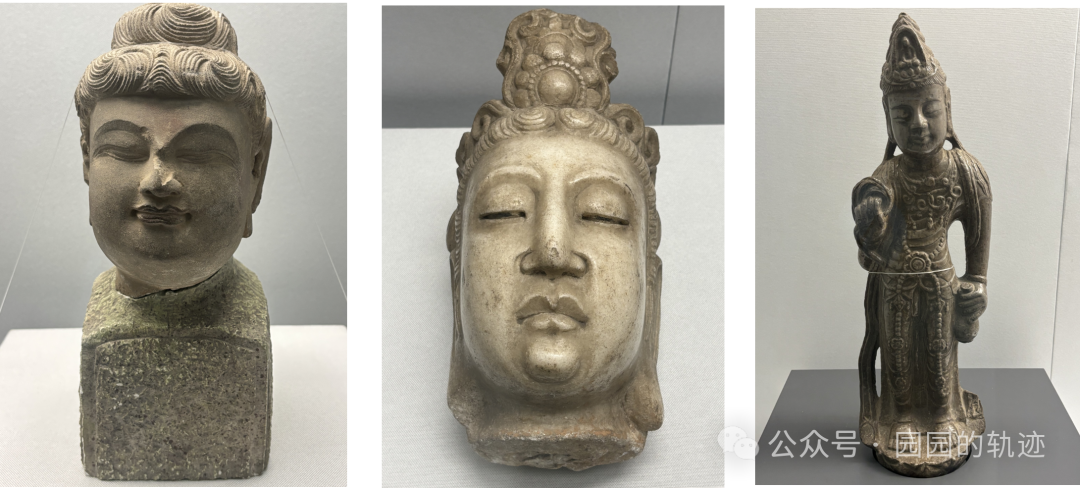
Left: Stone Buddha head Middle: Bodhisattva head Right: Stone statue of Guanyin All from the Tang Dynasty, collected by the Gansu Provincial Museum
For ordinary people, our impression of the Mogao Caves in Dunhuang mainly revolves around beautiful images like the flying apsaras, the Thousand-Hand Guanyin, and the Nine-Colored Deer. Today, this cultural and artistic treasure trove of the Mogao Caves, combined with modern technology, allows ordinary people to have the opportunity to deeply appreciate these treasures. I am very much looking forward to the next stop at the Shanghai Yifeng Center for the 3D replica of the Dunhuang Caves.
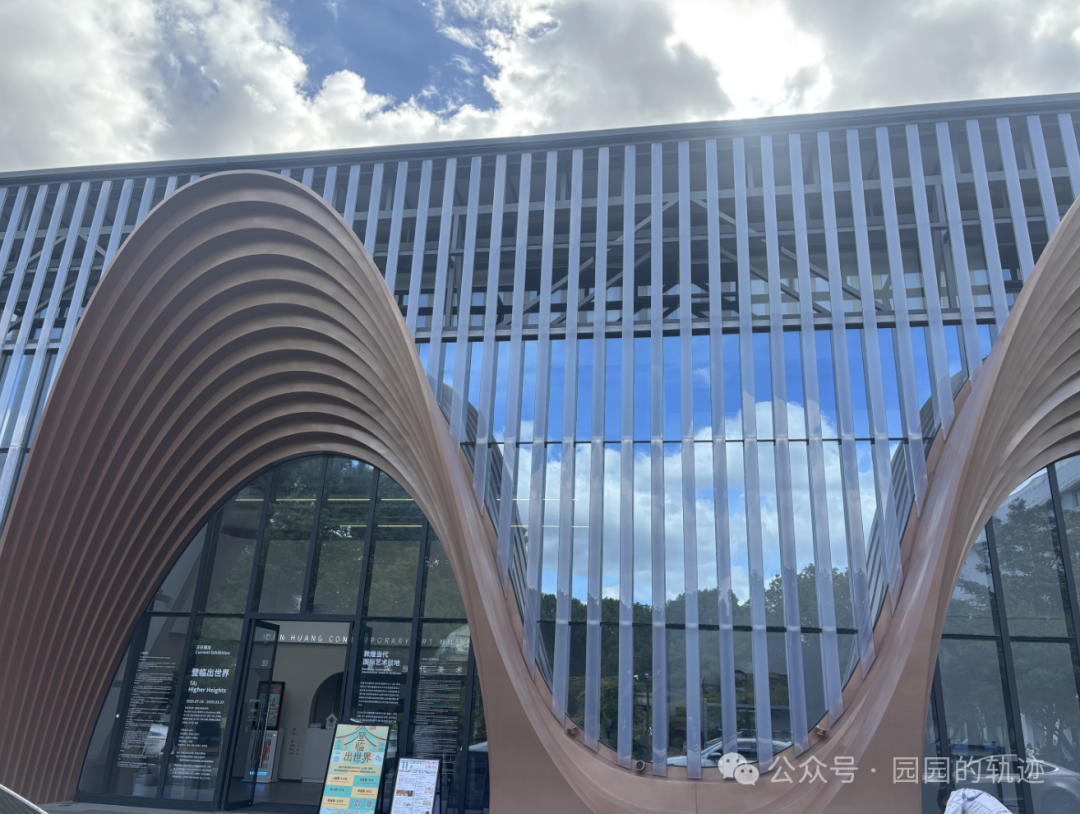
Shanghai Dunhuang Contemporary Art Museum “Ascending to the World” Exhibition