
Source: 21st Century Business Herald
Last weekend, a lengthy screenshot of a WeChat post by Tao Ye, the founder of Tuozhu Technology, was widely circulated.
The post claimed that “my former employer invested in a 3D printing company, and the agreement specifically included clauses related to Tuozhu.” The authenticity of this post has been confirmed through multiple channels.
This is the second technology company founder to publicly post on social media recently, the previous one being Liu Jingkang, founder of Yingshi Innovation (688775.SH), which has a market value exceeding 100 billion.
DJI responded to reporters, stating that the information regarding their investment in a 3D printing company is accurate. This investment is based on their optimism about the development potential of consumer-grade 3D printing technology and the industry’s growth potential, aligning with DJI’s consistent philosophy of innovative technology and forward-looking layout.
Market rumors suggest that the 3D printing company invested by DJI is Smart Pie. However, DJI did not name the invested party in their response. According to Tianyancha, Smart Pie currently has no information regarding equity changes, and the company’s publicly available financing records are still at the A round from 2022.
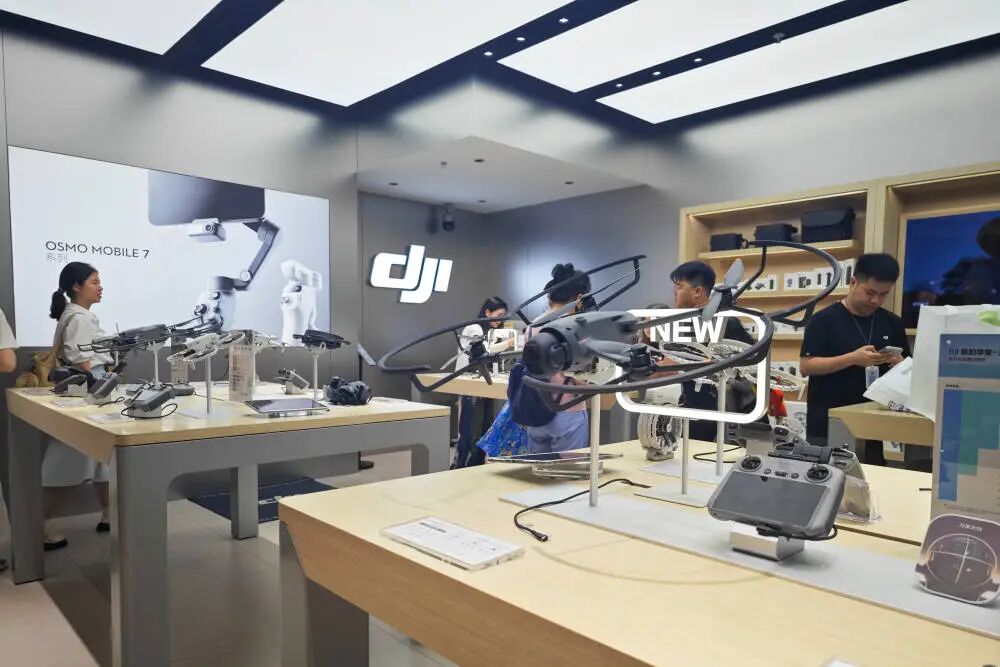
Image Source: 21st Century Business Herald, Photo by Liang Yuanhao
Before founding Tuozhu Technology in 2020, Tao Ye had an 8-year tenure at DJI, initially as the head of the consumer drone division, and later chose to venture into the 3D printing field, which at the time seemed less appealing, but is now experiencing a boom.
In recent years, 3D printing has gradually transitioned from a niche market to a common household technology.
Currently, the price of consumer-grade 3D printers has decreased by 60% compared to three years ago, with entry-level models available for under 2000 yuan. Various ecological community models are gradually improving, and AI tools represented by Hitem3D have significantly lowered the creative threshold, providing software conditions for the popularization of consumer-grade 3D printing.
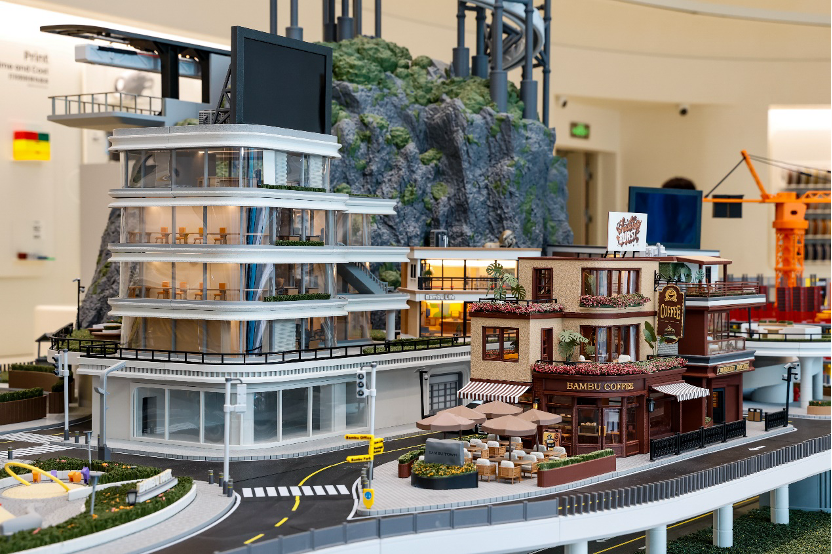
3D Printing Models
During this period, four Shenzhen companies—Tuozhu Technology, Chuangxiang Sanwei, Zongwei Lifang, and Smart Pie—collectively hold 90% of the global entry-level 3D printer market share, with Tuozhu Technology showing a significant leading advantage.
3D Printing is No Longer a Geek Toy
Various data indicate that 3D printing is becoming a lucrative business.Meituan, Highfly, and other institutions have previously made investments in this area.
According to data from the National Bureau of Statistics, the production of 3D printing equipment products in the first three quarters increased by 40.5% year-on-year, outpacing industrial robots and new energy vehicles.
Market research firm CONTEXT reports that in the first quarter of 2025, global shipments of entry-level 3D printers will exceed 1 million units, a year-on-year increase of 15%, with Chinese suppliers contributing 95% of this share, mainly from Tuozhu Technology and Chuangxiang Sanwei.
The competitive landscape of the consumer-grade 3D printing market has undergone profound changes in recent years, evolving from early fragmented competition to a current dominance by a few Chinese brands.
In particular, a market structure centered around Shenzhen is gradually taking shape. In August of this year, the 21st Century Business Herald reported that Creality, Bambu Lab, and Elegoo are overseas brands established by Shenzhen companies Chuangxiang Sanwei, Tuozhu Technology, and Smart Pie, respectively. Shenzhen also has emerging brands like Shenghua Sanwei and Shenzhen Kuaizao, as well as listed companies like Jiguang Innovation, Dazhu Laser, and Anker Innovation entering the market.Shenzhen has initially formed a complete 3D printing industry chain encompassing modeling systems, materials, equipment, and application services, making it the “first city of consumer-grade 3D printing.”
Among them, Tuozhu Technology, Chuangxiang Sanwei, Zongwei Lifang, and Smart Pie collectively hold 90% of the global entry-level 3D printer market share, earning them the title of the “Four Little Dragons” of Shenzhen 3D printing.
Tuozhu Technology’s market share is significantly ahead. According to media reports, Tuozhu is expected to achieve revenue of 5.5 to 6 billion yuan in 2024, with a net profit close to 2 billion yuan. In the first quarter of this year, Tuozhu’s revenue already reached 2 billion yuan. According to their prospectus, Chuangxiang Sanwei’s revenue for 2024 is projected to be 2.288 billion yuan, with a net profit of 88.66 million yuan.
In recent years, especially this year, consumer-grade 3D printing is transitioning from a geek toy to a true desktop creative center and small-scale production tool, penetrating more scenarios such as education, customized trendy toys, and small parts manufacturing, which is key to the market’s sustained growth.
In the entry-level 3D printing sector, Smart Pie has rapidly gained traction. In 2019, Smart Pie launched its first resin printer, Mars, breaking the high-price monopoly with a price of $299, and has since continuously released 4K, 6K, and 16K models, maintaining a strong position in the mid-to-low price market. In 2024, Smart Pie’s sales are expected to reach 1.6 billion yuan, with 550,000 units of 3D printers shipped.
Industry insiders say that if DJI invests in Smart Pie, as an innovation-driven company, DJI will certainly provide some technological empowerment and support in channel resources. Smart Pie currently has competitive pricing in the market and strong marketing capabilities, but still has potential in technology and product strength.
Today, DJI is no longer limited to drones but is a multi-category company encompassing drones, action cameras, panoramic cameras, outdoor power supplies, and robotic vacuum cleaners.
Wang Lei, founder of Zhenghao, was also the head of battery research and development at DJI before venturing into the then-niche portable energy storage market. Now, DJI has also entered the outdoor power supply sector.
After Tao Ye’s WeChat post, a co-founder of Zhenghao Innovation commented, “In fact, there are many teams in the field; we cannot just become teammates but can also form alliances. Moreover, the key is that there are countless spectators watching the happenings on stage.”
The Competitive Edge of 3D Printing
Ultimately, 3D printing is an industry that speaks through its products. Its moat is reflected in multiple dimensions, covering hardware, software, and a closed-loop content ecosystem, all of which are indispensable.
For instance, at the hardware level, technological upgrades have accelerated printing speed, precision, reliability, and intelligence, all of which are intuitive experiences for consumers.
In April 2022, Tuozhu launched its first product, the Bambu Lab X1 series high-speed multi-color 3D printer, which approaches industrial-grade performance but is priced under 10,000 yuan, achieving “industrial-grade performance at consumer-grade prices.”
This product has become the focus of industry learning and competition, but surpassing the company in price and product is not simple.
Tao Ye mentioned in his WeChat post, “Wolves will definitely come; we have never doubted that. We just didn’t expect that the time it would take for the wolves to use our products as reference designs to develop their products would be longer than anticipated, giving us an extra two years to stockpile resources and prepare ourselves.”
The ecosystem and community are key to enhancing user stickiness and repeat purchases of consumables, as well as lowering the usage threshold. Leading companies generally build their own model communities, providing a wealth of one-click printable models.
In the 3D printing enthusiast community, MakerWorld, under Tuozhu Technology, is an undeniable presence. Launched just two years ago, its official data shows nearly 10 million monthly active users and over a million 3D models. Recently, the MakerWorld community also announced legal action against platforms like Creality Cloud (Chuangxiang Sanwei), Nexprint (Aileku), and MakerOnline (Zongwei Lifang).
Additionally, most 3D printing manufacturers do not limit themselves to selling machines but also have their corresponding slicing tools, and some have integrated 3D large models, which are also key competitive factors for enhancing user experience.
It is worth mentioning that the complete electronic and precision manufacturing industry chain in Shenzhen and the Pearl River Delta region enables companies to achieve extremely high production efficiency.
For example, some companies can assemble a 3D printer every two minutes and can quickly respond to market changes for product iteration, which is why most leading 3D printing companies are located in Shenzhen.
After discussing his “former employer,” Tao Ye candidly acknowledged that he has anticipated fierce competition in the industry.
“In the past few years, we have constantly told shareholders not to be overly optimistic about next year’s situation just because this year looks good; next year is likely to be very difficult. The wolves have come several times, to the point where they no longer believe us, thinking I am overly modest. However, the wolves will definitely come; we have never doubted that.”
——END——