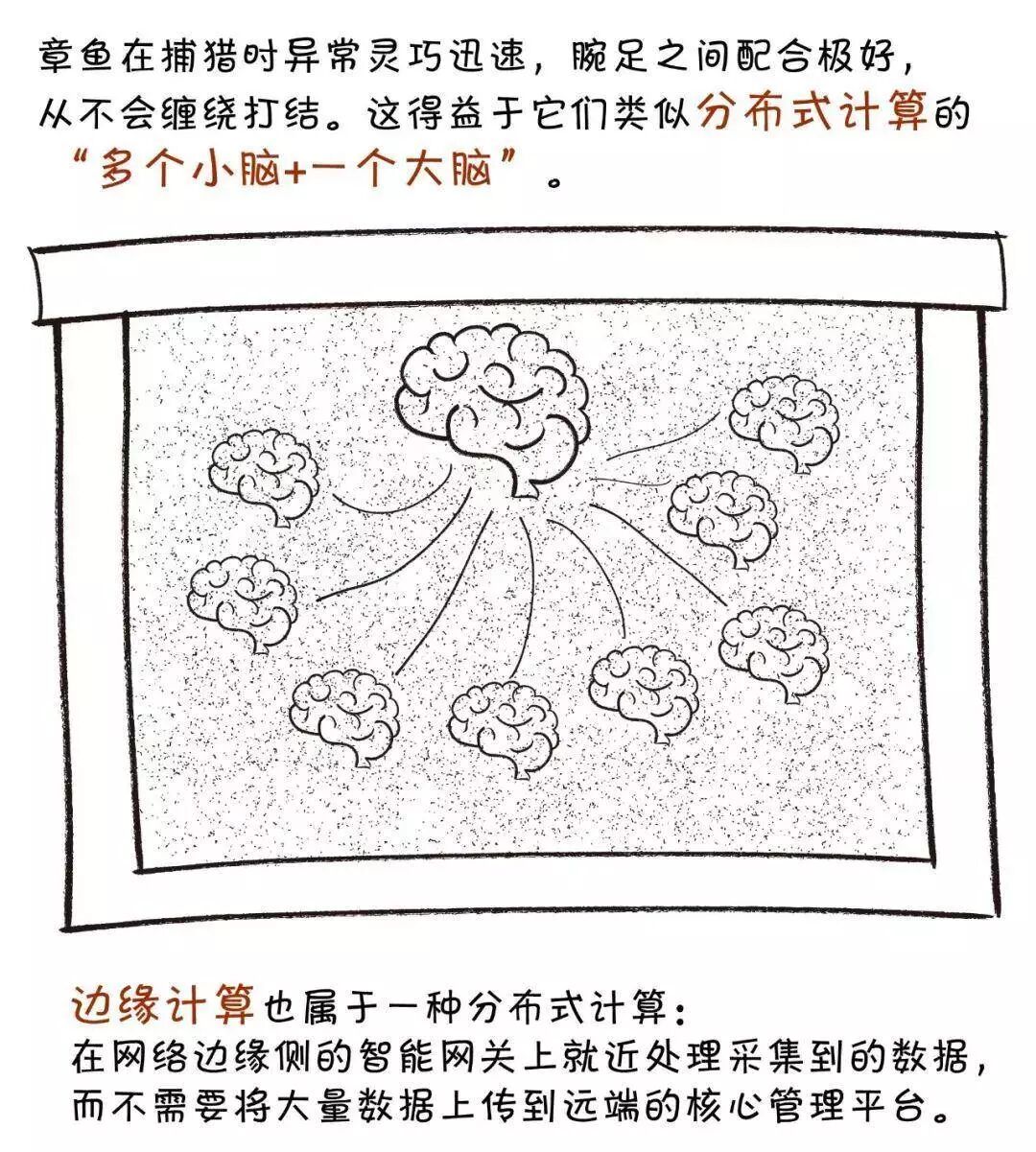
With the deepening trend of the Internet of Everything, the number of end devices such as smartphones and smart glasses is continuously increasing, causing the growth rate of data to far exceed that of network bandwidth. At the same time, the emergence of many new applications such as augmented reality and autonomous driving has raised higher demands for latency. Edge computing provides a unified platform of computing, networking, and storage resources at the network edge to serve users, allowing data to be processed timely and effectively near its source. This model differs from cloud computing, which requires all data to be transmitted to data centers, bypassing the bottlenecks of network bandwidth and latency, and has attracted widespread attention. Understanding Edge Computing In recent years, the rapid development of big data, cloud computing, and intelligent technologies has brought profound changes to the Internet industry and raised new requirements for computing models. The amount of data generated daily in the era of big data is surging, while the data in the context of applications like the Internet of Things is geographically dispersed and demands higher requirements for response time and security. Although cloud computing provides an efficient computing platform for big data processing, the current growth rate of network bandwidth is far behind that of data, and the decline in network bandwidth costs is much slower than that of hardware resources like CPUs and memory. Additionally, the complex network environment makes it difficult to achieve breakthrough improvements in network latency. Therefore, the traditional cloud computing model needs to address the two major bottlenecks of bandwidth and latency. In this application context, edge computing has emerged and gained widespread attention from researchers in the past two years.In edge computing, the “edge” refers to the computing and storage resources at the network edge, which are closer to users in terms of both geographical and network distance compared to data centers. Edge computing utilizes these resources to provide services to users at the network edge, allowing applications to process data near the source. From a bionic perspective, we can make this analogy: cloud computing is like the human brain, while edge computing is akin to the nerve endings. When a needle pricks the hand, the hand instinctively withdraws before the brain realizes the prick, as the withdrawal process is a reflex directly processed by the nerve endings. This reflex accelerates human response speed, avoiding greater harm while allowing the brain to focus on higher-level intelligence. The future is the era of the Internet of Everything, and Cisco predicts that by 2020, there will be 50 billion devices connected to the Internet. We cannot let cloud computing be the “brain” for every device; instead, edge computing allows devices to have their own “brains.”To help everyone understand better, we can think of a fascinating creature in the world—the octopus. As one of the most intelligent invertebrates, the octopus has a vast number of neurons, with 60% distributed in its eight arms, while only 40% are in its brain. It can escape and hunt with remarkable speed, and its eight arms are coordinated without tangling, thanks to its distributed computing-like structure of “multiple small brains + one large brain.”
  (Image source: Jiangnan Misty Rain Blog)Advantages of Edge Computing
 When discussing edge computing, we cannot overlook cloud computing. Cloud computing services are centralized, with all data transmitted over the network to a cloud computing center for processing. The high degree of resource centralization and integration gives cloud computing high versatility; however, in the face of the explosive growth of IoT devices and data, the aggregation services based on the cloud computing model have gradually revealed their shortcomings in real-time performance, network constraints, resource costs, and privacy protection. Compared to cloud computing, edge computing can better support mobile computing and IoT applications, with the following significant advantages:1. Greatly alleviates network bandwidth and data center pressure.Cisco’s Global Cloud Index from 2015 to 2020 indicated that with the development of the Internet of Things, global devices will generate 600ZB of data by 2020, but only 10% of this is critical data, while the remaining 90% is temporary data that does not require long-term storage. Edge computing can fully utilize this characteristic by processing a large amount of temporary data at the network edge, thereby reducing the pressure on network bandwidth and data centers.2. Enhances real-time response.In the Internet of Everything scenario, applications have extremely high requirements for real-time performance. In the traditional cloud computing model, applications send data to the cloud computing center and then request processing results, increasing system latency. For example, in autonomous driving applications, high-speed vehicles require millisecond-level response times; any increase in system latency due to network issues can have serious consequences. Edge computing processes data close to the data producers, eliminating the need to request responses from the cloud computing center, significantly reducing system latency. The proliferation of gigabit wireless technology ensures network transmission speed, making edge services more responsive than cloud services.3. Protects privacy data and enhances data security.Data security in IoT applications has always been a critical issue. Surveys show that about 78% of users are concerned about their IoT data being used by third parties without authorization. In the cloud computing model, all data and applications are in data centers, making it difficult for users to control access and usage of data at a granular level. With the popularity of smart homes, many households install network cameras indoors. If video data is directly uploaded to the cloud data center, not only will the transmission consume bandwidth resources, but it also increases the risk of leaking users’ private data. To address the data security issues of the existing cloud computing model, edge computing provides a better privacy protection mechanism for such sensitive data. On one hand, users’ source data is processed directly at the edge node near the data source before being uploaded to the cloud data center, achieving protection and isolation of sensitive data. On the other hand, functional interfaces are established between edge nodes and cloud data, meaning that edge nodes only receive requests from the cloud computing center and feedback the processed results to it. This method can significantly reduce the risk of privacy leakage. However, edge computing cannot replace cloud computing; rather, it complements it. Many services that require global data support still rely on cloud computing. For example, in e-commerce applications, users can perform operations on their shopping carts at edge nodes for the fastest response time, while services like product recommendations are better suited for the cloud, as they require global data support. Applications of Edge Computing
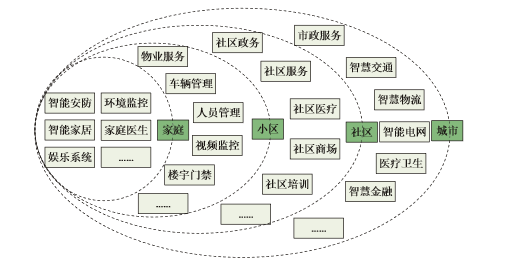
 Currently, edge computing applications are very widespread, especially suitable for application scenarios with special business requirements such as low latency, high bandwidth, high reliability, massive connections, heterogeneous aggregation, and local security and privacy protection. Smart CitiesSmart cities utilize advanced information technology to achieve intelligent management and operation of cities. In 2016, Alibaba Cloud proposed the concept of a “City Brain,” which essentially uses urban data resources to better manage cities. However, the data relied upon for building smart cities is characterized by diverse sources and heterogeneity, while also involving issues of privacy and security for urban residents. Therefore, applying the edge computing model to process data at the network edge is a good solution.Edge computing has rich application scenarios in the construction of smart cities. In urban road surface detection, sensors installed on streetlights collect information about the urban road surface, detecting environmental data such as air quality, light intensity, and noise levels, and can promptly feedback to maintenance personnel when streetlights malfunction. In intelligent transportation, edge servers run intelligent traffic control systems to obtain and analyze data in real-time, controlling traffic lights based on real-time road conditions to alleviate vehicle congestion. In autonomous driving, if sensor data is uploaded to the cloud computing center, it will increase the difficulty of real-time processing and be constrained by the network. Therefore, autonomous driving primarily relies on in-vehicle computing units to recognize traffic signals and obstacles and plan paths. EdgeOSc is a system-level operating system based on edge computing for smart cities, consisting of three parts: the underlying data perception layer, the intermediate network interconnection layer, and the top data application management layer. This operating system can effectively manage multi-source data in smart cities, enhancing the range and depth of data sharing to maximize the value of data in smart cities.
  (Source: Applications and Prospects of Edge Computing in the IoT Field)Smart ManufacturingSmart manufacturing is a very typical application field of edge computing in the IoT, facilitating the deep integration of IT and OT systems. Industrial robots are the foundation for achieving smart manufacturing, and in recent years, the market for industrial robots in China has shown a booming trend. According to statistics, in 2016, the total consumption of industrial robots in the Chinese market reached 87,000 units, nearly one-third of the world’s sales, making it the largest industrial robot market in the world. The application fields of industrial robots are mainly concentrated in automotive manufacturing, the 3C industry, logistics, metal processing, plastics, and chemicals, completing tasks such as handling, assembly, disassembly, and welding in harsh working environments that require high automation, execution precision, and safety. Industrial robots need to have the ability to respond to complex on-site environments and conduct comprehensive analysis and judgment based on current workflows, as well as the ability to collaborate with other robots to complete complex tasks. This requires robots to be equipped with intelligent controllers to perform complex computing tasks. However, in factory environments where dozens or hundreds of robots are used, equipping each robot with complex intelligent controllers would increase costs. By adopting edge technology, the functions of intelligent controllers for industrial robots can be concentrated and deployed at edge nodes in the production workshop, achieving centralized control while ensuring low latency, significantly reducing the development, deployment, and maintenance costs of industrial robots. Smart HomesIn current smart homes, smart appliances are mostly composed of individual smart products, such as password locks, smart lighting, smart air conditioning, security monitoring, smart bathrooms, indoor environment monitoring, and home theater multimedia systems. These smart appliances rely on cloud platforms for remote control via mobile devices over the Internet. This cloud-based smart home system cannot be controlled when the network fails, especially in scenarios where multiple smart products need to coordinate. Smart appliances connect to the cloud/data center via Wi-Fi modules, and users are concerned about the leakage of household data stored in the cloud/data center. Additionally, a large amount of monitoring video data can consume the communication bandwidth between smart home devices and the cloud/data center. By adopting edge computing technology, household video data can be stored on local edge computing gateway devices, ensuring that users’ privacy is not leaked; the coordination of multiple smart products can also be achieved through local edge computing in near real-time; edge computing nodes can also periodically synchronize updates of control and device status information with the cloud. References:[1] Li Linzhe, Zhou Peilei, Cheng Peng, Shi Zhiguo. Architecture, Challenges, and Applications of Edge Computing [J]. Big Data, 2019, 5(02): 3-16.[2] Shi Weisong, Zhang Xingzhou, Wang Yifan, Zhang Qingyang. Edge Computing: Current Status and Prospects [J]. Computer Research and Development, 2019, 56(01): 69-89.[3] Zhao Ziming, Liu Fang, Cai Zhiping, Xiao Nong. Edge Computing: Platforms, Applications, and Challenges [J]. Computer Research and Development, 2018, 55(02): 327-337.[4] Shi Weisong, Sun Hui, Cao Jie, Zhang Quan, Liu Wei. Edge Computing: A New Computing Model in the Era of the Internet of Everything [J]. Computer Research and Development, 2017, 54(05): 907-924.[5] Chu Junsheng, Zhang Bosheng, Lin Zhaoji. Applications and Prospects of Edge Computing in the IoT Field [J]. Information and Communication Technology, 2018, 12(05): 31-39.Disclaimer:The articles, images, and information reproduced in this public account are all copyrighted by the original organization or author and do not represent the views of this public account; they are shared for communication purposes. If there are any infringements, please contact us promptly for corrections or deletions.(13263203203 same WeChat)This article is reproduced from the public account: Shubangke