The Charm of MES and Industrial IoT (IIoT) Integration Begins to Emerge
On the grand stage of industrial production, MES (Manufacturing Execution System) and Industrial IoT (IIoT) shine like two brilliant stars. MES focuses on the management and execution of production processes, while Industrial IoT excels in equipment connectivity and data collection. What wonderful reactions will occur when these two are integrated?
Imagine that every piece of equipment in the workshop acts like a smart little guardian, interconnected through Industrial IoT, transmitting production data to the MES system in real-time. It’s like installing a pair of “eyes” in the workshop, allowing every detail of the production process to be clearly visible.

Through this integration, production in the workshop becomes more efficient. Previously, data collection and analysis during the production process often required significant manpower and time, and errors were common. Now, with the integration of MES and Industrial IoT, data can be collected and analyzed automatically and accurately. Production managers can understand the operational status of equipment, production progress, quality conditions, and more in real-time, allowing for timely adjustments and decisions.
For example, when a piece of equipment malfunctions, the Industrial IoT will immediately transmit the anomaly information to the MES system, which will automatically issue an alert to notify relevant personnel for handling. This greatly reduces the impact of equipment failures on production and improves production efficiency.
The Transformation of Workshop Transparency Driven by Real-Time Data
Real-time data acts like a magical key that opens the door to workshop transparency. In an environment where MES and Industrial IoT are integrated, everything in the workshop becomes “transparent”.
From the entry of raw materials to the exit of finished products, data from every link can be monitored in real-time. The inventory levels and usage of raw materials, the number of work-in-progress items on the production line, processing progress, and quality inspection results of finished products are all clearly visible in the MES system.
This is of great significance for production management in enterprises. Companies can arrange production plans reasonably based on real-time data, optimize production processes, and improve production efficiency. At the same time, they can promptly identify issues in the production process, take measures for improvement, and enhance product quality.
For instance, by analyzing real-time data on the production line, companies can discover that the production efficiency of a certain process is low, allowing them to optimize that process and improve overall production efficiency. Additionally, when a quality issue arises with a batch of products, real-time data can trace back to the source of raw materials and various stages of the production process to identify the root cause and take corrective actions.
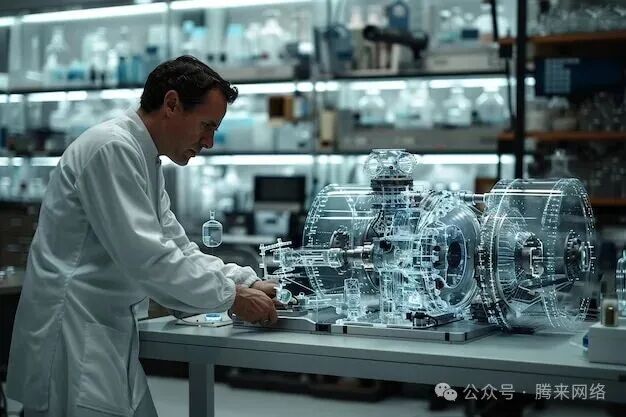
Workshop transparency can also enhance trust between enterprises and customers. Customers can understand the production progress and quality of products in real-time through the MES system, increasing their trust in the enterprise. This is very beneficial for market competition.
Practical Case: Witness the Miracle of MES and Industrial IoT Integration
A manufacturing enterprise faced numerous issues in production management before adopting the MES and Industrial IoT integration solution. The execution of production plans was often delayed, equipment failures were frequent, and product quality was unstable, severely impacting the enterprise’s production efficiency and market competitiveness.
To address these issues, the enterprise decided to implement the MES and Industrial IoT integration solution. They installed numerous sensors and smart devices in the workshop, connecting these devices through Industrial IoT to achieve real-time data collection and transmission. Additionally, they introduced an advanced MES system to comprehensively manage and control the production process.
After implementing this solution, the enterprise’s production management underwent a dramatic transformation. The execution rate of production plans significantly improved, the occurrence of equipment failures drastically decreased, and product quality was notably enhanced.
By analyzing real-time data, the enterprise identified bottlenecks in the production process and optimized these areas. For example, they discovered that the processing speed of a certain operation was slow, affecting the overall production efficiency of the production line. Consequently, the enterprise upgraded the equipment to enhance its processing speed, thereby improving the overall production efficiency of the production line.

The enterprise also utilized real-time data to evaluate and manage employee performance. By analyzing operational data from employees, the enterprise could understand their work efficiency and quality, rewarding high-performing employees and providing training and guidance to those underperforming, thus enhancing employee motivation and efficiency.
Challenges Faced and Response Strategies
Although the integration of MES and Industrial IoT brings numerous benefits, it also faces several challenges in practice.
Data security is a significant concern. In an Industrial IoT environment, a large amount of production data needs to be transmitted and stored over networks, increasing the risk of data breaches and attacks. To address this issue, enterprises need to strengthen data security measures, employing encryption technologies, access control techniques, and other methods to ensure data safety.
System integration is also a challenge. MES systems and Industrial IoT devices come from different vendors, and there may be differences in their interfaces and protocols, complicating system integration. Enterprises need to choose systems and devices with good compatibility and work closely with vendors to ensure smooth integration.
Employee training and awareness enhancement are also crucial. The integration of MES and Industrial IoT requires employees to possess certain information technology and data analysis skills. Enterprises need to strengthen employee training, improve skill levels and awareness, enabling employees to proficiently use MES systems and Industrial IoT devices to fully leverage their capabilities.
Future Outlook: The Infinite Possibilities of MES and Industrial IoT Integration
With the continuous advancement of technology, the prospects for MES and Industrial IoT integration are very promising. In the future, their integration will deepen further, bringing more transformations and innovations to industrial production.
On one hand, with the ongoing development of technologies such as artificial intelligence and big data, MES systems will possess more powerful data analysis and decision support capabilities. The system can analyze vast amounts of production data to predict issues and trends in the production process, making proactive decisions for intelligent production management.
On the other hand, Industrial IoT devices will become more intelligent and compact. Sensors and smart devices will achieve higher precision in data collection and transmission, while also being easier to install and maintain. This will further reduce the costs for enterprises implementing MES and Industrial IoT integration solutions, enhancing the feasibility and popularity of these solutions.
The integration of MES and Industrial IoT will also promote industrial production towards greener and more sustainable development. Through real-time data monitoring and analysis, enterprises can optimize energy consumption, reduce waste generation, and achieve green production.

The integration of MES and Industrial IoT is an inevitable trend in the development of industrial production. Through the practice of workshop transparency driven by real-time data, enterprises can improve production efficiency, enhance product quality, and strengthen market competitiveness. Although there will be challenges in practice, as long as enterprises adopt effective response strategies, they can fully leverage the advantages of MES and Industrial IoT integration to achieve transformation and upgrading in industrial production. Let us look forward to the creation of more miracles through the integration of MES and Industrial IoT in the future!
In this era full of opportunities and challenges, enterprises must actively embrace new technologies, continuously innovate and transform, to remain competitive in the fierce market. The integration of MES and Industrial IoT provides an effective pathway for enterprises to achieve intelligent production management. Let us work together to open a new chapter in industrial production!