The automotive industry is undergoing profound changes, with traditional OEMs facing the challenge of a sharp increase in computing power demands from modern vehicles. With the proliferation of Advanced Driver Assistance Systems (ADAS), In-Vehicle Infotainment (IVI) systems, and even in-vehicle Artificial Intelligence (AI), cars are rapidly evolving into “data centers on wheels.” To achieve these advanced functionalities and ensure competitive differentiation, automotive companies must accelerate software development and take an active role in selecting or even designing chips to ensure that the hardware can support the corresponding computational load. This trend is reshaping the automotive value chain, leading to structural upheaval.The Transformation of the Automotive Industry Value ChainAs vehicles gradually acquire data center attributes, the demand for advanced chips is experiencing explosive growth to process vast amounts of in-vehicle data. Leading foundries like TSMC are accelerating the introduction of automotive-grade process nodes to meet this challenge. Meanwhile, automotive companies are diversifying their strategies by directly investing in custom chips—Tesla’s FSD chip and Dojo supercomputer chip are typical examples—aiming to optimize costs, create differentiated advantages, and capture market share.Consequently, traditional OEMs are increasingly inclined to bypass intermediaries and collaborate directly with foundries, ASIC design service providers, and software suppliers, taking control of the supply chain while accelerating product iteration. For most OEMs and component suppliers, this is akin to “saying goodbye to the old model,” leading to a deep restructuring of the automotive value chain.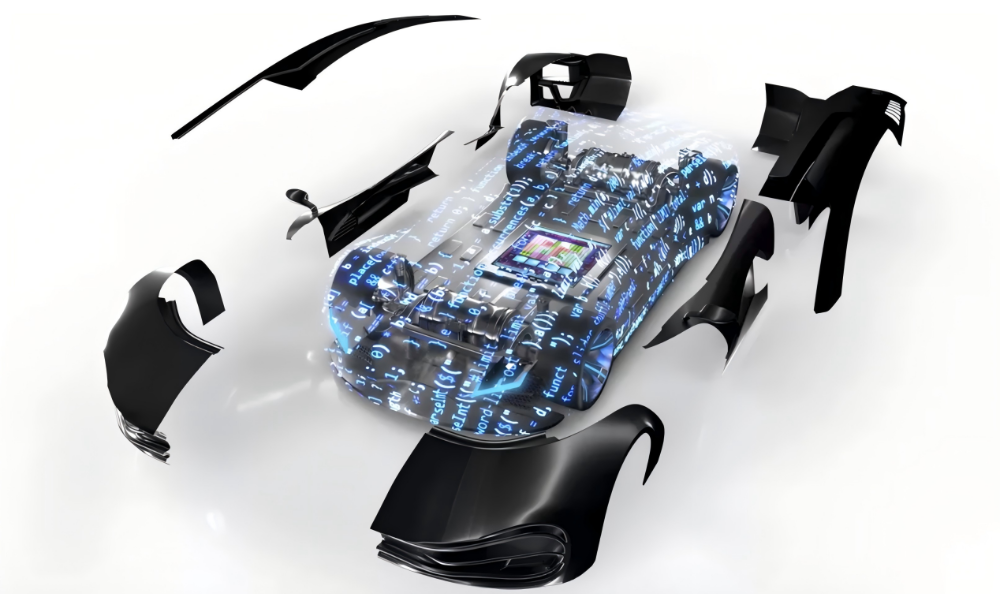
Enhancing Chip Self-Development Capabilities
In this process, all OEMs must consider a key question: “What level of chip development capability does my company need to possess?” The answer to this question will determine the depth of vertical integration achievable in the “chip-to-system” value chain. OEMs that have not yet achieved vertical integration need to clarify whether to develop towards shallow or partial vertical integration or to move towards complete vertical integration. This choice is closely related to the resources that OEMs need to invest—while complete vertical integration requires the highest one-time engineering (NRE) costs and effort, it can also bring the most significant competitive differentiation advantages.To successfully achieve vertical integration from “chip to system,” OEMs need to build core capabilities in four key areas:
- Hardware: Ability to control the entire process from electronic and electrical (E/E) architecture, subsystem design to final chip selection;
- Software: Possessing the full chain capability for the development and verification of both basic software and application layer software;
- Co-design of hardware and software: Shortening the R&D cycle through collaborative development while achieving dual optimization of cost and performance;
- In-vehicle terminal feedback loop: Ensuring the reliability, availability, and maintainability (RAS) of chip components through real-time monitoring of mass-produced vehicles.
As a pioneer in semiconductor design and a long-term technology partner driving automotive innovation, Synopsys possesses unique advantages, enabling it to provide professional consulting to OEMs, assisting them in managing all aspects of the “chip-to-system” value chain.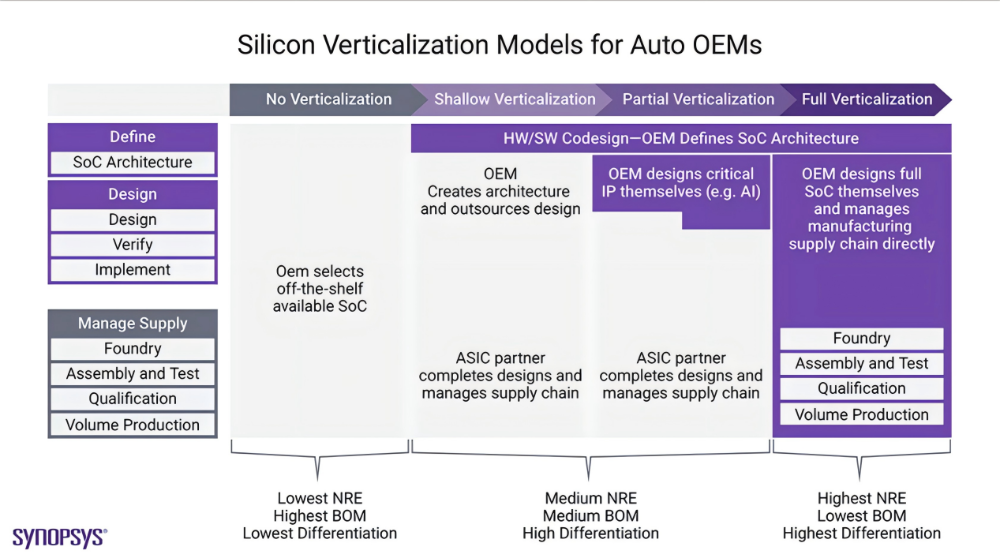
Co-Design of Hardware and Software
In the traditional development model, automotive OEMs develop vehicles in a “hardware-centric, isolated module” manner. Each new electronic function requires the addition of a corresponding Electronic Control Unit (ECU), which is bundled with dedicated hardware and embedded software. As the number of electronic functions in vehicles continues to increase, the number of ECUs in each vehicle also rises—today, a vehicle may have dozens to over 100 ECUs, many of which are sourced from different suppliers.This model not only significantly increases architectural complexity but also limits system flexibility. Due to the deep coupling of software with specific hardware, design cycles of 2 to 5 years have become the norm in the industry; and since requirements must be clearly defined at the early design stage, there is almost no room for iteration or updates during the design cycle.Co-design of hardware and software was born to address these pain points. By synchronously planning software and hardware requirements, OEMs can ensure that hardware better adapts to software needs while allowing software to maximize hardware performance. However, transitioning from the traditional “hardware-centric, isolated design” model to co-design of hardware and software is not easy, and OEMs must face multiple challenges:Challenge 1:Choosing chips for future electronic and electrical architectureOver the past 30 years, multiple industries have reached a “critical point”—reconstructing the value chain through customized chips has become extremely important, even indispensable. Now, the automotive industry is facing a similar critical point when designing the next generation of electronic and electrical architectures.OEMs currently need to clarify whether to use off-the-shelf System-on-Chips (SoCs), design custom SoCs themselves, or adopt a hybrid model of “off-the-shelf + custom” to provide computational support for vehicles. This decision must be evaluated on a case-by-case basis, carefully weighing priorities, trade-offs, and various variables.For OEMs choosing to design custom SoCs, they must independently bear the security, reliability, quality, safety protection capabilities, and PPA (Power, Performance, Area) metrics of the chips. Among these, PPA is a key consideration—especially in electric vehicle (EV) design, where high-power devices can directly impact vehicle range.Challenge 2:Selecting the optimal AI solutionMany OEMs have begun evaluating in-vehicle AI solutions. Most companies recognize that AI is a core element for achieving product differentiation in the future, and thus wish to understand the types and performance of available Neural Processing Units (NPUs) in the market, deciding whether to purchase or self-develop AI solutions.Challenge 3:Optimizing software for existing electronic and electrical architecturesAlthough the focus of co-design of hardware and software is often on future systems, OEMs must also consider mass-produced models, including enhancing vehicle functions or even adding new features under the constraint of limited computational power in existing architectures. This can sometimes be achieved by migrating software workloads (or parts of workloads) from one ECU in the vehicle to another or transferring tasks from satellite units to more powerful ECUs.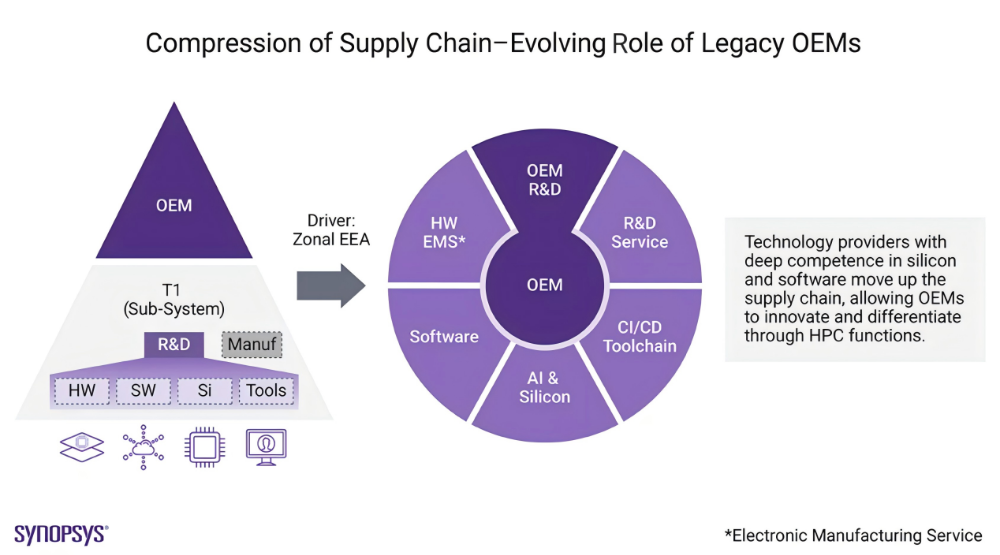
Continuous Development, Integration, and Verification
Currently, the automotive industry still commonly adopts a “big bang integration” model—most software defects are only discovered after the physical prototype is completed. This traditional development approach not only leads to high delay costs but also incurs unbearable R&D expenses. In a dynamically changing environment, static development models are no longer applicable; the future must shift to a new model of “continuous development, continuous integration, continuous verification.”From Advanced Driver Assistance Systems, In-Vehicle Infotainment Systems to Powertrain Systems, development teams are seeking more efficient development methods to enter the verification phase faster, test more software versions, and deliver higher quality software. OEMs are primarily seeking breakthroughs in the following areas:Starting software development earlier:In the past, much software development work relied on the availability of physical hardware prototypes; however, through virtual prototyping and verification technologies, reliance on physical hardware can be significantly reduced, allowing key software development work to start earlier. With the right tools, development teams can simulate electronic components and system designs, enabling testing of ECU software, embedded control systems, etc., even before physical hardware or test benches are ready.Replacing Hardware-in-the-Loop (HiL) testing with Software-in-the-Loop (SiL) testing:Traditional testing relies on the HiL model, which uses real physical components for testing. However, HiL testing equipment is expensive and often in short supply, especially during critical R&D phases, making it a bottleneck in testing and verification processes.Using SiL systems instead of HiL systems has significant advantages, such as SiL testing can detect system defects and errors earlier, which not only helps accelerate problem resolution but also effectively shortens development cycles and reduces R&D costs.Using cloud-based SiL to reduce the need for regional prototypes:Most OEMs need to maintain numerous regional software versions to meet different regional regulations and market demands. In the past, testing these regional versions also relied on HiL systems; however, by shifting from “HiL to SiL + migrating SiL testing to the cloud,” regional R&D centers can conduct development and testing work in parallel, eliminating process bottlenecks while significantly reducing testing costs and prototype requirements.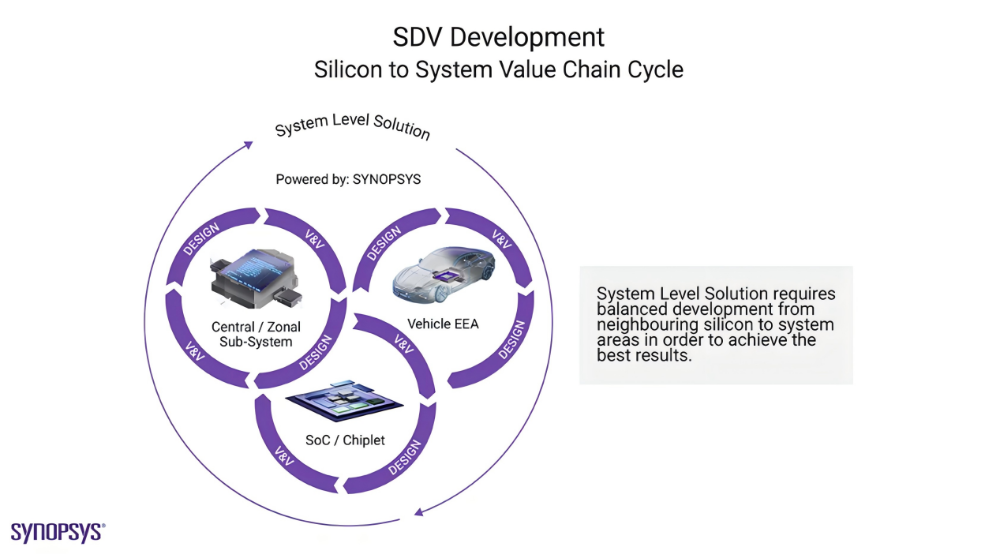
Chip Lifecycle Management
When automotive OEMs take control of chip selection, they must also pay more attention to chip reliability, ensuring that the selected chips operate as expected in real-world conditions.This is precisely the core value of Silicon Lifecycle Management (SLM). SLM can monitor the operational status of chips in vehicles in real-time, ensuring their performance meets expectations; manufacturers can use SLM to identify and fix minor issues in chips through firmware updates, while SLM can also provide feedback channels for the development process, allowing the next generation of chip designs to be optimized based on actual usage data.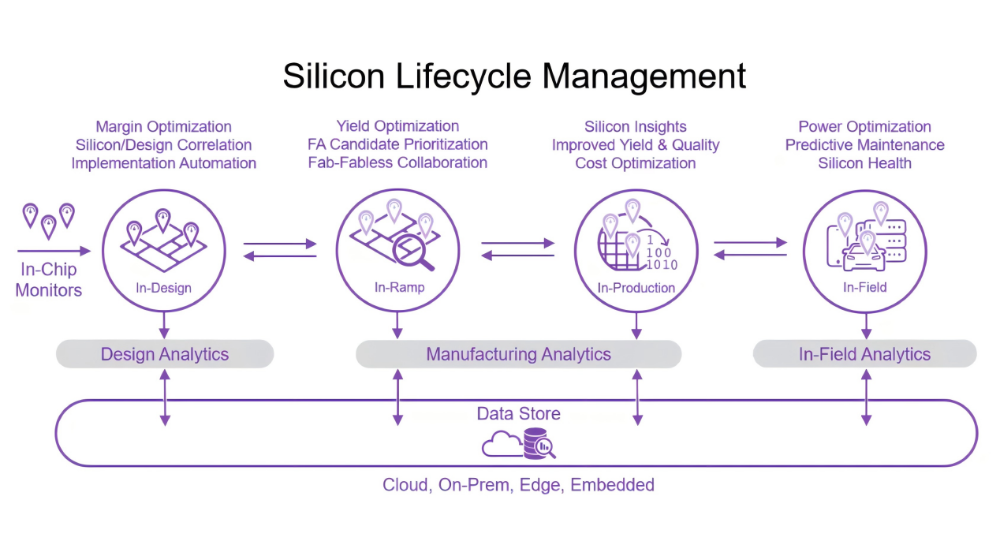
Synopsys Assists in Reshaping the Automotive Value Chain
With over 20 years of deep engagement in the automotive industry and a wealth of expertise accumulated in chip design, Synopsys helps address the complexity challenges of modern vehicles and has become a core partner for automotive OEMs and suppliers—able to assist OEMs in making informed choices in critical decisions regarding chip selection, design, and vertical integration; while also helping OEMs accelerate innovation, reduce risks, and ensure steady project advancement after decisions are made.Support for Hardware and Software Selection:Synopsys can help OEMs evaluate and select hardware and software solutions that best fit their electronic and electrical architectures and other specific needs, covering the full range from “off-the-shelf commercial products to customized chip solutions to AI technologies”; at the same time, it can assist OEMs in enhancing their chip technology capabilities and guide them in achieving a level of vertical integration that aligns with their strategic goals.Software Development, Testing, and Verification:Synopsys provides a complete set of software development, testing, and verification tools that can significantly reduce reliance on physical prototypes and HiL, accelerating software delivery while improving software quality.Chip Lifecycle Management:Synopsys’s integrated Silicon Lifecycle Management (SLM) solution can continuously optimize the health status and operational performance metrics of chips at all stages of the chip device lifecycle.Author: Walter Wottreng, Synopsys