This article is sourced from: Honeywell
Author | Jason Urso
“
Using a highly integrated virtual environment for process control systems can merge software and networks, allowing for the separation of control applications from physical devices and controllers from physical I/O. This can lower costs, achieve standardization, and avoid unnecessary work.
“
The world is changing at an unprecedented pace, and process control technology responds to this through lean project execution principles, software, and networks, separating control applications from physical devices and controllers from physical input/output (I/O). Modular design allows multiple controllers to form a virtual controller. In the interconnected global economy, such technologies can help business decisions become more agile and accurate.
Process operations must be executed quickly and efficiently. Projects must be completed on time and within budget. Workers must respond credibly to changing environments based on precise available data. Technology must facilitate success, not hinder it.
Few technical environments are as complex as those required for Industrial Control Systems (ICS). These environments must include critical functionalities, cybersecurity, redundancy, high-speed networking, and deterministic operations. This helps customers control process manufacturing facilities that are vital for safety with the highest reliability.
Although process control systems have served the process industry for over 30 years, there are still many opportunities to improve benefits by leveraging new technologies. By transitioning from custom solutions to standardization and avoiding unnecessary work, the process manufacturing industry still has many opportunities to achieve cost reductions. Continuously improving operations by converting data from installed systems into information and then into more precise actions.
Thus, process manufacturing enterprises will have more opportunities to complete projects in a shorter time while also lowering risks, increasing yields, improving quality, and enhancing operational reliability. Decades of engineering implementation and experience working with customers have accumulated a wealth of firsthand information regarding pain points that hinder project efficiency and limit customers from achieving and maintaining optimal operations. By integrating virtual environments, we help customers overcome these barriers, forming a new approach to deploying and operating industrial control systems.
By applying lean execution methods to automation projects, effective automation can be achieved. This strategy eliminates traditional dependencies that force project flows to proceed in sequence through the integration of common I/O devices, virtualization, virtual engineering, and automated debugging. This separates physical design from functional design, breaking task dependencies while using standardized designs, enabling engineering design to be conducted from anywhere in the world, significantly reducing risks and costs.
Reducing complexity through modular design
The next generation of control system technology utilizes lean project execution principles, software, and networks to separate control applications from physical devices and controllers from physical I/O. This reduces the design and implementation time for control systems, lowers costs and risks, and simplifies modular construction. This changes the way control systems are maintained, shifting daily management of servers to a centralized data center where experts and established protocols can reduce cybersecurity risks, allowing plant engineers to focus more on optimizing control systems.
Reducing complexity, separating control from physical platforms, and lowering information technology (IT) costs can eliminate barriers that hinder simplified project operations in control system design, implementation, and lifecycle management.
Moving I/O to the field can bring process control systems closer to production devices. Control centers are filled with customized system cabinets and extensive wiring, with almost no documentation. Assigning control systems to locations closer to process equipment can save more project costs with smaller space, fewer cables, and engineering time.
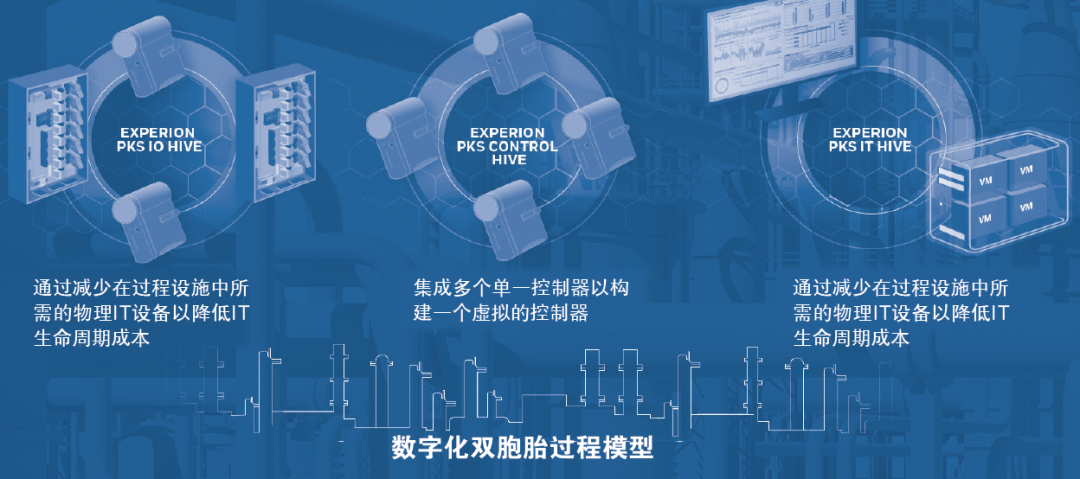
▎Project execution using next-generation control systems: Honeywell Experion Process Knowledge System (PKS) highly integrated virtualization environment (HIVE) uses lean project execution principles to separate control applications from physical devices and controllers from physical input/output (I/O) devices. Modular design allows multiple controllers to form a virtual controller.
Some facilities have already implemented remote I/O strategies to reduce project costs, but further optimization can be achieved through modularization. To benefit from the new generation of control platforms, consider high-speed Ethernet field I/O networks that can connect controllers to general I/O installed in production areas. Such communication should enhance network security with built-in firewalls and encryption technologies when necessary, while also providing technology to support the inevitable increase in sensing data volume in the future.
The advantages of next-generation control system architecture
The architecture of next-generation control system technology has the following advantages:
01
The discovery function of general I/O allows controllers to access any network I/O module and channel. Traditional communication methods between controllers and I/O require direct one-to-one physical connections between controllers and I/O cabinets. Networked I/O can eliminate a lot of scheduling and manual work. System design engineers design control strategies and assign them to controllers, which will find their corresponding I/O. This reduces project engineering planning and engineering time.
02
Integrated control functions provide simple software options and high-performance redundant control. As a subset of process controllers, these control functions are well-suited for packaged equipment and provide regulation, sequencing, and logic control. This eliminates the need for complex subsystem integration.
03
General wireless hotspots provide wired or wireless communication for field instruments and allow each field I/O box to become a wireless hotspot when needed. This enables field personnel to execute digital programs with real-time access to control system data during debugging and operation.
04
Modular debugging provides the ability to debug field I/O cabinets independently of the control system. With this capability, controllers can run on portable computers, access remote cabinets in the module field, and perform a series of debugging activities as if connected to the rest of the control system. With this flexibility, cross-regional modular construction will become simple.
These combined functions provide important engineering technology, allowing projects to be completed in shorter timeframes with lower risks. For example, they eliminate the inherent risks and rework associated with late changes, ensuring that automation does not become a bottleneck in the critical path. After changes, if new I/O is added, the control system network can be expanded without complex changes to the control system.
During project execution, traditional control engineering requires careful planning, as it is driven by a strict hierarchical approach defined by the close physical relationship between controllers and I/O. Changes are inevitable during the later stages of engineering implementation, requiring reconfiguration of I/O or controls, which not only is inefficient but sometimes requires rework, bringing certain risks.
By allowing multiple physical controllers to appear as a single virtual controller, the control architecture will become a control center. In this data center, process control can automatically balance loads between available controller computing resources. The advantages of such architecture are particularly evident, especially when responding to late changes. It can avoid manually assigning control strategies to specific controllers.
Using virtualization technology can reduce IT costs by eliminating up to 80% of physical IT nodes. However, even with significant efforts, large IT infrastructures still need to be retained on-site for reliability and loss range reasons. Using virtualization technology can lower lifecycle costs, allowing virtual machine files to be copied from off-site to on-site. This fault-tolerant architecture allows operations from a central operations center or regional data center, maintaining the same high reliability as critical process control.
Key Concepts:
■ Lean project execution helps in control system design.
■ High-speed Ethernet field I/O networks enable smarter design and network security.
Think About It:
Simplified control design will bring benefits faster.
– END –

This article comes from Control Engineering China, April 2020 issue, “Technical Article” column, originally titled: Transformation of Process Control System Design
Recommended Reading
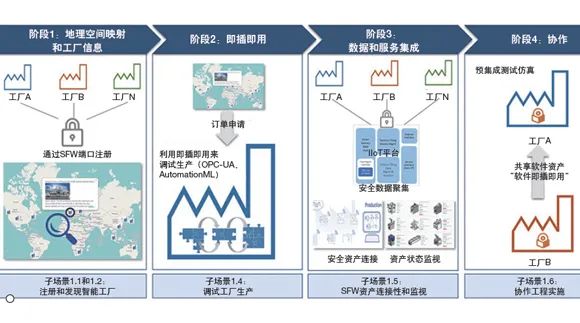
[New Concept] Smart Factory Web: From Concept to Reality
Is It Too Difficult to Make a Life-Saving Ventilator? Using This PLC+HMI Integrated Machine Is Half the Battle!
Five Major Technological Innovations in Motor Drive and Motion Control
The Future of Automation: Accelerating Innovation and Intelligence
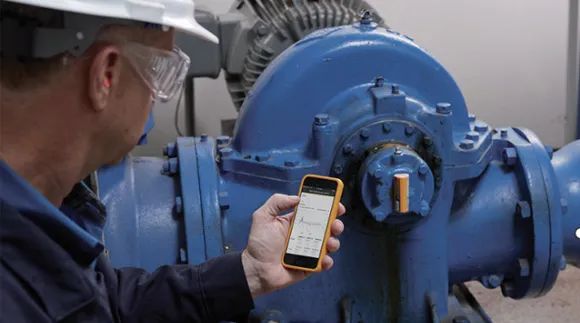
Integration of Legacy Systems with Industrial Internet of Things (IIoT)

Good News!
We invite you to join the Industrial Automation Circle
Starting in 2020, to enhance communication between editors and readers, and among readers, we will establish various WeChat groups focused on industrial automation technology for professional readers.
We plan to form the following technical category groups:
TSN Network Group
PLC Group
DCS Group
Machine Vision Group
Robotics Group
Industrial Software Group
Human-Machine Interface Group
Motion Control Group
Sensor Group
Industrial Safety Group
Instrumentation Group
AI/AR Group

Scan the QR code on the right, send “Name + Technical Interest + City” to add the editor’s WeChat (cec_editor), and after review, you will be invited to join the relevant technical group.