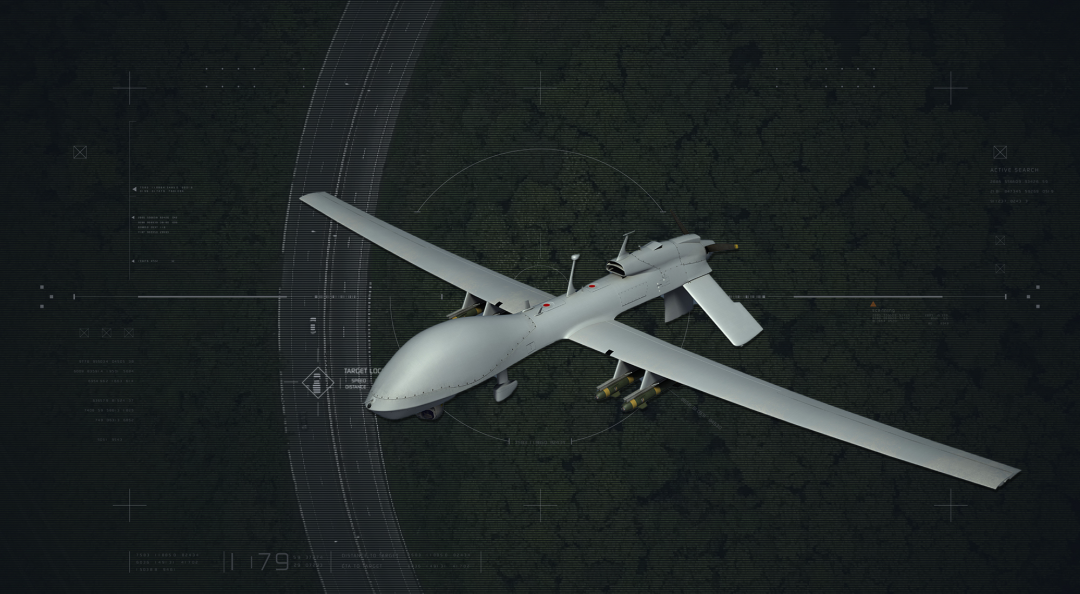
 Every conflict brings new technologies. World War I brought tanks, World War II brought tactical aviation, and the endless process of decolonization brought asymmetric warfare. Ukraine will soon be recorded in history as the conflict where the use of drones at the front lines became commonplace. Due to the uniqueness and versatility of these tools, their models are emerging one after another, but their high efficiency makes them indispensable for both sides in combat. The return of total war to the old continent confirms that drones are not mere gadgets or the fanciful ideas of engineers seeking funding. They are real weapons that will usher in what the U.S. Army calls the “Era of Competitive Equality,” the moment when technology replaces traditional combat methods. For drones, this era is expected to arrive between 2035 and 2050.The Ukraine war symbolizes these new platforms—Ukrainians use 300 drones daily, while the Russians have twice that number—but it should be noted that, before this conflict broke out, 91.3% of global drone strikes occurred in the Middle East and North Africa.We are witnessing an undeniable phenomenon, a strong trend that, like any technological innovation, is prompting armed forces to rethink operational doctrines to achieve interoperability between soldiers and drones (UAVs). The future of this new approach is highly anticipated. Future drones will be a clever combination of miniaturization, mobility, autonomous flight, and firepower. They will be able to return to base after completing their missions.Each type of theater requires different tactics, and thus different specific configurations to meet the needs of the troops using them. The direction for designing drones for future wars remains to be determined.
Combat in the Desert
In ancient times, Salah al-Din Yusuf ibn Ayyub, the leader of the Ayyubid dynasty who reconquered Jerusalem in 1187, once said: “In the desert, caution is the mother of safety; the desert allows for no mistakes.” The sky may generally be clear, but drones must adapt to disruptive air factors like sand winds, dust clouds, and overheating, all of which can lead to flight failures.In the desert, drones can monitor wells, discover suspicious encampments, and enemy logistical support lines. Drones often indicate tactical retreat areas and training grounds for non-state armed groups, such as the Islamic State in the Badia desert of Syria. While these areas have no obstacles, facilitating identification procedures, collateral damage can provoke strong hostility from local residents.The great advantage of drones lies in their small logistical footprint, inconspicuousness, and ability to conduct rural combat—two combat entities directly confronting each other in desolate places.
Operations in Arid Mountains
Whether in the Hajjar mountains of the Arabian Peninsula or in the mountainous regions of Oman and Yemen, such as Jabal al-Lawz and Jabal an-Nabi Shu’ayb, drones can establish isolated outposts in mineral-dry areas, for example, as part of a projection of light units targeting non-state organizations. Drones can also more conveniently supply operators hidden in wadis or coordinate combat actions from forward positions.In geographies that still present challenges—steep terrain and gusts that could throw drones against walls—drones can compensate for the inadequacies of ground logistics and reduce ambush risks. They can provide powerful firepower in difficult terrains (rocky slopes, valleys), making it hard for enemies to evade attacks. Such terrain has rarely appeared tactically. In these terrains, the economy of means is crucial. Surgical strikes with drones are advantageous here.Figure 1: Drone of the Houthi armed forces in Yemen, 2018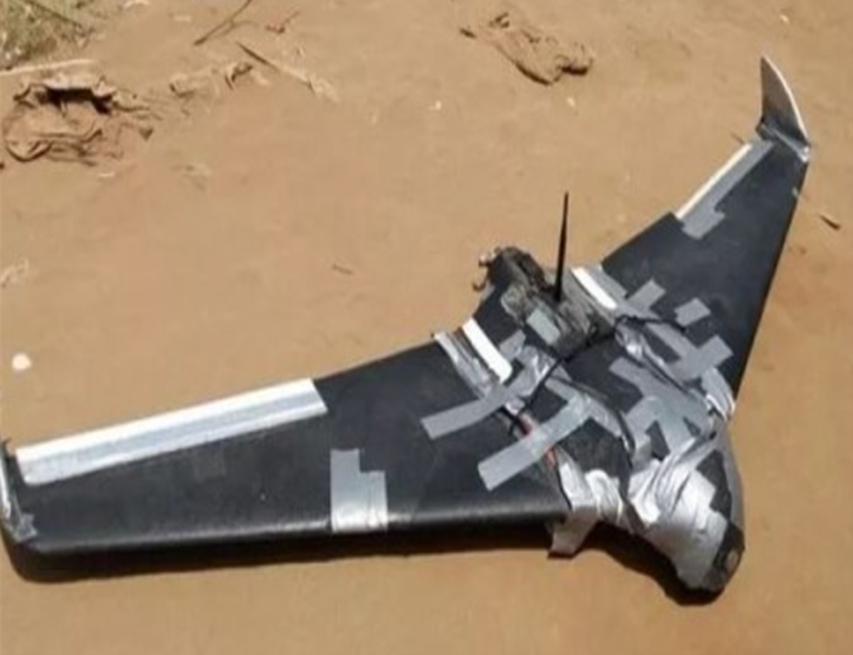 Source: 24.ae, “Yemeni Army Shoots Down Houthi Drone in Hajjah.”
Combat in Urban Areas
In urban areas, enemy observation is obstructed by buildings and population density. The camouflage of ruins complicates information, surveillance, and reconnaissance (ISR) tasks. The Gaza war confirmed that when a modern army exerts excessive pressure on an asymmetric entity, the front lines become overcrowded. Combatants will dig in and stop advancing. Drones then lose their significance. When rumors of ceasefires or withdrawals begin to circulate in the media, the effect is to ease the congestion on the front lines. The prospect of a temporary truce means that fighters will emerge from their hiding places and regain their operational capabilities, albeit limited. This increases the risk of being detected by drones, and commanders also become aware of the phenomenon of congestion/evacuation on the front lines.Space in urban areas is random. The width of streets, the winding layouts, and the safety corridors defined by adjacent buildings relativize them, distancing them from drone cameras. Drones cannot prevent armed groups from optimizing their use of urban geography. The challenge for armed organizations is how to maintain the flight of their drone fleets. While Hamas used mini-drones and unmanned aerial vehicles in the attack on October 7, 2023, these aerial operations ended under Israel’s strong counterattack. With the Palestinian territories isolated, the aerial capabilities of various Palestinian factions were wiped out, with no updated capabilities. However, this failure did not diminish the intensity of the fighting against Israel’s well-equipped army. After months of combat, Hamas fighters continue to resist fiercely.
Conventional Warfare
Europe thought it had escaped large-scale military bloodshed that defined its borders. It has become accustomed to the meticulous operations of counter-terrorism wars—striking extreme violence with white gloves. The drone imagery from the total war in Ukraine evokes memories of trench warfare.With fire support, drones can assess the balance of forces at any time. Plasma screens have replaced the telescopes of the past. This is a significant change, as soldiers already know the enemy’s position when they go to the front lines. The number of blind attacks has greatly reduced. Drones assist both attacking and defending sides. Telegram channels broadcast the battles between Ukraine and Russia day after day, with scenes such as soldiers in trenches hearing commands like: “You must go out, boys. The Russian army is fifty meters away. To the left.” Surprise is the mother of all battles, but it has been compromised. Soldiers know where to go. They know where death comes from.Who would have thought ten years ago that one day fighters would surrender not to humans, but by waving white flags to drones? These are everyday scenes in Ukraine. Fighters clasp their hands in prayer, hoping to avoid being hit by drone bombs. Some follow the aircraft to the opposite trench, where they are captured, this time by flesh-and-blood soldiers. Sometimes, unmanned aerial vehicles are welcomed, delivering information and supplies. At times, they swarm like bees around combat personnel, pouncing on targets and destroying them.The core issue of conventional warfare is incorporating drones as fundamental elements of artillery into tactical decision-making. For centuries, the virtues and undeniable effectiveness of artillery as the “steam engine” of combat have made it the queen of battle. The remaining question is how to make artillery more precise, more surgical, and less destructive, so that enemies do not hide in ruins. Can the deluge of shells be compensated by carefully managing the swarm attacks? The same goes for helicopters, which embody an army’s ability to rapidly and flexibly maneuver infantry. Of course, small quadcopters that can be purchased for $1,000 on the internet will never replace the AH-64 Apache helicopter, but it is a question worthy of attention. In wartime, drones can be used for various refueling tasks. The U.S. has abandoned the FARA (Future Attack Reconnaissance Aircraft) program aimed at updating its fleet. Even NATO is questioning the future of combat aviation and assessing the pros and cons of drones versus jet fighters.
Asymmetric Warfare
Non-state armed groups are “adaptive” organizations that utilize technological innovation. As early as 2003, militants from Pakistan’s Lashkar-e-Taiba sought help from North American partners to acquire drones and equip them with programmable GPS. The Islamic State attempted to start producing suicide drones in 2017, but their project lacked realism; they hoped to carry a 20-kilogram payload of explosives, with a budget of $5,000 per unit. If their drones are underpowered, their propaganda efforts are undoubtedly effective. Images captured by drones are very useful for their psychological warfare: occupying space enhances attention on social networks and traditional media. The “spectacular” nature of the visuals attracts the attention of internet users, thereby influencing public opinion on events.Figure 2: ISIS conducted multiple drone experiments in Syria (2017)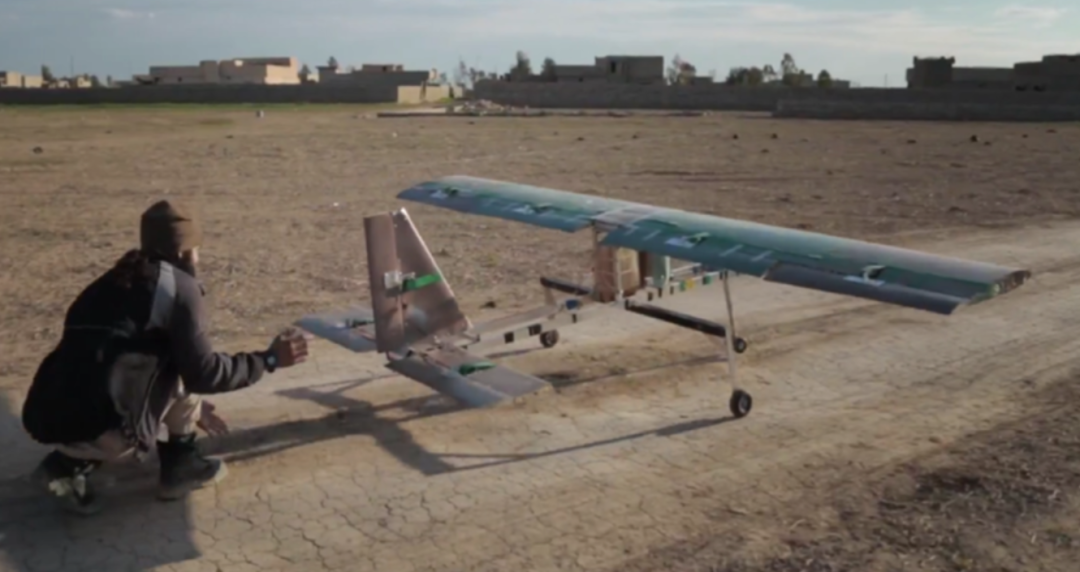 For a long time, drones were used sporadically, but they have gradually become dominant in the Syrian civil war. Since 2023, the Damascus army, supported by pro-Iranian militias, has used explosive drones weekly to attack rebel organizations in the rural areas of Idlib province and Hama province. The Syrian Observatory for Human Rights (SOHR) has quantified this increase. From February 6 to April 19, 2024, there were 112 kamikaze drone attacks in northwestern Syria, resulting in 25 deaths and 26 injuries. The operations room of the “Sham Fighters” organization, Al-Fath Al-Mubin, regularly reports that the organization has shot down drones from government-held areas but does not provide details on the weapons used to destroy these drones.These armed organizations share a commonality with the Syrian regime: they all have specialized military units for using drones. They are eager to recruit personnel with the necessary technical expertise. On the opposition side in Syria, Uyghur militants from the Turkistan Islamic Party are reportedly providing technical expertise to the HTS organization. In December 2023, the Talbiseh Mechanization School in Homs province began a 65-day training course on the use and maintenance of Iranian-made advanced Ababil-3 and Qasef-1 drones. According to the news site Political Keys, Hezbollah instructors include drone and reconnaissance experts Hajj Abu Sadiq and Kamal Abu Haidar, the head of the 127 Unit drones. Russian officers occasionally also conduct drone training courses, such as teaching how to use the Russian Garbia-S anti-drone aircraft, which can intercept drones within a range of 6 kilometers.
Supplement or Replacement Weapon? High-Tech or Low-Cost?
Future wars, whether conventional, non-state, or hybrid, will involve drones. They will become the battleground for capability competitions between the industrial parks of various combatants. Their logistics must prove capable of executing what the military calls “capability enhancement” to influence the outcomes of battles.Industrial production time differs from battlefield time. One is parameterized and standardized, while the other is explosive and elusive. To overcome this opposition, Ukrainians have established small drone assembly units and temporary factories of no more than several dozen square meters. The aim is to be as close to the front lines as possible, which contradicts the traditional principle that equipment should be produced in the rear and then transported to the front lines. To reduce logistical transport lines, the solution could be to create nano-factories that assemble drones within 30-foot containers, transported by trucks, mobile, and always as close to combat as possible.In North Africa, Algeria and Morocco are developing national industrial projects. In Saudi Arabia, the Military Industrial Authority has set a goal that by 2030, 50% of Saudi military spending will come from Saudi suppliers. The Saqr-1 drone is the first drone entirely developed and manufactured by a Saudi military industrial company in collaboration with the Saudi Military Industry Authority. In the UAE, the EDGE company was inaugurated by His Highness Sheikh Mohammed bin Zayed Al Nahyan, President of the UAE, in 2019. The company has become the 22nd largest arms company globally, with sales reaching $4.75 billion in 2020. The company offers dozens of aerial platforms (drones, cruise missiles).Figure 3: REACH-S is a medium-altitude long-endurance (MALE) drone developed by the UAE-based technology and defense company EDGE Group. This drone made its debut at the Dubai Airshow in November 2021.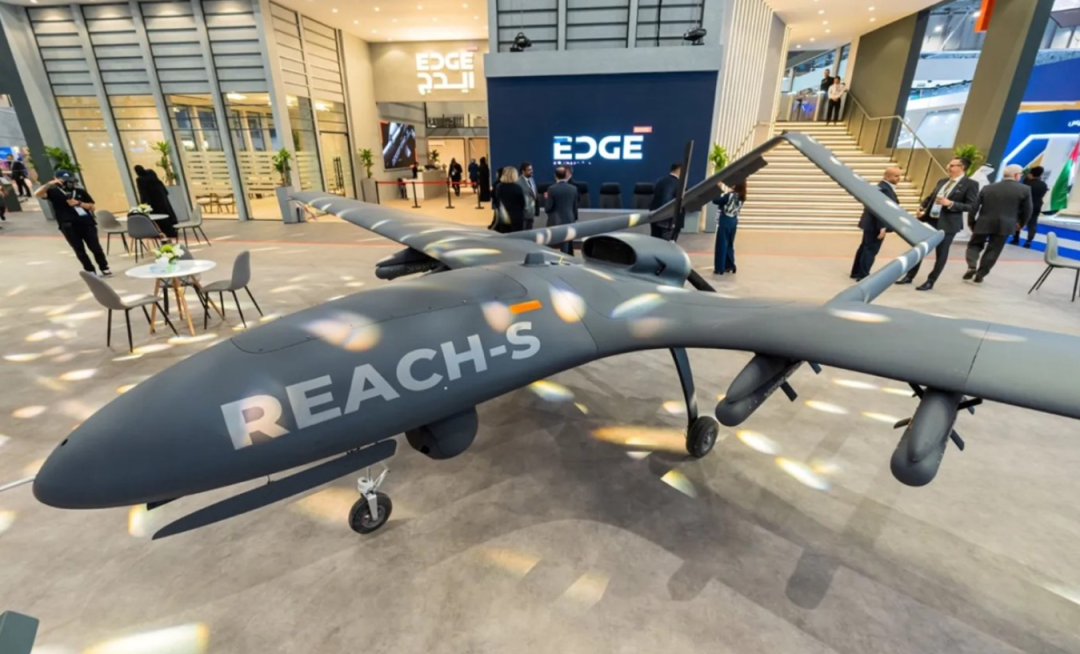 In just a few years, drones have become indispensable. A new era of drones is unfolding before our eyes. Perhaps soon we will determine the position of drones in the military during peace, secret wars, or full-scale confrontations.Their arrival may be filled with industrial uncertainties: which models will prevail? What tasks will they perform? What are the logistical demands? What are the costs? But they have a tremendous advantage in reshuffling the deck. In fact, drones are breaking down some outdated notions, such as “weapons of the rich/poor weapons,” allowing everyone the opportunity to adjust drones according to their strategic objectives.The tactical operational plan has become an open imaginative space, far less serialized than established concepts like armored vehicles or nuclear deterrence. The use of drones on the battlefield remains a blank slate, with each entity able to write according to its needs.Technological advantages do not guarantee military victory. Drones seem to be born for asymmetry. A homemade drone, equipped with a “bomb” bought online, is enough to render a Sukhoi SU-57 useless on the tarmac.It is foreseeable that technology transfer will no longer be a bargaining chip for superpowers negotiating with emerging nations. Open spaces, the dark web, and drone capture operations on the battlefield should gradually rebalance the relationship between both sides. For example, the rising industrial vitality of Arab countries should accelerate the rebalancing of power at the negotiating table.In the future, wars cannot be won solely with drones, and without drones, armies will no longer be able to fight. This paradox will undoubtedly be enriched by many other paradoxes on humanity’s long and winding road to army robotization.References: TRENDS Research & AdvisorySpecial Knowledge for Convenient Access
Please follow theSpecial Knowledge Intelligent Defense public account (click above to follow)
For more relatedcontent, please refer to Special Knowledge, click “Read the original text” in the lower left corner to view
Welcome to scan the QR code to addSpecial Knowledge Assistant, for consultation services:Purchase Chinese reports, customize materials

 Special Knowledge, a professional and trustworthy artificial intelligence knowledge distribution, makes cognitive collaboration faster and better! Welcome to register and log in to Special Knowledge www.zhuanzhi.ai, to obtain 100000+ AI(AI and military, medicine, public security, etc.) thematic knowledge materials!
 Click “Read the original text” to learn how to useSpecial Knowledge, view and obtain 100000+ AI thematic knowledge materials