
The Russia-Ukraine conflict is another high-intensity drone offensive and defensive confrontation after the Libyan civil war, with both sides using various types of drones for reconnaissance, monitoring, and target designation tasks. This article summarizes the background and current overall situation of the Russia-Ukraine conflict; it organizes the main unmanned combat platforms used by both sides based on open-source intelligence information, as well as the related unmanned equipment provided by the United States to Ukraine; it summarizes the deployment and operational situation of both sides’ drones; and it presents several insights regarding operational intentions, effectiveness, and confrontation situations. Only by continuously strengthening local research and development capabilities and continuously improving the unmanned equipment spectrum can strong combat effectiveness be maintained at all stages of future battlefields, thus adapting to the challenges posed by a highly confrontational environment.
1 Introduction
On February 24, 2022, Russian President Vladimir Putin announced the authorization of the Russian military to carry out a “special military operation” against Ukraine to achieve the goals of “demilitarization” and “denazification”. Both Russia and Ukraine engaged in fierce competition for important cities and military sites within Ukraine, leading to an increasingly complex battlefield situation. Since the outbreak of the conflict, both sides have frequently deployed drone equipment to the battlefield, coupled with continuous military assistance from the United States and other NATO countries to Ukraine, the drone equipment on the Russia-Ukraine battlefield has played a significant role in reconnaissance, monitoring, target designation, precision strikes, electronic warfare, cognitive warfare, and public opinion warfare, providing important reference value for studying modern unmanned warfare.
2 Background and Overall Situation of the Russia-Ukraine Conflict
2.1 Background of the Russia-Ukraine Conflict
After Volodymyr Zelensky was elected president of Ukraine in 2019, he tore up the “Minsk Agreement” and sought to join NATO, which triggered Russia’s strategic security bottom line and core interests, causing tensions in the Russia-Ukraine region to continue to escalate. On February 10, 2022, Russia held a 10-day joint military exercise with Belarus called “Alliance Resolve 2022”, aimed at practicing actions to deter and repel external aggression, combat terrorism, and protect the interests of allied countries in defensive actions. The exercise had clear objectives, as Russia intended to demonstrate its military strength and strategically deter Ukraine. On February 15, the Russian Ministry of Defense announced the withdrawal of some ground troops deployed at the Russia-Ukraine border participating in large-scale military exercises, leading to a slow cooling trend in the crisis in eastern Ukraine. On February 17, the situation in eastern Ukraine deteriorated, with the Ukrainian government and local militia launching provocative shelling. The next day, local militias in eastern Ukraine announced that due to the danger of Ukraine initiating military action, they would begin mass evacuations of local residents to Russia. On the evening of February 21, Putin signed an order recognizing the “Donetsk People’s Republic” and “Luhansk People’s Republic” in eastern Ukraine. Late on February 23, Russian troops launched a surprise attack on Ukraine from the east, north, and Black Sea directions in three waves.
2.2 Overall Situation of the Russia-Ukraine Conflict
Through years of cold-start strategies against Ukraine, the Russian military has relied on a series of troop movements and military exercises during periods of tension to deploy land, sea, and air forces in advance, implementing fire strikes at the first opportunity to achieve surprise in operations. As the regional situation continued to escalate, NATO countries led by the United States dispatched reconnaissance platforms such as the RC-130V/W and RQ-4B to the region to monitor Russian troop movements and deployment. The Russian military avoided the so-called “action window” declared by Europe and the United States on February 16, choosing to carry out special military operations under the pretext of assisting “anti-aggression” after signing documents recognizing the two republics, effectively achieving operational surprise. In the first round of strikes, the Russian military used precision-guided munitions to target important military objectives such as Ukrainian air defense systems, radar stations, and airports, attempting to capture major Ukrainian cities through air, airborne assaults, and ground breakthroughs, but did not achieve the expected “blitzkrieg” effect. With military support from NATO countries led by the United States, the Ukrainian military has continuously inflicted casualties on Russia using surprise attack tactics. After several rounds of negotiations and the opening of multiple humanitarian corridors, the situation in the Russia-Ukraine conflict remains stalemated.
3 Main Unmanned Platforms Used by Russia
Through the collection of open-source intelligence information, it can be preliminarily assessed that both sides have invested over 10 types and hundreds of drones in this conflict, primarily focusing on medium and small-sized reconnaissance and strike drones, with a large scale of participation and a variety of types.
3.1 Orion UAV
The Orion UAV is a medium-altitude long-endurance drone developed by Russia. As shown in Figure 1, the Russian military received the first batch of this type of drone in 2020, with plans to deploy 21 units by the end of 2023. The aircraft features a traditional aerodynamic layout with a V-tail design, a length of 8 m, a wingspan of 16 m, a maximum takeoff weight of 1000 kg, an effective payload of 200 kg, a cruising speed of 120 km/h, and a service ceiling of 7500 m. When carrying a 60 kg payload, its endurance time is 24 hours. The current version of the aircraft is not equipped with a satellite communication module, with a maximum control distance of 250 km. In terms of power system, it is equipped with an APD-115T piston engine and an AV-115 adjustable pitch propeller. In terms of mission payload, it can carry a variety of sensors including electro-optical/infrared, multimode radar, digital cameras, signals, and communication intelligence. Its multi-channel MOES stable electronic monitoring system can be used for all-weather detection and tracking of targets, providing target designation capabilities. In terms of weapon systems, the drone has four external hardpoints and can carry KAB-20 small diameter bombs, Kh-50 cruise missiles, UPAB-50 glide bombs, FAB-50 demolition bombs, and 9M113 anti-tank missiles.
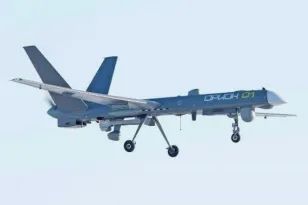
▲ Figure 1 Orion UAVThe Orion UAV is Russia’s latest large reconnaissance and strike drone, with design parameters superior to its currently deployed counterparts. However, due to its short service time and limited deployment numbers, it has not been extensively deployed in this conflict and has primarily been used for capability demonstration. The Orion UAV previously executed reconnaissance and monitoring tasks in the Syrian conflict but has not undergone combat testing. This conflict marks the first time this aircraft has engaged ground targets, successfully hitting the command post of the Ukrainian “Aidar Battalion” with a 9M133FM-3 missile.
3.2 Outpost-R UAV
The Outpost-R UAV is a domestically produced combat platform based on the introduction of the Searcher MK II production line in Russia. As shown in Figure 2, it has a maximum takeoff weight of 436 kg, an endurance of 15 to 18 hours, and a combat radius of 400 km. In terms of power system, it is equipped with an APD-85 piston engine; in terms of mission payload, it is equipped with radar, electro-optical sensors, and a new communication system with certain counter-reconnaissance and anti-jamming capabilities; in terms of weapon systems, it has two external hardpoints and can carry KAB-20 small diameter bombs, X-BPLA, and 9M133 anti-tank missiles. In this conflict, the Russian military used this type of drone to strike Ukrainian armed strongholds with precision-guided munitions.
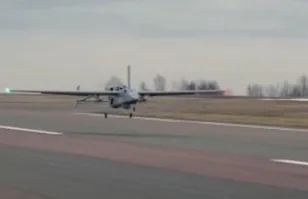
▲ Figure 2 Video footage released by the Russian Ministry of Defense showing the Outpost-R UAV carrying precision-guided munitions to strike Ukrainian multiple rocket launcher systems
3.3 Seagull-10 UAV
The Seagull-10 UAV is a multifunctional drone developed by Russia, primarily for reconnaissance, monitoring, and artillery calibration tasks. As shown in Figure 3, it can be catapult-launched and parachute-landed, with a length of 1.8 m, a wingspan of 3.1 m, a maximum takeoff weight of 14 kg, an effective payload of 5 kg, a maximum level flight speed of 150 km/h, a cruising speed of 90 km/h, a service ceiling of 5000 m, and a range of 600 km with a standard maximum fuel load, with an endurance of 16 hours. The power system is equipped with a Japanese Saito FG-40 engine; in terms of mission payload, it can carry various communication systems such as Ublox Neo-M8 positioning navigation systems, telemetry, communication video decoders, and RF transceivers. The Seagull-10 UAV can carry 3 to 4 types of mission payloads simultaneously, conducting large-scale reconnaissance and monitoring tasks in complex weather environments and areas with inconvenient transportation.
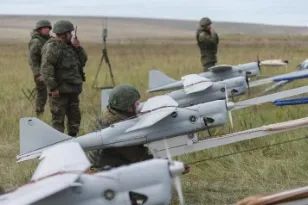
▲ Figure 3 Seagull-10 UAV
3.4 Seagull-30 UAV
The Seagull-30 is an upgraded version of the Seagull-10 UAV, as shown in Figure 4, which completed testing at the Chekalov State Flight Test Center in 2015. The main characteristics of the aircraft are similar to those of the Seagull-10 UAV, adopting a T-tail aerodynamic layout, with a maximum takeoff weight of 31 kg, an endurance of 8 hours, a flight speed of 150 km/h, a service ceiling of 5000 m, and a communication control distance of 120 km. In terms of mission payload, it can carry electro-optical reconnaissance pods, with laser ranging and laser designation capabilities, which can illuminate targets for laser-guided weapons launched by heavy mortars; the pod typically does not exceed a flying height of 900 m for identifying individuals and does not exceed 1200 m for identifying vehicles and other targets.
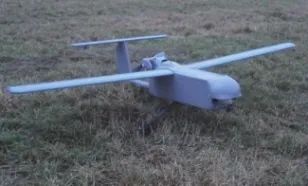
▲ Figure 4 Seagull-30 UAV
3.5 KUB-BLA Kamikaze Drone
The KUB-BLA is a kamikaze drone launched by the Kalashnikov company’s subsidiary Zala in 2019, as shown in Figure 5, and is planned to be deployed in 2022. The aircraft features a triangular flying wing layout, with a length of 0.95 m, a wingspan of 1.21 m, an effective payload of 3 kg, a flight speed of 80 to 130 km/h, and an endurance of approximately 30 minutes. The aircraft is powered by an electric engine, has low acoustic characteristics, and can carry various warheads, including a steel ball explosive warhead used in this conflict.
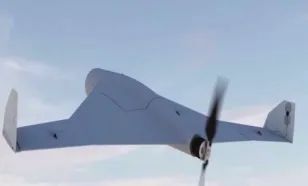
▲ Figure 5 KUB-BLA Kamikaze Drone
4 Main Unmanned Platforms Used by Ukraine
4.1 Bayraktar TB2 UAV
The Bayraktar TB2 UAV is a medium-altitude long-endurance reconnaissance-strike drone developed by Turkey, as shown in Figure 6. Ukraine purchased 12 units in 2019, and the Ukrainian Navy later ordered an additional 5 units, which were delivered in 2020. Subsequently, Ukraine established a joint venture in Turkey to produce 48 units of this type of drone locally, which was first used in October 2021. The aircraft has a length of 6.5 m, a wingspan of 12 m, a maximum takeoff weight of 630 kg, an effective payload of 55 kg, a cruising speed of 130 km/h, a service ceiling of 9100 m, a range of 150 km, and an endurance of 24 hours. In terms of mission payload, the aircraft can carry electro-optical, infrared imaging, and targeting sensors, and can carry four laser-guided munitions. In this conflict, this UAV successfully destroyed Russian “Buk” air defense missile systems as well as multiple fuel trucks, ground oil facilities, and armored vehicles.
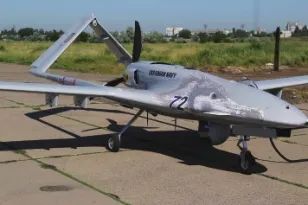
▲ Figure 6 Bayraktar TB2 UAV received by the Ukrainian Navy
4.2 UJ-22 “Sky” UAV
The UJ-22 “Sky” UAV is a multi-purpose small drone developed by Ukraine, as shown in Figure 7. It can perform reconnaissance, monitoring, artillery calibration, target designation, and search and rescue tasks under various weather conditions. The aircraft has a maximum takeoff weight of 82 kg, an effective payload of 20 kg, a service ceiling of 6000 m, a maximum flight speed of 160 km/h, and a cruising speed of 120 km/h. The communication distance of its ground control station is 100 km, but in autonomous mode, it can reach a range of 800 km.
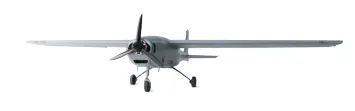
▲ Figure 7 UJ-22 “Sky” UAV
4.3 Leleka-100 UAV
The Leleka-100 UAV is a small tactical reconnaissance drone developed by Ukraine, as shown in Figure 8. It can perform both conventional takeoffs and landings, as well as vertical takeoffs and landings, and features a modular design that can be assembled by two people in 5 minutes. The aircraft has a length of 1.98 m, a wingspan of 1.14 m, a maximum takeoff weight of 5.5 kg, an endurance of 2.5 hours, a maximum communication distance of 45 km, and a service ceiling of 1500 m. The Leleka-100 UAV can carry high-resolution cameras, HD white light cameras, and night thermal imaging sensors, performing large-scale aerial surveys and reconnaissance tasks. It can autonomously fly along routes and altitudes planned on electronic maps by ground terminals and has a return-to-home function in case of communication disruption.
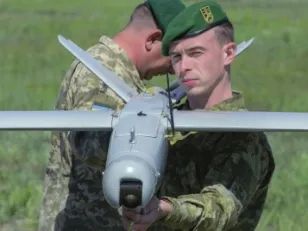
▲ Figure 8 Leleka-100 UAV
4.4 Punisher UAV
The Punisher UAV is a small weaponized platform developed by Ukraine, as shown in Figure 9. The aircraft has a wingspan of 2.29 m, a cruising speed of 72 km/h, an endurance of 3 hours, a warhead of 2 kg, a strike range of 47 km, and a service ceiling of 400 m, with autonomous navigation capabilities. This UAV has conducted over 60 missions in this conflict, primarily targeting Russian fuel storage facilities, ammunition supply nodes, and electronic warfare bases.
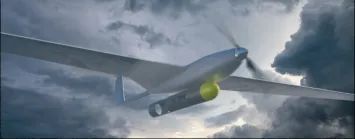
▲ Figure 9 Concept drawing of the Punisher UAV
5 US Military Aid Related Drones to Ukraine
5.1 Switchblade Series Kamikaze Drones
The Switchblade is a land-launched kamikaze drone developed by the American Aerospace Environment Company, as shown in Figure 10. It is primarily used for precision strike missions and can assist small-scale combat units in striking fixed or moving targets without air support. The United States has donated 400 Switchblade drones to Ukraine, with the first batch of 100 units arriving around April 20.
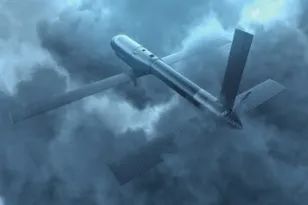
▲ Figure 10 Concept drawing of the Switchblade 600 kamikaze droneThe Aerospace Environment Company designates the basic model of the Switchblade as the Switchblade 300, with the improved model being the Switchblade 600, which is an enlarged and heavier anti-armor variant. The Switchblade 300 kamikaze drone is 0.5 m long, weighs 2.5 kg, with a warhead of 0.32 kg, a cruising speed of 101 km/h, a maximum flight speed of 161 km/h, a range of 10 km, an endurance of 15 minutes, and a service ceiling of approximately 150 m, using a dual-mode guidance head and an electric propeller-driven system. The Switchblade 600 kamikaze drone is 1.3 m long, weighs 22.7 kg, with a cruising speed of 113 km/h, a maximum flight speed of 185 km/h, a range of 40 to 90 km, an endurance of over 40 minutes, and a service ceiling of approximately 1980 m; it is equipped with optical and infrared sensors, carrying anti-armor warheads.
5.2 RQ-20 Puma AE UAV
The RQ-20 UAV is a small reconnaissance drone, as shown in Figure 11. It has a length of 1.4 m, a wingspan of 2.8 m, a weight of 5.9 kg, a service ceiling of 152 m, a maximum flight speed of 83 km/h, and a range of 15 km. The drone is equipped with variable zoom electro-optical and infrared sensors, powered by batteries, with an endurance of 3.5 hours, and can be hand-launched to perform reconnaissance, monitoring, and target localization tasks.
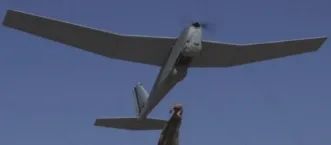
▲ Figure 11 RQ-20 Puma AE UAV
5.3 Quantum Reconnaissance UAV
The Aerospace Environment Company plans to donate over 100 Quantum Reconnaissance UAV systems to the Ukrainian military, along with related operational training services, which will be transported in two batches, with the first batch expected to arrive in Ukraine in mid to late April. The Quantum Reconnaissance UAV, launched in 2020, features a hybrid vertical takeoff and landing design, with an endurance of approximately 45 minutes, battery power, low acoustic characteristics, and the ability to scout an area of 1.6 km² (or a straight-line distance of 20 km) in a single mission. This UAV is designed to provide Ukrainian troops with a small reconnaissance drone that can be used without being detected by the enemy and is unaffected by radio frequency jammers, enabling accurate and rapid reconnaissance of remote and hard-to-reach areas on the battlefield, enhancing situational awareness for Ukrainian ground forces.
5.4 Phoenix Ghost UAV
On April 21, the US Department of Defense announced that it would provide Ukraine with over 121 sets of Phoenix Ghost tactical drones, aiming to meet Ukraine’s current critical combat needs in response to the new Russian offensive in eastern Ukraine, although specific details were not disclosed. A Pentagon spokesperson stated that the Phoenix Ghost UAV is developed by Aevex Aerospace Company, and a military contract was signed before the Russia-Ukraine conflict, with the UAV still in the development process. Its performance is similar to that of the Switchblade, mainly targeting strike missions, but it can also carry optical devices to provide necessary reconnaissance and localization capabilities. Public information indicates that this type of UAV can take off and land vertically, with an endurance of approximately 6 hours, and can carry infrared sensors for nighttime target tracking and searching.
6 Deployment and Use of Drones in the Russia-Ukraine Conflict
The Russia-Ukraine conflict is one of the few military conflicts involving major powers in recent years. However, due to constraints such as international public opinion, military cost, and political objectives, this conflict has remained at a limited scale without full-scale high-intensity confrontation. Especially in the aerial battlefield, both Russia and Ukraine have not deployed combat aircraft on a large scale, and there has been no high-intensity struggle for air superiority. Furthermore, due to incomplete field air defense systems in logistics supply lines and other areas, a relatively loose operational environment has been provided for drones, making extensive use possible.
6.1 Deployment and Use of Drones by the Russian Military
The Russian military has a large number of drones in service, but their deployment frequency is low, and the introduction of new drones is limited, making it difficult to form asymmetric combat capabilities. The total number of drones in the Russian military is over 2000, covering large, medium, and small sizes, high, medium, and low altitudes, and near, medium, and long ranges, with a relatively complete mission spectrum, but the number deployed during the conflict is low. In recent years, the Russian military has placed great emphasis on drone development, successively developing advanced stealth combat drones such as “Thunder” and “Hunter”, and verifying new concepts such as manned-unmanned collaboration and drone swarms in multiple exercises. However, in this conflict, Russian drones have not demonstrated significant combat effectiveness, revealing issues such as limited numbers of advanced reconnaissance-strike drones and an immature drone equipment system. The main types of drones deployed by the Russian military in this conflict are small and medium-sized reconnaissance drones, with only a small number of reconnaissance-strike drones used primarily for battlefield surveillance, target designation, and artillery calibration, lacking timely strike capabilities. The main drones for the Russian military in this conflict are the Seagull-10 and Outpost-R series drones. The Seagull-10 has been delivered to the Russian military since 2010, while the Outpost-R began delivery in 2020, with the first batch being fewer than 30 units. Another type of drone with strike capabilities, the Orion UAV, also began delivery in 2020, but its limited quantity and small payload make it difficult to achieve significant combat effects.
6.2 Deployment and Use of Drones by the Ukrainian Military
Most of Ukraine’s drones are imported models, with a rich variety of equipment types and diverse operational styles. After the conflict began, the Ukrainian military did not gain air superiority, and suffered significant losses in fighter aircraft under the suppression of Russian air and air defense forces, thus relying heavily on drone equipment. The primary drones used by the Ukrainian military include the Bayraktar TB2 reconnaissance-strike drone procured from Turkey and the Switchblade kamikaze drones provided by the United States. It is reported that the Ukrainian military may also receive the MQ-9 Reaper drone, which is one of the world’s most advanced reconnaissance-strike drones and has previously completed assassination missions against Iranian general Qassem Soleimani in 2020, demonstrating strong timely strike capabilities. Additionally, NATO countries’ RQ-4 Global Hawk drones and MQ-9 Reaper drones have frequently appeared around the Russia-Ukraine battlefield, potentially providing the Ukrainian combat troops with rich battlefield intelligence information. The main drone used by Ukraine in the conflict is the Bayraktar TB2, which has been widely used in the Libyan civil war and the Nagorno-Karabakh conflict, achieving significant results. In this conflict, Ukraine has drawn on previous case studies to deploy the Bayraktar TB2 drone to conduct precise strikes on Russian fuel trucks, ground oil facilities, and ammunition supply vehicles, effectively deterring the enemy. Due to the flight altitude and speed limitations of the drones, the Ukrainian Bayraktar TB2 has been shot down 35 times by Russian air defense systems, exceeding half of its deployed quantity, indicating that such drones still face survival challenges under advanced air defense systems. As the conflict in the Donbas region has entered an urban warfare stage, the RQ-20 Puma and Switchblade-600 small reconnaissance and strike drones provided by NATO may provide strong support for Ukrainian ground forces.
6.3 Combat Effects of Drone Use in the Russia-Ukraine Conflict
The Russian military’s first round of operations primarily focused on air and airborne assault tactics, attempting to seize control of key areas and airports through a “blitzkrieg” approach, and thus did not extensively use drones in combat. After a week of conflict, the United States and its NATO allies continuously supplied weapons to Ukraine, shifting the war situation towards a protracted conflict. The Russian military subsequently used reconnaissance-strike drones to target high-value military objectives such as Ukrainian armed strongholds and command posts, achieving good results. The battlefield situation is rapidly changing, and the operational styles of both Russia and Ukraine have shifted from traditional field warfare to urban special operations. The Russian military has utilized small drones to conduct reconnaissance and monitoring tasks in urban warfare, providing information support to ground forces to enhance situational awareness. The Ukrainian military, having not gained air superiority and suffering severe losses in aerial combat forces under Russian fire strikes, has relied on drones as the main force for airstrike operations from the outset of the conflict, primarily using the Bayraktar TB2 reconnaissance-strike drone to implement low-altitude penetration with its low radar detectability, launching precision-guided munitions against Russian fuel trucks, ground oil facilities, and ammunition supply vehicles to slow down their offensive pace. It is reported that the Ukrainian military has also used this type of drone to sink several Russian ships near Snake Island in the Black Sea. In addition, the Ukrainian military has used small reconnaissance drones and commercial multi-rotor drones to monitor enemy activities and capture videos of their successful resistance, delivering certain psychological and cognitive warfare impacts.
7 Insights on the Use of Drones in the Russia-Ukraine Conflict
The battlefield environment of the Russia-Ukraine conflict is more complex, with higher confrontation intensity and greater logistical challenges compared to the Nagorno-Karabakh conflict. Both sides have frequently deployed and used drone equipment, fully leveraging the advantages of long endurance, low cost, and expendability of drones while also exposing some usage problems.
7.1 Limited Defensive Capabilities and Significant Losses
Both Russia and Ukraine’s drones are not equipped with self-defense electronic jamming and passive countermeasure devices, lacking self-defense capabilities. Additionally, drones fly at relatively low altitudes; the Ukrainian Bayraktar TB2 UAV’s service ceiling can avoid being targeted by portable air defense missiles, but it still falls within the range of the Russian “Buk” mobile air defense missile system. Therefore, in the face of a battlefield environment with a certain level of confrontation intensity, the survival capabilities of both sides’ drones are limited.
7.2 Initial Integration into Combat Systems with Certain Combat Effectiveness
The Russian military’s drone integration capabilities with existing combat systems have improved compared to the anti-terrorism period in Syria. First, they provide information support to ground forces. The Russian military uses the Orion UAV to track Ukrainian artillery movements and provide target designation for precision-guided weapons such as the “Iskander”-M, ensuring strike accuracy. Second, small and medium-sized drones are equipped with electronic warfare systems and collaborate with the army. The Seagull-10 UAV is equipped with the “Leir-3” electronic warfare system, assisting ground forces in urban combat operations.
7.3 Insufficient Local R&D Capabilities and Limited Equipment Performance
Compared to the United States, the development of the Russian military’s drone equipment is relatively lagging, lacking high-altitude long-endurance reconnaissance drones on the battlefield, resulting in insufficient situational awareness capabilities. The flight altitude of reconnaissance-strike drones is limited, with small payloads and inadequate strike effectiveness; the onboard radar detection accuracy of Russian drones is insufficient, requiring low or even ultra-low altitude flights to conduct reconnaissance, monitoring, and target designation tasks. Key technologies are constrained, leading to limited performance of their equipment and insufficient battlefield survival capabilities for drones.
7.4 Insufficient Readiness of Russian Air Defense Systems, Providing Opportunities for Drones
The Russian military has displayed insufficient air defense capabilities in this conflict. The Russian military has long-range air defense systems such as the S-300 and S-400, mainly designed to counter ballistic missiles, bombers, and fighter jets, making their countermeasures against drones costly. The Russian field air defense systems mainly use “Buk”, “Pantsir”, and “Tor” systems, but due to the low-altitude flight characteristics and composite material construction of drones, these air defense systems struggle to effectively counter them.
8 Conclusion
The Russia-Ukraine conflict is still ongoing, with both sides continuously increasing the frequency and intensity of drone usage, indicating that drones can break the traditional manned aircraft-dominated aerial combat pattern, initially forming a combat pattern of air-space integration and manned-unmanned collaboration, enhancing joint long-range strategic strikes, mid-low altitude target interception, stealth penetration, and other combat capabilities, creating a combat advantage of unmanned against manned forces. Future attention should be paid to the use of drones in the Russia-Ukraine conflict, studying their impact on the direction of warfare, thus providing reference and insights for further understanding modern, unmanned new-type warfare.
Disclaimer:This article is transferred from Unmanned Systems Technology, originally authored by Yang Jiahui, Zhu Chaolei, and Xu Jia. The content of the article represents the personal views of the original authors, and this public account’s translation/reproduction is solely for sharing and conveying different viewpoints. If there are any objections, please feel free to contact us/reproduce public account XXX!
Recommended Reading
2021 World Frontier Technology Development Trends and 2022 Trends Outlook——Summary Article
2021 World Frontier Technology Development Trends Summary and 2022 Trends Outlook——Information Article
2021 World Frontier Technology Development Trends Summary and 2022 Trends Outlook——Biological Article
2021 World Frontier Technology Development Trends Summary and 2022 Trends Outlook——Energy Article
2021 World Frontier Technology Development Trends Summary and 2022 Trends Outlook——Ocean Article
2021 World Frontier Technology Development Trends Summary and 2022 Trends Outlook——Aerospace Article
2021 World Frontier Technology Development Trends Summary and 2022 Trends Outlook——Aeronautics Article