Two books at a 10% discount, four books at a 20% discount, five books at a 30% discount. Limited-time discounts at the Armament Technology Mall, welcome to order!
The development of missile weapons has shown trends toward both large-scale and miniaturization. The purpose of large-scale development is to achieve greater range or power, while the aim of miniaturization is to meet the needs of drone integration. At the 2018 Zhuhai Airshow, miniaturized drone-mounted missiles were not uncommon, such as the Rainbow series drones, which utilize the AR series air-to-ground missiles as a representative example.
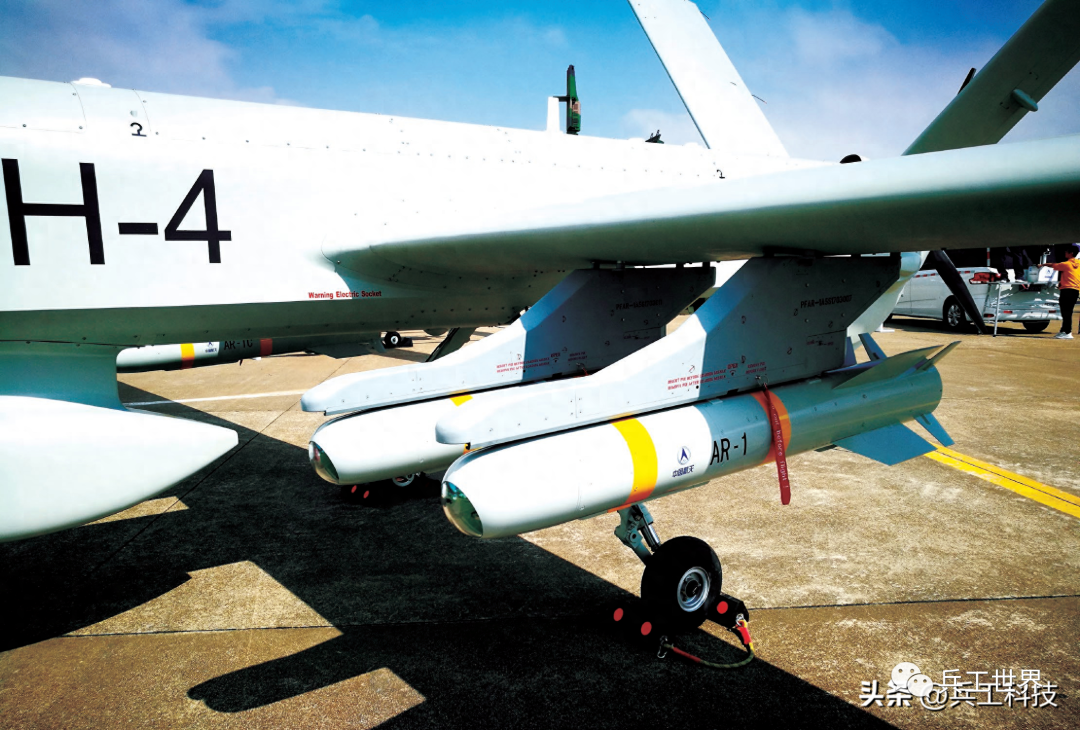
AR Series Drone-Mounted Missiles
Product development has shown a trend towards series production.
The Rainbow series drones are widely favored by users from various countries not only for their excellent performance but also because the AR series air-to-ground missiles, as the “claws of the battle eagle”, are an indispensable part of the reconnaissance-strike integrated drone system. Since the first powered shape missile was launched in 2008, the AR missile family has already turned 10 years old, evolving from the single 40 kg AR-1 missile to a large family of various types of missiles weighing 15, 20, 40, 80, and 100 kg, including cruise missiles, significantly boosting China’s drone military trade and the modernization of our military.
Air-to-Ground Missile Series
Unlike other drone models that generally use active precision munitions or even directly utilize anti-tank missiles from armed helicopters, the AR series missiles used by the Rainbow series drones have been specially redeveloped and produced by relevant units of China Aerospace Science and Technology Corporation to cater to the unique characteristics of drone usage, offering far superior specificity and applicability compared to traditional anti-tank missiles and air-to-ground missiles. In August 2006, with the progress of the Rainbow-3 drone development, the foreign party proposed a joint development of a small laser semi-active guided anti-tank missile to be mounted on a drone platform, forming an immediate reconnaissance-strike capability, which became the AR-1 air-to-ground missile.
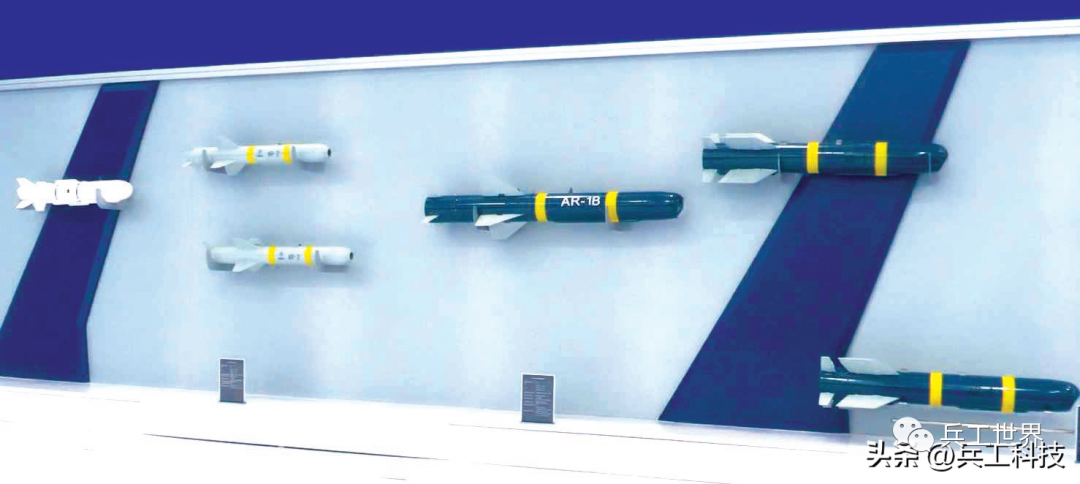
Static display of the AR series missiles
The AR-1 missile weighs just over 40 kg, slightly smaller than the famous American “Hellfire” heavy anti-tank missile. However, as the saying goes, “though the sparrow is small, it has all the vital organs.” It involves various fields such as overall design, control, electrical systems, fire control, propulsion, structure, and telemetry. After more than half a year of hard work and validation, the technical team proposed the overall scheme for the AR-1 missile, which successfully passed the review in April 2007. As this was the first attempt at designing and developing a domestically produced small air-to-ground missile, the design team faced setbacks such as failures in launching powered shape missiles, unsuccessful ignition of self-control test missiles, and the first air launch missile going off-target. Nevertheless, the designers of Rainbow remained undeterred, maintaining their faith, overcoming challenges, and ultimately achieving successful air-to-ground test launches on October 26, 2011!
The AR-1 missile has accompanied the Rainbow-3 and Rainbow-4 drones into foreign battlefields, achieving remarkable results. According to foreign media reports, the Iraqi Army Aviation’s Rainbow-4 drone alone achieved a remarkable record of 260 successful strikes using this missile during anti-terror operations. In actual combat, missiles equipped with shaped charge warheads are often more effective than those with high-explosive warheads, excelling at destroying enemy strongholds and buildings. After carefully summarizing combat experiences and actively listening to foreign military needs, the AR-1 missile has since evolved into variants such as the AR-1A missile with a heavier warhead and low-smoke engine, the AR-1C missile with an infrared seeker for all-weather strikes, the AR-1D missile using a television seeker, the AR-1E missile utilizing millimeter-wave radar, and the AR-1L missile with a tandem warhead capable of penetrating reactive armor on tanks.
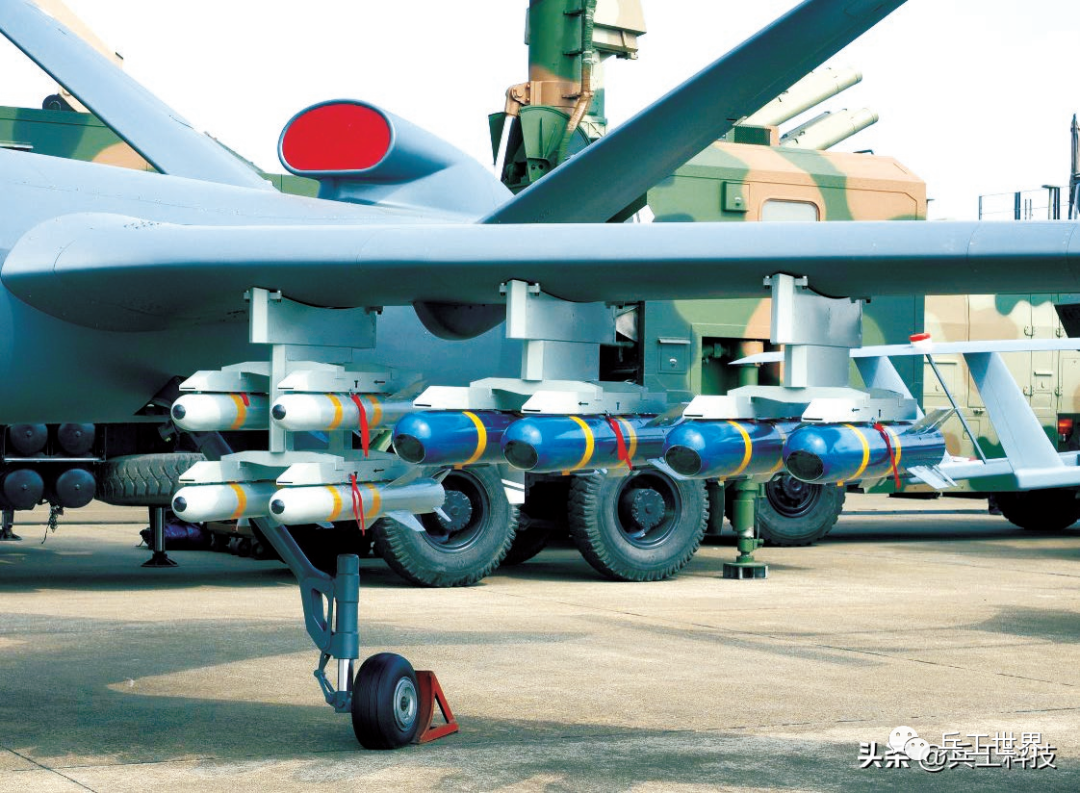
The Rainbow-4 drone carries AR-1 light air-to-ground missiles, which have strong penetration capabilities, capable of penetrating light armored targets and building walls to strike internal personnel.
To meet foreign military demands for further miniaturization, cost reduction, and increased payload capacity of drone-mounted munitions, the 20 kg AR-2 missile has also been developed. It can utilize various guidance methods including INS + laser semi-active, GPS/INS + laser inertial, infrared imaging, and television to effectively strike light vehicles and armed personnel on the ground. At the same time, the design of external mounting points on the drone has been optimized, adopting a quad-launch rack that allows the previous single AR-1 missile mounting point to carry four AR-2 missiles, greatly enhancing the drone’s firepower sustainability.
For heavy armored targets and fortified structures on the battlefield, the 80 kg AR-4 air-to-ground missile has been developed, characterized by high combat cost-effectiveness, reliability, and safety. This missile has a powerful 40 kg blast/fragmentation warhead and an impressive range of up to 20 km, capable of being deployed from an altitude of 7000 meters, which is significantly higher than the altitude of short-range surface-to-air missiles, ensuring the operational safety of the drone. Additionally, the missile adopts a modular design, allowing for interchangeable infrared seekers, television seekers, and millimeter-wave radar seekers.
Cruise Missile Series
In addition to traditional air-to-ground missiles, the AR series missiles also include three advanced cruise munitions. Cruise missiles are a product of the organic integration of drone technology and munitions technology, capable of conducting patrol flights in target areas using existing weapon deployment. They can perform reconnaissance and damage assessment, precision strikes, communication, relay, target designation, and aerial surveillance, among other single or multiple tasks.
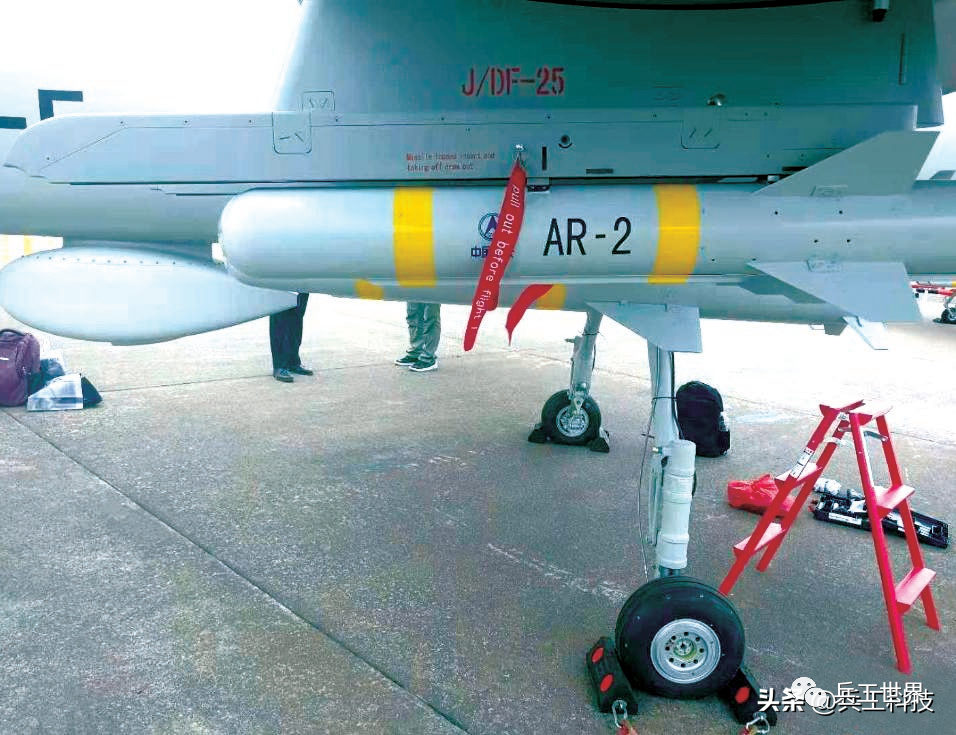
Close-up of the AR-2 air-to-ground missile
The cruise missiles used by the Rainbow series drones include two models, primarily for combat attack purposes. The first is the AR-3 cruise missile, which weighs 100 kg, uses a micro turbojet engine, has a range of 100 km, and can patrol in the air for 30 minutes. The operational mission of the AR-3 cruise missile is mainly to autonomously attack enemy fire control radars, warning radars, etc., during symmetrical combat, launched by drones from outside the defense zone, detecting radar target signals after entering enemy territory, and executing dive and maneuver strikes once targets are locked. Additionally, this missile can suppress radar equipment during prolonged patrol flights, reducing threats from ground air defense firepower.
The second is the AR-10 cruise missile, a portable, tube-launched weapon. The cruise missile adopts a tandem dual-wing design, available in 3 kg and 7 kg variants, with a double vertical tail layout, and the tail wing can be folded. After being launched from the storage tube, the missile’s wings unfold, and a battery powers the propeller for propulsion, while an onboard video sensor transmits battlefield images to the operator.
The operator can confirm the target to be struck via the real-time video images transmitted back and then send an unlock command to the AR-10 cruise missile, locking in the ballistic trajectory for a glide attack. This advanced cruise missile has a range of up to 40 km and can patrol in the air for half an hour to one hour, suitable for special operations as well as police counter-terrorism operations. The third is the AR-20 airborne cruise missile, the latest model of an intelligent, low-cost small cruise missile deployed from outside the defense zone, mainly used for reconnaissance and strikes against armored vehicles and other targets. It is equipped with a line-of-sight data link and visual inertial navigation equipment, allowing it to conduct reconnaissance and strike missions even when GPS is jammed. This missile weighs 15 kg, can patrol in the air for 90 minutes, has a maximum range of 60 km, and is carried and launched by drones with an accuracy of 1 meter.
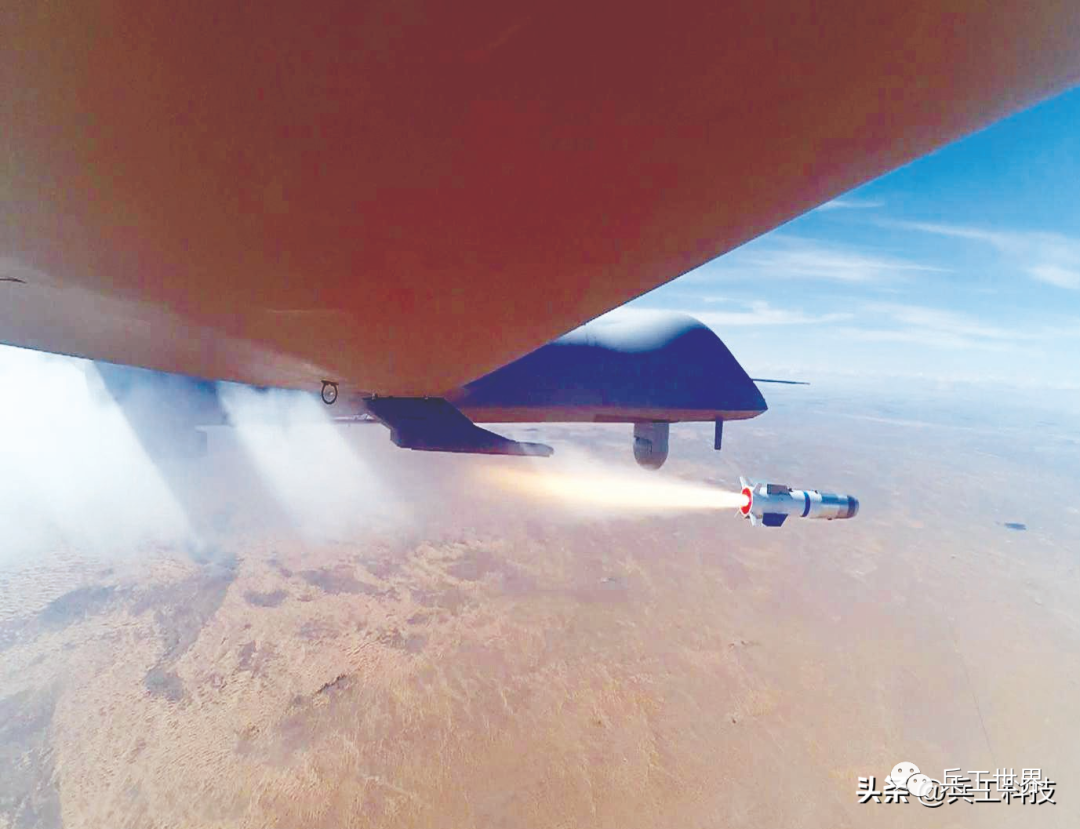
Rainbow-4 drone test launch of the AR-1 missile
Conclusion
The development of the AR series missiles has significantly enhanced the Rainbow drones, further improving their ground strike capabilities based on their strong reconnaissance abilities, providing countries with weak aerial forces with asymmetric air combat capabilities, which is of great significance.

Interested readers, hurry up and click the link below to purchase, as the printed quantity is limited and available until sold out!
Purchase link:
September 2024 Issue of “2024 Naval Vessels Open Activities” Armament Technology Magazine30August 2024 Issue of “US ‘Typhoon’ Medium-Range Missile Deployment in the Philippines”Armament Technology Magazine30“Armament Technology” 2024 Half-Year Package (Issues 13-24)Armament Technology Magazine360
 Join our WeChat fan group, welcome!

Follow the public account below:↓↓↓
Important Notice: Due to WeChat’s redesign, it is recommended to star and like to be marked as a long-read user; otherwise, you may not receive the next article.
End