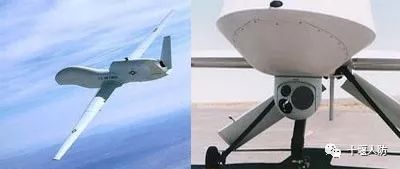
Unmanned Aerial Vehicles, abbreviated as “UAVs,” are pilotless aircraft manipulated by radio remote control devices and self-contained program control devices. There is no cockpit on board, but it is equipped with autopilots, program control devices, and other equipment. Personnel on the ground, ships, or mother aircraft’s remote control station track, locate, remotely control, telemetry, and digitally transmit data using radar and other devices. It can take off like a normal aircraft under radio remote control or be launched into the air using a booster rocket, and it can also be deployed from the air by a mother aircraft. For recovery, it can automatically land in the same way as a normal aircraft, or be recovered by parachute or net through remote control. It can be reused multiple times. UAVs are widely used for aerial reconnaissance, surveillance, communication, anti-submarine warfare, electronic interference, and more.
The Unmanned Aerial Vehicle (UAV) is primarily a pilotless aircraft controlled mainly by radio remote control or its own program. Its successful development and battlefield application have opened a new chapter in “non-contact warfare” dominated by long-range attack intelligent weapons and information-based weapons.
Compared to manned aircraft, UAVs have advantages such as small size, low cost, ease of use, low operational environment requirements, and strong battlefield survivability, making them highly favored by military forces around the world. In several localized conflicts, UAVs have played a significant role with their accurate, efficient, and flexible reconnaissance, interference, deception, search, calibration, and combat capabilities under irregular conditions, sparking a plethora of research on military theory, equipment technology, and related issues. They will join the emerging arsenal ships, unmanned tanks, robotic soldiers, computer virus weapons, space-based weapons, and laser weapons to become important players on the battlefield of the 21st century, profoundly influencing future military struggles.
Some experts predict: “Future aerial combat will be between stealthy unmanned aerial vehicles and air defense weapons.” However, as UAVs are still a nascent concept in the military research field, with limited practical experience and imperfect technologies, their combat applications are still limited to high-altitude electronic and photographic reconnaissance and other limited technologies, not fully realizing their tremendous battlefield influence and combat power. Therefore, major military nations around the world are accelerating the development of UAVs. Based on practical tests and future combat needs, UAVs will see faster development in more areas.