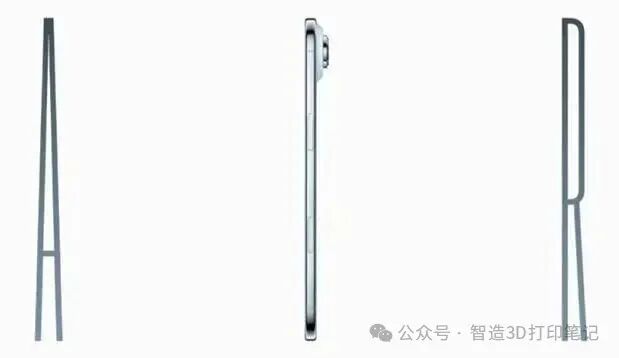
Apple has adopted3D printing technology to manufacture titanium alloy USB-C ports in the newly released iPhone Air, reducing material usage by 33% compared to traditional forging processes.
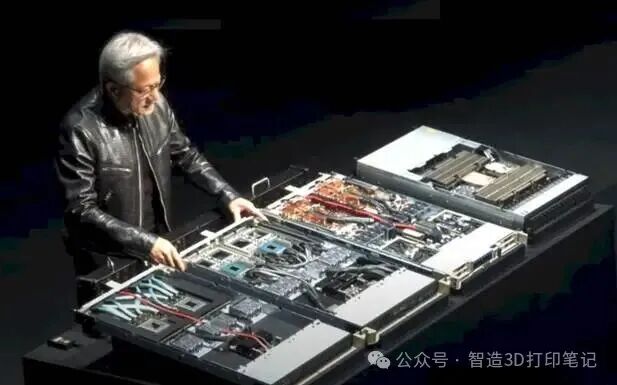
NVIDIA has also recently announced the development of MLCP (microchannel liquid cooling plates) for cooling components.
These announcements raise the question: what has prompted these leading global technology companies to start applying 3D printing technology in production? What has allowed this technology, once regarded as a “novel concept“, to enter the consumer electronics sector, which requires large-scale production with strict quality and cost control?
The answer may exceed our imagination.
In the following sections, I will analyze typical cases from various industries worldwide to explore how 3D printing has evolved from assisting in prototype manufacturing to becoming a core technology that addresses the pain points of traditional manufacturing, and analyze the reasons behind this evolution and the limitless possibilities for future development.
Emergence of 3D Printing Technology: Supporting Prototype Manufacturing
In the early stages of 3D printing technology development, constrained by material costs and printing speed, 3D printing was primarily positioned as a tool for rapid prototyping.
Engineers initially used this technology to quickly validate design concepts and create functional test models. At that time, 3D printing was more of a “appetizer” for traditional industrial production processes: it aided in design validation, but the final product still relied on traditional manufacturing processes such as injection molding and machining.
Growth Phase of 3D Printing Technology: Moving Towards Mainstream Production
Today, 3D printing technology is in a critical growth phase. The maturity of 3D printing technology allows it to be directly applied to the manufacturing of final products, and in certain applications, it offers advantages over traditional manufacturing processes.
Perfect Interpretation of Personalization and Customization
Revolutionary Breakthroughs in the Biomedical Field
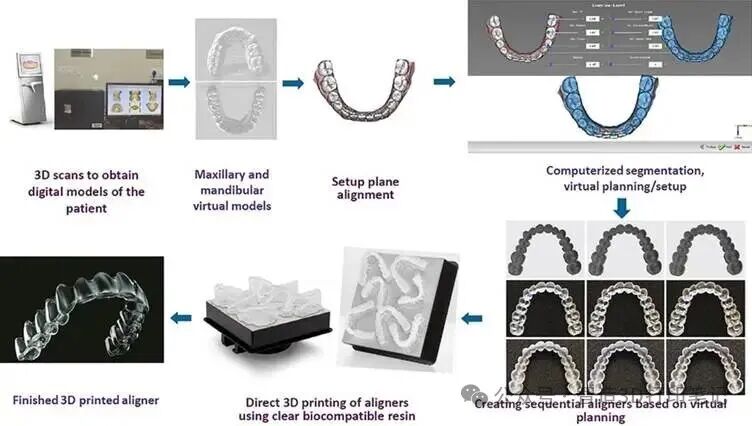
When we talk about mass customization, it is hard to find a more classic example than Invisalign. This orthodontic treatment company uses 3D printing technology to create custom clear aligners for each patient. Compared to traditional orthodontic treatments that require multiple visits and adjustments of metal brackets, Invisalign designs a series of aligners needed for the entire treatment process based on 3D scans of the patient’s mouth, and then uses high-precision 3D printing for one-time manufacturing.
Now, Invisalign can produce over 600,000 customized aligners daily, achieving a goal that was impossible in traditional manufacturing systems: customizing each product while maintaining large-scale production efficiency and cost control.
Performance Breakthroughs in Sports Equipment
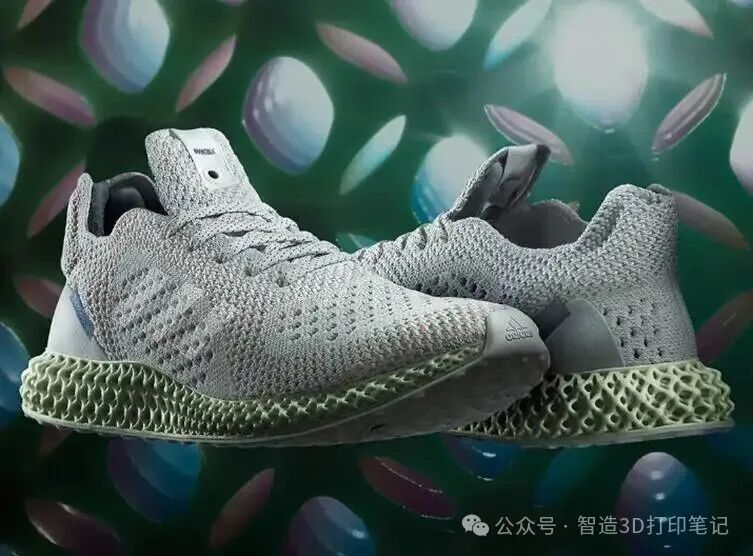
Adidas has showcased the potential of 3D printing in product functionality customization in the field of sports shoes. It not only achieves personalized aesthetic designs but also delves into the core functional aspects of the product.
Adidas’ Futurecraft 4D series uses 3D printing to manufacture midsoles. By analyzing the pressure distribution and movement patterns of athletes’ feet, Adidas has designed a complex lattice structure to provide differentiated cushioning and support performance in different areas of the foot, and has produced midsoles with hundreds of different density zones using 3D printing to optimize performance for different types of sports.
This precise structural optimization is simply unimaginable in traditional manufacturing!
Showcasing Complexity and Functionality
Precision Manufacturing in Consumer Electronics
Apple has publicly adopted 3D printing technology in the latest iPhone Air and Apple Watch, and the logic behind this decision is worth pondering: Apple is known for its stringent quality requirements, and now its willingness to use 3D printing technology on a large scale indicates that this technology has reached (or is at least close to) the standards required for precision, reliability, and cost control in consumer electronics.

Lightweighting in the Aerospace Industry
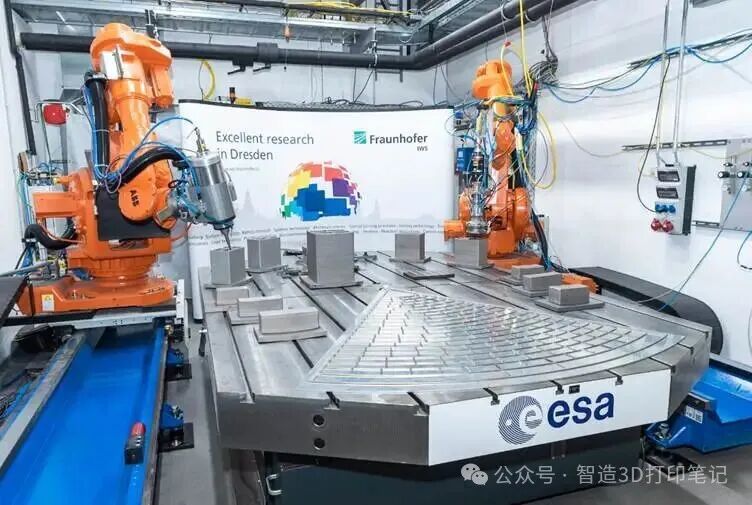
Reports indicate that the European Space Agency (ESA) and Thales Alenia Space have adopted 3D printing to achieve lightweighting in satellite manufacturing. For every kilogram of weight reduced, tens of thousands of dollars can be saved in launch costs.
Traditional satellite component manufacturing requires assembling multiple parts, where the connections often become a dual burden of weight and reliability. By applying 3D printing technology, it is possible to manufacture complex structures in a single piece, achieving lightweighting while eliminating the risk of failures at multiple connection points.
Dual Benefits of Efficiency and Sustainability
Flexible Manufacturing in the Automotive Industry
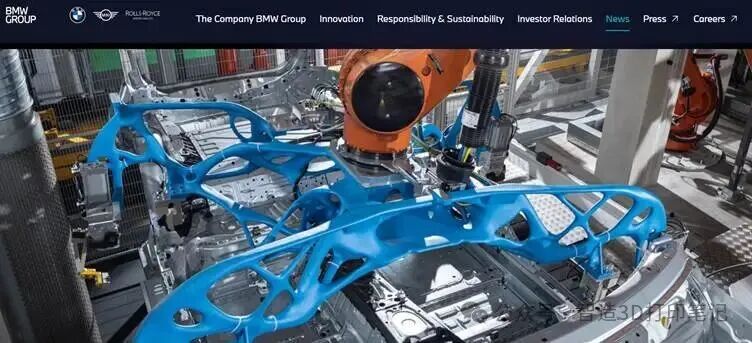
BMW and Porsche’s applications of 3D printing technology demonstrate its significant value in production flexibility. In traditional automotive manufacturing, each type of tooling requires a lengthy process of design, mold-making, and manufacturing. However, with 3D printing technology, BMW can complete the design, manufacture, and put new tooling into use within days.
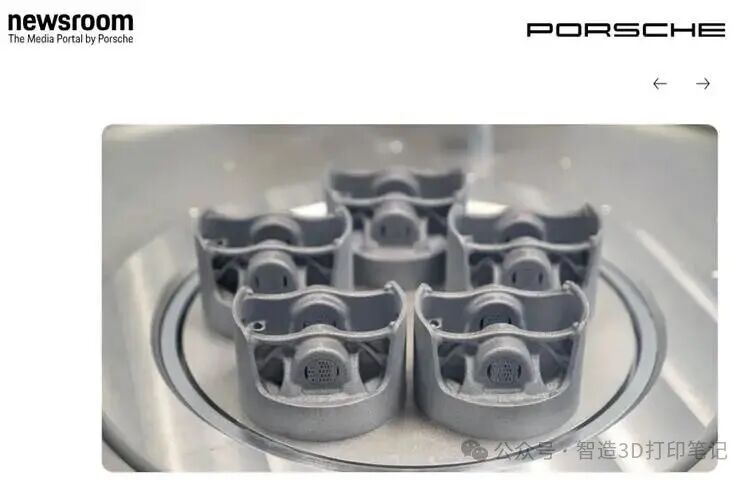
This value of production flexibility is not only reflected in new product development but also extends to after-sales service. For instance, Porsche uses 3D printing technology to produce spare parts on demand for classic models, addressing the high costs of small-batch parts in traditional manufacturing.
Lighting Industry’s Sustainable Practices
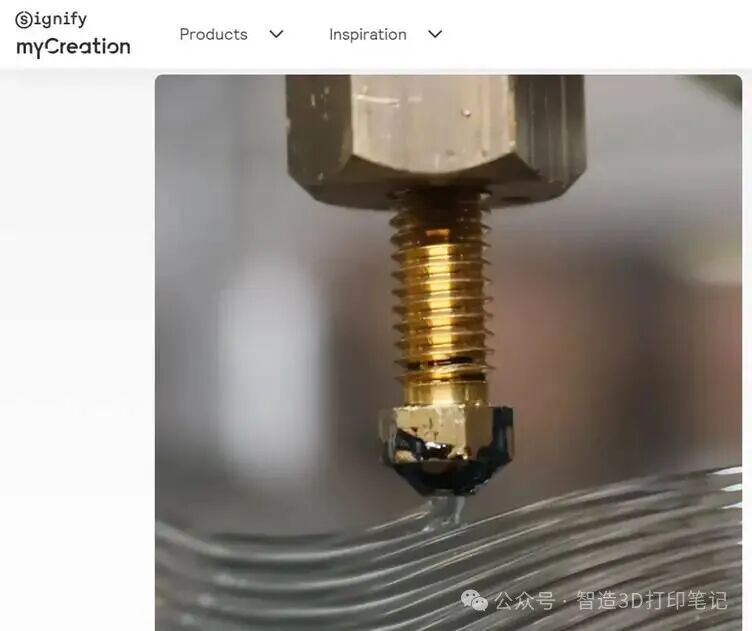
The Dutch lighting giant Signify (formerly Philips Lighting) perfectly embodies the potential of 3D printing technology in sustainable development.
Traditional lighting product manufacturing involves a complex supply chain: from raw material procurement, component manufacturing, inventory management to global transportation, each link consumes a large amount of resources and generates significant carbon emissions. Signify has achieved localized production and on-demand manufacturing through 3D printing, significantly shortening the supply chain. Additionally, they use recyclable materials in the 3D printing process, reducing environmental impact while creating new cost advantages.

Smart Manufacturing3D Printing Notes Summary
From Apple’s 3D printed titanium alloy USB-C port to NVIDIA’s 3D printed microchannel cooling plate applications, from Invisalign’s large-scale customization to BMW’s flexible on-demand manufacturing, we can clearly see: 3D printing technology is no longer a marginal technology in manufacturing; it is becoming an essential component of the core productivity of global manufacturing.
3D printing technology addresses seemingly disparate yet fundamentally interconnected issues across different industries:
How to achieve personalization while maintaining efficiency?
How to enhance product performance while controlling costs?
How to maintain supply chain stability while addressing global supply chain uncertainties?
As we stand at the threshold of 2025, we can see that we are at a critical moment of transformation in the manufacturing industry.
The widespread application of 3D printing technology is not only the result of technological accumulation but also a product of the evolution of market demand, business models, and social values: the growing consumer demand for personalization, the increasing emphasis on supply chain resilience by enterprises, and the focus on sustainable development by human society are all driving 3D printing technology from concept to reality.
The future of manufacturing will not rely solely on a single technology but will evolve into an intelligent ecosystem of multiple technologies working in synergy. In this ecosystem, 3D printing technology will occupy an important position with its unique advantages, integrating with traditional manufacturing processes, artificial intelligence, robotics, new materials science, and more, collectively shaping a more flexible, efficient, and sustainable era of intelligent manufacturing.
Note: This article was created by Smart Manufacturing 3D Printing Notes. For reprints, please contact for authorization.