
In October 2025, a shocking scene unfolded at a construction site in Shenzhen managed by China State Construction Engineering Corporation (CSCEC) Eight Bureau: 200 rebar workers were completely replaced by 10 AI rebar tying robots, resulting in a 40% reduction in construction time.
Even more alarming, this is not an isolated case—across the country, from Beijing to Guangzhou, and from Shanghai to Chengdu, a transformation in the construction industry driven by rebar robots, concrete construction robots, and the “Cicada” building machine is sweeping the nation.
When wall construction errors can be controlled within 1 millimeter, and 24-hour continuous construction becomes the norm, we must ask: How much longer can the jobs of 80 million construction workers last?
01. The End of Rebar Workers: One Robot Replaces 20 Skilled Workers
Traditionally, tying rebar is considered one of the most physically demanding jobs in construction. However, at the CSCEC Eight Bureau site, a 6-axis robotic arm is tying 30 nodes per minute at an astonishing speed. This robot is equipped with a 3D vision recognition system that can automatically avoid intersections of rebar, maintaining a tying quality rate of over 99.5%.
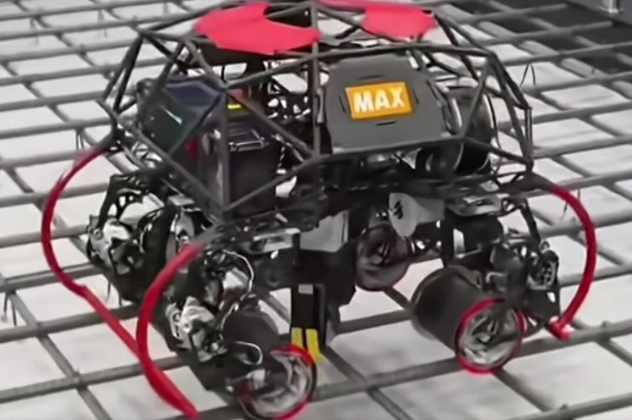
“In the past, our team of 20 could tie 800 meters of rebar in a day, but now two machines can do the same job without needing to worry about food, accommodation, or insurance,” said Master Li, a contractor with 15 years of experience in rebar work, with a bitter smile. “I just signed a contract last month, and this month I was informed that the project will fully switch to robots.”
Even more shocking is the efficiency comparison: manual tying of rebar for one square meter of floor takes 45 minutes, while the robot only needs 12 minutes. Data released by CSCEC Eight Bureau shows that after introducing robots, the cost of rebar work for a certain affordable housing project dropped by 37%, and the construction period was nearly halved.
02. Concrete Construction Enters the Era of Automation: Error Control to 0.5 Millimeters
If rebar robots replace physical labor, then concrete construction robots eliminate the need for experience. At a super high-rise project in Wuhan managed by CSCEC Third Bureau, a suspended vibration robot glides along a track, adjusting the vibration depth in real-time through pressure sensors to ensure uniform concrete density.
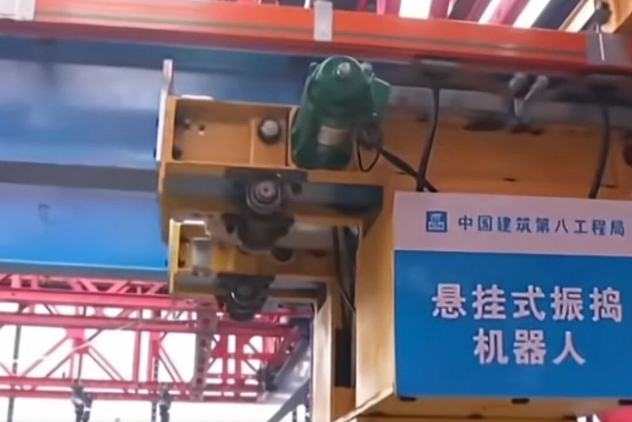
“In the past, experienced workers relied on their instincts to judge the vibration effect, but now robots can time the vibration to the precision of 0.1 seconds,” said Engineer Wang, showcasing the data comparison. “The error in wall flatness for manual construction is usually between 3-5 millimeters, while robots can control it within 0.5 millimeters, directly saving 20% on later plastering materials.”
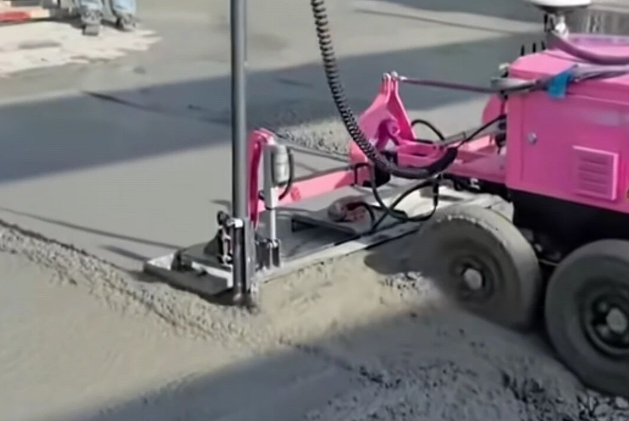
Even more revolutionary is the concrete pouring process. Traditional construction requires 10 people to operate a concrete distributor, but now it is independently completed by an AI concrete construction robot. Equipped with a BIM model navigation system, it can automatically plan the pouring path, avoiding cold joints. After application in a commercial complex project, the concrete waste rate dropped from 8% to 1.2%.
03. The Emergence of the “Cicada” Building Machine: Turning Construction into Assembly Line Production
What truly shakes the construction industry is the residential construction robot system known as the “Cicada.”
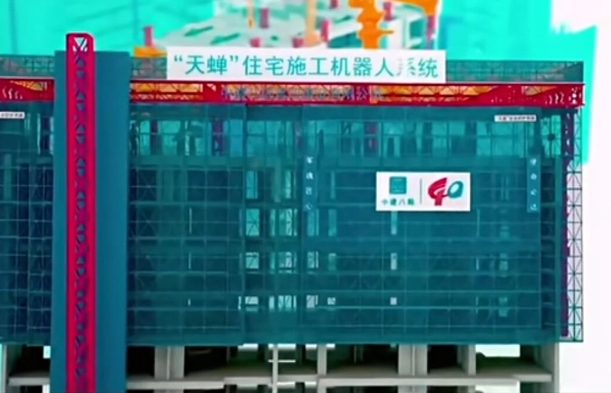
This massive system, developed by CSCEC, envelops the floors like a giant steel shell, integrating the entire process of template installation, rebar tying, and concrete pouring.
At a project in Longhua, Shenzhen, the “Cicada” system set a record of building one floor in just three days. Traditional construction required 120 workers, but now only 15 technical personnel are needed to monitor the equipment. Even more frightening is the consistency of quality—this project achieved a vertical deviation of no more than 2 millimeters over 12 consecutive floors, setting a new industry record.
“In the past, a 30-story building required a two-year construction period, but with the ‘Cicada,’ it can be topped out in eight months,” revealed the technical head of CSCEC Third Bureau in an interview. “Currently, this system has been implemented in 12 projects nationwide, directly reducing frontline workers by 70%.”
04. The Crossroads of Fate for 80 Million Construction Workers
As robots can work 24 hours a day with zero errors, and a project can save over 60% in labor costs, the choices presented by the market are exceptionally harsh. Data shows that from 2023 to 2025, the national construction robot market size will soar from 12 billion to 87 billion, while the number of construction workers will decrease by 12 million.
“Last year, our site had over 300 workers, but now only about 80 are left,” revealed a project manager from a construction company in Guangzhou. “The three major trades of carpentry, tiling, and rebar work are each losing 10% of their positions every month.”
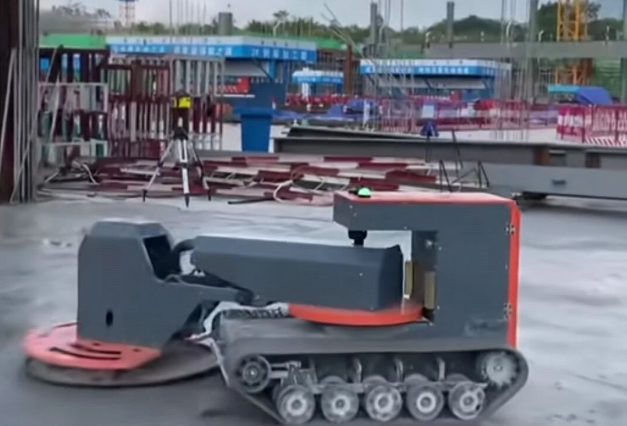
Even more concerning is the speed of technological iteration. A leader from a top robotics company candidly stated: “Current construction robots can already complete 70% of traditional processes, and in the next three years, this proportion will reach 90%.” This means that the countdown to the elimination of the last batch of construction workers has already begun.
05. Transformation or Elimination: A Survival Guide for Construction Workers
In this transformation, some have already found a way out. 42-year-old Old Zhang was once a plasterer but has now transitioned to a robot maintenance operator, with his salary rising from 300 yuan a day to 600 yuan. “In the past, I relied on physical strength to make a living, but now I have to learn programming and parameter adjustment. It’s difficult, but I won’t starve.”
Experts suggest three directions for construction workers to transition: Robot Maintenance (monthly salary of 8,000-15,000 yuan), BIM Model Management (monthly salary of 10,000-20,000 yuan), and Prefabricated Building Quality Inspection (monthly salary of 7,000-12,000 yuan). However, the reality is that only 15% of construction workers nationwide have received systematic training.
“The government and enterprises must accelerate the construction of training systems,” warned Professor Li from Tsinghua University’s Institute of Architectural Industry Research. “If the transition does not keep pace, in the next five years, 30 million construction workers will face the risk of unemployment.”
06. Not the End, But a New Beginning
As we marvel at the efficiency of the “Cicada” building machine, we must not forget those workers who have spent half their lives climbing scaffolding; as we praise the quality revolution brought by robots, we must also consider how to ensure a smooth transition for 80 million laborers.
This transformation in the construction industry is essentially an upgrade in productivity. Just as the steam engine replaced the horse-drawn carriage, the replacement of manual labor by AI robots is an irreversible trend. But history tells us that technological progress will ultimately create new forms of employment.
Perhaps in ten years, construction workers will become a historical term, but new “digital construction engineers” will rise. The question is, can we prepare for this transformation? For those laborers who have bled and sweat for urban construction, can we provide them with a dignified opportunity to transition?
This is not just a problem for the construction industry, but a challenge that the entire society must face. As machines become smarter, where does human value lie? The answer may lie in the transformation journey of each laborer.