According to authoritative statistics, the search popularity of the Mercedes-Benz C-Class in the domestic luxury mid-size car market surged by 48% in the first half of 2024, making “C-Class generational change” a hot topic in the automotive circle. Is it the magic of classic heritage or the allure of new-generation design? When a familiar “star emblem” begins to self-subvert, competitors like the BMW 3 Series, Audi A4L, and even a host of new forces should feel a twinge of unease.
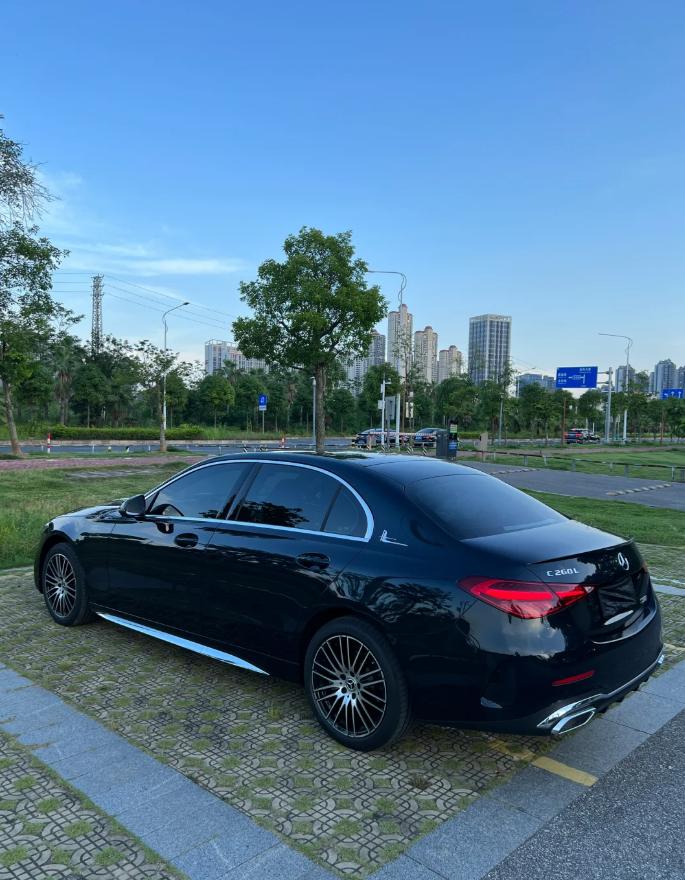
Looking at the market, the Mercedes-Benz C-Class is not a new dark horse, but rather a seasoned player with a rich history. Since the launch of the W201 in 1982, the C-Class has accompanied countless middle-class individuals in Chinese cities through their identity transitions. Even in 2023, when the penetration rate of new energy vehicles continues to rise and price wars intensify, the C-Class still manages to maintain its traditional luxury stronghold with an average monthly sales exceeding 8,000 units. Notably, recent terminal discounts have brought its starting price below 300,000 yuan, directly competing with high-end models like the Volkswagen Magotan and Honda Accord. The once unattainable “little S” has now become a “dream within reach”.
However, dreams can be chased by reality. The electric storm from new forces and the internal competition among the three German giants compel the C-Class to provide a more convincing answer. This generation of the C-Class clearly shows that Mercedes has made bold moves. The exterior design can be described as a “burning the boats” transformation. The front face no longer settles for traditional elegance but boldly incorporates family elements from the CLS and S-Class: a large star-pattern grille, a sculpted engine hood, and sharp LED daytime running lights—everything is aggressive. The side profile features a lower stance and a longer wheelbase, creating a sense of stability with a hint of “muscle”. The rear design also breaks away from the previous roundness, with horizontally stretched taillights and a slightly raised ducktail spoiler, all leaning towards a sporty aesthetic. Sitting next to it, the BMW 3 Series can’t help but wonder, “Are you also trying to play the sporty card?”
In terms of dimensions, the domestic long-wheelbase version of the C-Class targets the peak of its class. With a length of 4865mm and a wheelbase of 2954mm, it visibly increases rear legroom. The storage capacity does not deliberately flaunt its “muscles”, but the regular trunk volume remains practical, and the rear seats can be folded down for expansion, making it more than sufficient for a couple with a child on short trips.
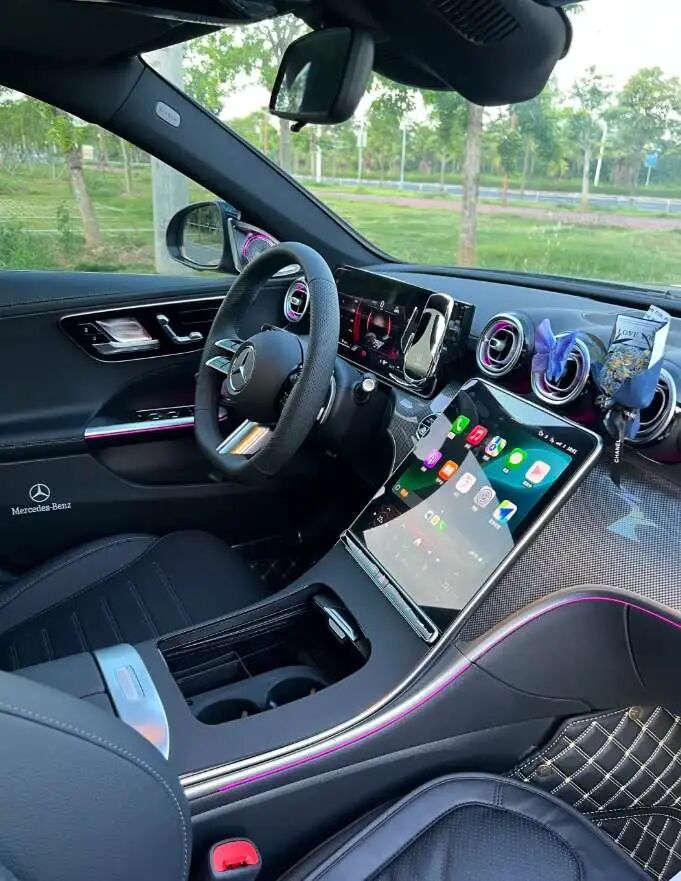
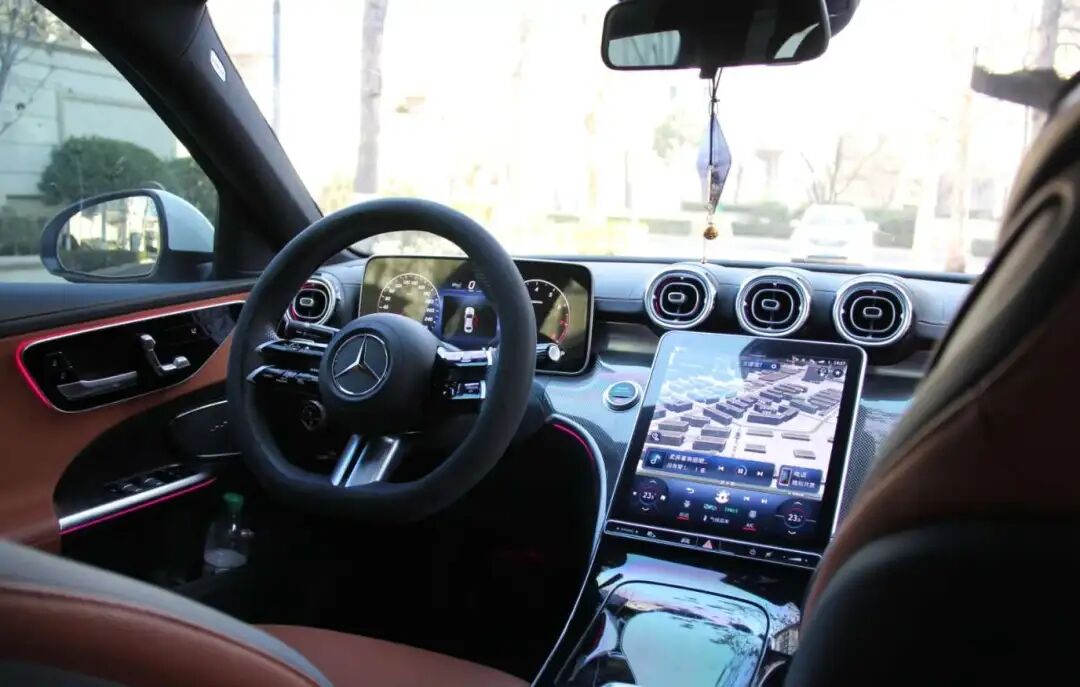
Moving inside, Mercedes’ consistent “interior aesthetics” reaches new heights in the new C-Class. A 12.3-inch full LCD instrument panel and an 11.9-inch vertically oriented central control screen, combined with ambient lighting, create a nightclub-like technological atmosphere. The vehicle system has been upgraded to the second generation of MBUX, featuring voice recognition, navigation, and remote connectivity. The materials remain exquisite, with large areas of leather covering and wooden/metal trim accents, providing an impeccable tactile and visual experience. The seats support multi-directional electric adjustment and memory, with mainstream high-end models also equipped with heating, ventilation, and massage functions. Advanced driving assistance features are also included, such as L2-level assisted driving, active braking, panoramic imaging, automatic parking, and smart remote control, essentially encompassing everything that can be included. In terms of the entertainment system, the Burmester sound system, wireless CarPlay, and OTA upgrades ensure that the C-Class can meet all your desires.
The powertrain is the highlight of this generational change. The entire lineup is equipped with a 2.0T inline four-cylinder engine, paired with a 9AT automatic transmission, delivering a maximum power of 150kW (high-power version 190kW) and a peak torque of 320-400N·m. While the figures may not be earth-shattering, in actual driving, this powertrain delivers smooth output and quick response, with the 9AT transmission featuring intelligent shifting logic that ensures smoothness for daily commuting while also providing impressive acceleration when the throttle is fully pressed. The suspension tuning balances comfort and firmness, offering the “heaviness” typical of German cars while not losing the sporty feedback sought by younger drivers. Fuel consumption levels are maintained in the range of 7-8L/100km, finding a balance in the face of “energy consumption anxiety” from new energy hybrids and pure electric vehicles.
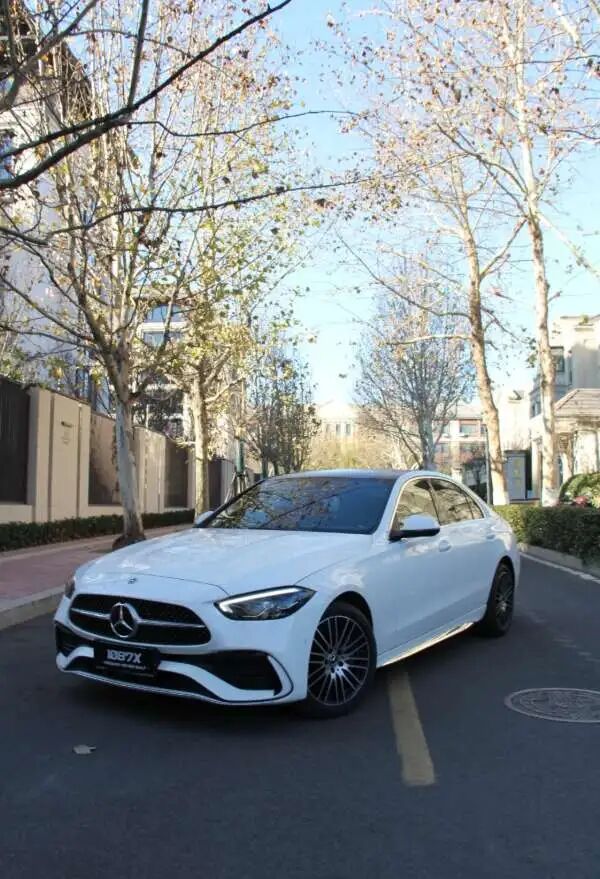
Turning our attention to competitors, the BMW 3 Series remains the C-Class’s “arch-rival”. The 3 Series emphasizes sporty handling and driving pleasure, with similar power parameters, but features an 8AT transmission and a stiffer suspension, catering to fans of the “man-machine unity” experience. In terms of pricing, the two are nearly overlapping after discounts, but the 3 Series falls slightly short in terms of intelligent configurations, and its interior design appears conservative. The Audi A4L excels in space, technology, and terminal discounts, with full configurations but slightly lower brand influence. As for new forces like NIO ET5 and Zeekr 001, they are encroaching on the traditional luxury mid-size car market with electrification, intelligent cockpits, and exceptional cost performance. Consumers are becoming increasingly rational and discerning—they want brand prestige, intelligent experiences, practical space, decent power, and ideally, a more “friendly” price.
In the broader industry context, the generational change of the C-Class is actually a microcosm of how German luxury brands are responding to the impact of electrification and intelligence. Under the wave of new energy, the “moat” of traditional fuel vehicles is narrowing. Domestic brands are advancing rapidly, with intelligence and connectivity becoming the main themes, and the halo of BBA is no longer “self-generating traffic”. Mercedes is attempting to maintain its position as the “first choice for luxury middle-class” with more aggressive designs, smarter configurations, and balanced power. Some say the C-Class’s generational change is a form of self-rescue, while others view it as the “last stubbornness”. On one hand, it clings to the classic, while on the other, it embraces change; the C-Class is walking a tightrope.
How to evaluate its strengths and weaknesses? The new C-Class has a completely refreshed appearance, with high levels of intelligence, luxury, and spatial comfort, and a mature and reliable powertrain, still representing the brand’s halo. However, in the face of the electrification trend, fuel power ultimately has its ceiling. Coupled with the “dimensionality reduction attack” from new forces in areas like intelligent cockpits and assisted driving, whether the C-Class can continue to attract young consumers remains uncertain.
Looking ahead to market performance, the new C-Class is expected to spark a wave of replacement purchases in the short term, with existing users upgrading and new users trying it out, likely boosting sales further. However, in the long run, the contraction of the fuel vehicle market has become a foregone conclusion, and how Mercedes successfully transitions to the electrification and intelligence track will determine whether it can continue to thrive in the next decade.
What do you think? Is this “self-revolution” of the C-Class a last hurrah for fuel luxury, or a new round of comeback? If it were you, would you choose this all-new C-Class or turn to the new electric forces? Feel free to share your choice in the comments section.