1.The Rules of the Game Have Changed
Many people will ask:
“Operating systems, browsers, game engines, database kernels, and compiler backends are all written in C/C++. How can Rust replace it?”
So let’s state the conclusion first:
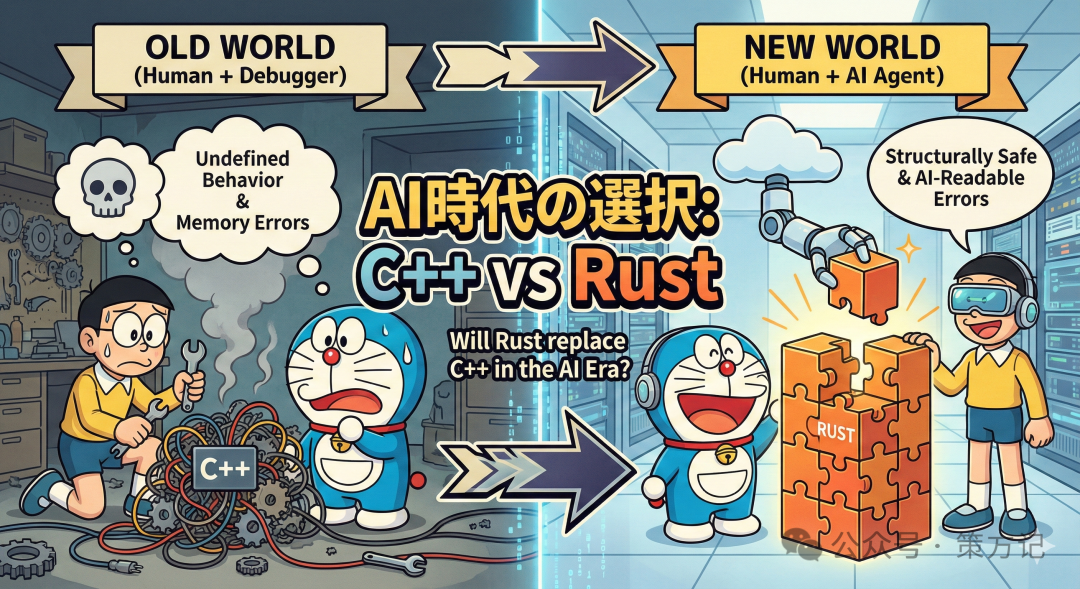
In the era of “human engineers + AI/agents writing code together”, the new system-level projects are likely to gradually see C++ give way to Rust. C++ will continue to exist in the long term, but its role will gradually revert to that of a “legacy from the old world + a few special scenarios”.
Why is this happening? Because the rules of the game have changed—writing low-level code is no longer solely the domain of humans, but also involves large models.
2. For the Past 30 Years, C++ Has Been Collaborating with “Human Senior Engineers”
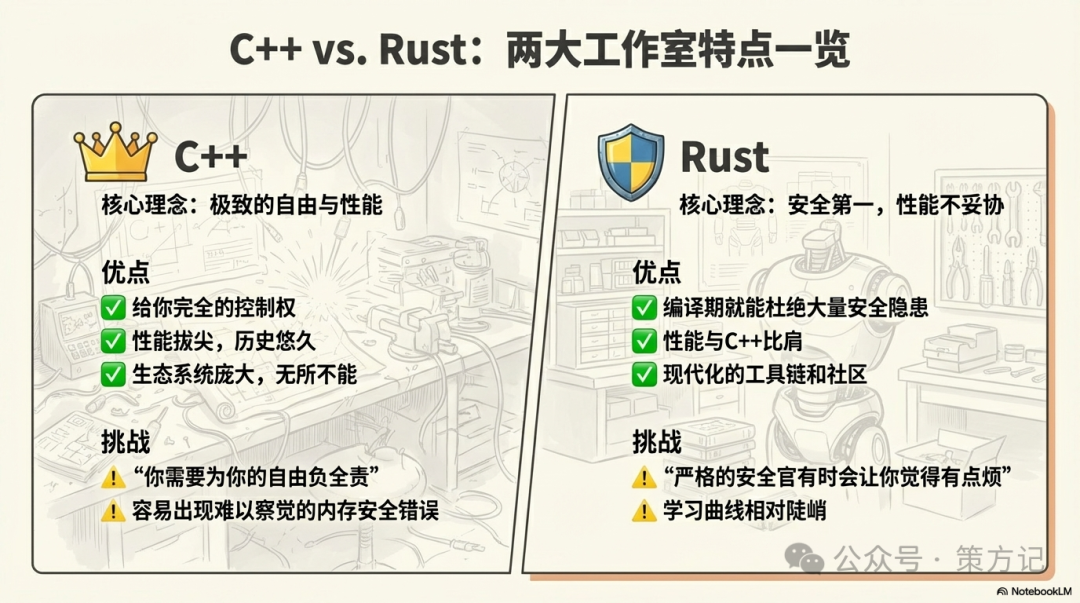
C++ has dominated system programming for so long not because it is “friendly to human beginners”; on the contrary, it is very unfriendly:
-
Manual memory management;
-
Undefined Behavior is rampant;
-
Macros and template metaprogramming can easily create unreadable black magic.
So why do people still use it?
-
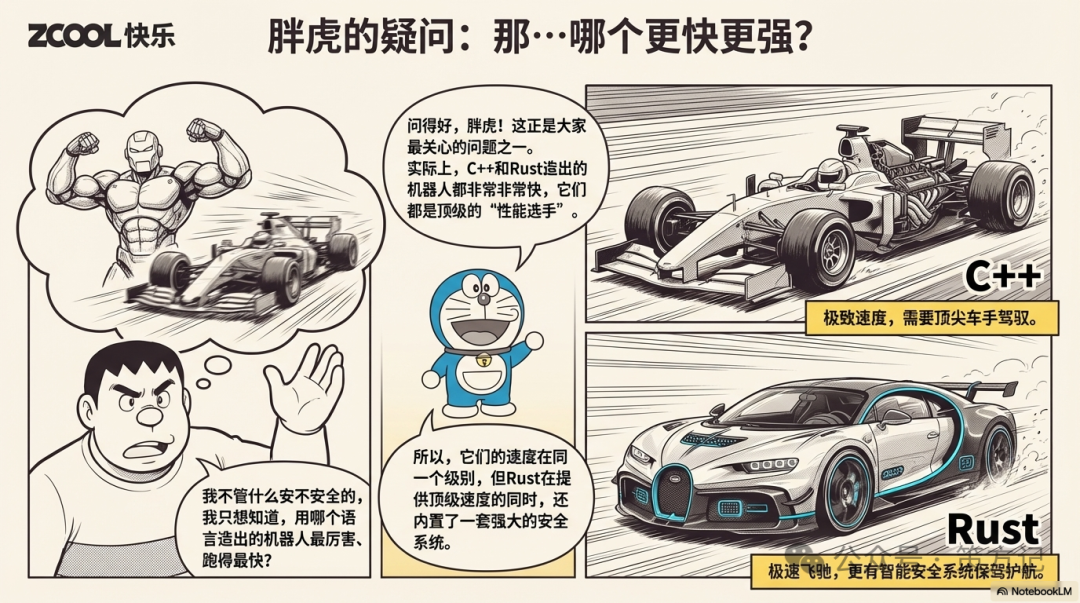
Performance and Control: Close to hardware, allowing fine control over memory layout, cache friendliness, SIMD, and manual optimization.
-
Historical Assets and Ecosystem: Operating system kernels, browser engines, databases, game engines, numerical libraries, all belong to the C/C++ family.
-
Human Senior Engineers + Toolchain:
-
Humans can use experience to avoid some pitfalls;
-
The rest relies on gdb/lldb, AddressSanitizer, Valgrind, and static analysis tools to keep things in check.
In other words:
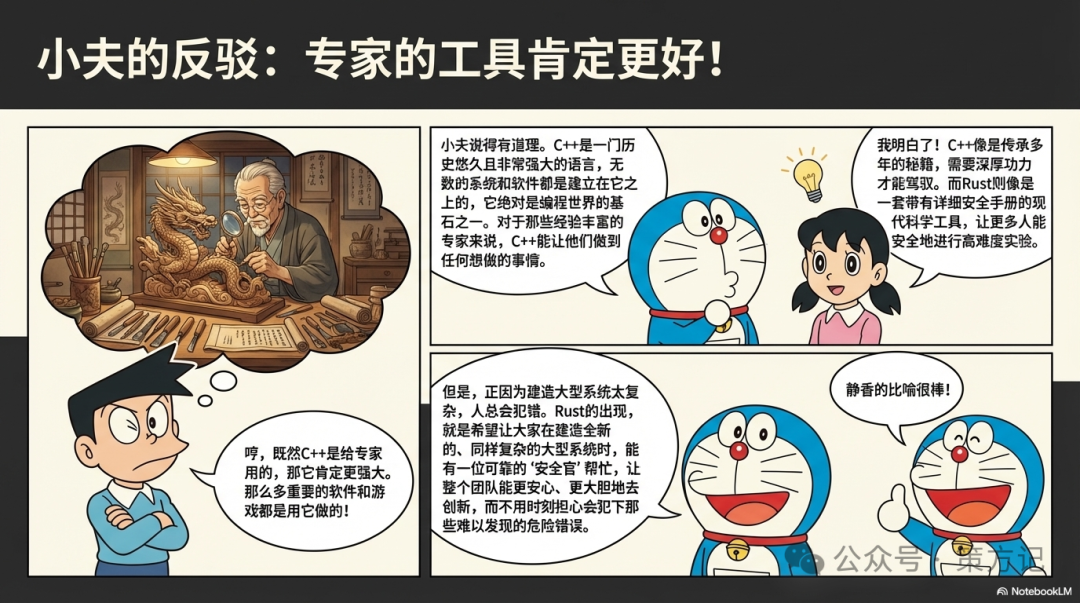
The default premise for the past 30 years has been— those writing C++ are a group of elite engineers willing to pay a huge mental cost for performance and control. The language itself is dangerous, but “human seniors + a complete set of debugging tools” can provide a safety net.

3. With AI on the Table: Languages Must Now Be Responsible for the “Model”
But today, there is a new role: Large Models / Coding Agents.
Their working methods are completely different from humans:
-
They can quickly write a lot of code;
-
They can rapidly iterate based on compilation errors and test failures;
-
They can remember common error patterns and fix paradigms;
-
But they are not good at:
-
Stepping through debugging with gdb;
-
Staring at core dumps and registers to guess where it crashed;
-
Inferring the root cause of problems in the world of Undefined Behavior through random experimentation.
The model essentially forms a closed loop:
Generate Code → Compile/Run Tests → Read Structured Error Information → Modify Code
You will notice an interesting phenomenon:
-
For humans, the most critical issue with C++ is: Many bugs can compile but crash randomly at runtime, and they are UB (Undefined Behavior).
-
For models, this is a nightmare:
-
Errors are not stable, structured feedback;
-
Often, it’s just “a certain request failed”, which is a very weak signal.
In contrast, Rust moves a large class of “runtime crashes that are hard to debug” issues from the C/C++ era to the compile time.
4. The Biggest Divide Between Rust and C++: Which is More Suitable for “Compiler-Driven Workflows”
We can compare from three dimensions: Memory Safety, Error Feedback, Local Reasoning.
4.1 Memory Safety: Which Bugs Are More Suitable for AI to Fix at the “Compile Stage”?
-
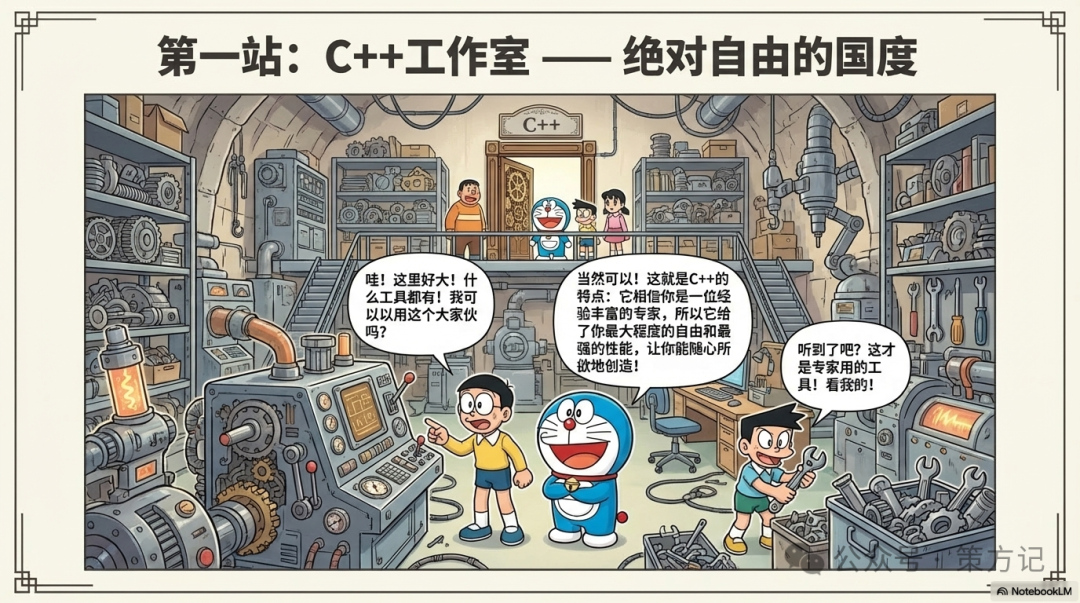
C++‘s typical issues:
-
Dangling pointers / use-after-free;
-
Double free;
-
Out-of-bounds access;
-
Data races;
-
Uninitialized variables;
-
Collectively known as Undefined Behavior.
These bugs are characterized by:
-
They can compile;
-
They may run for a while before crashing;
-
They are also affected by optimization levels, platforms, and compiler versions.
-
Rust‘s core design is:
-
Ownership / Borrowing / Lifetimes;
-
<span>Send</span>/<span>Sync</span>ensure safe data sharing in concurrency; -
<span>Option<T></span>/<span>Result<T, E></span>turn null / errors into explicit types.
The result is:
In Rust, many classic landmines from C++ become **”compilation errors”**. This is crucial for AI— compilation errors are standardized training signals.
4.2 Error Feedback: Which Type of “Error” Does the Large Model Prefer?
For models, the ideal error looks like this:
Has a clear error type (type mismatch, incorrect lifecycle, trait not implemented…)
Has precise location (which line, which symbol)
Has specific hints (what is expected, what is actual)
This is almost one of the signature features of the Rust compiler:
-
Error messages are long and verbose, but very structured;
-
Often, they provide one or two suggestions for fixes (“Did you mean to use
<span>&mut</span>?”).
In contrast:
-
C++’s error chains explode wildly in templates, macros, and SFINAE, resulting in a bunch of nonsensical errors;
-
Runtime crashes are even worse:
-
It may only show a Segmentation fault
-
Or a difficult-to-understand stack trace
-
The real root cause may be in completely different modules.
From the perspective of “AI-driven development processes”:
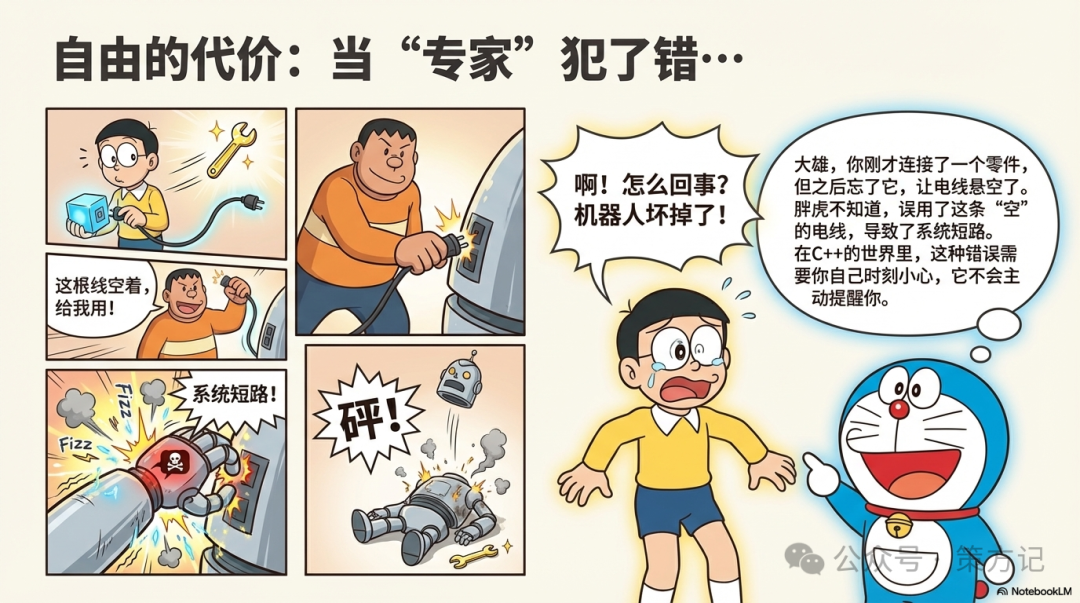
Rust: Error → Compilation Output → Model Fixes, the closed loop is very clear;C++: Error → Runtime Crash / UB → Human Senior Engineer + Debugger, which is hard to fully automate.
4.3 Local Reasoning: How Much “Context” Does a Bug Need?
Large models have context windows and cannot ingest the entire repository at once. This raises a very practical question:
How much code and how many files does the model need to see to locate a bug?
-
In C++:
-
Macro expansion, template metaprogramming, and manual memory management often mean that the root cause of a bug is far from its manifestation;
-
A use-after-free may only crash under very specific paths and very specific sequences of time.
-
In Rust / Go / TypeScript / Kotlin and similar languages:
-
Most constraints are written in types, traits, and interfaces;
-
Many errors can be judged within the local scope of “current function + related type definitions + a few call points”.
For models, this means:
-
Each bug in Rust can often be explained with a medium-length context;
-
Many bugs in C++ naturally require a global view across modules, threads, and ABIs.
And context is the “oxygen” for models.Under the same computational budget, whoever can solve more problems in a shorter context is more “AI-friendly”.
5. After AI Comes to the Table, the Dimensions of Language Competition Are Changing
From the era dominated by human engineers to the era of “human + AI co-governance”, the advantage function of programming languages is gradually becoming this formula:
Effective Productivity ≈ (Language Expressiveness × Runtime Performance) / (Human Mental Burden + Model Debugging Cost)
Previously, the denominator was basically only “human mental burden”, so C++ could stand at the top due to its extreme performance and mature ecosystem.
Now, there is an additional item in the denominator:
-
Model Debugging Cost:
-
How many iterations does the model need to pass compilation?
-
How many tests need to be run to ensure there are no obvious bugs?
-
Is the feedback information for each error structured enough to facilitate automatic fixes by the model?
You will find:
-
In this new function, Rust’s denominator is clearly much smaller than C++’s;
-
Even if Rust’s raw performance is roughly equal to or slightly weaker than C++ in certain specific scenarios, for the overall “human + AI” it brings a huge improvement in development loop efficiency.
In the long run, this will gradually change the selection:
-
In the past:
“This project requires close hardware and extreme performance, so we choose C++.”
-
After AI intervention:
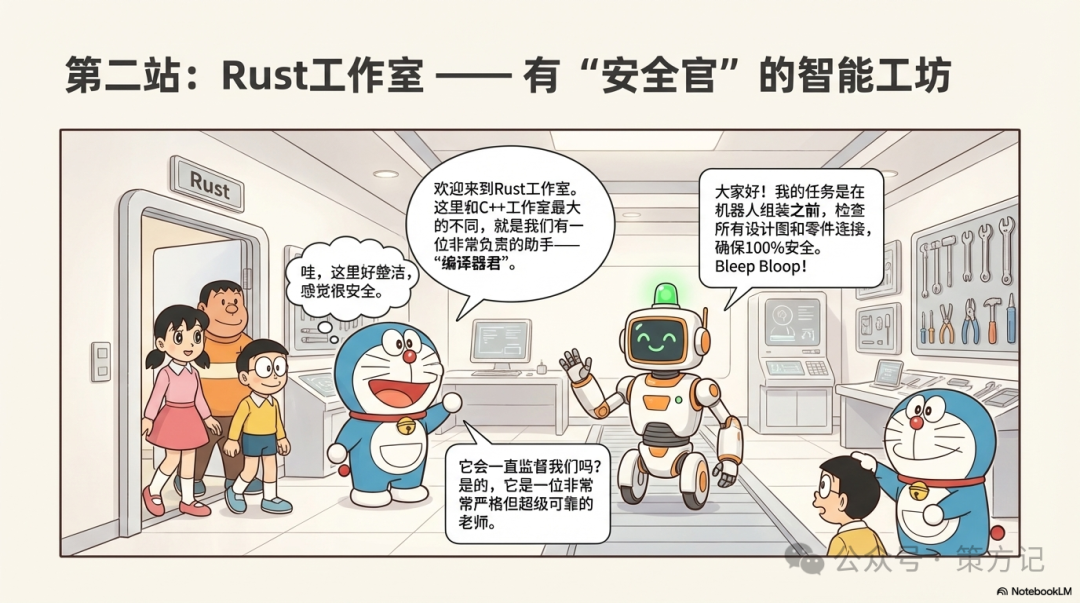
“This project will be maintained long-term by AI and a small group of people, so we better choose Rust—it’s much safer to let AI write safe Rust and fix compilation errors than to run around in the C++ UB minefield.”
6. Will C++ Disappear? No, But It Will “Age”.
If we look at the timeline a bit longer, I tend to envision the following scenario:
-
C++ will long guard a vast “legacy from the old world”.
These things are nearly impossible to rewrite, with huge risks and economic impracticality.
-
Operating system kernels;
-
Browser engines;
-
Game engines;
-
HPC libraries;
-
Core modules of various large industrial software.
Rust will become one of the default system languages in the “new world”.
Especially in teams where AI is deeply involved in development, Rust’s advantages will be magnified.
-
New databases / message queues / storage engines;
-
New service meshes / proxies / load balancers;
-
New high-performance backends and security-sensitive modules.
The language layer will naturally stratify.
-
Low-level: Rust (+ a small amount of unavoidable C/C++), close to hardware, managing resources;
-
Middle layer: Go/TypeScript/Kotlin/Java/C# for business services and platform layers;
-
Upper layer: Python/TS for “glue + prototyping + AI workflow orchestration”;
-
Bypass: SQL / DAX / JSON Schema / Terraform and other DSLs for “explainable constraints”.
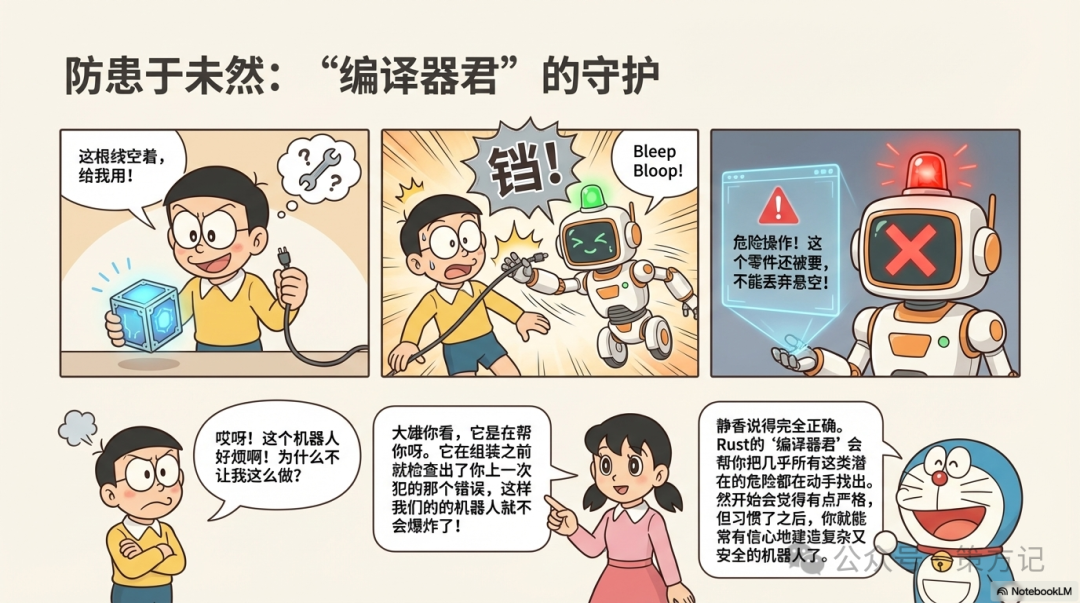
You can imagine C++ as “the core nobility of the old dynasty”, while Rust is “the backbone responsible for the army and infrastructure in the new dynasty”. The old nobility will not disappear overnight; it’s just that new assets will no longer be centered around it.
7. From the Perspective of Individual Engineers: What Does This Migration Mean for Us?
If you are an engineer still writing C++, or considering what to learn:
-
In the short term: C++ is still very valuable.
-
Low-level infrastructure, game engines, browsers, automotive systems, industrial software—all rely on it;
-
Those who can write it well will always be scarce.
In the medium to long term: Migrating C++ experience to Rust is a highly cost-effective investment.
-
You already understand low-level concepts like caching, memory layout, locks, schedulers, RTTI, and exceptions;
-
Rust simply reassembles these concepts in a more “strongly constrained” world;
-
In the future, in teams of “AI + engineers”, you will be the one who can design boundaries and review Rust unsafe modules.
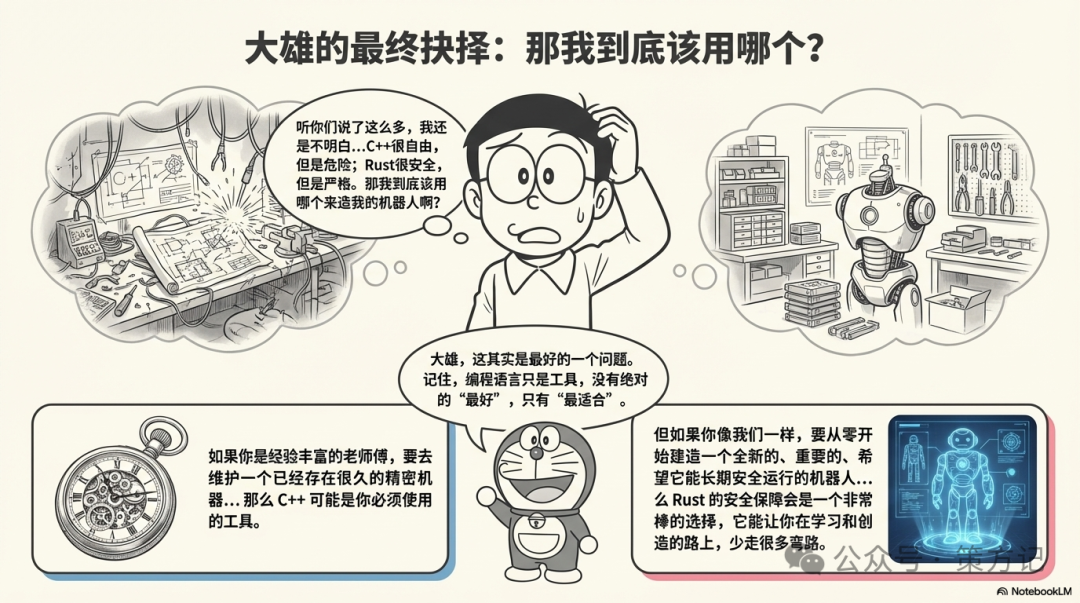
For newcomers who haven’t deeply engaged with C++: consider taking a detour.
-
If you have no intention of writing legacy engines and operating system kernels, you can primarily focus on Rust;
-
Consider C/C++ as “an old language to read when needed and wrap with a layer of FFI”, rather than your main battlefield.
8. Why Did I Make That Extreme Statement?
Finally, returning to the headline-like judgment:
“In the AI era, C++ may ultimately be replaced by Rust.”
If you interpret “replace” as “completely disappear”, then that is certainly incorrect.
But if you understand it as:
In a world where “humans + AI” program together, the new underlying system code is more likely to choose Rust over C++, and in the scale of 10–20 years, the proportion of Rust in enterprises and infrastructure will continue to rise—
Then I think this statement is not excessive, and even a rather conservative prediction.
What truly changes the game is not Rust itself, but:
-
More and more companies are starting to take “AI/agents writing code” seriously as a productivity tool;
-
Once you treat “compilation errors + test failures” as training data for the model, those languages that are more suitable for compiler constraints and have more structured error feedback will naturally possess the “language dividend of the AI era”.
If you are already using Rust, or are moving your team’s code towards a “more AI-friendly” direction, you can also share your real experiences in the comments:
-
What areas has Rust started to “take over” from C++ in your case?
-
Have you tried using Copilot / LLM to fix Rust compilation errors? How was the experience?
-
For young engineers, would you recommend they learn more Rust or more C++?
Perhaps history will not simply repeat itself, but the economic logic behind technology choices has always been very simple. When AI becomes part of the programmer’s team, the success of a language will increasingly depend on: how friendly it is to the overall system of “humans + models”, rather than working against them.