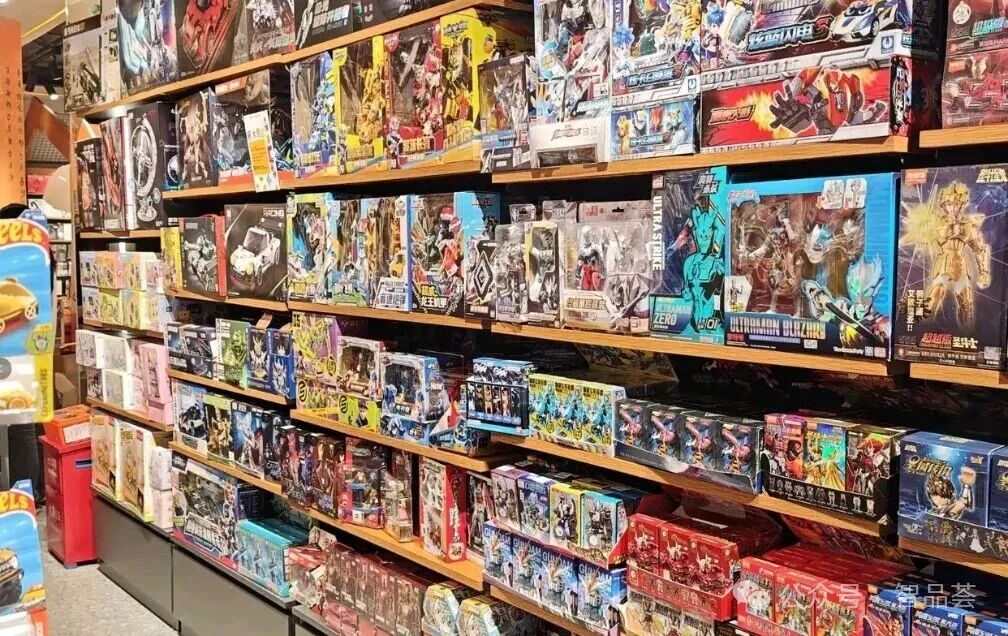
Currently, at electronic exhibitions and on e-commerce platforms, AI toys are everywhere. They occupy prime shelf space in supermarkets, are hot topics among parents, and dominate financing rankings pursued by capital. AI toys have become a hot topic in the electronics and technology circles. The government has issued documents encouraging and supporting the AI toy industry. Some market research institutions are also adding fuel to the fire, stating that by 2025, the scale of China’s AI toy market could reach 29 billion yuan, and the global AI toy market is expected to exceed 60 billion USD by 2033, maintaining double-digit growth each year. However, behind this apparent excitement lie many hidden dangers and risks. Some have already begun to surface. The current industry situation shows a return rate of over 30% and 80% of small and medium-sized enterprises going out of business. The AI toys on the market look like they were all born from the same mother, and their intelligence is about the same.
Why are AI toys so popular? Three reasons come together. In the past two years, the rapid development of artificial intelligence (AI) has caused a frenzy across society. Some say this is another global technological revolution, similar to the internet boom over 20 years ago. “AI+” will be integrated into every industry, every unit, and even every individual. AI toys represent the market segment where AI can be implemented the fastest and most easily, with a sufficiently large market capacity. Children, the elderly, and adults are all potential users, meaning billions of people worldwide are AI toy users. Therefore, technology, capital, and talent are flocking to this sector.
First, looking at the capital side, investment in AI toys is coming in quickly and abundantly. By 2025, the financing amount for China’s AI toy industry is expected to show significant growth, with nearly a hundred investment institutions entering the fray, and many startups successfully securing multiple rounds of financing. As of August 2025, the financing amount for AI toys has exceeded 20 billion yuan, an increase of over 80 times compared to the 2.49 billion yuan for the entire year of 2024. Major investment firms like Sequoia China and GSR Ventures are getting involved, and entrepreneurs from Baidu and Alibaba are also entering the market with capital, with nearly a hundred investment institutions eager to get a piece of the pie.
Next, looking at the supply side, making AI toys has become too easy. Related companies are ramping up their efforts. Xinghui Interactive has launched multiple AI toy products this year; Aofei Entertainment has established a dedicated AI toy division and set up joint laboratories; Guangdong Gaole has accelerated its layout in AI toys through acquisitions. In Shantou, Guangdong, known as the “Toy Capital,” the export proportion of AI toys among large-scale toy enterprises has increased from less than 10% last year to about 30% this year. Previously, developing an AI toy took six months; now, AI models can be obtained for free, and ready-made AI modules can be purchased easily. Traditional toy manufacturers can simply integrate these modules into plush toys, change the appearance, and launch new products within a month. In Guangdong Chaozhou, the export proportion of AI products among large-scale toy factories has jumped from less than 10% last year to about 30% this year.
Looking at the demand side, the most important factor is that people are genuinely willing to buy. AI technology allows toy products to “understand,” “see,” and “think,” making them increasingly attuned to users, breaking the age limitations of traditional toy products and achieving full coverage across all age groups. JD.com data shows that in the first half of 2025, sales of AI toys increased sixfold compared to before, whether it’s early education toys for children aged 3-6 or emotional companionship toys favored by young adults, all selling exceptionally well. Huawei launched its first AI emotional companion toy, ‘Smart Hanhai,’ on November 28, 2025, priced at 399 yuan, which sold out immediately, with multiple restocks still unable to meet demand, and the JD flagship store selling over 6,500 units in a single day. With more people living alone, there is a willingness to pay for “emotional value”; AI toys can chat and listen, perfectly addressing this need.
Despite the excitement, these pitfalls cannot be hidden. The AI toy market currently appears to be thriving, with government support, enthusiastic investment, and companies rushing to enter. However, despite the apparent excitement, there are indeed many potential issues behind the scenes. Investment institutions, especially companies, must have risk awareness and be cautious when entering the market; a slight misstep could lead to failure.
Currently, the AI toys on the market have “uniform functions” and are highly similar. About 80% of AI toys are essentially “plush dolls + voice boxes,” with core functions limited to storytelling or chatting, relying entirely on the technology support of the same AI service provider. In Huaqiangbei, you can buy ready-made AI toys for just 100 yuan, while those online priced at 400-500 yuan not only lack functional differences but often lag and sound “robotic,” with return rates exceeding 30%. This leads to a vicious cycle of “selling at high prices but poor performance.” Previously, making AI toys required some technical skills; now it’s as simple as “elementary school students doing homework,” with the barriers to entry being too low, resulting in an oversupply of products that no one wants. At the beginning of 2025, 3,000 companies suddenly emerged in the AI toy sector, most of which were traditional toy manufacturers transitioning. These manufacturers cannot solve core issues like inaccurate voice recognition or lack of empathy; they merely use AI as a gimmick to “clear inventory.” The government mandates strict protection of children’s personal information, such as voice and facial features, which must be encrypted, but many small companies lack the technology and funds, making them prone to violations and penalties.
Making AI toys is a call but not a draw; currently, making money is particularly difficult. Early on, some companies aimed to “sell toys and then charge for follow-up services,” but with AI models now available for free, that idea has completely collapsed. If AI toys rely solely on hardware sales, selling at low prices is unprofitable, while high prices deter buyers. An overseas product called Moxie, a children’s AI robot, sold for over 5,800 yuan, backed by investments from Amazon and Intel, but ultimately went bankrupt due to funding issues, leaving parents to explain to their children that their “toy friend has passed away.”
Small companies will go bankrupt in large numbers, but good companies will survive. The polysilicon photovoltaic industry, new energy batteries, children’s early education machines, and even the low-altitude economy—these once-popular industries that everyone celebrated a few years ago are now all subject to the “80/20 rule,” with 80% of small and medium-sized enterprises exiting the market and investments going to waste. It is now evident that 80% of small and medium-sized companies in the AI toy sector will likely go bankrupt. This does not mean the AI toy industry is failing; rather, it is a necessary “reshuffling” of the industry. The laws of industrial development in China dictate that the unfit will be eliminated, leaving only the reliable. Media reports indicate that of the 3,000 AI toy companies that entered the market in early 2025, 2,400 had closed by September. Most of these bankrupt companies lacked technology, uniqueness, talent, or funding. Some spent 500,000 yuan on core components but failed to achieve even basic voice recognition; others faced supply chain issues that caused all orders to fail; and some products became obsolete as soon as they hit the market. In the coming years, many more companies will exit, leading to increased industry concentration.
Faced with the harsh realities of the industry, what should small AI toy companies do? Companies without technology or funding should exit early to minimize losses. This market cannot accommodate thousands of companies producing AI toy products. For those with existing investments and confirmed technology, it is crucial to avoid direct competition with a few leading listed companies and instead focus on niche markets. For example, Luobo Intelligent’s “Fuzai” does not produce ordinary plush toys but instead creates small accessories targeting trendy and social markets, appealing to young people who not only buy them for themselves but also take them offline to meet others, achieving stable monthly sales of over 20,000 units, with orders reaching 100,000 units. Another company, FoloToy, specializes in products for children aged 3-9, improving response times to under one second, making children eager to play continuously, with 70% of users still engaged after two months and 20% of parents making repeat purchases, generating profit through a 99 yuan annual fee.
In conclusion, the current “heat” of AI toys resembles a bubble. The low technical barriers have attracted many participants, and capital enthusiasm has made the industry irrational, with products not being well-made yet sold at high prices. The impending “wave of bankruptcies” is the process of the bubble bursting, clearing out those companies that only seek quick profits.
However, the potential of this market remains, with a global annual growth rate of 14%-15%. Whether for children’s early education needs or young adults’ emotional companionship needs, these demands are real. Ultimately, the players left standing will be a few leading companies in the industry. Once the bubble is deflated, these technologically adept and rule-abiding companies will establish a firm foothold in this market, capturing over 80% of the global market share, while thousands of others will only share 20%. This is not an exaggeration; it is an inevitable law of industrial development. Investors and owners of small enterprises in the AI toy industry must recognize this reality and plan accordingly!
To help more friends understand industry news, please share this in your social circles or WeChat groups. To conveniently receive the latest technology news, please follow the “Zhihuihui” public account.

Recommended past works
Starting with 120,000, within three months, the AI learning camera startup Shenzhen Qiduo Intelligent raised tens of millions!
From the recently concluded 27th High-Tech Fair, AI terminals are booming locally, with various industries adopting them.
Jintaiyi Xueerjia leads a new direction in educational hardware! AI learning cameras + educational tablets reveal three major trends in the AI learning camera industry.
Overview of major enterprises in China’s AI learning camera industry chain (learning cameras, children’s cameras, AI cameras).
Most companies entering the AI toy market will not survive beyond next year, even those seriously working on products.