Ban Mei Er feels that this article is truly a conscience of the industry, comprehensive and practical, and must be shared with friends in PCB design!
1. World Famous PCB Design Software Companies
In the field of PCB design tools, there are three major companies competing in the Chinese market: Cadence, Mentor Graphics, and Altium. Altium targets the mid-to-low end market, so in the mid-to-high end market, it is Cadence and Mentor Graphics that compete.
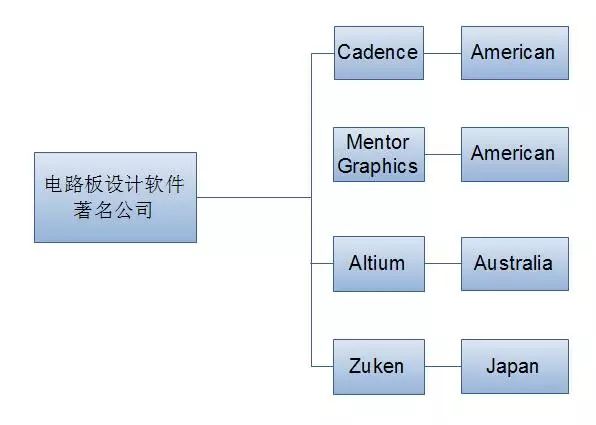
2. Company Product Introductions
1. Cadence
This company is a leader in the EDA field, and its PCB design area includes two well-known brands in the market: OrCAD and Allegro SPB. OrCAD was acquired in the 1990s, while Allegro SPB is its own brand, with early versions called Allegro PSD. After more than a decade of integration, Cadence still implements a dual-brand strategy in the PCB field, with OrCAD covering the mid-to-low end market (providing useful tools at very low prices, mainly competing with Protel and Pads) and Allegro SPB covering the mid-to-high end market (competing with Mentor and Zuken).
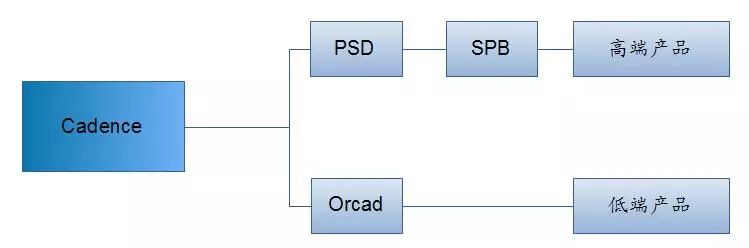
Before acquiring OrCAD, Cadence’s schematic tool was called Concept HDL, and the PCB tool was Allegro, also known as PCB Editor, along with SI tools (for signal integrity analysis).
OrCAD has three tools: the schematic tool Capture CIS, the schematic simulation tool Pspice AD and PSpice AA, and a PCB layout and routing tool Layout (PLUs). It is worth mentioning that Layout (PLUs) is even worse than Protel in routing, although I believe OrCAD is the best schematic software.
After Cadence acquired OrCAD, it seamlessly integrated OrCAD’s Capture CIS and Pspice with its own products and eliminated the previous Layout (Plus). Currently, Cadence’s Allegro has been fully integrated as a PCB routing tool into the OrCAD series. It is known that 60% of the world’s computer motherboards and 40% of mobile phone motherboards are designed using Allegro.
So, what are the differences between the OrCAD series and the SPB series?
(1) The core products are the same. OrCAD’s schematic is Capture CIS, while in PS there are two schematics, one is Cadence’s previous Concept HDL, and the other is Capture CIS, but in SPB, it is renamed Design Entry CIS; OrCAD’s PCB layout and routing tool is PCB Editor, and the core of both in the SPB series is completely the same; OrCAD’s schematic simulation tools are PSpice AD and Pspice AA, and the SPB series also includes these, but in the SPB series, Pspice AD and PspiceAA are integrated into a product package and renamed AMS simulator.
(2) The SPB series is divided into three levels: L, XL, and GXL, similar to clothing sizes; the larger the size, the more powerful the features, and of course the price is higher. Whether L, XL, or GXL, the schematic tool Capture CIS is the same, and the Pspice functions are the same across all levels.
(3) The L-level products of the OrCAD series and SPB differ in two points; otherwise, they are completely the same. Difference one: the L series license can run either Capture CIS or Concept HDL, but OrCAD series cannot run Concept HDL. For those who only use Capture CIS for schematic design, this difference is negligible; Difference two: the L series can combine high-end physical rule constraints and SI L, but you must purchase Performance Option and SI L tools for that. It is worth noting that Cadence has integrated SI into the OrCAD series, but the SI features here are less than those in the SPB series.
Additionally, the latest version 16.3 has integrated OrCAD into SPB, and since 15.5, the concept of OrCAD has disappeared.
2. Mentor Graphics
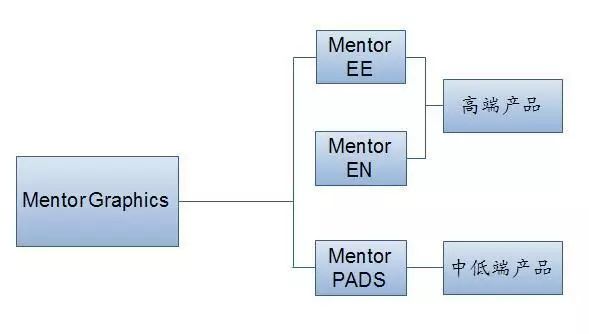
(1) Mentor EN2004 Mentor EN, or Mentor Board Station, is a schematic and PCB design software launched by Mentor Graphics, supporting both Unix and Windows systems (Win2000 and Win XP). EN stands for Enterprise, and many large IT companies, such as Intel, Lucent, Flextronics, Siemens, and Boda, use Mentor EN for PCB design. However, there are not many engineers in China using Mentor EN, so hardware engineers and PCB layout engineers familiar with Mentor EN generally receive good treatment.
Moreover, Mentor EN is the legendary invincible expert in PCB, especially for those who only consider deadlines without caring about costs, always making 8 to 12-layer PCBs, which is a killer skill for communications and military research institutes.
(2) Mentor EE2007
Mentor EE2007, or Mentor Expedition2007, is a high-end PCB design tool based on the Windows interface launched by Mentor Graphics. Mentor DxDesigner and Expedition design flow are the recommended schematic and PCB design processes by Mentor Graphics. The Mentor Expedition2005 version is also known as Mentor WG2005. Mentor DxDesigner is an upgraded version of the schematic input tool ViewDraw, featuring powerful capabilities and a friendly interface, supporting various PCB layout tools such as Mentor Expedition, Mentor Board Station, PowerPCB, Cadence Allegro, and Zuken. The installation of DxDesigner requires Mentor ePD2004 and Mentor SDD. That is, Mentor DxDesigner + Mentor WG2005 (Mentor Expedition2005) is the design flow from schematic to PCB.
Furthermore, Mentor EE (previously called Mentor WG) seems to be unanimously agreed upon by all BBS as the best wiring tool on Earth.
(3) Mentor PADS PowerLogic5.0 and PowerPCB5.0 schematic and PCB design software are widely used due to their user-friendly interface and ease of use. After being acquired by Mentor Graphics, PowerLogic and PowerPCB products were renamed the PADS series, with versions including PADS2005 and PADS2007, which include the schematic tool PADS Logic, PCB tool PADS Layout, and automatic routing tool PADS Router.
3. Altium
Altium (formerly Protel International Limited) entered China early, and its piracy marketing was very successful, making pirated programs available everywhere for download. They also invested heavily in having teachers write tutorials, and Protel’s tutorials were everywhere, while Cadence and Mentor’s tutorials were rarely seen. However, its functionality is relatively limited, and when certain technical requirements are reached, it fails to meet design needs, so very few Fortune 500 companies use Protel. Currently, Protel’s clients are basically only local Chinese companies and Indian companies, while Cadence’s tools are spread across the global market.
The company mainly targets mid-to-low end products, such as Protel 99, Protel99se, Protel DXP, AD series, etc.
4. Zuken
Zuken is another giant in the EDA industry from Japan, with high-end products CR5000 and low-end CADSTAR. Besides Japanese companies and those doing business with Japan, many companies also use Zuken’s software. Some domestic research institutes and older television companies use it, and LG and NOKIA also use ZUKEN’s tools.
Zuken’s main products include:
a. Cadstar;
b. CR3000, CR5000.
CR3000 has been upgraded to CR5000, and CR5000 has two PCB tools, PWS and BD. As of 2007, the versions of CR5000 are BD10.0, PWS18.0, CADSTAR9.0.
3. Comparison Between Cadence and Mentor
Cadence’s product chain is relatively advantageous, providing a complete set of design tools from board level to chip level. Their product advantage lies in the seamless connection between different level versions, with identical operation methods and file formats between different versions. For example, if you originally purchased a version for 100,000 yuan and now want to upgrade to a version for 200,000 yuan due to increased design requirements, you can complete the upgrade by simply changing an authorization file without needing to reinstall, directly adding some advanced features.
Mentor, on the other hand, has multiple different level products; the low-end has PADS, while the high-end has Expedition and Board Station. However, these products are not compatible with each other, and the file formats used by each program are different. After upgrading from PADS to Board Station, the original drawings must either be redrawn or converted using third-party tools, which will definitely lead to data loss. Moreover, the operation methods are completely different, and engineers need retraining, which could take several months of downtime.
This is because these products were all acquired by Mentor, but Mentor did not integrate the technologies well. Cadence’s OrCAD products were also acquired, but they removed the less desirable features of OrCAD and added their high-end product features, controlling feature usage through different authorization files, thus connecting their high, mid, and low-end product lines. Functionally, Allegro and Expedition are comparable, but in terms of product universality, Cadence’s products are more advantageous. Additionally, Cadence’s products follow a pyramid model, allowing for flexible configuration of different computer tool versions within the company, as not all machines need high-end features at all times. This way, only a few high-version machines can be configured internally, and high-version features can be rotated internally through changes in authorization files, maximizing the company’s capital utilization.
Tools Used by Large Companies: Intel: Concept+Allegro+SpecctraQuest Dell: Viewdraw+Allegro+SQ; some schematics are also Capture Huawei: Viewdraw+Allegro+SpecctraQuest+Expedation ZTE: Concept+Allegro+SpecctraQuest+Expedation UT: Concept+Allegro+SpecctraQuest; PowerPCB is used for the mobile division Cisco: Concept+Allegro+SpecctraQuest HP: Concept+Allegro+SpecctraQuest; transitioned from Boardstation to Allegro process Moto: Concept+Allegro+SpecctraQuest; transitioned from Boardstation to Allegro process
China’s First High-Speed, High-Frequency, High-Density PCB Design Certification/Training Employment Platform
Follow the Quick PCB Career Planning Platform for more workplace and industry information