Behind the stable operation of power systems lies an often-overlooked “invisible threat”—partial discharge. The insulation performance is the core factor determining the lifespan of electrical equipment: according to industry statistics, 60%-80% of accidents in power equipment operation are caused by insulation failures such as partial discharge and overheating. It is even more concerning that insulation degradation is a gradual “deterioration chain”: from the initial emergence of insulation defects to the occurrence of partial discharge, leading to the decomposition of insulating gases (for devices like GIS), ultimately resulting in aggravated insulation degradation until equipment breakdown, directly threatening the safety of the power grid.To cut off this risk at the source, Taiyue Tiancheng has independently developed the UECG series partial discharge sensors, which, with advanced technology and reliable performance, have become the “safety guard” for intelligent operation and maintenance of the power grid.
“
The “True Face” of Partial Discharge and Monitoring Logic
Before delving into the sensor, we must clarify: partial discharge (PD) is not a singular phenomenon but a collective term for small discharges in localized areas of the insulation system, usually caused by insulation defects or electric field distortion. Different types of discharges correspond to different forms and locations of insulation defects, and accurately identifying the type is key to troubleshooting:
Internal Discharge
Often originates from bubbles, impurities, or gaps within the insulation of the equipment, such as bubble discharge between layers of transformer insulation paper. The discharge signal is weak but persistent, slowly eroding the insulation structure;
Surface Discharge
Occurs on the surface of the insulation (such as the surface of GIS insulators), often triggered by surface dirt, moisture, or uneven electric field distribution. The discharge intensity increases with rising environmental humidity, easily leading to surface creepage;
Corona Discharge
Commonly appears at the tips of high-voltage equipment (such as burrs on high-voltage bus joints), generated in air media, accompanied by a noticeable “buzzing” sound and faint blue light, which can cause aging of insulating materials over time;
Floating Potential Discharge
Caused by the presence of floating potential between internal metal components and the grounding body (such as loose gaps between GIS shells and conductors), resulting in high-frequency discharge pulses that can rapidly damage insulation.
For these types of discharges, the industry commonly uses three monitoring technologies—Ultra High Frequency (UHF), ultrasonic, and Transient Earth Voltage (TEV), each with its characteristics and highly correlated with discharge types. In practical operation and maintenance, a single monitoring method is often insufficient to cover all scenarios, so a “multi-method fusion” strategy is typically employed—such as combining UHF and ultrasonic, which can accurately capture weak internal discharges through UHF while using ultrasonic to locate surface discharges, significantly enhancing monitoring accuracy and comprehensiveness. The series of partial discharge sensors from Taiyue Tiancheng is based on this logic and the technological accumulation in the power transmission and transformation IoT field, providing targeted solutions for different scenarios.
“
Strong Performance, Clear Advantages
As a “core member” of the Taiyue Tiancheng partial discharge monitoring family, the UECG-TF2 UHF partial discharge sensor has developed full-link monitoring capabilities for internal hazards in closed/semi-closed equipment:
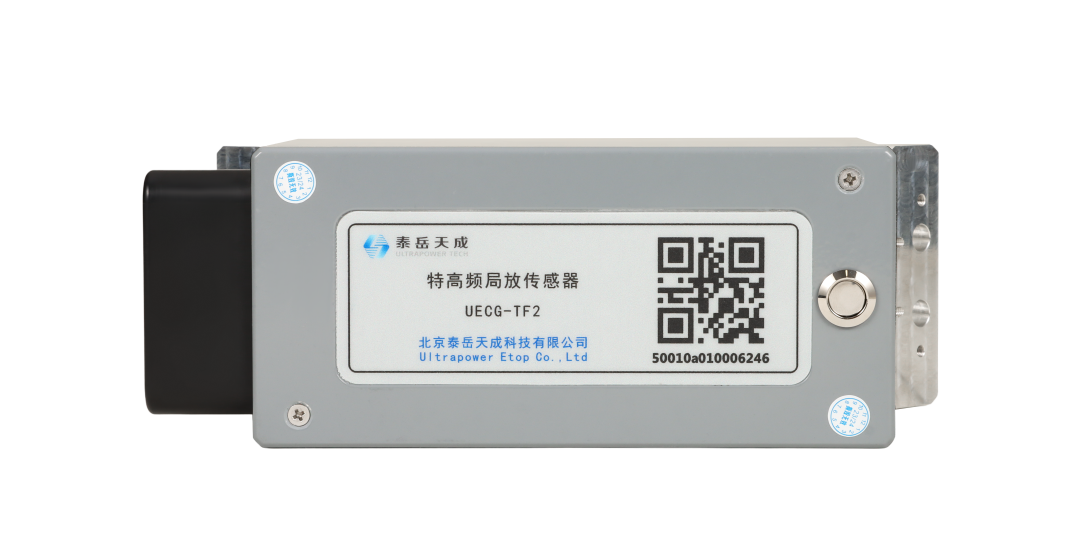
UECG-TF2 UHF Partial Discharge Sensor
Precise Monitoring, Capturing “Subtle Clues”
When partial discharge occurs, it generates electromagnetic waves with frequencies up to several GHz. The UECG-TF2 UHF partial discharge sensor employs UHF principles to receive partial discharge signals in the 300MHz-1500MHz frequency range, combined with pre-amplification, band-pass filtering, ADC sampling, and FPGA processing technologies to accurately detect key parameters such as signal peak, frequency, and phase, with a monitoring sensitivity of up to -60dBm, allowing even weak internal discharge and floating potential discharge signals to be accurately captured.
Additionally, the sensor features various graphical representations such as PRPD and PRPS, combined with self-developed partial discharge intelligence, enabling automatic identification of discharge types with high accuracy in comparison conclusions, allowing staff to quickly grasp the operational status of the equipment.
Strong Anti-Interference Capability, Adaptable to Complex Environments
The operating environment of the power grid is complex, and interference signals such as radio and carrier waves can easily affect monitoring accuracy. The UECG-TF2 UHF partial discharge sensor employs frequency selection measurement, noise separation, shielding isolation, and other technical means to effectively filter out various interferences, ensuring the reliability of monitoring data.
Moreover, after passing multiple rigorous performance tests, the sensor has achieved Class A standards in anti-interference tests for electrostatic discharge, pulsed magnetic fields, industrial frequency magnetic fields, damped oscillation magnetic fields, and radio frequency electromagnetic field radiation; it can operate normally in high temperatures (70°C) and low temperatures (-25°C), with a dust and water resistance rating of IP65, ensuring stable operation in both humid, dusty outdoor substations and complex indoor distribution environments.
Easy Deployment, More Peace of Mind in Operation and Maintenance
In terms of installation and use, the UECG-TF2 UHF partial discharge sensor showcases a user-friendly design. It employs a magnetic installation method, requiring no complex wiring, and can be easily fixed to the surface of the equipment; it supports LORA 470MHz wireless transmission, with a transmission distance of ≥2km in open environments and ≥300m indoors, allowing flexible networking with aggregation nodes to meet the diverse networking needs of substations.
Regarding power supply, the sensor adopts a 3.6V self-powered mode, with an average static power consumption of ≤120uW, and a battery life of up to 6-8 years, with a maintenance-free design significantly reducing operation and maintenance costs and workload, truly achieving “one-time installation, long-term stable operation.”
Intelligent Management, Full-Cycle Monitoring
The sensor access node is equipped with a standard edge computing framework based on container technology, supporting algorithm APP deployment, unified management, and remote OTA upgrades. Third-party algorithms can also be easily integrated through standard I/O interfaces, providing strong extensibility. Combined with the IoT management platform, it enables visual presentation of sensor perception data, including real-time data recording, monitoring of equipment operational status, anomaly alerts, and comprehensive analysis, allowing for full-cycle monitoring of the sensor’s operational process, shifting power grid operation and maintenance from “passive repair” to “proactive prevention.”
“
Comprehensive Protection for Power Grid Equipment
The UECG-TF2 UHF partial discharge sensor focuses on monitoring UHF partial discharges in electrical devices within substations, widely applied in:
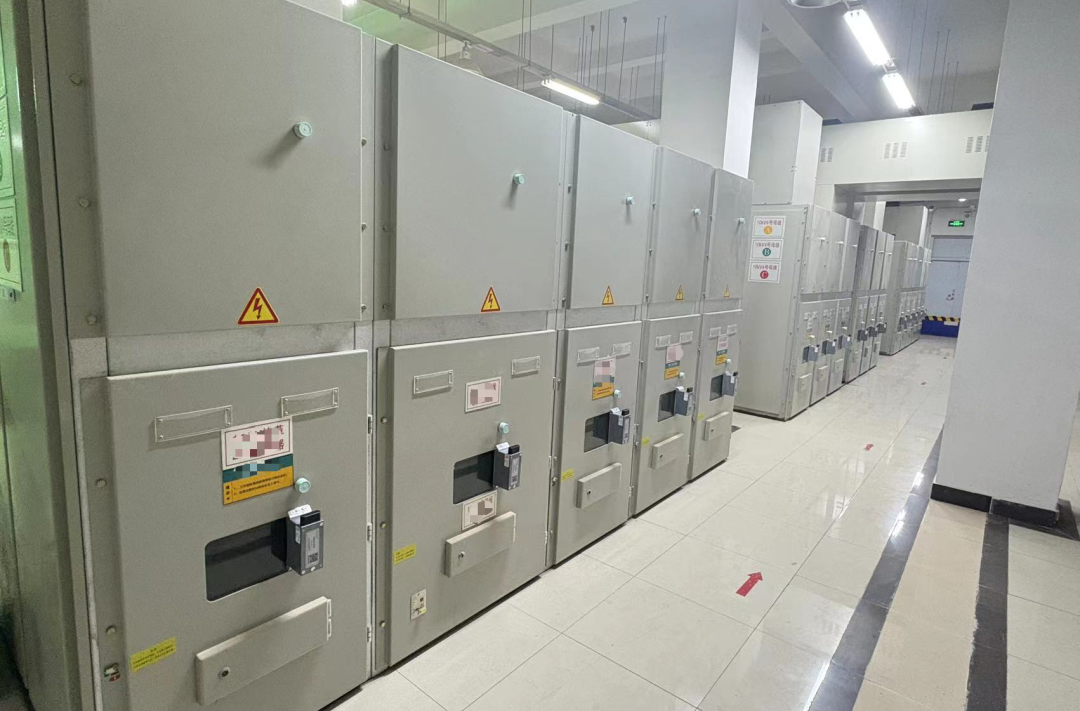
Switchgear
Real-time monitoring of partial discharge conditions inside switchgear to prevent failures caused by insulation aging, poor contact, etc.; in a certain 110kV substation, the UECG-TF2 UHF partial discharge sensor detected partial discharge phenomena inside the switchgear, and further investigation confirmed it was due to poor contact leading to floating potential discharge. Maintenance personnel promptly addressed the issue, avoiding overheating failures caused by poor contact and ensuring the normal operation of the switchgear.
GIS Equipment (Gas Insulated Switchgear)
Accurately capturing internal partial discharge signals of GIS to ensure long-term safe and stable operation of the equipment; the UHF partial discharge online monitoring system built by State Grid Xinjiang Electric Power Co., Ltd. uses the UECG-TF2 UHF partial discharge sensor to monitor the internal status of GIS equipment in real-time, successfully capturing early discharge signals inside the insulating bowl, effectively reducing on-site testing time and errors, and achieving real-time upload of circuit breaker discharge data, providing strong support for intelligent operation and maintenance of the equipment.
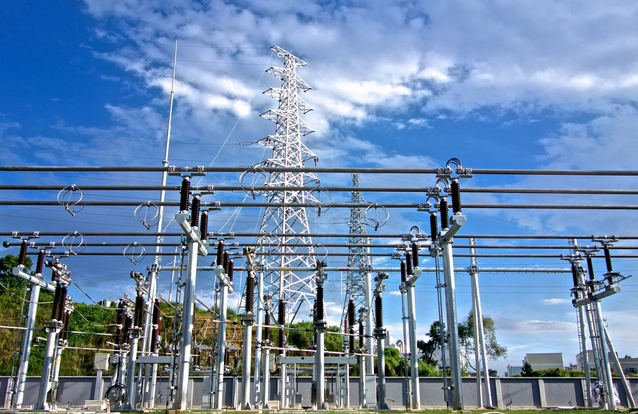
High Voltage Equipment
Covering transformers, current transformers, and other high-voltage equipment, timely detection of potential hazards to prevent accidents from escalating. In a certain substation, the UECG-TF2 UHF partial discharge sensor was used to monitor a transformer, successfully capturing early internal discharge signals between the transformer windings, allowing maintenance personnel to take preventive measures in advance, avoiding insulation breakdown accidents.