According to a report by MEMS Consulting, researchers at Seoul National University of Science and Technology in South Korea have successfully developed a highly sensitive tactile sensor using “negative Poisson’s ratio” metamaterials, which can be applied in wearable devices, prosthetics, and robotics.
Tactile sensors are widely used in products such as touch screens, touchpads, smartwatches, and fitness trackers. These sensors can convert physical stimuli such as force and strain into electrical signal responses within the device. In addition to consumer electronics, tactile sensors also hold significant value in advanced prosthetics, industrial robots, security systems, and health monitoring devices—these health monitoring devices can achieve real-time monitoring of health data by providing feedback on the user’s physical movement status.
Metamaterials are favored in the field of tactile sensors and actuators due to their diverse physical properties and tunability. By adjusting the periodic honeycomb structure of the metamaterials, it is possible to concentrate or amplify the pressure experienced by the sensor, thereby endowing it with specific functional characteristics.
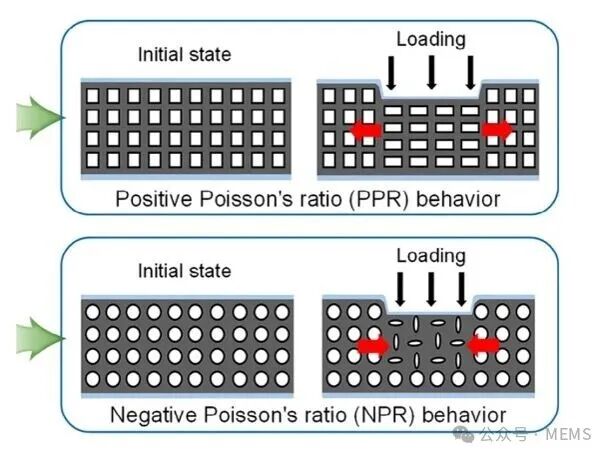
Comparison of deformation behavior between positive Poisson’s ratio (PPR) and negative Poisson’s ratio (NPR) materials
Interestingly, a type of metamaterial known as “negative Poisson’s ratio metamaterials (AMM)” exhibits a negative Poisson’s ratio characteristic: when compressed, the material undergoes lateral contraction rather than lateral expansion. Recently, Professor Soonjae Pyo’s team at Seoul National University of Science and Technology developed a silicone rubber-based negative Poisson’s ratio metamaterial using digital light processing (DLP) 3D printing technology. This metamaterial is based on a cubic lattice structure and contains specifically arranged spherical voids. When subjected to external forces, the connections around these spherical voids are prone to rotational deformation, thereby inducing the aforementioned lateral contraction phenomenon. The related research results were published in the journal Advanced Functional Materials under the title “Additively Manufactured 3D Auxetic Metamaterials for Structurally Guided Capacitive and Resistive Tactile Sensing.”
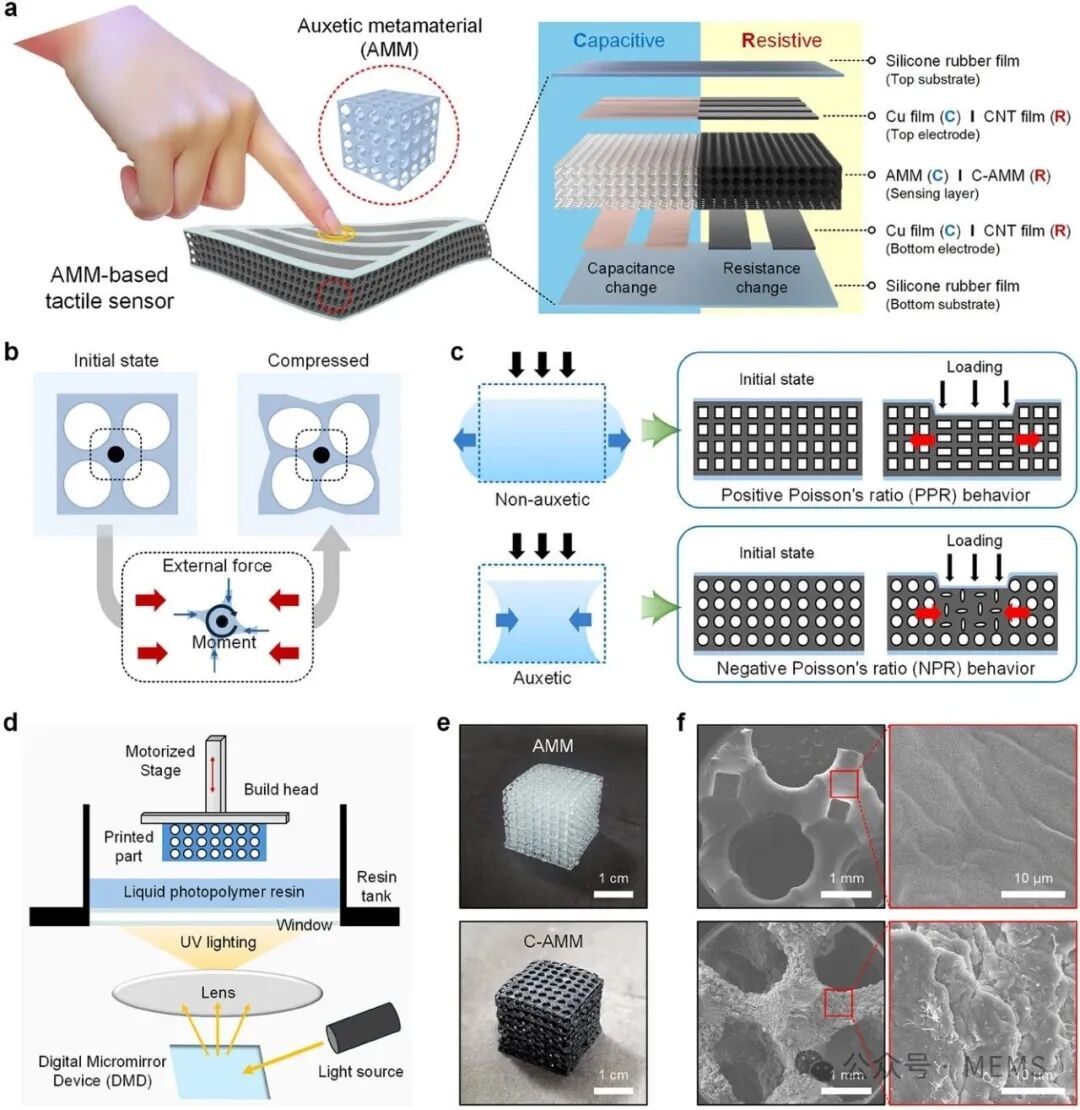
Concept and design of tactile sensors based on negative Poisson’s ratio metamaterials
The research team developed two types of tactile sensors based on the negative Poisson’s ratio metamaterial: one is a capacitive sensor that directly responds to pressure changes; the other is a resistive sensor coated with carbon nanotubes (CNT) that can sense pressure and produce changes in resistance. Generally speaking, capacitive sensors have higher sensitivity to small pressure changes, while resistive sensors are more suitable for detecting larger pressures, with both types complementing each other in functionality.
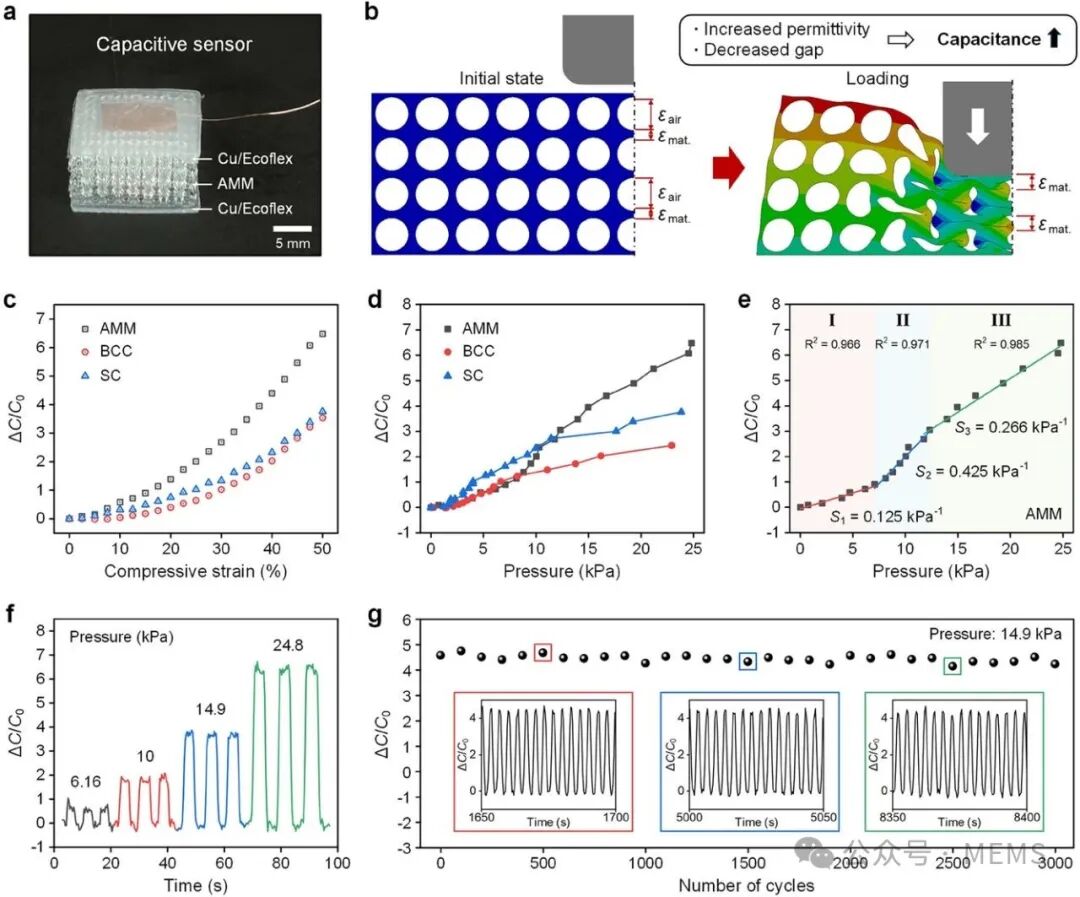
Performance study of capacitive tactile sensors based on metamaterials
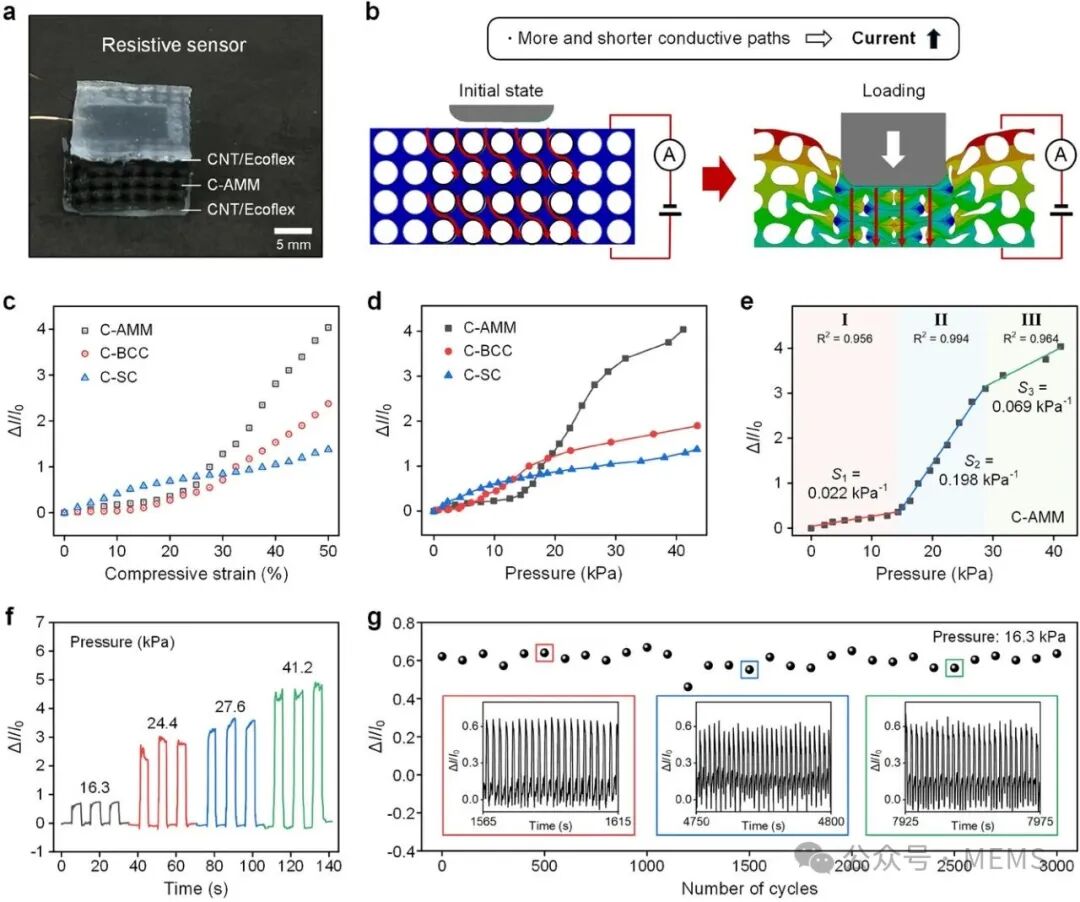
Performance study of resistive tactile sensors based on metamaterials
To explore practical application scenarios, the research team developed a resistive sensor by constructing an array of negative Poisson’s ratio metamaterials. This array consists of 16 metamaterial units arranged in a 4×4 grid structure, forming a 16-pixel detection grid, with each unit integrated between custom electrodes. The researchers applied different levels of stress to this sensor to evaluate its sensitivity and spatial resolution. Additionally, the researchers developed a smart insole using the aforementioned resistive sensor, which can monitor and analyze gait while the user is walking.
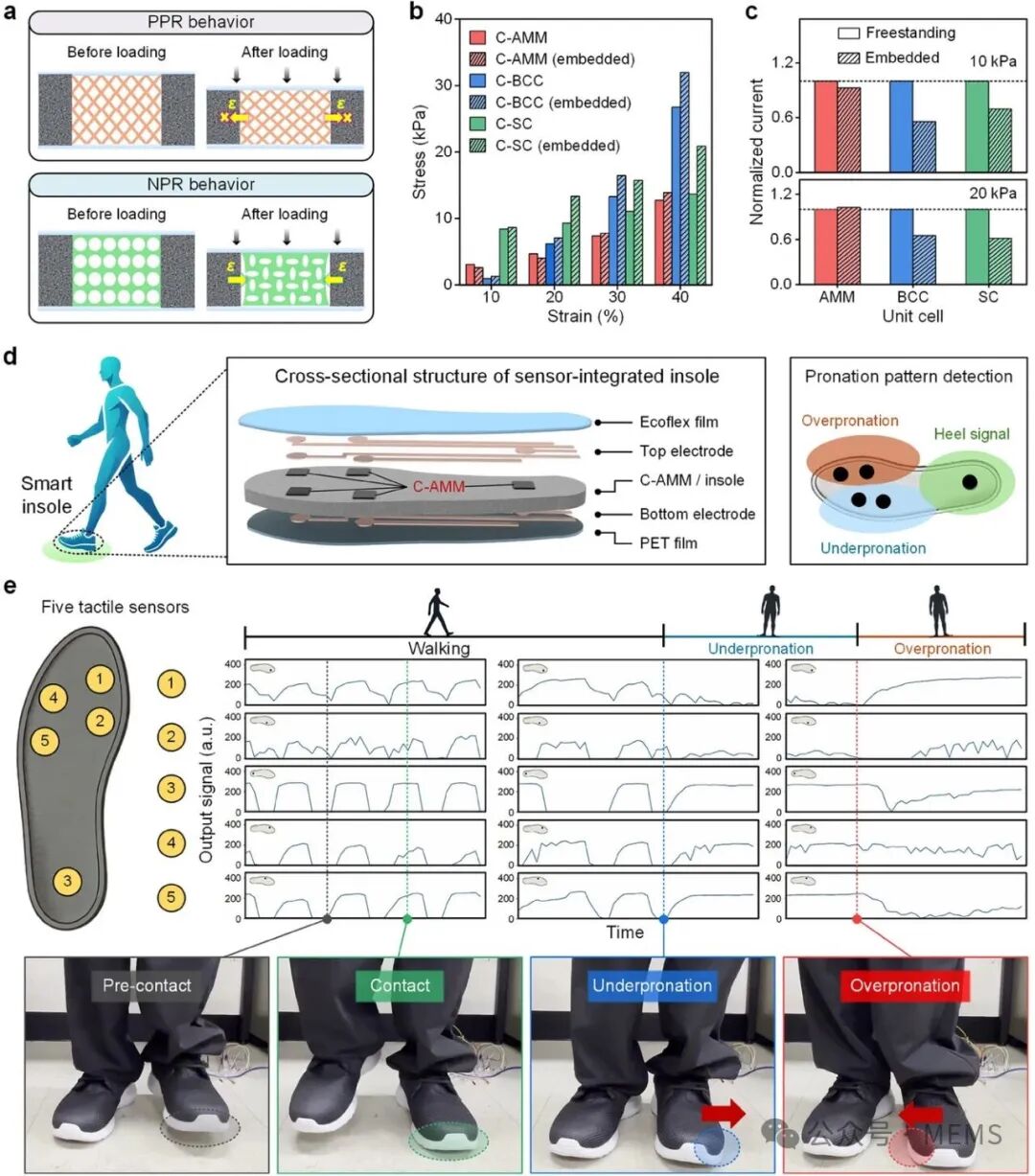
Gait monitoring and analysis based on smart insoles
In summary, the researchers developed a tactile sensing platform based on negative Poisson’s ratio metamaterials. Utilizing digital light processing 3D printing technology, the researchers achieved a geometrically simple yet functionally diverse metamaterial that exhibits negative Poisson’s ratio characteristics under pressure, allowing for inward deformation, thereby localizing strain and enhancing sensing performance. By integrating this metamaterial into both capacitive and resistive sensing structures, the researchers demonstrated that this metamaterial provides a “material-independent, structure-centric” design approach for tactile sensors. Compared to traditional positive Poisson’s ratio porous structures made from the same material system, both types of sensors exhibit superior pressure sensitivity, which can be used to optimize the performance of wearable health monitoring devices, enhance the sensitivity of prosthetics, and improve the tactile capabilities of robots.
Paper link:
https://doi.org/10.1002/adfm.202509704