The latest advancements in artificial intelligence (AI), particularly in large language models and multimodal robotic learning, have propelled the development of robotics technology. Force/Torque (torque) sensors are one of the critical components in robotic applications, as they provide force feedback during operation. With precise force measurements, robots can achieve fine operational control and safe interactions with humans.
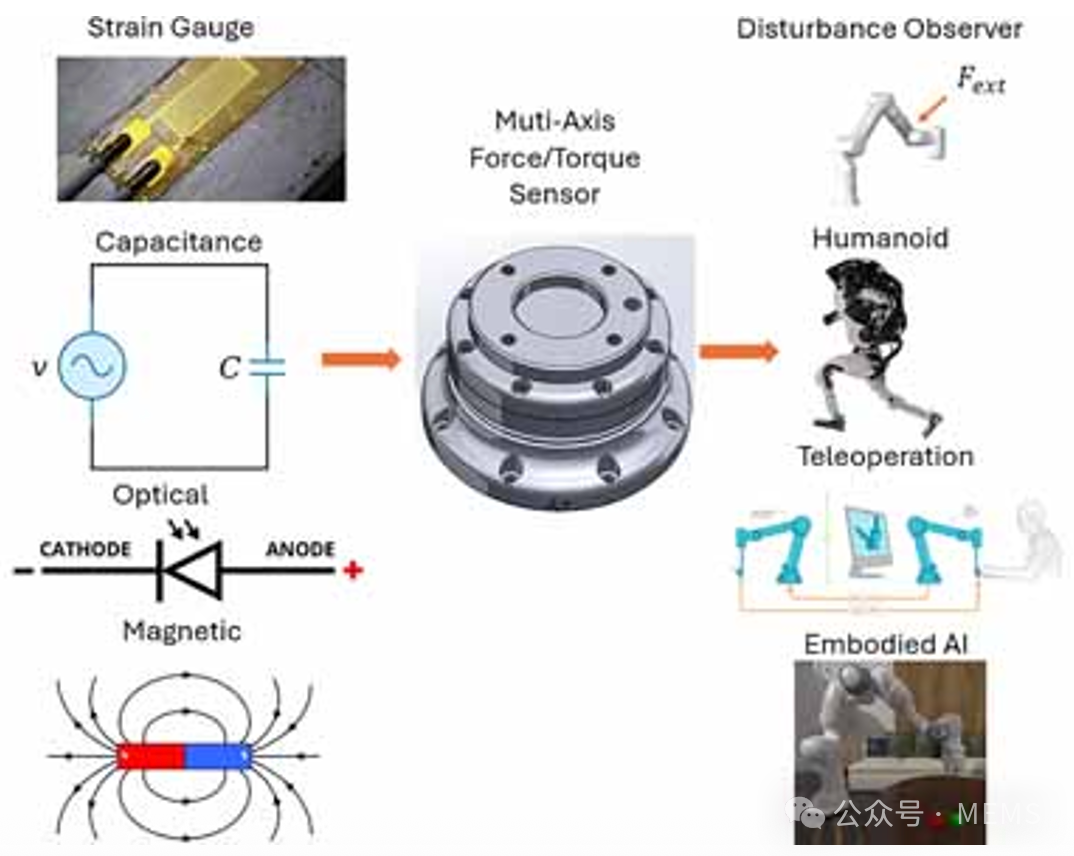
According to a report by MEMS Consulting, Professor Xu Jinli’s team from the School of Mechanical and Electrical Engineering at Wuhan University of Technology published a review paper titled “Multiaxis Force/Torque Sensor Technologies: Design Principles and Robotic Force Control Applications” in the IEEE Sensors Journal, which comprehensively elaborates on force/torque sensor technologies and deeply analyzes their sensing principles and calibration methods. Additionally, the review discusses the integration of force/torque sensors and their fusion applications with other sensors, such as for disturbance observers and collision detection. By outlining some practical applications of force/torque sensors in robotics, it illustrates their key role in enhancing robotic functionality and interaction capabilities in fields such as industrial automation, medical assistance, humanoid robots, teleoperation, and embodied AI. Finally, the review also explores future directions for sensor development.
Design Principles
Figure 1 shows a multiaxis force/torque sensor. It can capture three-dimensional (3D) forces along the x, y, and z directions, as well as the corresponding rotational torques. Since forces and torques cannot be directly measured, force/torque sensors typically use analog sensing elements such as strain gauges, capacitive, optical, and magnetic sensors. These elements are embedded within the sensor to detect structural geometric deformations caused by external loads, thereby enabling the measurement of forces and torques.
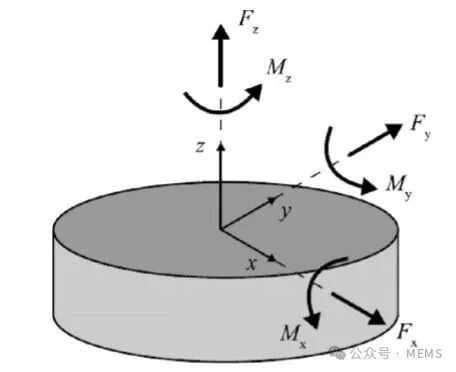
Figure 1 Three-dimensional six-axis force/torque coordinate system
A. Strain Gauge Type
Strain transducers are mounted on a deformable beam structure inside the sensor. The geometric deformation of the strain gauge leads to a change in its resistance. Since these signal changes are typically very small, a Wheatstone bridge circuit is required to enhance signal detection and measurement accuracy.
Due to the coupling effects (known as “crosstalk”) present within the sensor, transducers are arranged on different sides of the beam to achieve decoupling. Figure 2 shows the simulation of the structure under different loads.
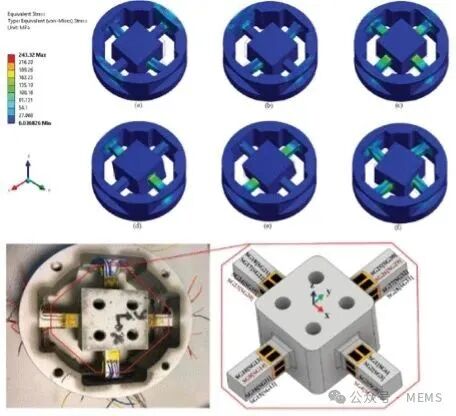
Figure 2 Finite element simulation of the force/torque sensor structure under different loads and the arrangement of strain gauges inside the sensor
Figure 2 shows that the strain gauges are arranged in pairs at the maximum deformation positions to maximize sensitivity along the applied force and torque axes. With its small size and high sensitivity, it can be conveniently integrated into robotic joints and used to develop miniature force/torque sensors.
However, strain gauges are sensitive to temperature changes, which can adversely affect the accuracy and reliability of the sensor. Additionally, compared to other sensing technologies, they typically require higher power consumption. The bonding process of strain gauges to the sensor structure is also complex and time-consuming, potentially increasing overall costs.
B. Capacitive Type
A capacitor consists of two layers of parallel electrodes with a dielectric layer sandwiched in between, as shown in Figure 3. When force is applied to the sensor, the capacitive structure is compressed or stretched, changing the distance or overlapping area between the electrodes, thereby altering the capacitance value. The change in capacitance is proportional to the applied force.
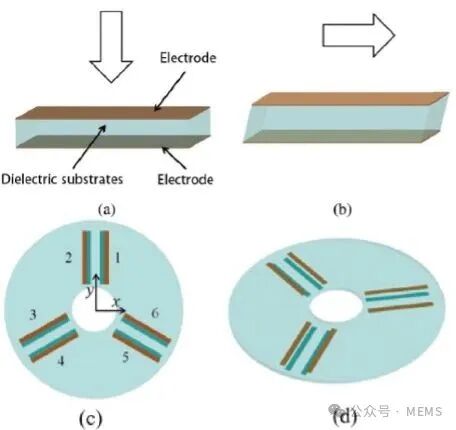
Figure 3 Parallel plate capacitor as a force sensor
C. Optical Type
Optical-based force/torque sensors are mainly divided into three categories. The first category uses LEDs and photodiodes (PD) to detect extremely small structural displacements by monitoring changes in the photodiode’s analog signal output. The second category combines LEDs with cameras, utilizing computer vision algorithms to quantify structural displacements. The third category is fiber Bragg grating (FBG) force sensors, which measure force by detecting the wavelength shift of reflected light caused by strain or deformation in the fiber when subjected to force or pressure.
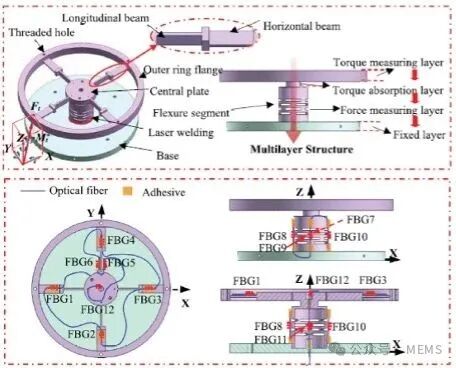
Figure 4 Multilayer elastic structure with FBG sensing unit
Furthermore, the article also elaborates on the design principles of force/torque sensors based on magnetic sensing technology.
Integration with Other Sensors
Integrating data from multiaxis force/torque sensors with other types of sensors (such as inertial sensors and position encoders) can enhance the estimation of robotic dynamics and enable their use as disturbance observers. Specifically, as shown in Figure 5, the inertial forces of the robot’s end effector can be determined through inertial measurement sensors and position encoders, and subtracted from the output of the force/torque sensors. This step is crucial for distinguishing contact forces from inertial effects.
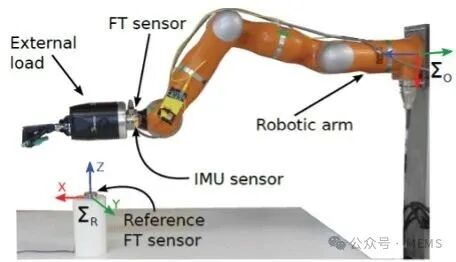
Figure 5 Contact force separation test setup
Integration with Force/Torque Sensor Design
Force/torque sensors are typically installed on the end effector of robotic arms to enhance precise force control, compliance, and safety. This configuration significantly enhances the flexibility of robots, allowing them to perform delicate operations when interacting with various environments. Such applications include surface polishing and complex operational tasks, where precise force application is crucial.
As shown in Figure 6, installing force/torque sensors in the feet of humanoid robots can enhance self-balancing capabilities. Similarly, placing sensors at the fingertips enables robotic hands to perform more complex tasks, utilizing diverse force information to handle delicate materials and intricate operations.
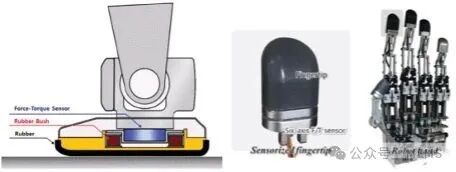
Figure 6 Structure of humanoid robot foot with force/torque sensor and sensing fingertips integrated with multiaxis force/torque sensors
Embodied Intelligence with Integrated Force/Torque Sensors
Embodied AI is becoming increasingly important in the field of robotics, but the application of force as an input modality in existing robotic systems remains limited. Researchers such as Chi and Ha have designed a universal operational interface for collecting demonstration data from human experts and transferring this data to robotic platforms for policy learning, as shown in Figure 7. Similarly, researchers like Zhao have proposed a low-cost dual-hand teleoperation system for collecting human demonstration data for robotic imitation learning. Wu and others have constructed a low-cost teleoperation framework using 3D-printed parts and off-the-shelf robots to collect high-quality human demonstration data. Likewise, researchers like Xiong have designed a comprehensive framework for adaptive manipulation of articulated objects in unstructured environments.
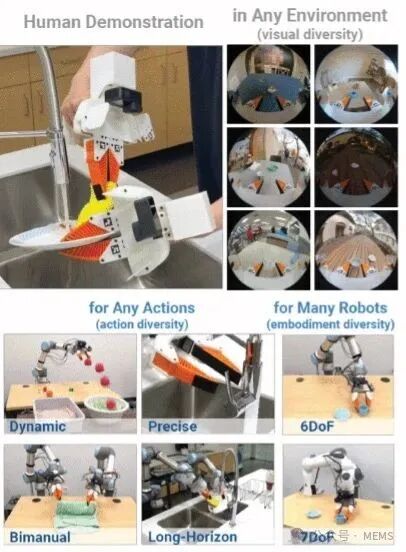
Figure 7 Universal operational interface for transferring human demonstrations to robotic visual motion strategies
Conclusion
In summary, this review provides a comprehensive overview of force/torque sensor technologies, emphasizing their important role in enhancing robotic application performance in industrial automation and human-robot interaction. By exploring different types of sensors such as strain gauges, capacitive, camera, optical, and magnetic, this article highlights the various design principles, calibration methods, and integration technologies that support robotic functionality and interaction capabilities.
Integrating force/torque sensors with systems such as inertial measurement units (IMUs) and encoders can further improve the precision and safety of robotic operations, supporting advanced functions such as dynamic interaction and collision detection. From a design perspective, force/torque sensors can be integrated into robotic joints, humanoid robot feet, and finger structures; at the application level, these sensors are crucial for tasks such as surface polishing, hole assembly, and tactile teleoperation. In embodied intelligence, force information is vital for robotic learning algorithms.
Future research should address challenges related to sensor cost, size, susceptibility to coupling effects, and environmental factors. Potential innovative directions may include further breakthroughs in sensing principles, calibration algorithms, and structural designs. In the development of embodied intelligence, the integration of force/torque modalities will become increasingly important.
Paper Information:
DOI: 10.1109/JSEN.2024.3495507