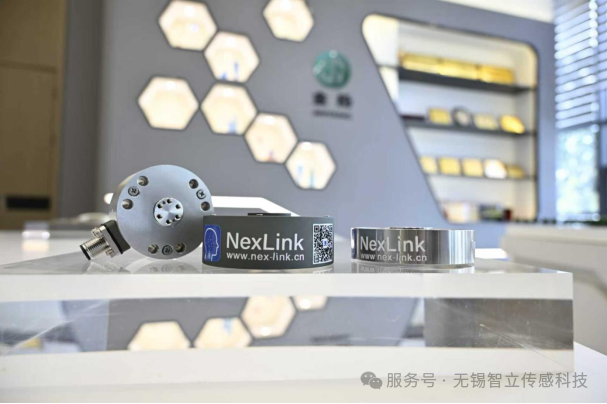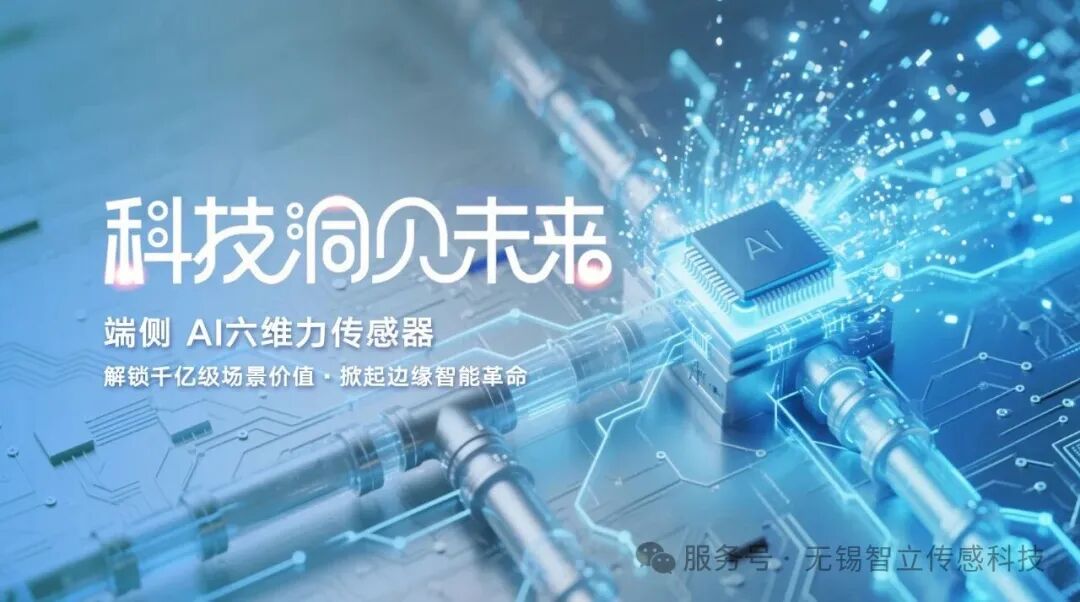
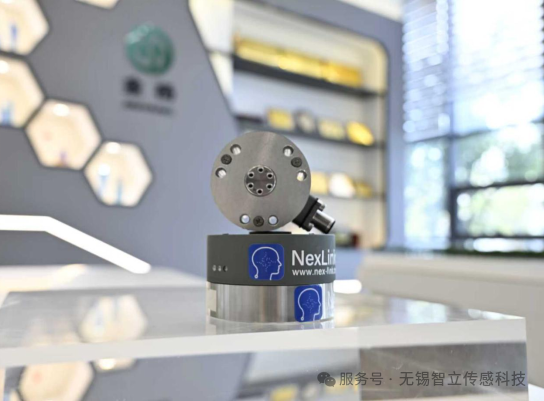
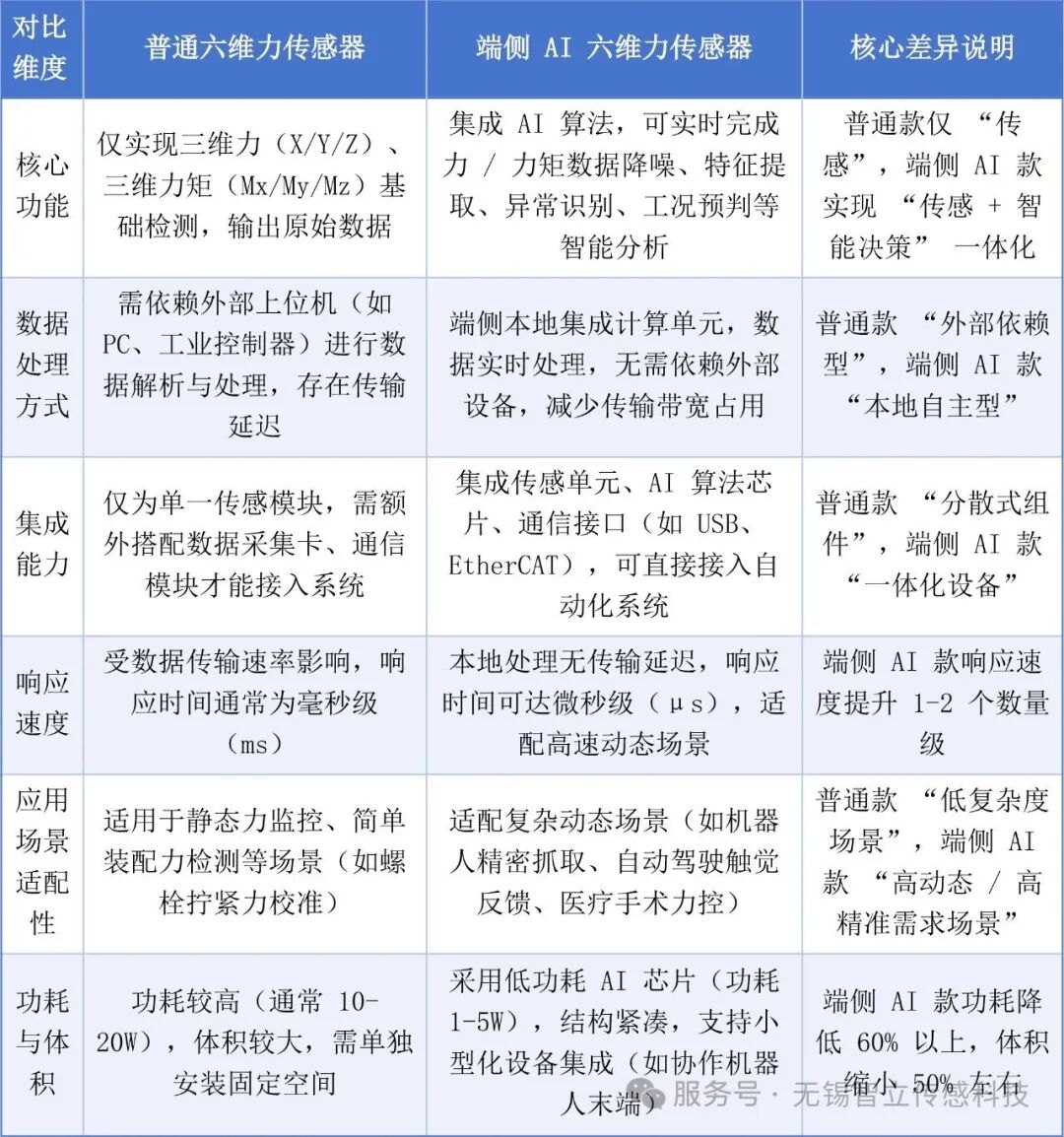
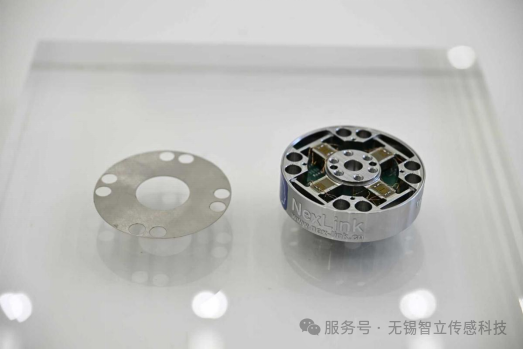
When six-dimensional force sensors are deeply integrated with edge artificial intelligence (AI), the measurement accuracy error breaks through to 0.2% full scale, it is not just a more precise “scale,” but a “perceptual brain” capable of local real-time decision-making—equivalent to weighing 100 pounds of apples with only a 100g difference.This intelligent six-dimensional force sensor, the first of its kind in China, is jointly developed by Wuxi Zhilichuan Sensor Technology, Wuxi Jinyang Co., and Wuxi Moxin Semiconductor, and is reshaping the intelligent perception landscape in industries such as manufacturing, services, and research with its dual advantages of “high precision error + high cost performance.”
Edge AI provides 0.2% accuracy, the “intelligent soul.”
Real-time local computing, zero latency correction: No need for cloud, the sensor has built-in edge AI to immediately complete data cleaning and error compensation; for example, in automotive welding, within 10 ms it can identify force deviations and stop the process, about 50 times faster than a human blink.
Adaptive scene learning: Remembers the force feedback characteristics of different materials/populations, with the model evolving as it is used; for instance, rehabilitation robots dynamically adjust thresholds based on patient muscle tension, ensuring 0.2% accuracy always meets the needs.
Edge collaborative decision-making: Detecting subtle force changes can directly drive actuators, correcting assembly torque “on the spot,” avoiding over-tightening/over-loosening.
Technical alliance, balancing “high precision + high cost performance”
The outstanding performance of this sensor stems from the technical collaboration among Wuxi Zhilichuan Sensor, Jinyang Co., and Moxin Semiconductor, breaking through core technology barriers while achieving cost disruption:
Algorithm – chip closed-loop, solving perception challenges: The elite team at Wuxi Zhilichuan Sensor (members from renowned universities and leading sensor companies) has independently developed an AI matrix decoupling algorithm based on data analysis of the structural coupling of six-dimensional force sensors, accurately eliminating the mutual interference of multidimensional force signals, significantly enhancing measurement stability; at the same time, in-depth cooperation with Wuxi Moxin Semiconductor— Moxin’s core members come from ZTE Microelectronics and Huawei, possessing rich chip design experience. Moxin Semiconductor has developed a dedicated RPU (Real Time Processing Unit) chip specifically for Zhilichuan’s AI matrix decoupling algorithm and edge real-time computing needs, optimizing the architecture—integrating dedicated computing cores and algorithm modules for processing six-dimensional force signals, ensuring maximum operational efficiency of the algorithm on the chip, avoiding “general-purpose chip adaptation algorithms” that lead to computational waste or performance bottlenecks, forming a “chip defined by algorithms, algorithms supported by chips” technical closed loop, further strengthening the sensor’s edge intelligence capabilities.
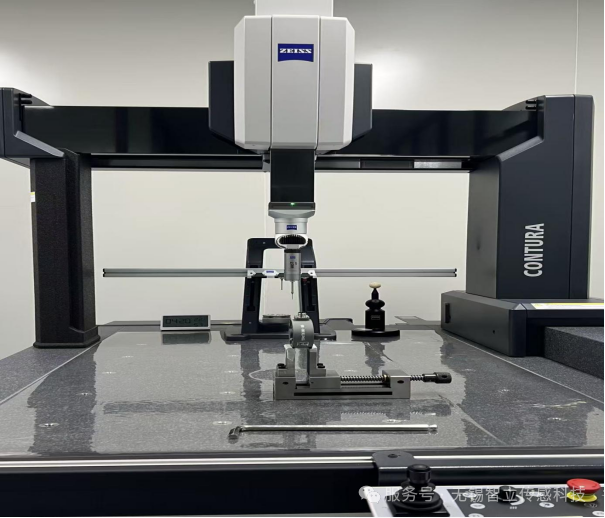
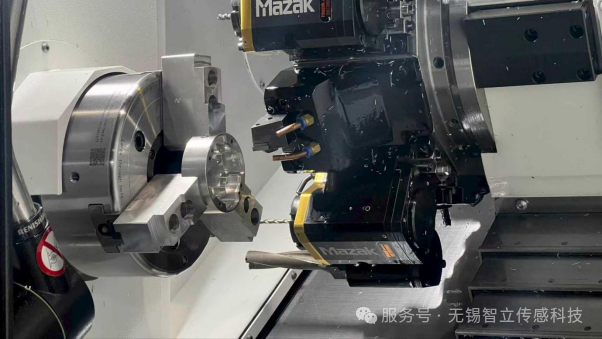
Precision manufacturing support, dual breakthroughs in cost reduction and efficiency improvement: In the processing of elastomer materials for sensors, Wuxi Jinyang relies on flexible tooling control, multi-machine linkage, and real-time online monitoring to precisely control material characteristics: by customizing flexible tooling to adapt to the processing needs of different specifications of elastomers, ensuring stress-free clamping; relying on multi-machine operations to achieve efficient connections from raw material cutting to forming, significantly improving production consistency; while introducing real-time online monitoring systems to dynamically detect key quality indicators such as concentricity, flatness, and smoothness, immediately adjusting upon detecting deviations, ultimately ensuring that the elastomer components of the six-dimensional force sensor possess ultra-high precision and stability, laying a solid foundation for the sensor’s accurate perception of force signals..
Four Core Scenarios and Effects
(1)Industrial Quality Inspection: From “Post-Remediation ” to “Real-Time Prevention,” saving millions annually in losses
In precise processes such as automotive welding and bearing pressing, even a force deviation of 0.4 Newtons (about the weight of a leaf) can lead to parts being welded through or not securely welded. Traditional sensors are slow to respond, often resulting in “discovering problems only after dozens of parts have been scrapped.”
However, the edge AI six-dimensional force sensor can achieve:
Real-time stoppage + automatic adaptation: responding to deviations within 10 milliseconds and adjusting. After application in a certain automotive factory, the welding defect rate dropped from 5.2% to 0.3%, reducing annual losses by over 800 thousand; at the same time, no manual adjustment is required, and it can automatically adapt to different materials such as steel plates and aluminum alloys, reducing adjustment time from 2 hours to 15 minutes.
Trillion Market Space: By 2025, the global industrial sensor market will reach hundreds of billions of dollars, with industrial quality inspection accounting for a significant share. As factories upgrade to intelligent systems, the demand for such “error-proofing tools” will continue to surge.
(2)Service Robots: Learning to “Interact Gently”
When nursing robots in nursing homes deliver water cups, the grip strength of the elderly is only 20-35 Newtons, traditional sensors have large errors, often resulting in “pinching the elderly” or “breaking the cup.”
The edge AI six-dimensional force sensor brings innovation:
Personalization + fast response: remembering the grip habits of different elderly individuals, controlling force deviation within 0.05 Newtons (lighter than a hair), after application in a certain nursing home, the complaint rate dropped by 60%; when an elderly person suddenly loosens their grip, it switches to “buffer mode”, preventing the cup from breaking.
Explosive Market Potential: By 2025, the global service robot market will reach 20 billion dollars, with Chinese companies occupying over half of the commercial robot market; it is expected that by 2035, the humanoid robot market alone may exceed 2000 billion dollars, and the aging population will continue to drive the demand for “gentle interaction” type robots.

(3)Optical Module Testing: Acting as the “Health Inspector” of Communication Components
Optical modules are core components of fiber optic communication (such as QSFP-DD, SFP56 and other high-precision error models), during testing, the insertion force must be controlled between 8-12 Newtons, with an error not exceeding 0.02 Newtons; traditional testing often damages interfaces or fails to measure accurately due to force deviations.
The solution provided by this sensor:
Precise force control + fast switching: controlling force deviation within 0.024 Newtons (about the weight of a feather), after application in a certain optical module factory, the defect rate dropped from 4.1% to 0.5%, reducing the annual waste of 36,000 modules; no manual adjustment is required, and it can automatically adapt to more than 10 different models, improving testing efficiency from 200 units/hour to 350 units/hour.
The market continues to expand: By 2025, the global optical module testing equipment market will be approximately 1 billion dollars, as the acceleration of 5G and data center construction drives the demand for high-speed optical modules, the testing equipment market will rise accordingly.
(4)Scientific Research Experiments: More Reliable Data, More Efficient Research
Solution: In rigorous scientific scenarios such as material mechanics testing, external factors like environmental vibrations can easily interfere with data accuracy, requiring researchers to sift through massive amounts of data to find valid information.
The edge AI six-dimensional force sensor can:
Effectively eliminate external interference, ensuring 0.2% accuracy stability;
Automatically label abnormal data such as sudden impact forces, allowing researchers to focus on core research without expending energy on data filtering, significantly accelerating the research process.
 This is not a “ceiling of accuracy,” but rather a “starting point for intelligence.”
The value of the edge AI six-dimensional force sensor goes far beyond 0.2% measurement accuracy error— it is an “intelligent perceptual brain” capable of independent thinking and real-time decision-making at the edge. In the industrial field, it is an “error-proofing tool” that reduces losses and improves efficiency; in the service field, it is a “gentle link” that endows robots with human care; in the research field, it is a “precise assistant” that accelerates innovation.
From the perspective of market scale, the four major scenarios of industrial quality inspection, service robots, optical module testing, and scientific research experiments have formed a blue ocean worth trillions; from an industrial significance perspective, it breaks foreign technology monopolies with “low cost + high precision error,” helping industries such as robotics reduce costs and increase efficiency, accelerating intelligent upgrades. In the future, as edge AI technology continues to evolve, this sensor will unlock more scenarios, leading various industries towards a “more efficient, safer, and smarter” new future.