
The field of artificial intelligence has recently experienced explosive growth led by generative AI large models. On November 30, 2022, OpenAI launched an AI conversational chatbot, ChatGPT, whose outstanding natural language generation capabilities attracted widespread attention worldwide, surpassing 100 million users in just two months. This led to a wave of large models both domestically and internationally, with various models such as Gemini, Wenxin Yiyan, Copilot, LLaMA, SAM, and SORA emerging like bamboo shoots after a rain, making 2022 known as the year of large models. The current information age is accelerating into the development stage of intelligent computing, with breakthroughs in AI technology continuously emerging, gradually empowering various industries and pushing AI and data elements to become typical representatives of new productive forces.General Secretary Xi Jinping pointed out that the new generation of artificial intelligence should be used as a driving force to promote technological leapfrog development, industrial optimization and upgrading, and overall improvement of productivity, striving to achieve high-quality development.Since the 18th National Congress of the Communist Party, the Central Committee, with Xi Jinping at its core, has attached great importance to the development of the intelligent economy, promoting the deep integration of artificial intelligence and the real economy, injecting strong momentum into high-quality development.
1. Overview of Computing Technology Development
The history of the development of computing technology can be roughly divided into four stages. The emergence of the abacus marked the entry of humanity into the first generation—the mechanical computing era. The second generation—electronic computing was marked by the appearance of electronic devices and electronic computers. The emergence of the internet has ushered us into the third generation—network computing, and currently, human society is entering the fourth stage—intelligent computing.Early computing devices were manual auxiliary computing devices and semi-automatic computing devices. The history of human computing tools began with the Chinese abacus in 1200 AD, followed by the invention of Napier’s bones (1612) and the wheel-based adder (1642), culminating in the birth of the first automatic computing device capable of performing four arithmetic operations—the stepper calculator in 1672.During the mechanical computing period, some basic concepts of modern computers had already appeared. Charles Babbage proposed the designs for the Difference Engine (1822) and the Analytical Engine (1834), supporting automatic mechanical computation. During this period, the concepts of programming and programs were basically formed. The concept of programming originated from the Jacquard loom, which controlled the printed patterns through punched cards, eventually evolving into the storage of all mathematical calculation steps in the form of computational instructions; the first programmer in human history was Ada, the daughter of the poet Byron, who wrote a set of instructions for solving Bernoulli numbers for Babbage’s Difference Engine, which was also the first computer algorithm program in history, separating hardware from software and introducing the concept of programs for the first time.It wasn’t until the first half of the twentieth century that four scientific foundations of modern computing technology emerged: Boolean algebra (mathematics), the Turing machine (computational model), the von Neumann architecture (architecture), and the transistor (device). Among them, Boolean algebra is used to describe the underlying logic of programs and hardware such as CPUs; the Turing machine is a universal computational model that transforms complex tasks into automated calculations without human intervention; the von Neumann architecture proposed three basic principles for constructing computers: the use of binary logic, program storage execution, and the computer being composed of five basic units: the arithmetic unit, control unit, memory, input device, and output device; the transistor is a semiconductor device that constitutes the basic logic circuits and storage circuits, serving as the “bricks” for building modern computers. Based on these scientific foundations, computing technology has developed rapidly, forming a large-scale industry.From the birth of the world’s first electronic computer ENIAC in 1946 to today in the 21st century, five types of successful platform computing systems have emerged. Currently, various types of applications in different fields can be supported by these five types of platform computing devices. The first type is high-performance computing platforms, which solve scientific and engineering computing problems for key national departments; the second type is enterprise computing platforms, also known as servers, used for enterprise-level data management and transaction processing, with computing platforms from internet companies like Baidu, Alibaba, and Tencent belonging to this category; the third type is personal computer platforms, appearing in the form of desktop applications, allowing people to interact with personal computers through desktop applications; the fourth type is smartphones, characterized by mobility and portability, connecting to data centers via the internet, primarily focusing on internet applications, which are distributed across data centers and mobile terminals; the fifth type is embedded computers, embedded in industrial equipment and military devices, ensuring the completion of specific tasks within a specified time through real-time control. These five types of devices cover nearly all aspects of our information society, while the sixth type of platform computing system centered on intelligent computing applications, which people have long pursued, has yet to be formed.The development of modern computing technology can be roughly divided into three eras. IT 1.0, also known as the electronic computing era (1950-1970), is characterized by being “machine-centered.” The basic architecture of computing technology was formed, and with the advancement of integrated circuit technology, the scale of basic computing units rapidly shrank, with transistor density, computing performance, and reliability continuously improving, leading to widespread applications of computers in scientific engineering calculations and enterprise data processing.IT 2.0, also known as the network computing era (1980-2020), is characterized by being “human-centered.” The internet connects the terminals used by people with backend data centers, and internet applications interact with people through intelligent terminals. Internet companies represented by Amazon proposed the idea of cloud computing, encapsulating backend computing power as a public service rented to third-party users, forming the cloud computing and big data industries.IT 3.0, also known as the intelligent computing era, began in 2020 and adds the concept of “things” compared to IT 2.0, which refers to various end-side devices in the physical world that are digitized, networked, and intelligent, achieving a trinity of “human-machine-object” integration. In the intelligent computing era, in addition to the internet, there is also data infrastructure that supports various terminals to achieve the internet of everything through edge-cloud integration, with terminals, objects, edge, and cloud all embedded with AI, providing intelligent services similar to large models like ChatGPT, ultimately achieving AI intelligence wherever there is computation. Intelligent computing has brought about massive data, breakthroughs in AI algorithms, and explosive demand for computing power.
2. Overview of Intelligent Computing Development
Intelligent computing includes artificial intelligence technology and its computing carrier, which has roughly gone through four stages: general computing devices, logical reasoning expert systems, deep learning computing systems, and large model computing systems.The starting point of intelligent computing was general automatic computing devices (1946). Scientists like Alan Turing and John von Neumann initially hoped to simulate the process of the human brain processing knowledge by inventing machines that think like the human brain, although this was not achieved, it solved the problem of automation in computing. The emergence of general automatic computing devices also promoted the birth of the concept of artificial intelligence (AI) in 1956, with all subsequent developments in AI technology built on the new generation of computing devices and stronger computing capabilities.The second stage of intelligent computing development is logical reasoning expert systems (1990). Scientists from the symbolic AI school, such as Edward Albert Feigenbaum, aimed primarily at automating logical reasoning capabilities and proposed expert systems capable of performing logical reasoning with knowledge symbols. Human prior knowledge enters the computer in the form of knowledge symbols, enabling the computer to assist humans in certain logical judgments and decisions in specific fields. However, expert systems heavily rely on manually generated knowledge bases or rule bases. A typical representative of this type of expert system is Japan’s fifth-generation fighter jets and China’s 863 Program-supported 306 intelligent computer theme, where Japan used dedicated computing platforms and knowledge reasoning languages like Prolog to complete application-level reasoning tasks; China, on the other hand, took a different technological route, based on general computing platforms, turning intelligent tasks into AI algorithms, connecting both hardware and system software to general computing platforms, and giving rise to a batch of backbone enterprises such as Sunrise, Hanwang, and iFlytek.The limitation of symbolic computing systems lies in their explosive computational space-time complexity, meaning that symbolic computing systems can only solve linear growth problems and are unable to tackle high-dimensional complex space problems, thus limiting the size of problems they can handle. Additionally, since symbolic computing systems are based on knowledge rules, we cannot enumerate all common sense using exhaustive methods, which greatly restricts their application scope. With the arrival of the second AI winter, the first generation of intelligent computers gradually exited the historical stage.It wasn’t until around 2014 that intelligent computing progressed to the third stage—deep learning computing systems. Represented by Geoffrey Hinton and others from the connectionist school, the goal was to automate learning capabilities, leading to the invention of new AI algorithms like deep learning. Through the automatic learning of deep neural networks, the capacity for statistical induction of models significantly improved, achieving tremendous breakthroughs in applications such as pattern recognition, with recognition accuracy in certain scenarios even surpassing that of humans. Taking facial recognition as an example, the entire training process of the neural network is akin to a parameter adjustment process for the network, inputting a large number of labeled facial image data into the neural network, and then adjusting parameters between networks so that the output probability of the neural network approaches the real result as closely as possible. The higher the probability the neural network outputs for the real situation, the larger the parameters, thus encoding knowledge and rules into network parameters, allowing for the learning of various common sense as long as there is enough data, greatly enhancing generalization capabilities. The applications of connectionist intelligence have become more widespread, including speech recognition, facial recognition, and autonomous driving. In terms of computing carriers, the Institute of Computing Technology of the Chinese Academy of Sciences proposed the world’s first deep learning processor architecture in 2013, and internationally renowned hardware manufacturer NVIDIA has continuously released multiple performance-leading general-purpose GPU chips, both of which are typical representatives of deep learning computing systems.The fourth stage of intelligent computing development is large model computing systems (2020). Driven by the technology of AI large models, intelligent computing has reached new heights. In 2020, AI transitioned from “small model + discriminative” to “large model + generative,” upgrading from traditional facial recognition, object detection, and text classification to today’s text generation, 3D digital human generation, image generation, speech generation, and video generation. A typical application of large language models in dialogue systems is OpenAI’s ChatGPT, which uses the pre-trained base large language model GPT-3, introducing a training corpus of 300 billion words, equivalent to the total of all English text on the internet. Its basic principle is to train the model by predicting the next word based on an input, improving prediction accuracy through extensive training, ultimately allowing for real-time dialogue with the model when asking questions. Based on the base large model, it is then fine-tuned with supervised instruction through human to gradually teach the model how to engage in multi-turn dialogues with people. Finally, through manually designed and automatically generated reward functions, reinforcement learning iterations are conducted to gradually align the values of the large model with those of humans.The characteristics of large models lie in winning through “largeness,” which has three layers of meaning: (1) large parameters, GPT-3 has 170 billion parameters; (2) large training data, ChatGPT used approximately 300 billion words and 570GB of training data; (3) large computing power requirements, GPT-3 used tens of thousands of V100 GPUs for training. To meet the explosive increase in computing power demand for large models, both domestically and internationally, new intelligent computing centers with massive investments are being built on a large scale. NVIDIA has also launched a large model intelligent computing system composed of 256 H100 chips, 150TB of massive GPU memory, etc.The emergence of large models has brought about three transformations. First is the scaling law in technology, meaning that the accuracy of many AI models rapidly improves once the parameter scale exceeds a certain threshold, although the reasons for this remain unclear and highly debated in the scientific community. The performance of AI models is logarithmically linearly related to the model parameter scale, dataset size, and total computing power, so increasing the model’s scale can continuously enhance its performance. Currently, the most advanced large model GPT-4 has reached a parameter scale of trillions to tens of trillions and continues to grow; second, there is an explosive growth in computing power demand in the industry, where training large models with hundreds of billions of parameters usually requires training on thousands to tens of thousands of GPU cards for 2-3 months, sharply increasing the demand for computing power and driving related computing companies to develop at super speed, with NVIDIA’s market value approaching two trillion dollars, an occurrence never seen before in chip companies; third, there is an impact on the labor market in society, as indicated by the report “Research on the Potential Impact of AI Large Models on China’s Labor Market” released by Peking University’s National Development Research Institute and Zhilian Recruitment, which points out that among the 20 occupations most affected, finance, sales, and clerical jobs are at the forefront, while physically labor-intensive jobs that require interaction with people, such as human resources, administration, and logistics, are relatively safer.The technological frontier of artificial intelligence will develop in the following four directions. The first frontier direction is multimodal large models. From the human perspective, human intelligence is inherently multimodal, possessing eyes, ears, nose, tongue, body, and mouth (language). From the AI perspective, vision, hearing, etc., can also be modeled as sequences of tokens, using the same methods as large language models for learning and further aligning with the semantics in language to achieve intelligent capabilities of multimodal alignment.The second frontier direction is video generation large models.OpenAI released the text-to-video model SORA on February 15, 2024, significantly increasing video generation duration from a few seconds to one minute, with significant improvements in resolution, visual realism, and temporal consistency. The greatest significance of SORA is that it possesses the basic characteristics of a world model, which is the ability of humans to observe and further predict the world. A world model is built on fundamental physical common sense (e.g., water flows downwards) and then observes and predicts what event will happen next. Although SORA faces many challenges to become a true world model, it can be considered to have learned the ability to imagine scenes and predict the minute future, which are foundational characteristics of a world model.The third frontier direction is embodied intelligence.Embodied intelligence refers to intelligent agents that have bodies and support interaction with the physical world, such as robots and unmanned vehicles. Through multimodal large models processing various sensory data inputs, large models generate motion instructions to drive the intelligent agents, replacing traditional rule-based or mathematical formula-based motion driving methods, achieving deep integration of the virtual and real worlds. Therefore, robots with embodied intelligence can gather the three major schools of artificial intelligence: connectionism represented by neural networks, symbolism represented by knowledge engineering, and behaviorism related to control theory, which are expected to bring about new technological breakthroughs.The fourth frontier direction is AI4R (AI for Research) becoming the main paradigm for scientific discovery and technological invention.Currently, scientific discovery mainly relies on experiments and human brain wisdom, with humans conducting bold conjectures and careful verifications, where information technology, whether in computing or data, only plays a supporting and validating role. Compared to humans, AI has considerable advantages in memory, high-dimensional complexity, all-seeing perspective, reasoning depth, and conjecture. The question is whether AI can take the lead in some scientific discoveries and technological inventions, significantly enhancing the efficiency of human scientific discovery, such as proactively discovering physical laws, predicting protein structures, designing high-performance chips, and efficiently synthesizing new drugs. Because AI large models have access to comprehensive data and possess an omniscient perspective, through deep learning capability, they can look further ahead than humans. If they can achieve a leap from inference to reasoning, AI models have the potential to possess imagination and scientific conjecture abilities akin to Einstein, greatly enhancing the efficiency of human scientific discovery and breaking through the cognitive boundaries of humanity. This is the true disruption.Finally, general artificial intelligence (AGI) is an extremely challenging and controversial topic.There was once a bet between a philosopher and a neuroscientist: whether researchers would be able to reveal how the brain achieves consciousness in 25 years (i.e., by 2023). At that time, there were two schools of thought regarding consciousness: one called integrated information theory, which posits that consciousness is formed by specific types of neuron connections in the brain, while the other called global workspace theory, which argues that consciousness arises when information spreads through interconnected networks to brain regions. In 2023, adversarial experiments conducted across six independent laboratories yielded results that did not fully match either theory, with the philosopher winning the bet and the neuroscientist losing. This wager illustrates that people have always hoped that AI could understand the mysteries of human cognition and the brain. From the perspective of physics, physics is a thorough understanding of the macroscopic world, which began with quantum physics to understand the microscopic world. The intelligent world, like the physical world, is also a research object of immense complexity. AI large models continue to study the macroscopic world using data-driven methods to improve machine intelligence levels, but understanding the intelligent macroscopic world is still insufficient, and directly seeking answers in the microscopic world of the nervous system is difficult. Since its inception, artificial intelligence has carried humanity’s various dreams and fantasies about intelligence and consciousness, inspiring continuous exploration.
3. Security Risks of Artificial Intelligence
The development of artificial intelligence has promoted technological progress in today’s world while also bringing many security risks that need to be addressed from both technical and regulatory aspects.First is the rampant spread of false information on the internet. Here are several scenarios: One is digital avatars. AI Yoon is the first official “candidate” synthesized using DeepFake technology, modeled after Yoon Suk-yeol, the candidate of South Korea’s People Power Party. This digital persona was created by a local DeepFake technology company using 20 hours of audio and video clips of Yoon, along with over 3,000 sentences specially recorded for researchers. In reality, the content expressed by AI Yoon was written by the campaign team, not the candidate himself.Two is forged videos,especially videos of leaders that can cause international disputes, disrupt election orders, or trigger sudden public opinion events, such as a forged video of Nixon announcing the failure of the first moon landing or a forged announcement from Ukrainian President Zelensky saying “surrender.” These actions lead to a decline in social trust in the news media industry.Three is fabricated news,primarily generated through automated false news to gain illegal profits, using ChatGPT to generate trending news and earn traffic. As of June 30, 2023, there were 277 global websites generating fake news, severely disrupting social order.Four is face-swapping and voice imitation,used for scams. For instance, due to AI mimicking the voice of a corporate executive, an international company in Hong Kong was defrauded of $35 million.Five is the generation of inappropriate images,especially targeting public figures, such as the production of pornographic videos of film stars, causing adverse social impacts. Therefore, there is an urgent need to develop detection technologies for the forgery of internet false information.Secondly, AI large models face serious trust issues. These problems include: (1) factual errors that are “serious nonsense”; (2) narratives based on Western values, outputting political bias and erroneous statements; (3) susceptibility to inducement, outputting incorrect knowledge and harmful content; (4) exacerbated data security issues, as large models become significant traps for sensitive data, with ChatGPT incorporating user inputs into its training database for improvement, allowing foreign parties to access Chinese language materials that are not covered by public channels, gaining knowledge about China that even we may not possess. Thus, there is an urgent need to develop security regulation technologies for large models and our own trustworthy large models.In addition to technical measures, the security of artificial intelligence also requires relevant legislative work. In 2021, the Ministry of Science and Technology released the “Ethical Norms for the New Generation of Artificial Intelligence,” and in August 2022, the National Information Security Standardization Technical Committee released the “Information Security Technology Machine Learning Algorithm Security Assessment Specifications.” Between 2022 and 2023, the Central Cyberspace Administration of China successively issued regulations such as the “Algorithm Recommendation Management Regulations for Internet Information Services,” the “Deep Synthesis Management Regulations for Internet Information Services,” and the “Management Measures for Generative Artificial Intelligence Services.” European and American countries have also successively introduced regulations, with the European Union issuing the “General Data Protection Regulation” on May 25, 2018, and the United States releasing the “Blueprint for an AI Bill of Rights” on October 4, 2022. On March 13, 2024, the European Parliament passed the “AI Act” of the EU.China should accelerate the introduction of the “Artificial Intelligence Law,” build a governance system for artificial intelligence, ensure that the development and application of artificial intelligence adhere to common human values, promote harmonious and friendly human-machine relationships; create a policy environment conducive to the research, development, and application of artificial intelligence technology; establish reasonable disclosure and auditing mechanisms to understand the principles and decision-making processes of artificial intelligence mechanisms; clarify the security responsibilities and accountability mechanisms of artificial intelligence systems, trace back responsible parties and provide remedies; and promote the formation of fair, reasonable, open, and inclusive international governance rules for artificial intelligence.
4. The Dilemmas of China’s Intelligent Computing Development
The technology of artificial intelligence and the intelligent computing industry are at the focal point of Sino-U.S. technological competition. Although China has made significant achievements in recent years, it still faces many development dilemmas, particularly difficulties arising from U.S. technological suppression policies.The first dilemma is that the U.S. has long been in a leading position in AI core capabilities, while China remains in a tracking mode.China has certain gaps compared to the U.S. in terms of the number of high-end AI talents, innovation in foundational AI algorithms, capabilities of foundational large models (large language models, text-to-image models, text-to-video models), training data for foundational large models, and training computing power for foundational large models, and this gap is expected to persist for a long time.The second dilemma is the ban on the sale of high-end computing products and the long-term restriction of high-end chip technology.High-end intelligent computing chips like A100, H100, and B200 are banned from being sold to China. Companies like Huawei, Loongson, Cambricon, Sunrise, and Haiguang have all been placed on the Entity List, and their advanced manufacturing processes for chips are restricted, with domestic processes capable of meeting large-scale production lagging 2-3 generations behind international advanced levels, and the performance of core computing chips lagging 2-3 generations behind international advanced levels.The third dilemma is the weak domestic intelligent computing ecosystem, with insufficient penetration of AI development frameworks.NVIDIA’s CUDA (Compute Unified Device Architecture) ecosystem is complete and has formed a de facto monopoly. The domestic ecosystem is weak, specifically manifested in: first, insufficient research and development personnel, with nearly 20,000 developers in the NVIDIA CUDA ecosystem, which is 20 times the total number of personnel in all domestic intelligent chip companies; second, insufficient development tools, with CUDA having 550 SDKs (Software Development Kits), which is hundreds of times more than related domestic companies; third, insufficient funding investment, with NVIDIA investing $5 billion annually, which is dozens of times more than related domestic companies; fourth, the AI development framework TensorFlow occupies the industrial market, PyTorch occupies the research market, while domestic AI development frameworks like Baidu PaddlePaddle have only one-tenth the number of developers compared to foreign frameworks. More seriously, domestic enterprises are fragmented, unable to form a unified force, with relevant products existing at every layer from intelligent applications to development frameworks, system software, and intelligent chips, but lacking deep adaptation between layers, making it impossible to form a competitive technological system.The fourth dilemma is the high cost and barriers to entry for AI applications in industries.Currently, AI applications in China are mainly concentrated in the internet industry and some defense sectors. When promoting the application of AI technology across various industries, especially transitioning from the internet industry to non-internet industries, a significant amount of customization work is required, making the migration difficult and the cost of single use high. Finally, there is also a significant shortage of talent in the AI field compared to actual demand in China.
5. The Path Choices for China’s Development of Intelligent Computing
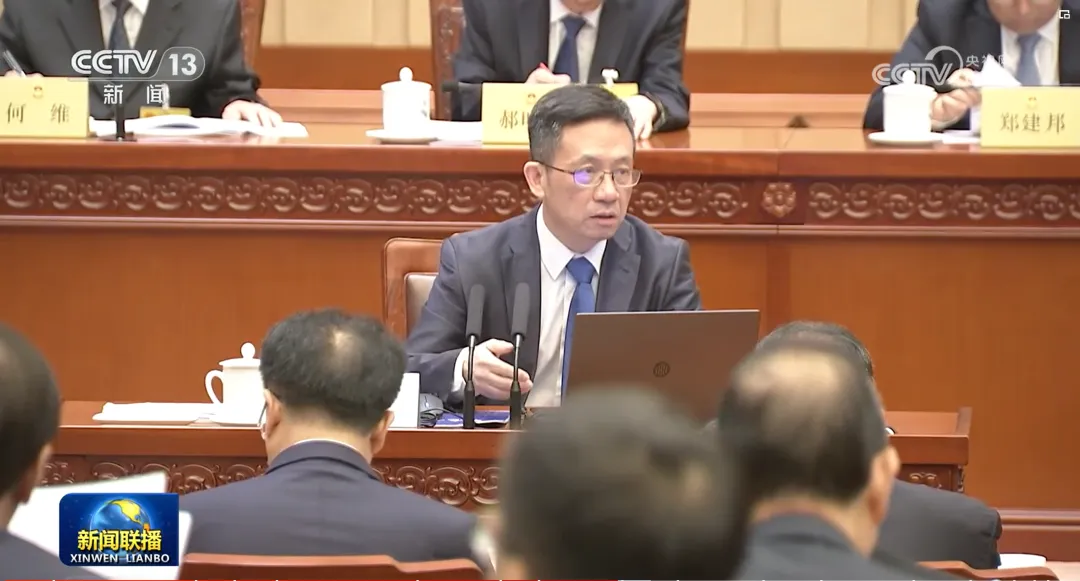
The choice of development paths for artificial intelligence is crucial for China, as it relates to sustainability and the ultimate international competitive landscape. Currently, the cost of using artificial intelligence is very high, with the Microsoft Copilot suite charging $10 per month, ChatGPT consuming 500,000 kilowatt-hours of electricity daily, and the price of NVIDIA’s B200 chip exceeding $30,000. Overall, China should develop affordable, safe, and trustworthy artificial intelligence technology to eliminate information poverty among its population and benefit countries along the Belt and Road Initiative; empower various industries at low thresholds to maintain the competitiveness of China’s advantageous industries and significantly narrow the gap for relatively lagging industries.Choice One: Should we unify the technology system to follow a closed-source approach or an open-source approach?The intelligent computing industry is supported by a tightly coupled technological system, which is an integrated whole that closely connects materials, devices, processes, chips, complete machines, system software, and application software through a series of technical standards and intellectual property. China has three paths for developing its intelligent computing technology system:One is to catch up and be compatible with the U.S.-dominated A system.Most Chinese internet companies are following the GPGPU/CUDA compatibility path, and many startup companies in the chip field are also trying to build ecosystems compatible with CUDA, which is a relatively realistic path. Due to U.S. restrictions on China’s processes and chip bandwidth in terms of computing power, and the fragmented domestic ecosystem making it difficult to form a unified front in algorithms, the maturity of the ecosystem is severely limited, and the lack of high-quality Chinese data will make it difficult for catch-up efforts to narrow the gap between followers and leaders, and at times may even further widen it.Two is to build a dedicated closed B system.This involves creating a closed ecosystem for specialized fields like military, meteorology, and judicial systems, producing chips based on domestically mature processes, focusing more on specific vertical large models rather than foundational large models, and using proprietary high-quality data for training large models. This path can easily form a complete and controllable technological system and ecosystem; however, its downside is that it is closed off, making it difficult to gather the majority of domestic forces and achieve globalization.Three is to globally co-build an open-source C system.Using open-source to break the ecological monopoly and lower the barriers for enterprises to possess core technologies, allowing every enterprise to develop its own chips at low costs, forming a vast ocean of intelligent chips to meet ubiquitous intelligent demands. By using openness to create a unified technological system, Chinese enterprises can join forces with global powers to co-build a unified intelligent computing software stack based on international standards. This would form a pre-competitive sharing mechanism among enterprises, sharing high-quality databases and open-source general foundational large models. For the global open-source ecosystem, Chinese enterprises have benefited greatly during the internet era, where they were mainly users and participants. In the intelligent era, Chinese enterprises should become major contributors in the RISC-V + AI open-source technology system, becoming the leading force in global open sharing.Choice Two: Should we focus on algorithm models or on new infrastructure?Artificial intelligence technology needs to empower various industries, exhibiting a typical long-tail effect. About 80% of China’s small and medium-sized enterprises need low-threshold, low-cost intelligent services. Therefore, China’s intelligent computing industry must be built on new data space infrastructure, where the key is for China to take the lead in achieving comprehensive infrastructure for intelligent elements, namely data, computing power, and algorithms. This work can be compared to the historical role of the early 20th-century U.S. information superhighway plan (i.e., information infrastructure construction) for the internet industry.The core productivity of the information society is cyberspace. The evolution of cyberspace is from a computing space formed by machine-centric connections, to an information space formed by human-machine connections, and then to a data space formed by human-machine-object connections. From the perspective of data space, the essence of artificial intelligence is the refinement of data, and large models are products of deep processing of all data on the internet. In the digital age, what is transmitted on the internet is information flow, which is a structured abstraction of data after rough processing by computing power; in the intelligent age, what is transmitted on the internet is intelligent flow, which is a model abstraction refined from deep processing of data by computing power. A core feature of intelligent computing is using numerical calculations, data analysis, and artificial intelligence algorithms to process massive amounts of data in the computing power pool, obtaining intelligent models that are then embedded into various processes in the information world and the physical world.The Chinese government has proactively laid out new infrastructure, seizing the initiative in global competition. First, data has become a national strategic information resource. Data possesses both resource element and value processing attributes, including production, acquisition, transmission, aggregation, circulation, trading, ownership, asset, and security. China should continue to strengthen the construction of national data hubs and data circulation infrastructure.Second, AI large models are a type of algorithmic infrastructure for data space.Using general large models as bases, infrastructure for the research and application of large models should be constructed to support a wide range of enterprises in developing domain-specific large models for industries such as robotics, unmanned driving, wearable devices, smart homes, and intelligent security, covering long-tail applications.Finally, the construction of a national integrated computing power network has played a pioneering role in promoting the infrastructure of computing power.The Chinese solution for computing power infrastructure should significantly reduce the costs and barriers for using computing power while providing high-throughput and high-quality intelligent services to the widest range of people. The Chinese solution for computing power infrastructure needs to feature “two lows and one high,” meaning that on the supply side, it should greatly reduce the total costs of computing devices, computing equipment, network connections, data acquisition, algorithm model invocation, power consumption, operation maintenance, and development deployment, making high-quality computing power services affordable for a wide range of SMEs; on the consumption side, it should significantly lower the barriers for users to access computing power, with public services for the masses needing to be easily accessible and usable, like water and electricity, ready to use immediately, and as easy to customize as writing a web page. On the service efficiency side, China’s computing power services should achieve low entropy and high throughput, where high throughput refers to satisfying a high rate of end-to-end service response time while achieving high concurrency service, and low entropy means ensuring system throughput does not sharply decline in cases of resource disorderly competition under high concurrent loads. Ensuring “more computation” is especially important for China.Choice Three: Should AI+ focus on empowering the virtual economy or strengthen the real economy?The effectiveness of AI+ is the touchstone for the value of artificial intelligence. After the subprime mortgage crisis, the value added of U.S. manufacturing as a percentage of GDP fell from 28% in 1950 to 11% in 2021, and the proportion of employment in U.S. manufacturing fell from 35% in 1979 to 8% in 2022, suggesting that the U.S. tends to favor the virtual economy with higher returns while neglecting the real economy, which has high investment costs and low economic return rates. China tends to develop both the real economy and the virtual economy in parallel, placing greater emphasis on developing equipment manufacturing, new energy vehicles, photovoltaic power generation, lithium batteries, high-speed rail, and 5G as part of the real economy.Correspondingly, AI in the U.S. is primarily applied to the virtual economy and IT infrastructure tools, reflecting a trend of “de-virtualizing and moving to the virtual,” with Silicon Valley continuously hyping virtual reality (VR), the metaverse, blockchain, Web 3.0, deep learning, and AI large models since 2007. China’s advantages lie in the real economy, with the most comprehensive categories of manufacturing industries and the most complete systems, characterized by diverse scenarios and abundant private data. China should select several industries for increased investment to form paradigms that can be promoted across all industries at low thresholds, such as choosing the equipment manufacturing industry as a representative industry that continues its advantages and selecting the pharmaceutical industry as a representative industry that rapidly narrows the gap. The technical challenge of empowering the real economy lies in the integration of AI algorithms with physical mechanisms.The key to the success of artificial intelligence technology is whether it can significantly reduce the costs of an industry or product, thereby expanding the user base and industry scale by tenfold, producing transformative effects similar to that of the steam engine on the textile industry and the smartphone on the internet industry.China should find a high-quality development path for artificial intelligence that is suitable for empowering the real economy.The speaker is an academician of the Chinese Academy of Engineering, a researcher at the Institute of Computing Technology, Chinese Academy of Sciences, and the director of the academic committee.Source: China National People’s Congress Network
Disclaimer: The content published by this WeChat public account is for sharing only and does not represent the views and positions of this platform. The materials in this article are sourced from publicly available internet channels, and the copyright of reprinted articles belongs to the original author or institution. If there are any copyright issues, please leave a message to contact us, and we will correct or delete it at the first time.


已关注 Follow Replay Share Like <!– 随便看看 –> 观看更多中关村股权投资协会
0/0
00:00/04:45进度条,百分之0Play00:00/04:4504:45全屏 倍速播放中 0.5倍 0.75倍 1.0倍 1.5倍 2.0倍 超清 流畅
继续观看
人工智能与智能计算的发展
转载,人工智能与智能计算的发展中关村股权投资协会Added to Top StoriesEnter comment Video Details 中关村股权投资协会(缩写为ZVCA)是在民政部门合法注册覆盖全国的股权投资行业协会,拥有红杉资本、天星资本、前海母基金、英诺天使、同创伟业、软银中国、常春藤、深创投等知名机构会员;天士力、万安科技、北康医疗、远东控股、特变电工、海航航空集团、豪美新材、万年青等众多上市公司会员;新希望集团、富华国际集团、京泰集团、星牌集团、国瑞置业、鑫苑中国等知名大型企业集团会员;民生证券、太平洋证券、中国银河、哈尔滨银行、亿联互联网银行等大型金融集团会员;国新、诚通、中国港湾、江苏悦达等大型国有企业投资集团。协会会员机构管理资金总规模超过三万亿人民币(超过5000亿美元)。协会以中关村创新、创业高地为基础,全国各类智库为依托,秉承专业化、国际化的发展理念,每年举办数十场高品质国内外投融资对接活动、多次国际考察活动,努力打造中国股权投资行业高端、专业、国际的资源对接平台,为中国股权投资行业服务。
中关村股权投资协会
○
加入我们:
进入公众号 点击关于协会-入会申请
把您的基本信息“姓名+公司+职务+手机号”提交给我们
我们会第一时间联系您。
○
电话:+86-10-53692796
○
与中关村股权投资协会深度合作、推荐优质项目请联系:
林女士 13699282137(同微信)
点击关注我们
期待您的加入