In recent years, drone-related technologies have developed rapidly both domestically and internationally. The variety of drone systems and their distinct applications have resulted in significant differences in size, weight, range, duration, altitude, speed, and mission capabilities. Due to the diversity of drones, different classification methods arise from various considerations:
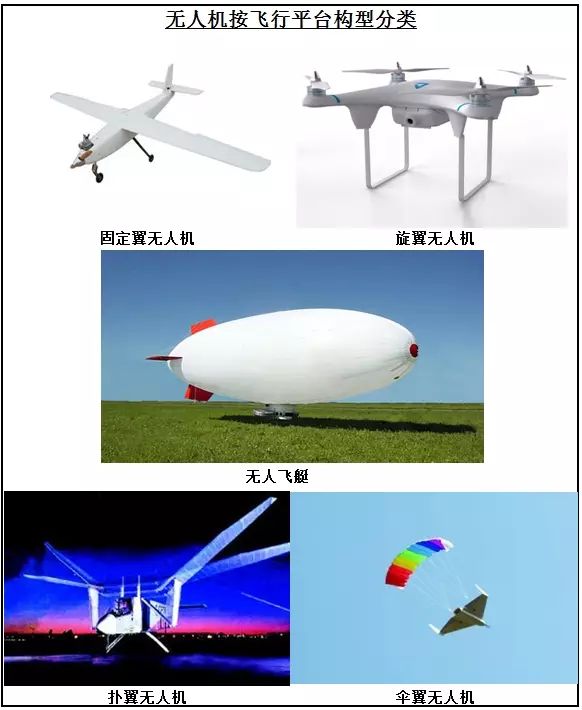
Classification by Flight Platform Configuration: Drones can be divided into fixed-wing drones, rotary-wing drones, airships, parachute drones, and flapping-wing drones.
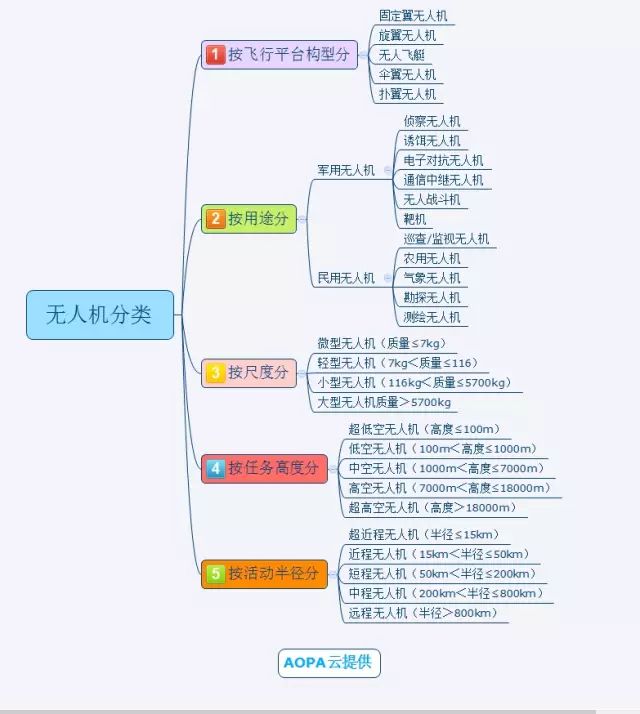
Classification by Purpose: Drones can be divided into military drones and civilian drones. Military drones include reconnaissance drones, decoy drones, electronic warfare drones, communication relay drones, unmanned combat aircraft, and target drones; civilian drones include inspection/surveillance drones, agricultural drones, meteorological drones, exploration drones, and mapping drones.
Classification by Scale (Civil Aviation Regulations): Drones can be categorized as micro drones, light drones, small drones, and large drones. Micro drones are defined as having an empty weight of ≤7 kg; light drones weigh more than 7 kg but ≤116 kg and have a calibrated airspeed of <100 km/h (55 nmile/h) during level flight, with a ceiling of <3000 m. Small drones are those with an empty weight of ≤5700 kg, excluding micro and light drones. Large drones are those with an empty weight of >5700 kg.
Classification by Operational Radius: Drones can be categorized into ultra-short-range drones, short-range drones, medium-range drones, and long-range drones. Ultra-short-range drones have an operational radius of ≤15 km, short-range drones have an operational radius of 15-50 km, medium-range drones have an operational radius of 50-200 km, and long-range drones have an operational radius of >800 km.
Classification by Mission Altitude: Drones can be divided into ultra-low-altitude drones, low-altitude drones, mid-altitude drones, high-altitude drones, and ultra-high-altitude drones. Ultra-low-altitude drones typically operate at altitudes of 0-100 m, low-altitude drones operate at 100-1000 m, mid-altitude drones operate at 1000-7000 m, high-altitude drones operate at 7000-18000 m, and ultra-high-altitude drones operate at altitudes >18000 m.

The Beijing Aviation Home Drone Pilot Training Center has a strong faculty,
equipped with a drone simulation flight room,
a drone assembly and maintenance room,
and dozens of various types of drone training equipment.
It also boasts an excellent teaching team with years of flying experience and rich teaching experience.

Learn drone technology, say goodbye to “illegal flying”, and enter a high-paying industry.
Beijing Aviation Home Technology Co., Ltd. is creating a season for employees to change careers and start their own businesses, helping you achieve a magnificent transformation in life!
Click “Read the Original” below to register directly~