Decorator is a special syntax structure in Python that allows adding extra functionality (such as logging, performance testing, permission validation, etc.) to functions without modifying the original function code.
In simple terms, a decorator is a function that wraps another function, which takes the decorated function as an argument and returns a new function (or callable object), thereby extending its functionality without changing the way the original function is called. For example: the original function is like a piece of clothing, and the decorator is like a coat that can add a “layer of functionality” at any time without altering the clothing itself.
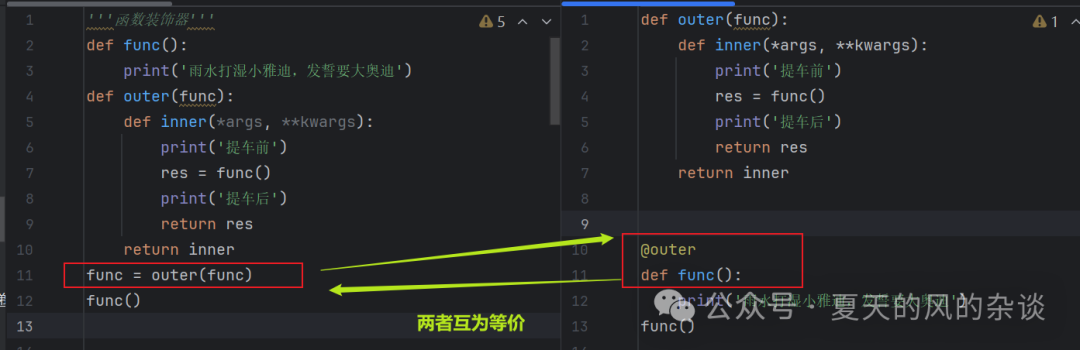 Decorators utilize functions as parameters and functions that can return; the implementation process is as follows: func = outer(func) first executes outer(func), returning the name of the inner function, and assigns inner to the variable func. The next step is to execute func(), which actually runs the already replaced inner function, meaning func() is equivalent to inner(); since the inner function returns func(), at this point, the principle should be clear. The func() function returns the previously defined ‘….Audi’ statement. The right side of the image compares the decorator syntax sugar, where the decorator is formed by adding @ followed by the decorator function name to the decorated function. If there are multiple decorators, their execution order is from bottom to top.That’s all for today’s summary. If there are any errors, please feel free to leave a comment for correction, and let’s improve together. If this has been helpful in your learning, that would be great. I hope everyone can support, like, and comment more!