
Selection and Evaluation under the Localization of Virtualization

Introduction
The Chinese virtualization market is undergoing profound changes, driven by the wave of domestic substitution and the demand for AI computing, reshaping the market landscape. Chinese users will face a more complex and severe situation when using VMware. To respond to this change, enterprises need to adopt a systematic strategy, comprehensively planning from strategic assessment, technology selection to migration implementation.
Shandong Huaan Saifu Intelligent Technology Co., Ltd., as the most professional private cloud construction solution provider in the region, continuously applies the latest technologies to achieve IT-as-a-Service customized operations, providing users with solutions and optimal services. Let us analyze from the perspectives of risk and brand to provide you with professional and comprehensive solutions.
1
Migration Capability and Risk Assessment

Migration Strategy Selection:
P2V/V2V Migration: Mainstream domestic solutions provide migration tools. It is necessary to assess the tool’s support for the source end, migration efficiency, and whether downtime is required and the duration of the downtime.
Lift-and-Shift Migration: Redeploy new virtual machines on the target platform, migrating applications and data. This involves a large workload but can purify the system.
Disaster Recovery Switch Mode: Utilize storage replication technology to build a disaster recovery site on the target platform, ultimately switching over.
Key Technical Risk Points:
Compatibility Risks: Are outdated operating systems, special peripherals (such as dongles, specific boards), and non-standard virtual hardware configurations usable on the target platform?
Performance Risks: Can the storage/network performance of the target platform meet core business needs? This must be verified through PoC performance testing.
Functional Difference Risks: Domestic platforms may not be able to achieve 100% parity for certain advanced features (such as SRM), requiring alternative solutions or acceptance of downgrades.
Rollback Plan: A clear and executable rollback process must be designed for each migration batch.
2
Replacement Solutions in Different Scenarios

Mainstream domestic suppliers have formed various solutions focusing on core scenarios such as virtualization, cloud platforms, and hyper-convergence. Different choices should primarily depend on the core demands of the business scenario, such as whether to pursue smooth and seamless replacement, full-stack architecture upgrades, or focus on high performance and reliability.
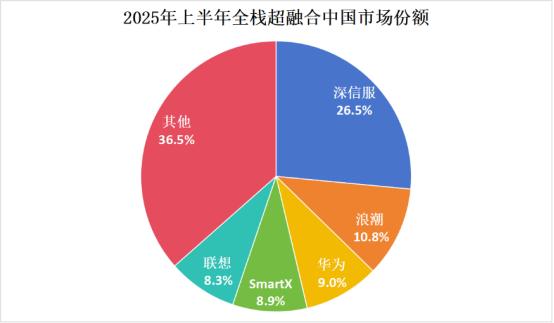
Scenario 1: Server Virtualization Replacement
This scenario is the foundation of replacement, with the core demand being to stably and high-performance support existing virtual machine loads and achieve smooth migration.

Deepin Technology
aSV computing virtualization software + SCP virtualization resource and cloud management integrated product, the solution focuses on “one-stop + security integration”. The aSV software is on par with VMware vSphere in core functions such as HA high availability and DRS dynamic resource scheduling, and can be deployed separately from storage and computing by integrating with FC/IP SAN and other shared storage, directly replacing vSphere. Its differentiated advantage lies in the deep integration of its own security capabilities, forming a “virtualization + security” integrated architecture, solving the hassle of additional security products during the replacement process.
In terms of migration, the hot backup migration based on Continuous Data Protection (CDP) technology can achieve second-level impact, and the product is compatible with over 764 models of physical servers from more than 60 vendors and 1174 operating systems, demonstrating strong adaptability. It can also be paired with managed cloud services to provide cost-effective backup and disaster recovery services, further reducing the operational pressure on small and medium-sized enterprises.

Inspur
The Yunhai InCloud Sphere virtualization platform, which has repeatedly ranked at the forefront of the domestic virtualization market, covers over 95% of the core capabilities of VMware vSphere in functionality, and its operational logic and management interface are highly similar to VMware, significantly reducing the learning costs for operational personnel.
To address the core pain points of migration, it supports online migration of VMware virtual machines, with incremental data synchronization taking only seconds, ensuring business continuity during the migration process. Additionally, leveraging Inspur’s advantages as a large data center infrastructure vendor, this platform can deeply adapt to its own server hardware and can also utilize old servers from multiple brands, achieving unified management of virtualization clusters with existing VMware clusters and bare-metal servers through the Yunhai cloud management platform, balancing asset reuse and management efficiency.
Scenario 2: Hyper-Converged Architecture Replacement
This scenario aims to reconstruct IT infrastructure using a distributed storage resource pool, replacing the vSphere + vSAN combination, pursuing higher resource integration and elastic expansion capabilities.

Deepin Technology
Hyper-Converged Infrastructure (HCI) (aSV computing virtualization + aSAN storage virtualization + aNET network virtualization), Deepin’s hyper-converged solution provides full-stack replacement capabilities for computing, storage, network, and security, with high maturity and extensive case studies.
Its distributed storage aSAN claims to perform well (e.g., over a million IOPS with 3 nodes) and provides a clear evolutionary path from managing existing VMware environments to final replacement. For enterprises looking to adopt a mature full-stack solution in one step, referencing numerous successful practices, Deepin’s HCI is a strong competitor.

Yunhong
CNware WinStack hyper-converged solution, which focuses on “same-position replacement + progressive migration”, precisely targets the VMware vSphere + vSAN hyper-converged architecture. During migration, it can fully utilize existing server and storage hardware without needing to modify business systems, maintaining performance on par with the original architecture, and also supports smooth evolution from hyper-convergence to a separated storage and computing architecture, addressing resource imbalance issues.
Ecologically, it can interface with international backup products like Veritas through standardized methods, is compatible with domestic backup software like Dingjia and Aishu, and supports mixed deployment of x86 and domestic CPUs, achieving unified management of heterogeneous resources through the WinCenter platform. It has successfully completed large-scale migrations of over 10,000 virtual machines, ensuring uninterrupted operation of critical businesses such as databases and ERP. This is suitable for key industries such as government and finance, which have high compliance and business continuity requirements, and wish to advance migration and innovation transformation in a “small steps, fast pace” manner.
Scenario 3: Cloud Platform Replacement and Upgrade
This scenario is aimed at future architecture upgrades, intending to provide more comprehensive IaaS services, multi-cloud management, and self-service capabilities, building an agile private cloud.

Deepin Technology
Hyper-converged platform (including aSV computing virtualization, aSAN storage virtualization, aNET network virtualization), SCC cloud business management software.
Deepin’s cloud management platform (SCC/SCP) supports lightweight construction of private clouds starting from 3 nodes and can unify management of VMware, Deepin’s own resource pools, and edge nodes. This capability of “replacement” and “management” in parallel is very attractive for enterprises looking to smoothly evolve from virtualization to cloud platforms, especially those with complex existing environments (including a large number of existing VMware devices).

ZStack
ZSphere virtualization platform, ZStack Cloud cloud platform
ZStack Cloud is a highly productized cloud platform that emphasizes simplicity, robustness, elasticity, and intelligence. Its user interface and operational experience are highly consistent with vSphere, significantly reducing the learning costs for operational teams. For enterprises seeking an out-of-the-box, quick delivery, and low learning curve cloud platform experience, ZStack Cloud is an ideal choice.